

Arabic Calligraphy Painting
17 œuvresDes œuvres en édition limitée, pensées par l'artiste pour illuminer votre intérieur.
Fait main en AllemagneLivraison offertePrêt à accrocher30 jours pour changer d'avis
-
Add to Wishlist ISLAM CALLIGRAPHY TABLEDès 89 €
-
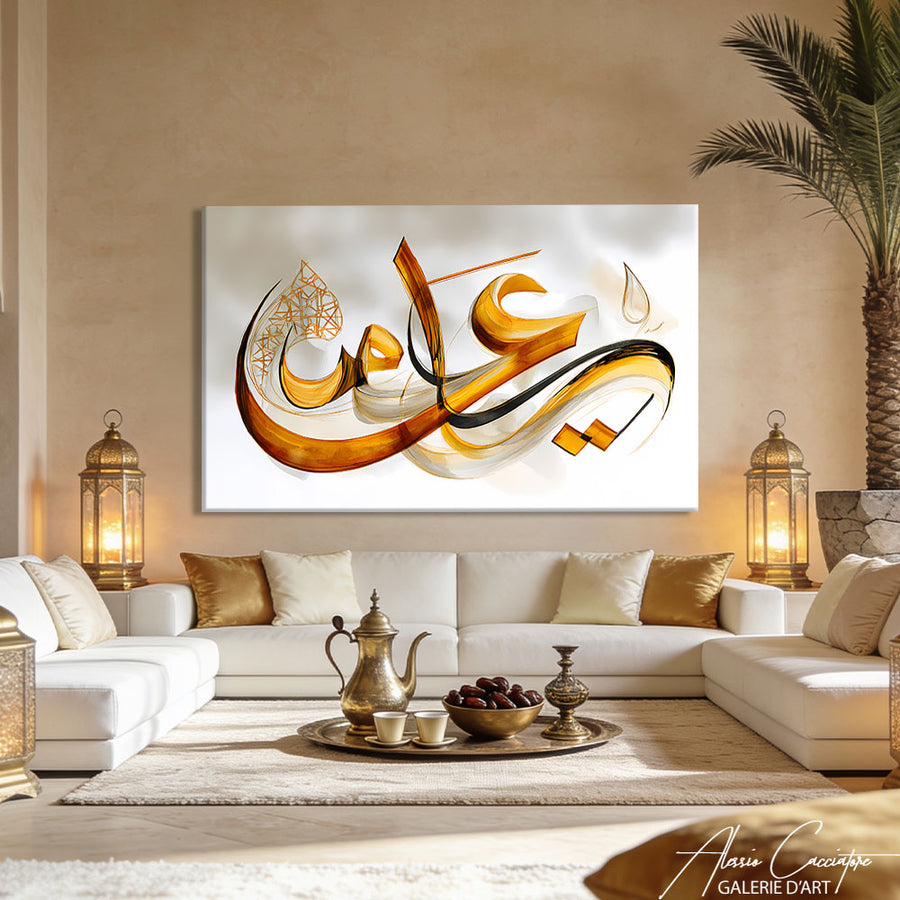
Add to Wishlist ABSTRACT ARABIC CALLIGRAPHY PAINTINGDès 89 €
-
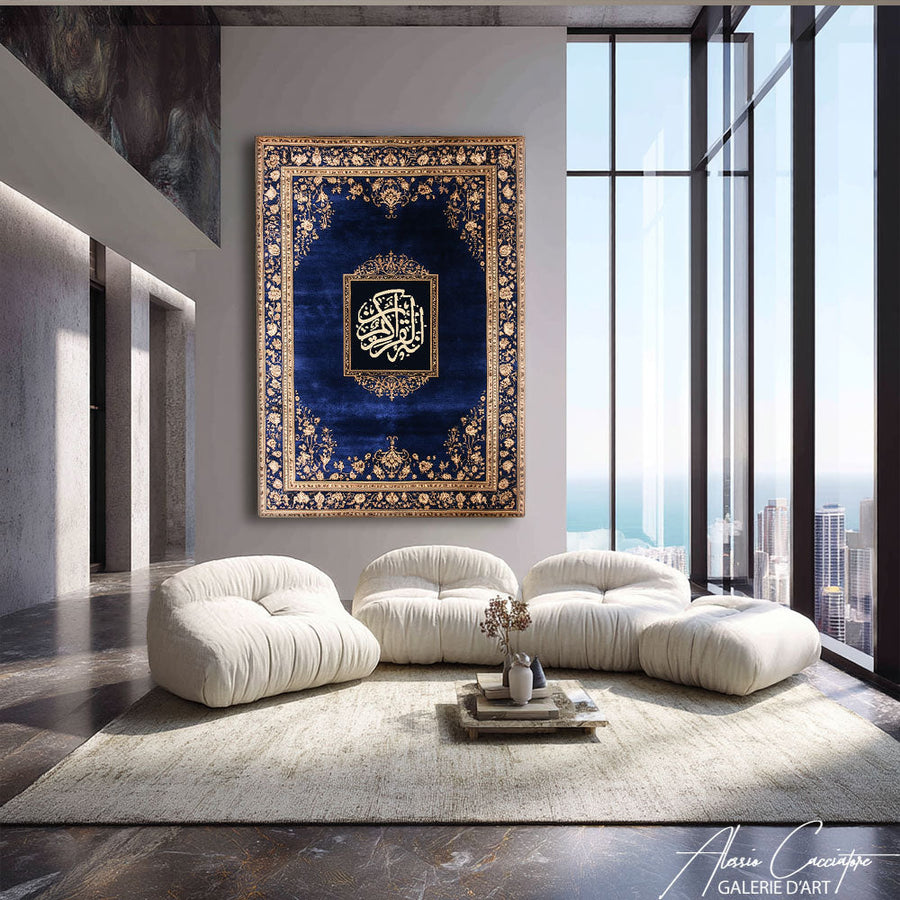
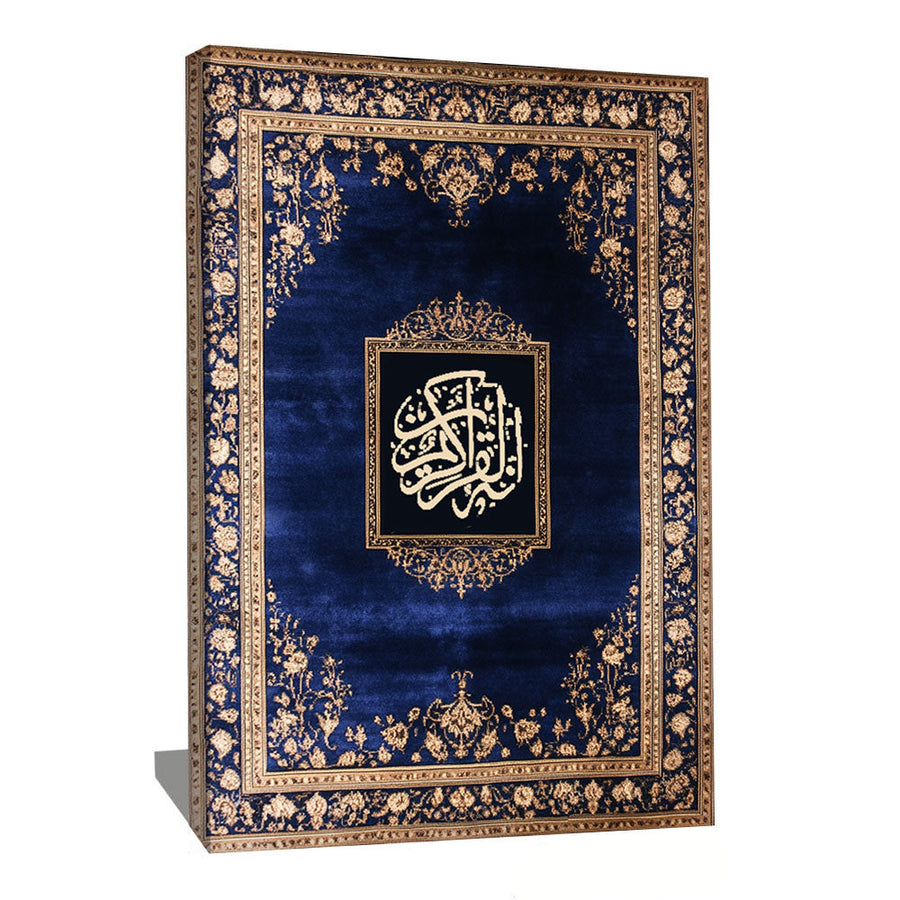
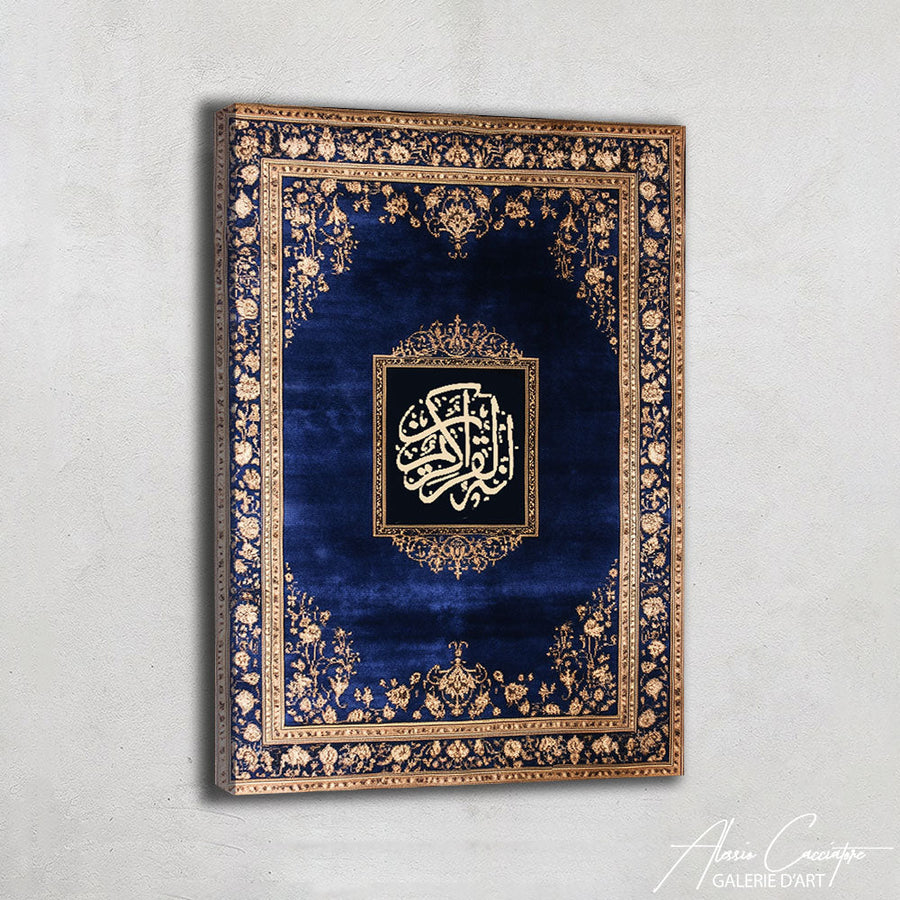
Add to Wishlist QURAN CALLIGRAPHY PAINTINGDès 89 €
-
Add to Wishlist ISLAM CALLIGRAPHY PAINTINGDès 89 €
-
Add to Wishlist ARABIC CALLIGRAPHY PAINTINGDès 89 €
-
Add to Wishlist ARABIC CALLIGRAPHY PAINTINGDès 89 €
-
Add to Wishlist GOLDEN CALLIGRAPHY PAINTINGDès 89 €
-
Add to Wishlist MODERN ARABIC CALLIGRAPHY PAINTINGDès 89 €
-
Add to Wishlist QURAN CALLIGRAPHY PAINTINGDès 89 €
-
Add to Wishlist ARABIC CALLIGRAPHY PAINTINGDès 89 €
-
Add to Wishlist ALLAH CALLIGRAPHY PAINTINGDès 89 €
-
Add to Wishlist ABSTRACT CALLIGRAPHY PAINTINGDès 89 €
-
Add to Wishlist ISLAM CALLIGRAPHY TABLEDès 89 €
-
Add to Wishlist ISLAMIC CALLIGRAPHY PAINTINGDès 89 €
-
Add to Wishlist MODERN CALLIGRAPHY PAINTINGDès 89 €
-
Add to Wishlist ARABIC CALLIGRAPHY PAINTINGDès 89 €
-
Add to Wishlist ISLAMIC CALLIGRAPHY TABLEDès 89 €




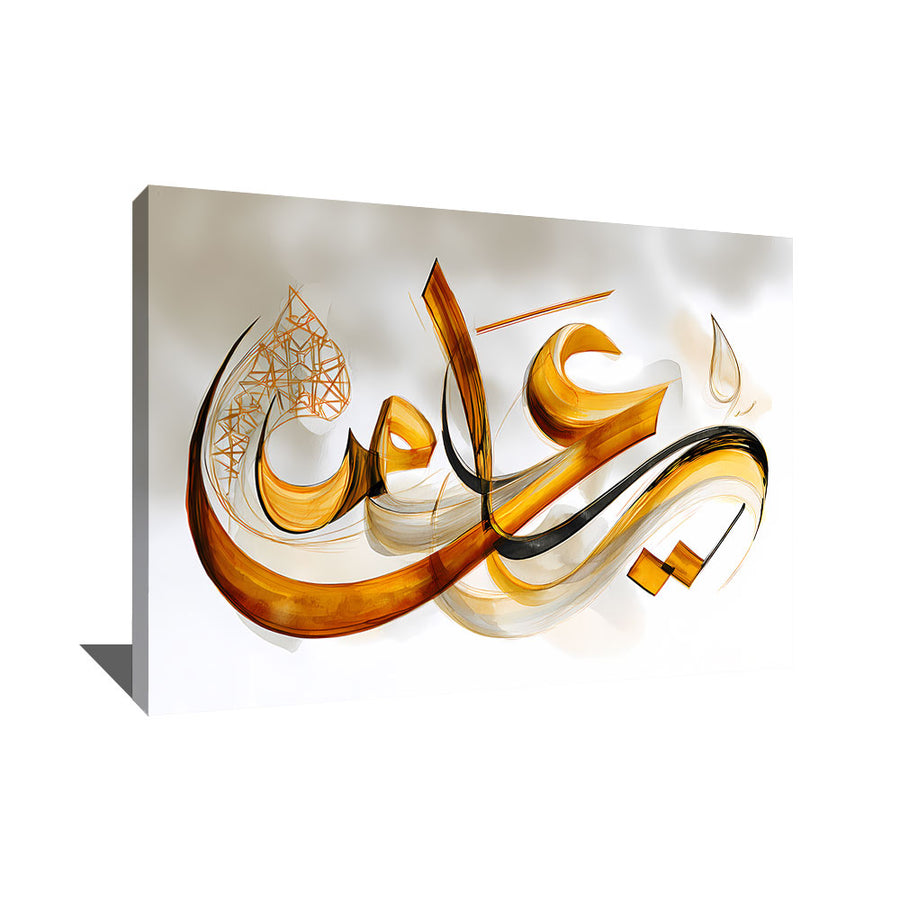
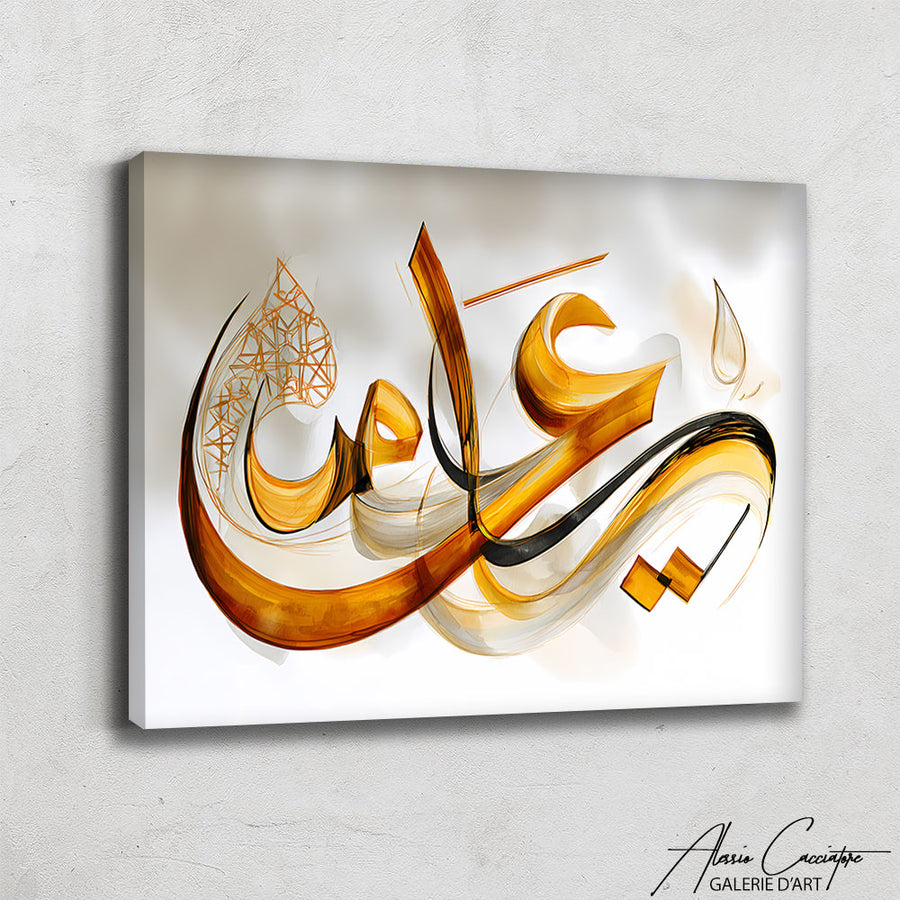


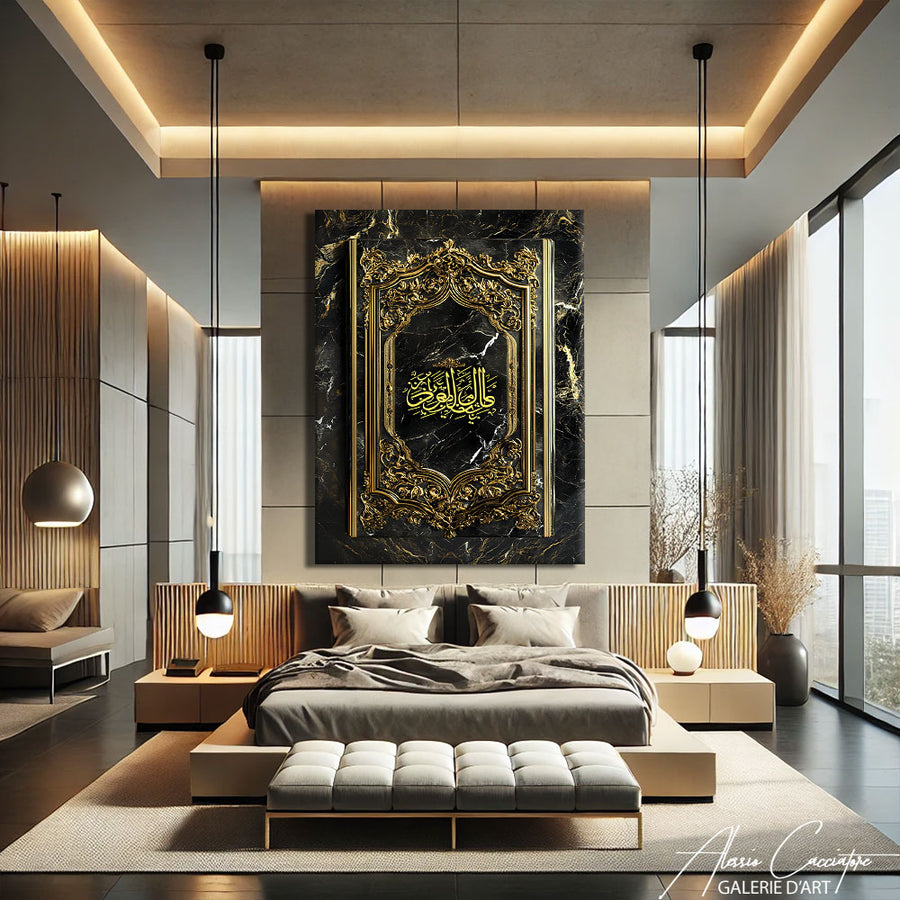
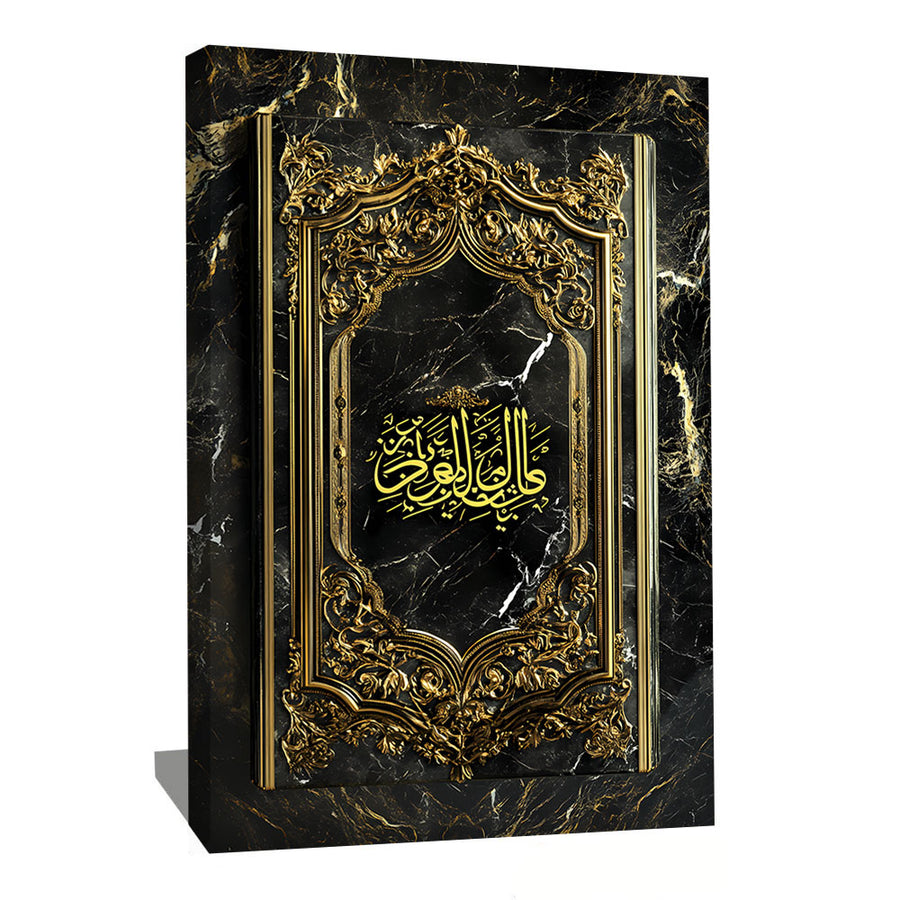
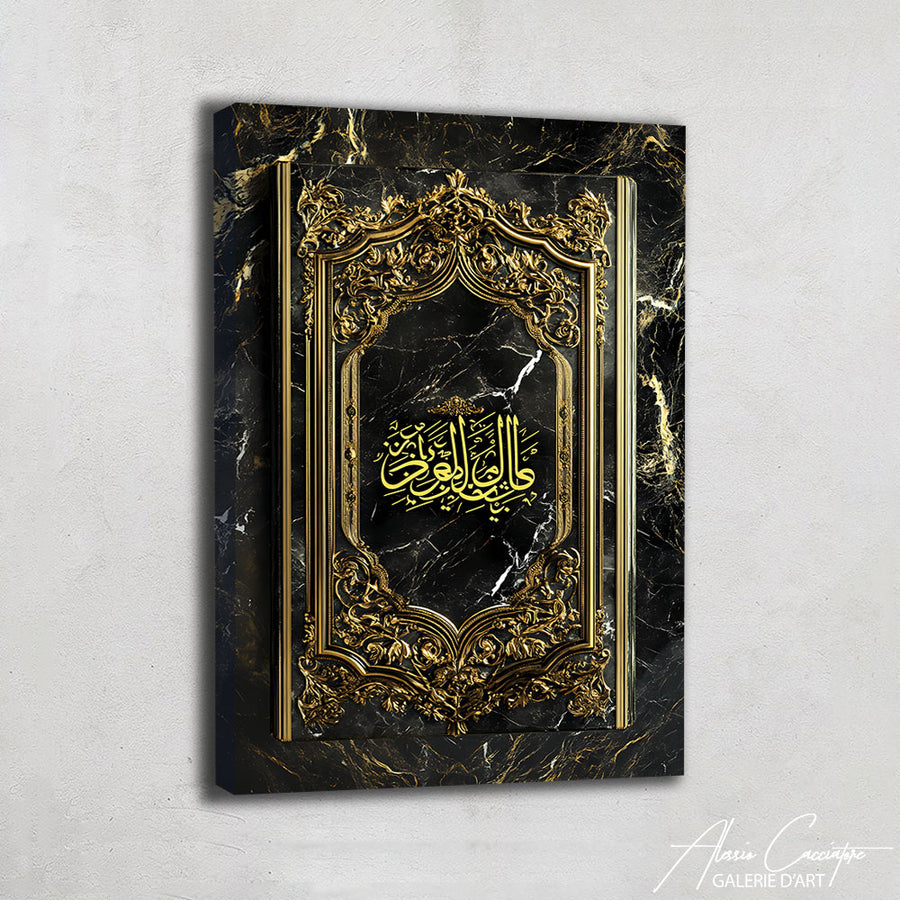
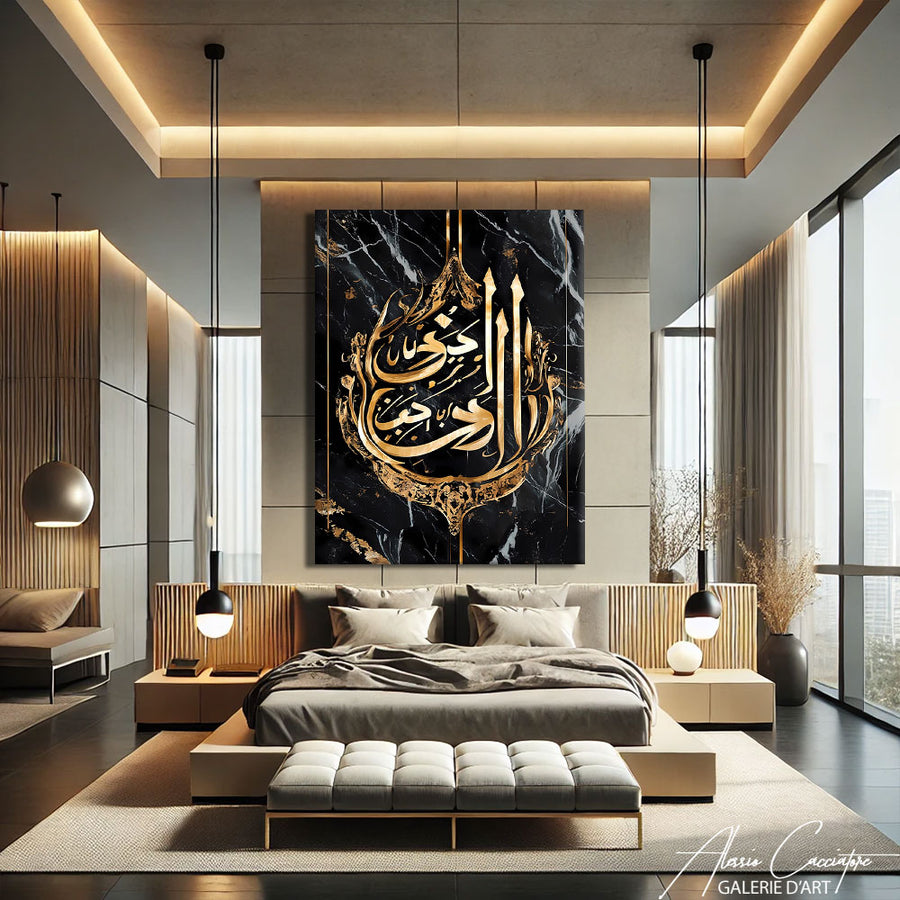
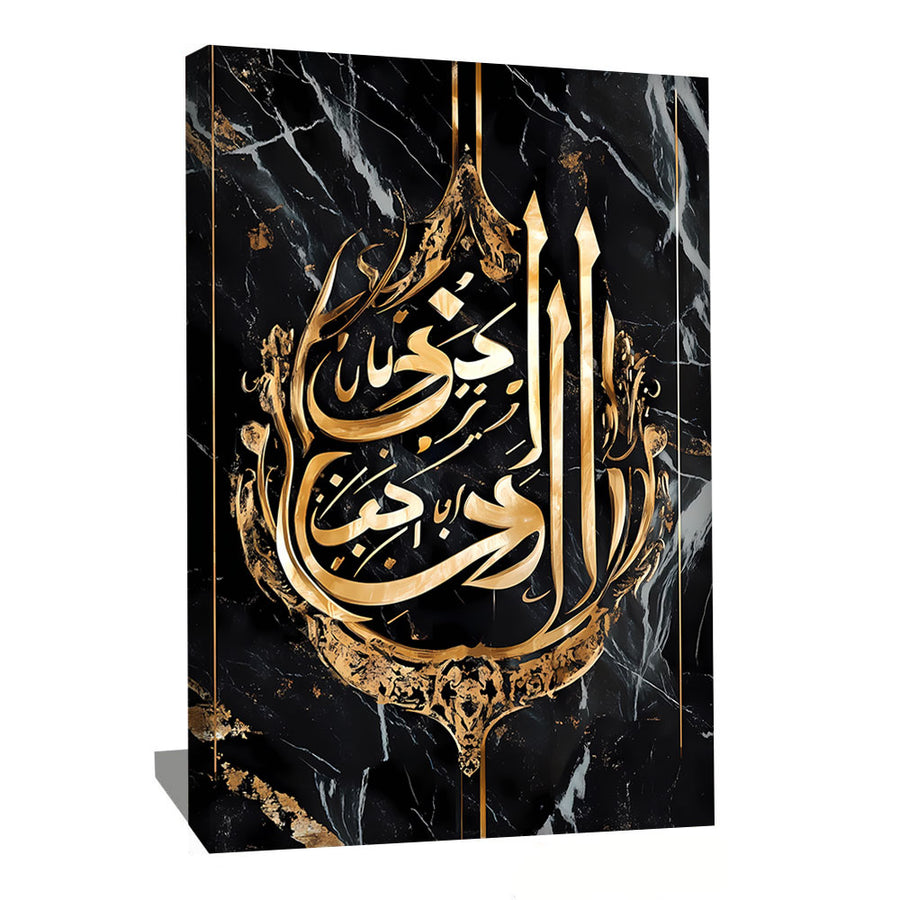
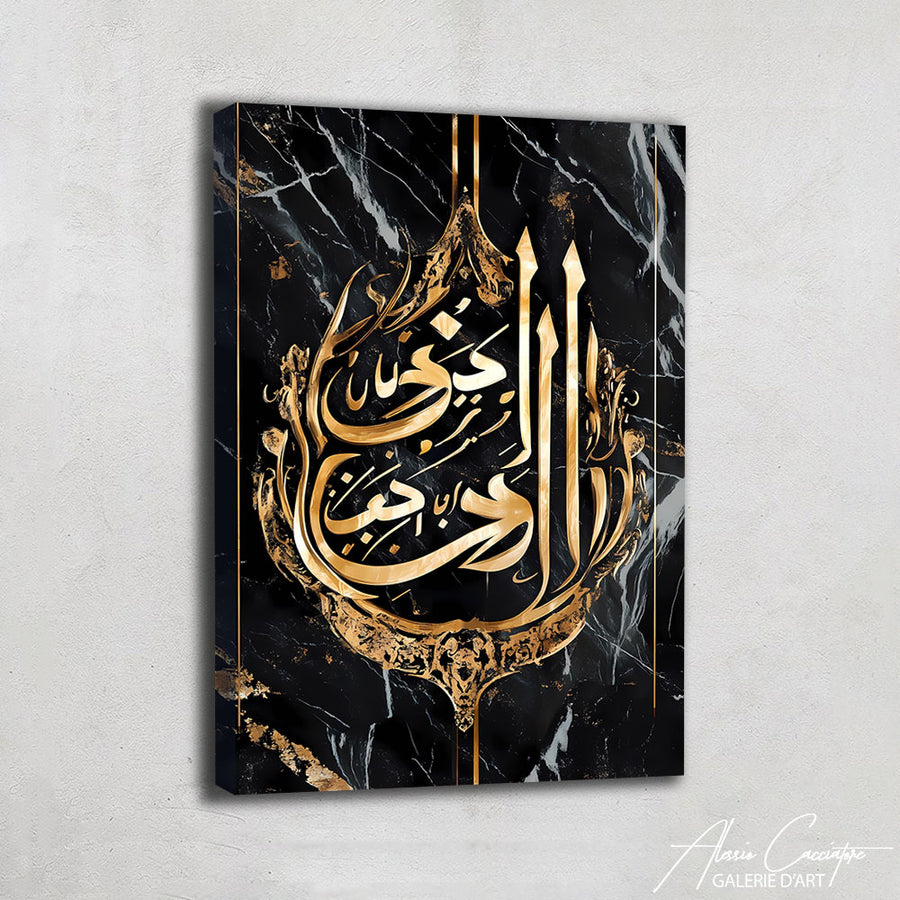
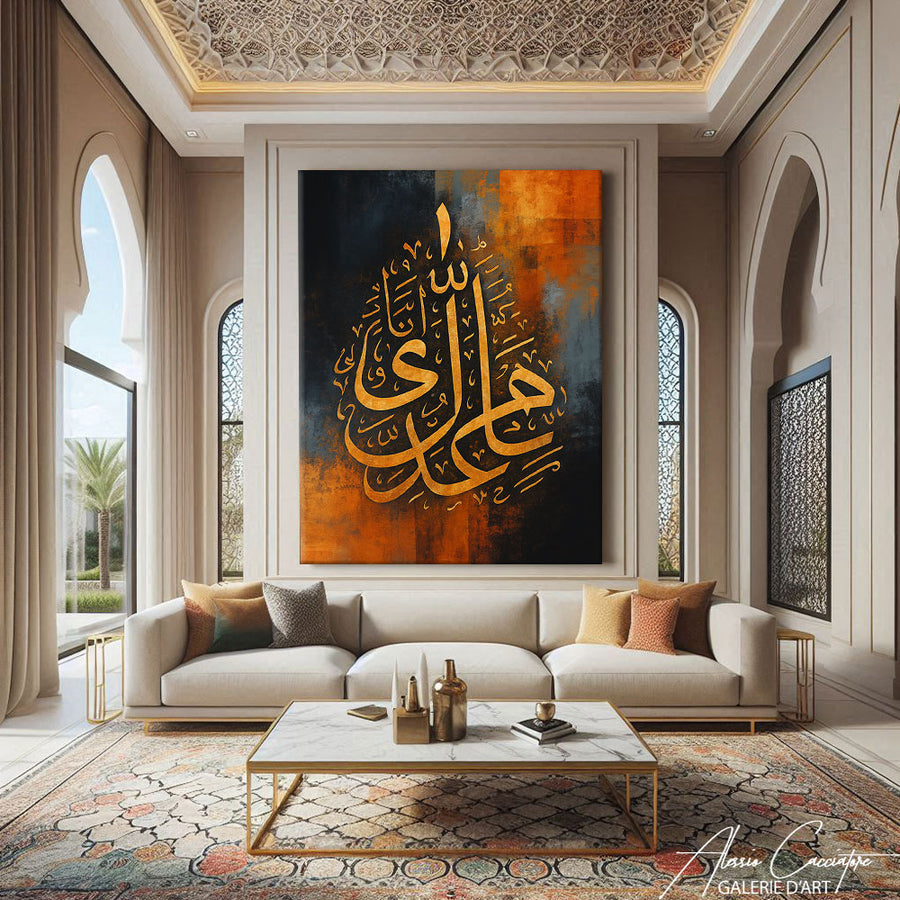
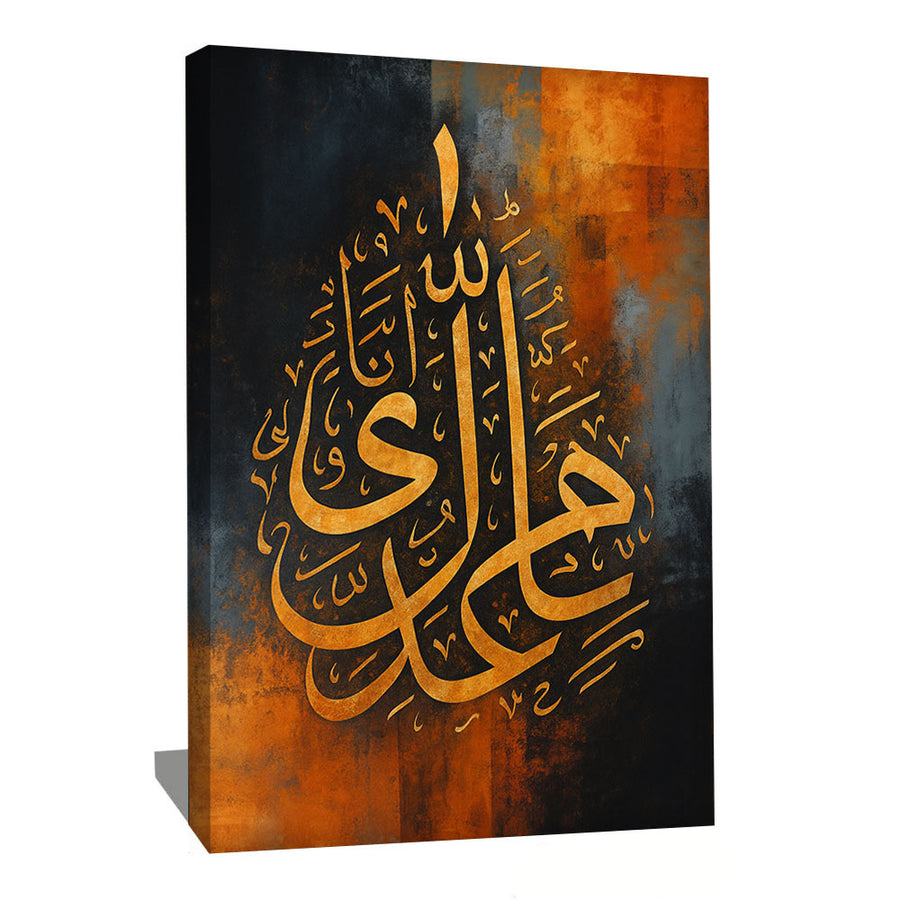
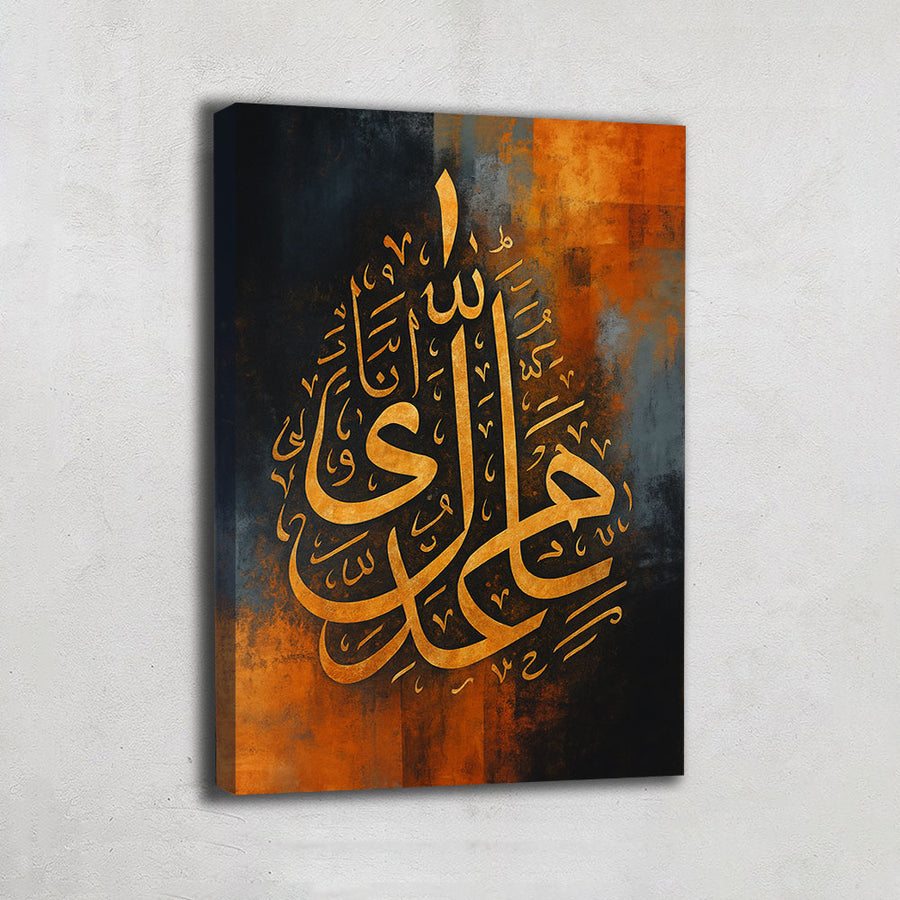


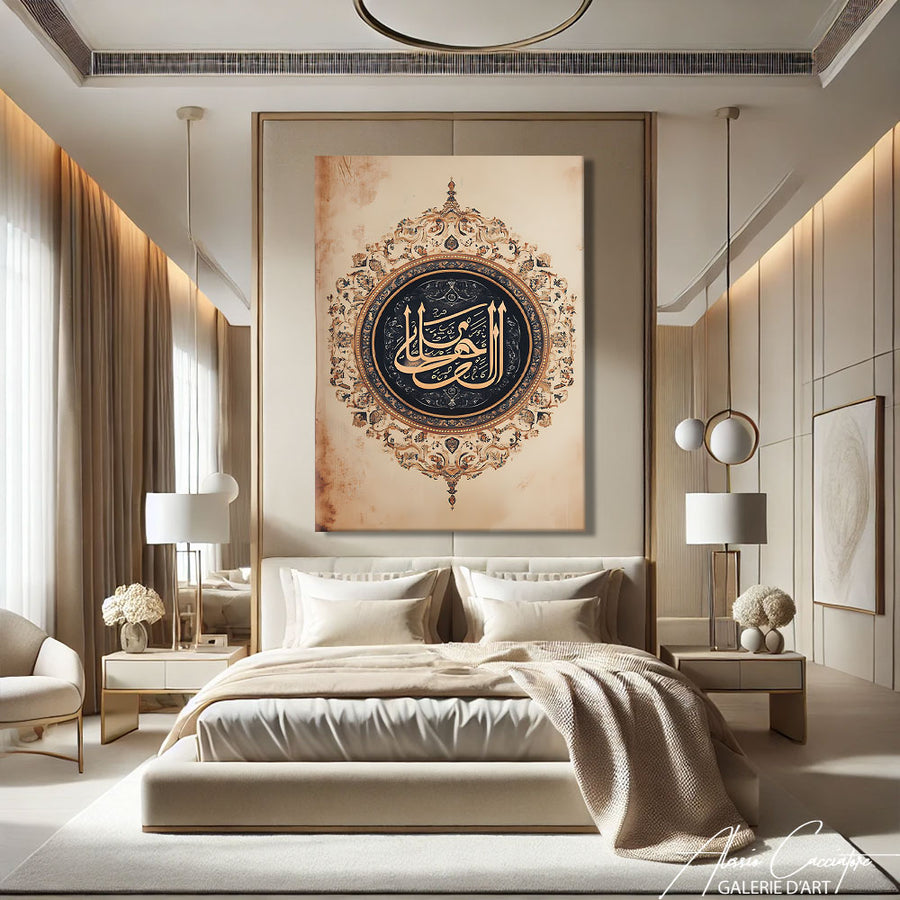
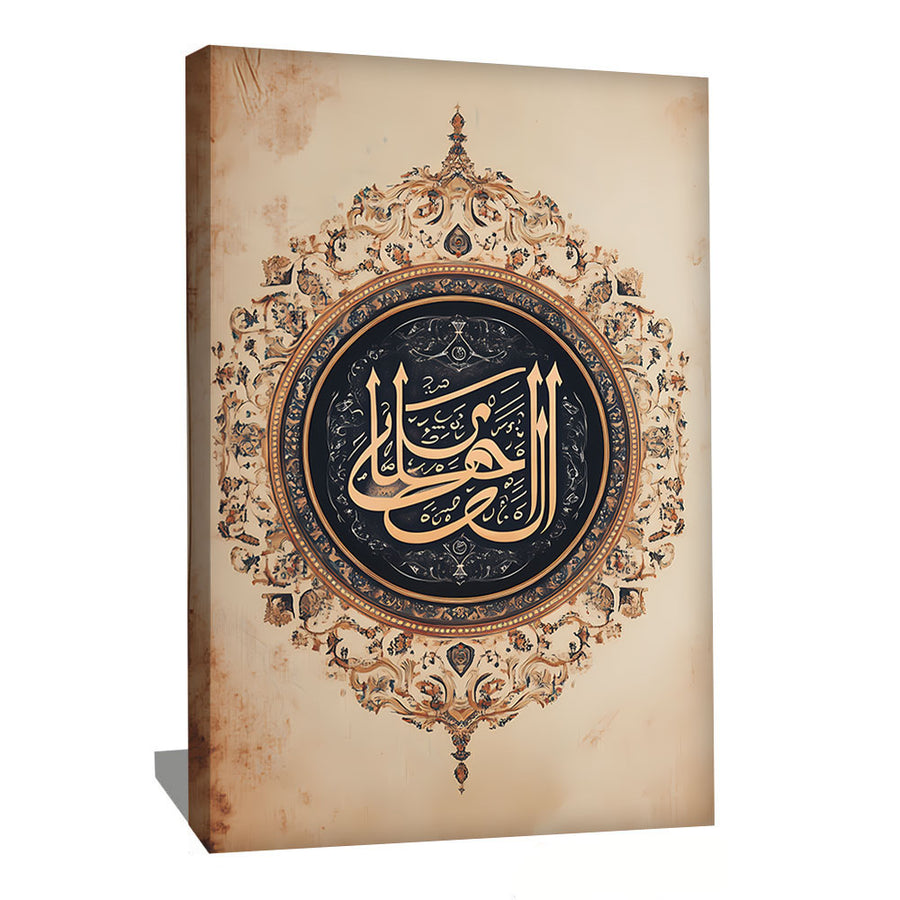
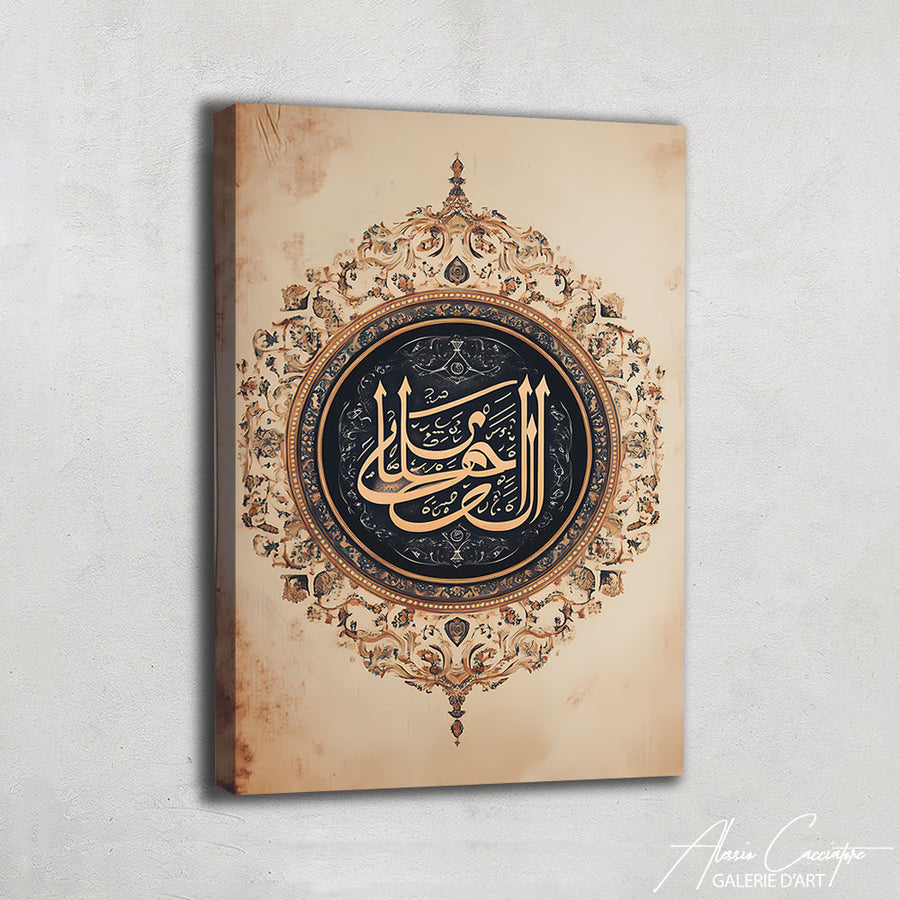


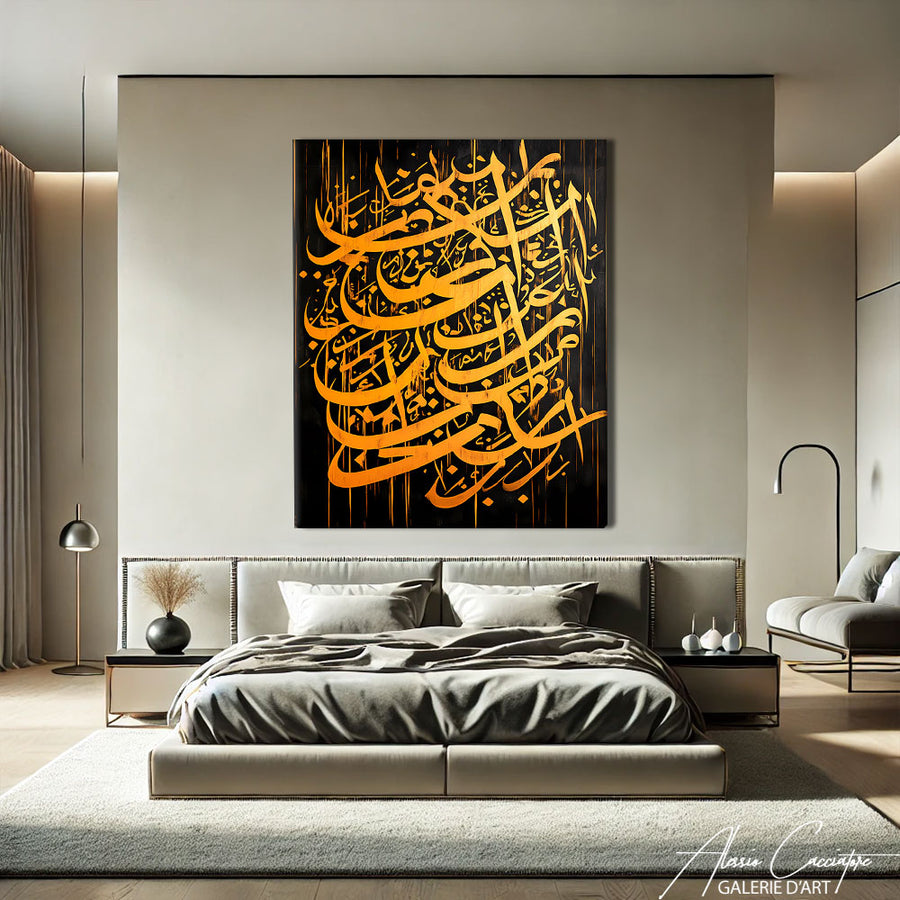
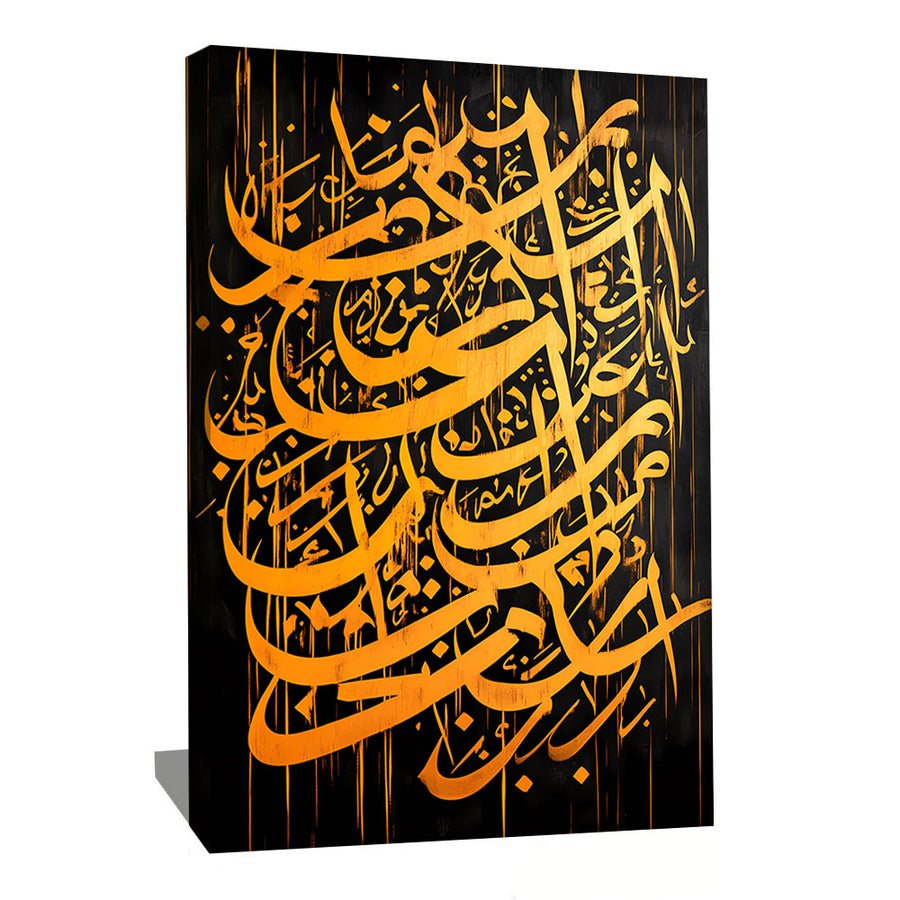


Chargement des œuvres suivantes…
Vous avez vu 17 œuvres sur 17


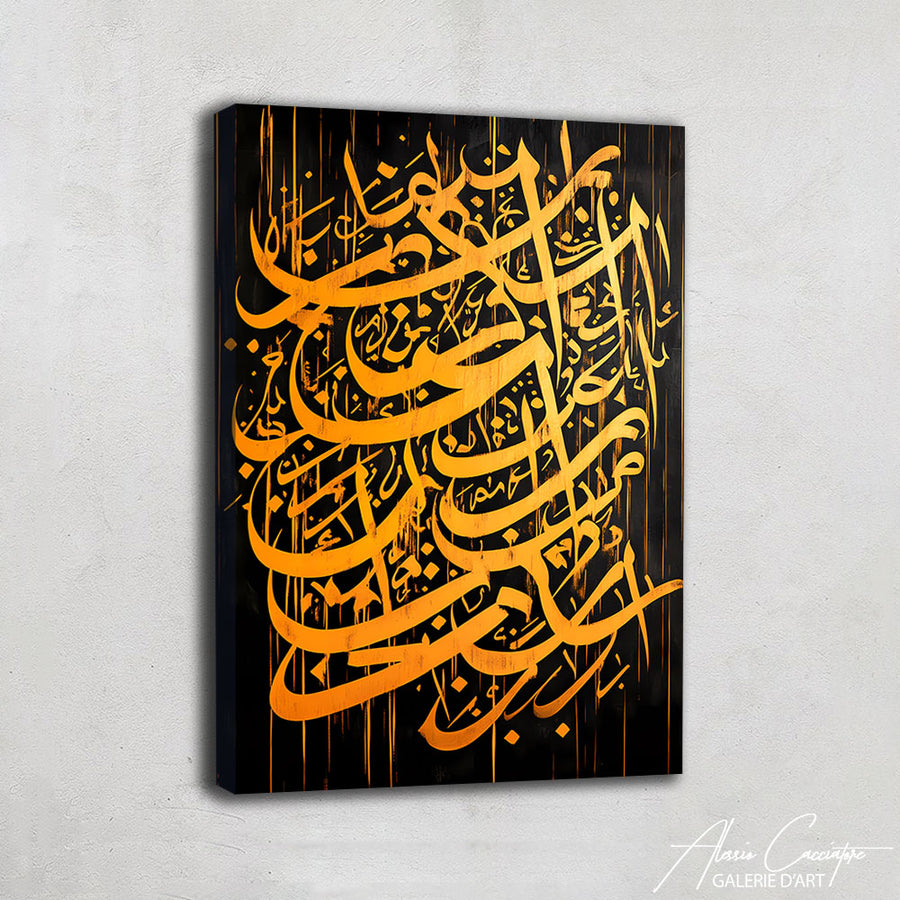
In Islamic tradition, calligraphy is not just another decorative art; it is the art par excellence, occupying the same prominent place that figurative painting holds in European culture. This uniqueness stems from a precise theological reason: as Islam historically developed a reluctance towards human and animal representation in sacred contexts, writing itself, and more specifically that which conveys the revealed word of the Quran, became the primary visual medium for spiritual expression. Thirteen centuries later, Arabic calligraphy remains one of the most demanding and moving artistic disciplines in the world. Our Arabic calligraphy art prints are part of this millennia-old tradition, reinterpreted for contemporary interiors where they bring both a spiritual dimension and incomparable graphic elegance.
Our gallery brings together over forty calligraphic compositions printed on premium canvas and glossy plexiglass in our workshop in Germany. Verses from the Quran rendered in grand classical styles (Thuluth, Diwani, Naskh, Kufic), names of Allah in contemporary palettes, words of Bismillah and Shahada, entire surahs arranged in architectural compositions: each piece in the collection adheres to the absolute demands of this art while offering a presentation that dialogues with today's décor.
Arabic Calligraphy: An Art Born from Quranic Revelation
The story begins in Medina in the 7th century. When Prophet Muhammad received the revelation of the Quran, his companions immediately felt the need to commit these words to writing. The Arabic of that time was a relatively uncodified tribal language, with a rudimentary script primarily used for commerce. It was therefore necessary to invent, within a few decades, a writing system capable of worthily carrying the divine word. It was in this sacred urgency that Arabic calligraphy, in the artistic sense of the term, was born.
The first major canonical style appeared in Kufa, Iraq, at the end of the 7th century: Kufic, an angular and solemn script used for the earliest Quranic manuscripts. Three centuries later, the calligrapher Ibn Muqla (886-940) in Baghdad systematized the proportions of Arabic writing and invented the "six styles" system that still structures the entire tradition today. In the 13th century, Yaqut al-Mustasimi perfected the Thuluth style, which became the script for grand monumental inscriptions. In Istanbul under the Ottoman Empire, entire dynasties of master calligraphers (the khattat) pushed the art to its technical perfection: Sheikh Hamdullah, Hafiz Osman, Mustafa Râkim. Even today, the title of master calligrapher in the Arab world is passed down through the traditional chain (the silsila) that goes directly back to these great historical figures. Our compositions are inspired by this millennial lineage with the respect it demands.
The Grand Styles of Arabic Calligraphy in Our Gallery
Arabic calligraphic art traditionally distinguishes several major styles, each with its own rules, historical uses, and unique character. Here are the main schools you will find in our selection.
Thuluth: The Script of Domes and Monumental Inscriptions
Thuluth (meaning "one third" in Arabic, in reference to the proportions of its strokes) is probably the most recognizable and respected calligraphic style. Characterized by its elongated vertical strokes, ample curves, and majestic balance, it has been used for grand inscriptions in mosques (Hagia Sophia, Blue Mosque in Istanbul, Al-Aqsa Mosque) and remains today the reference style for ceremonial calligraphic compositions. Our Thuluth art prints are particularly suitable for formal living rooms, entrances that demand a strong visual presence, and reception areas. See also our Islam collection which extends this sacred iconography.
Diwani: The Calligraphy of the Ottoman Chancellery
Invented in Istanbul in the 16th century for official documents of the Sublime Porte, Diwani is a highly ornamental style, characterized by its intertwined curves, letters that wrap around each other, and its spectacular decorative effect. Difficult to read, it prioritizes the pure beauty of the stroke over immediate legibility. This decorative dimension makes it one of the most popular styles for contemporary wall decoration, especially successful in complex compositions on a large format.
Naskh: Everyday Legibility and Quranic Manuscripts
Naskh (from the Arabic verb meaning "to copy") is the most commonly used style for copying Quranic manuscripts and remains today the basis of all modern Arabic typography. More composed and legible than Thuluth, more restrained than Diwani, it offers a perfect balance between elegance and clarity. Our Naskh compositions are particularly suitable for entire Quranic verses, surahs, and long quotations, where legibility remains an important quality.
Kufic: The Solemnity of Origins
The oldest of the canonical styles, Kufic is characterized by its angular forms, rigorous verticals, and monumental character. It was used for the first Qurans transcribed in the 7th and 8th centuries and still retains an archaic and solemn dimension today. Its modern version, geometric Kufic, is particularly popular in contemporary decoration for its refined graphic appearance that dialogues with current minimalist design.
Allah, Bismillah, Shahada: Compositions of the Sacred
Beyond technical styles, certain calligraphic formulas hold a special place in tradition. The name of Allah alone, calligraphed in all possible schools. The Bismillah ("In the name of God, the Most Gracious, the Most Merciful"), an opening formula that precedes every surah of the Quran except the ninth. The Shahada ("There is no deity but God, and Muhammad is His messenger"), the Muslim profession of faith. These compositions imbued with spiritual meaning constitute one of the most requested families in our collection. For practitioners, they become a daily reminder of lived faith.
Emblematic Verses and Surahs
Some Quranic verses are so frequently calligraphed that they have their own iconographic tradition. The Ayat al-Kursi (Verse of the Throne, surah 2 verse 255), one of the most powerful verses in the Quran, traditionally considered a verse of protection. The four Qul (the four surahs that begin with "Qul": Al-Ikhlas, Al-Falaq, An-Nas, and Al-Kafirun). Surat Al-Fatiha (The Opening), the first surah of the Quran. These longer compositions generally require large formats to maintain legibility.
Modern and Contemporary Calligraphy
Arabic calligraphic art did not freeze in the 18th century. A whole contemporary school, particularly vibrant since the 1960s, has reinvented the discipline by dialoguing with Western abstraction (Hassan Massoudy in France, Nja Mahdaoui in Tunisia, Hassan Massouda in Baghdad). These modern calligraphies embrace illegibility in favor of pure pictorial gesture, integrating the Arab tradition into the language of global contemporary art. Our compositions in this vein are part of this movement of controlled modernization of tradition. See our Arabic art print collection.
Symbolism and Imagination: What Your Choice Says
Choosing an Arabic calligraphy art print for your interior evokes a dense imagery that deserves to be unfolded, whether one approaches the subject for religious, cultural, or strictly aesthetic reasons.
Faith Lived Daily
For practicing Muslims, an Arabic calligraphy art print is primarily an object of spiritual presence. The divine word, displayed on the walls of the home, becomes a silent companion that punctuates the day and constantly reminds one of the sacred dimension of existence. Many of our customers place their art print in a specific location: the living room where guests are received, the entrance as a welcoming signature, or a corner dedicated to prayer. This daily presence of the Word is a central dimension of lived Muslim spirituality.
Arab-Muslim Cultural Heritage
For people of North African, Middle Eastern, or Sub-Saharan Muslim origin, Arabic calligraphy touches upon a deep dimension of cultural identity. Seeing this script on one's walls means keeping alive the connection with a language, a tradition, a family history that transcends geographical boundaries. For children growing up in Europe in families of Arab origin, an Arabic calligraphy art print can be a particularly valuable act of silent transmission.
Admiration for a Universal Art
Beyond the specific religious or cultural dimension, Arabic calligraphy attracts admiration from a much wider audience than just practicing Muslims. Contemporary art lovers recognize it as one of the great global graphic traditions, comparable to Chinese or Japanese calligraphy. Designers and architects have drawn inspiration from it for decades. Western collectors of Islamic art frequent specialized sales at Christie's and Sotheby's. An Arabic calligraphy art print can be chosen simply for its extraordinary formal beauty, regardless of any religious interpretation.
Protection and Barakah

Envoyez une photo de votre mur : nous vous aidons à choisir l'œuvre et la taille, gratuitement.
Fabriqué en Allemagne · Paiement sécurisé · 30 jours pour changer d'avis
Animaux

Villes & cultures
Styles
 Styles
Spiritualité
Nature & paysages
 Nature & paysages
Portraits
- Choosing a selection results in a full page refresh.
- Opens in a new window.
- Opens external website.
- Opens external website in a new window.