
Horses Painting | Exclusive Works | Alessio Cacciatore

Horses Painting
Des oeuvres en édition limitée pensées par l'artiste pour illuminer votre intérieur
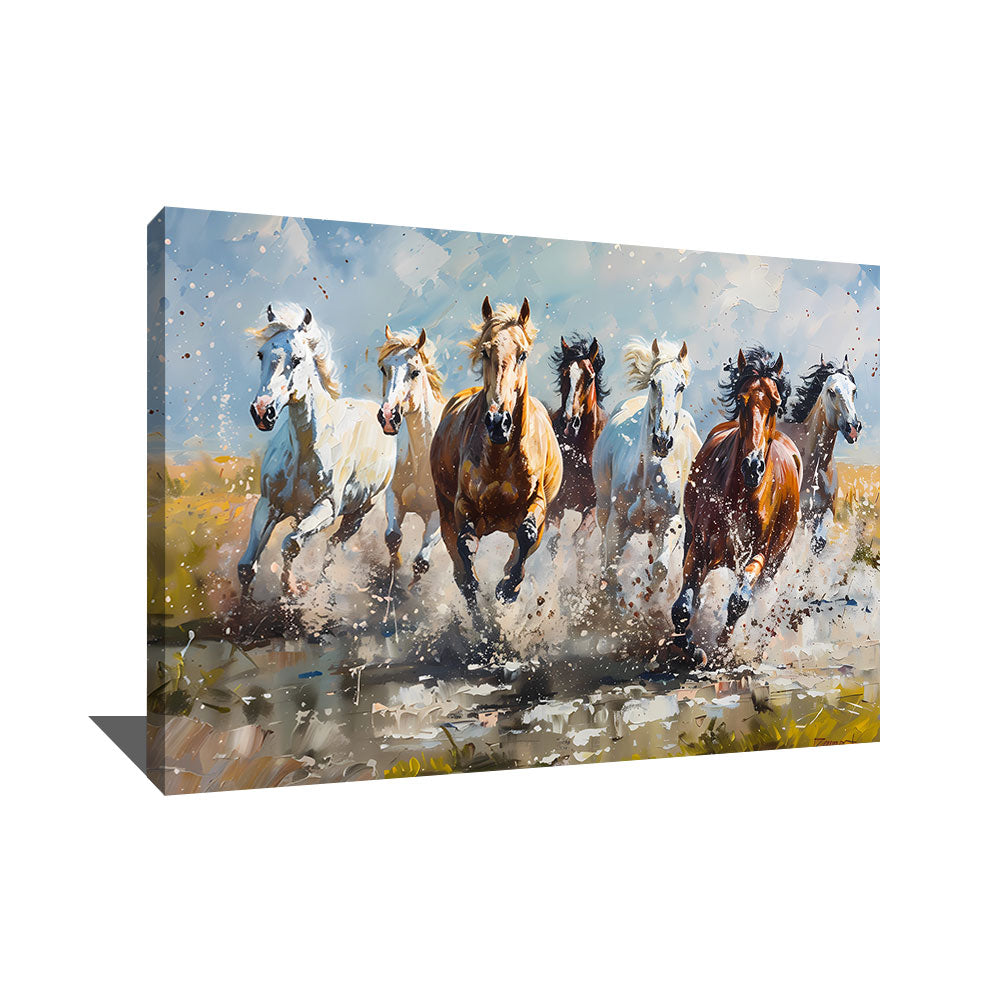
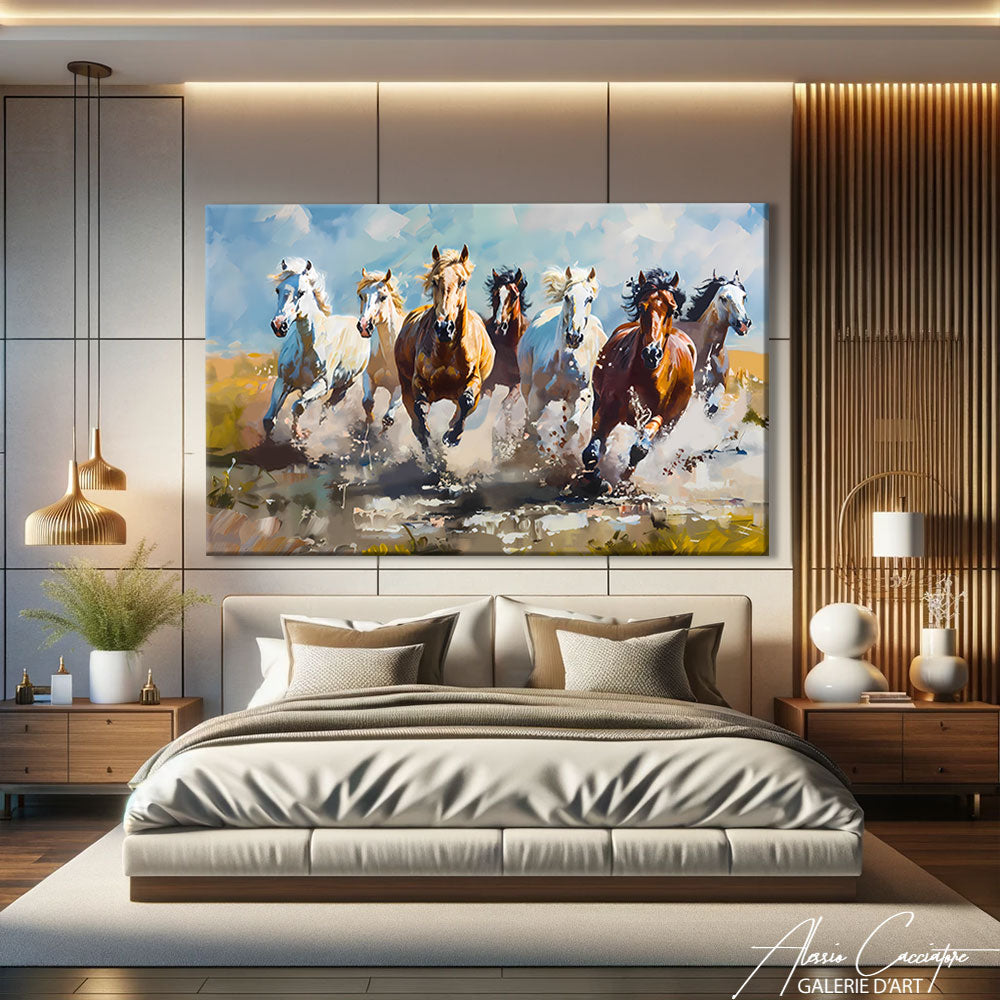


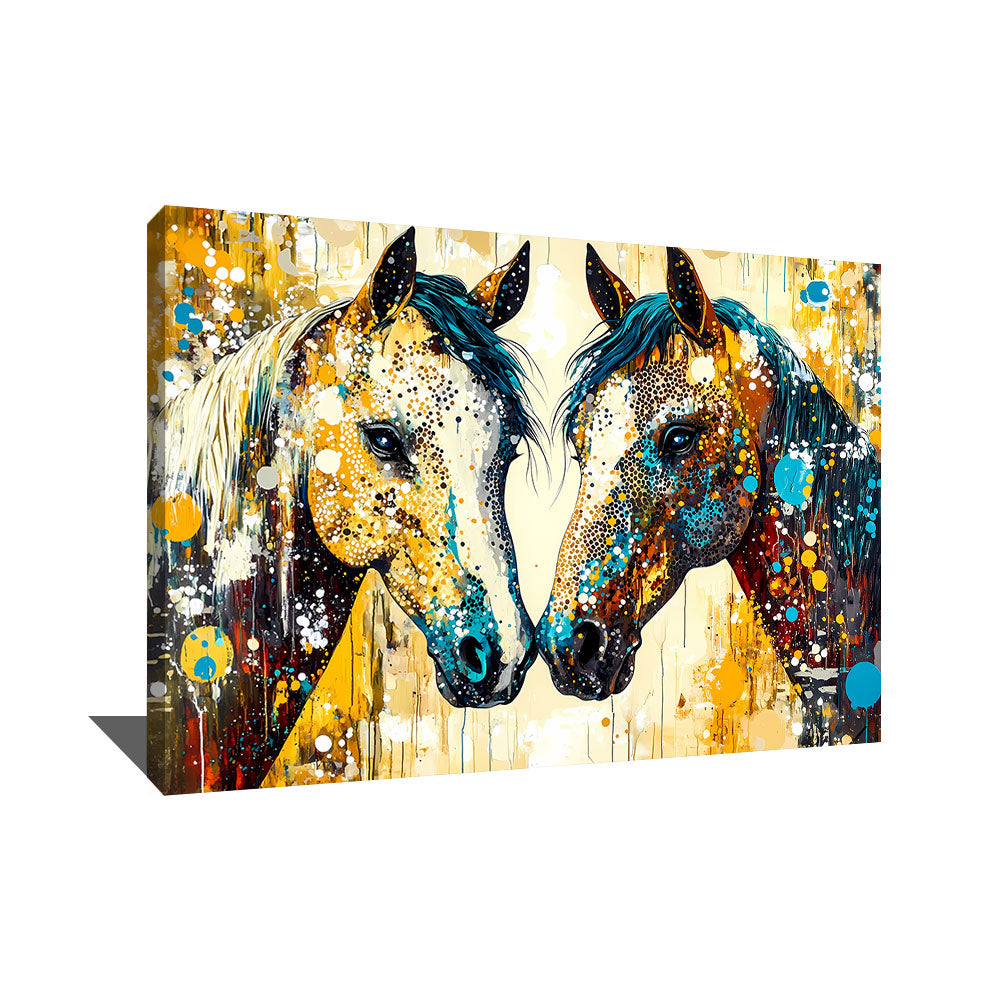
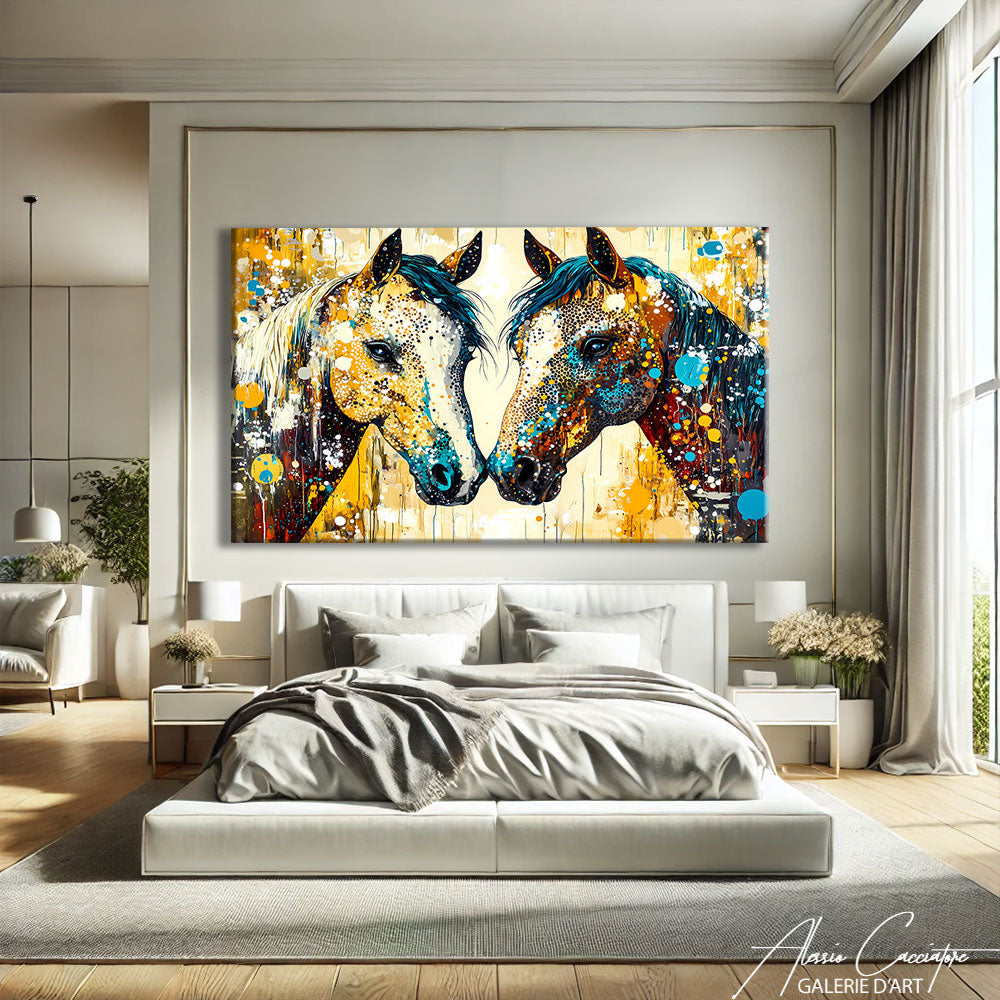


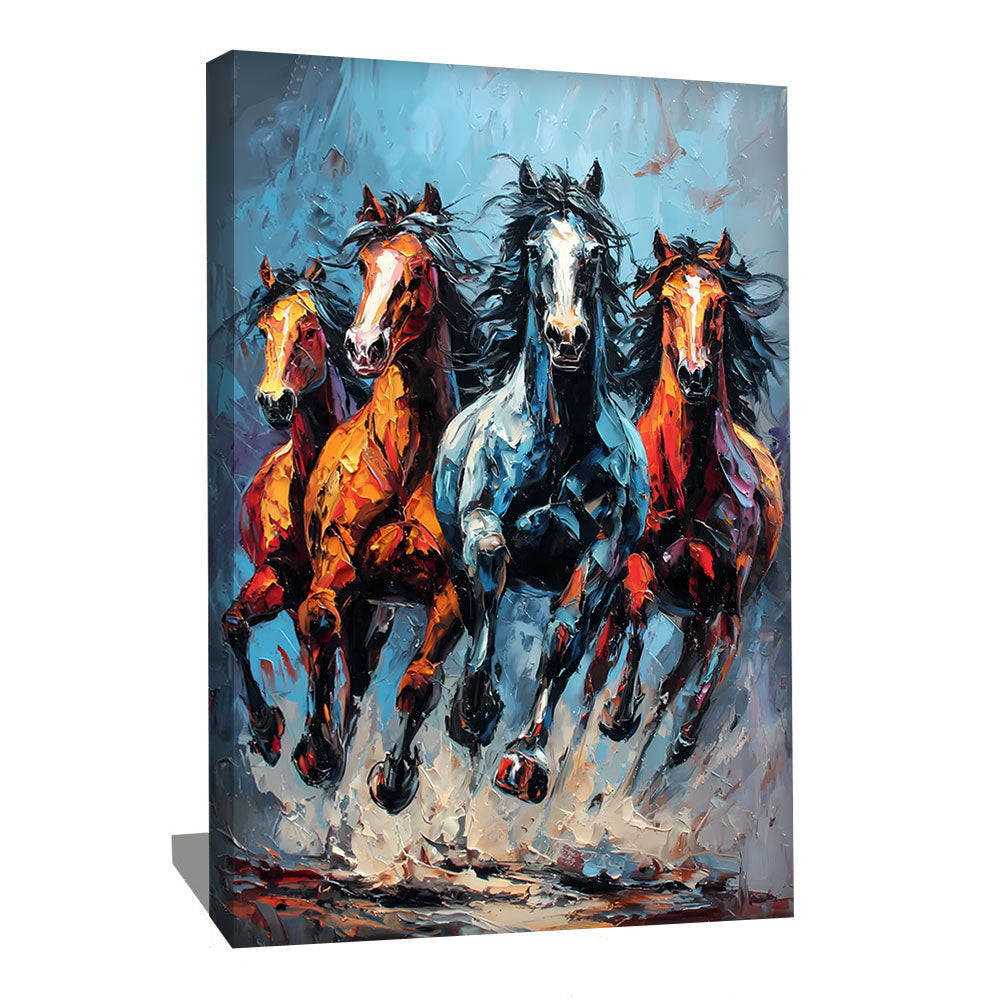

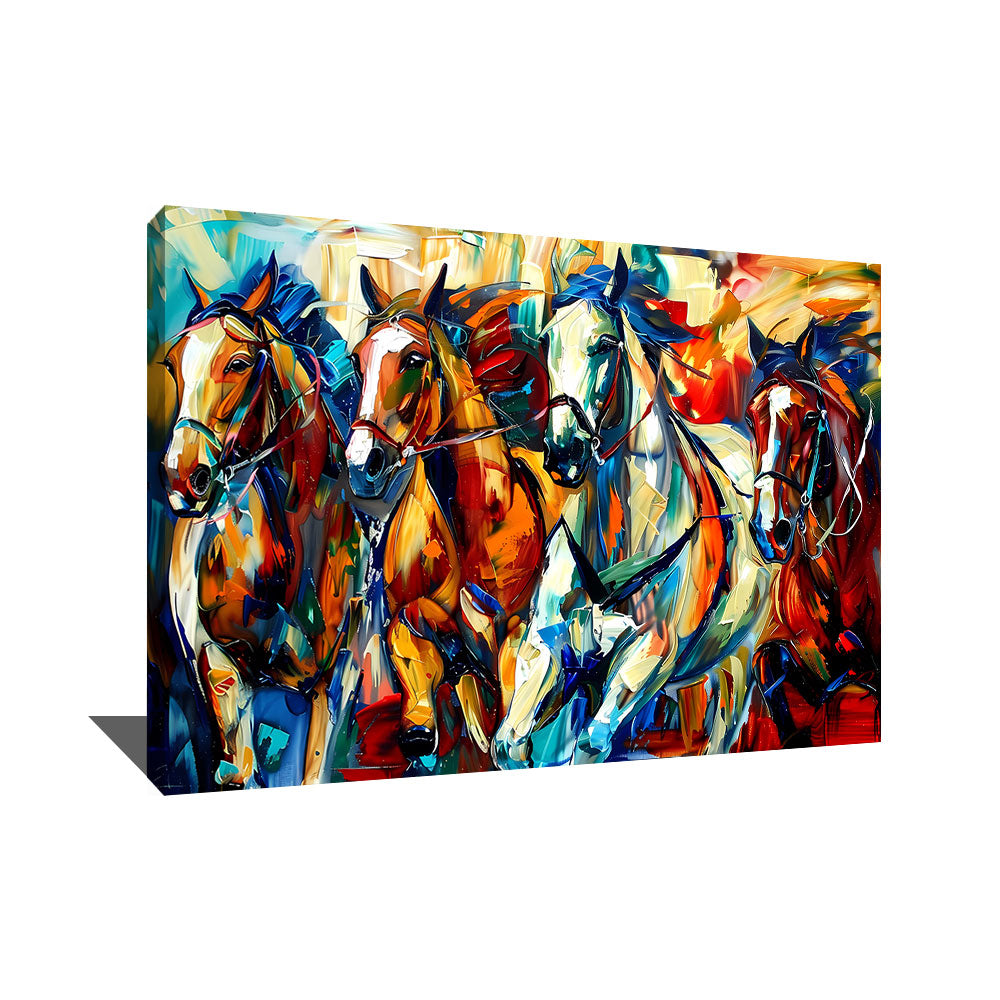


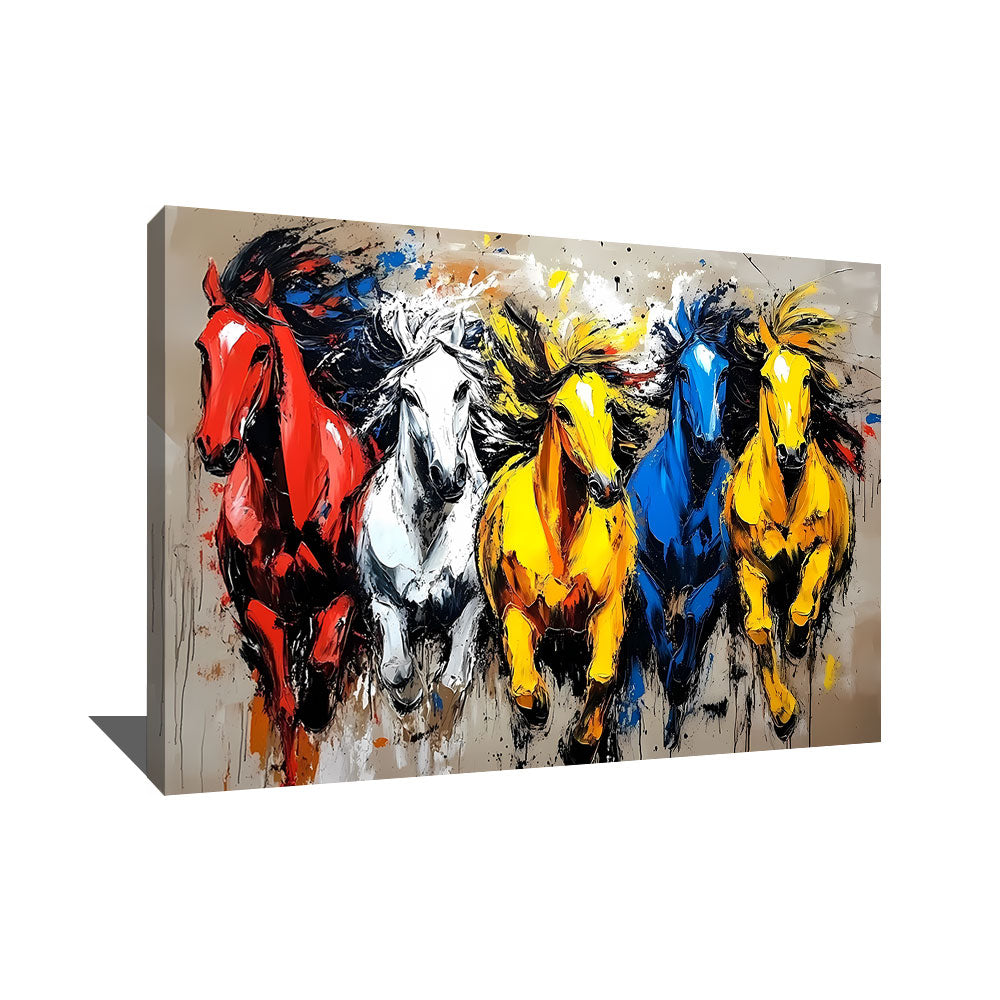
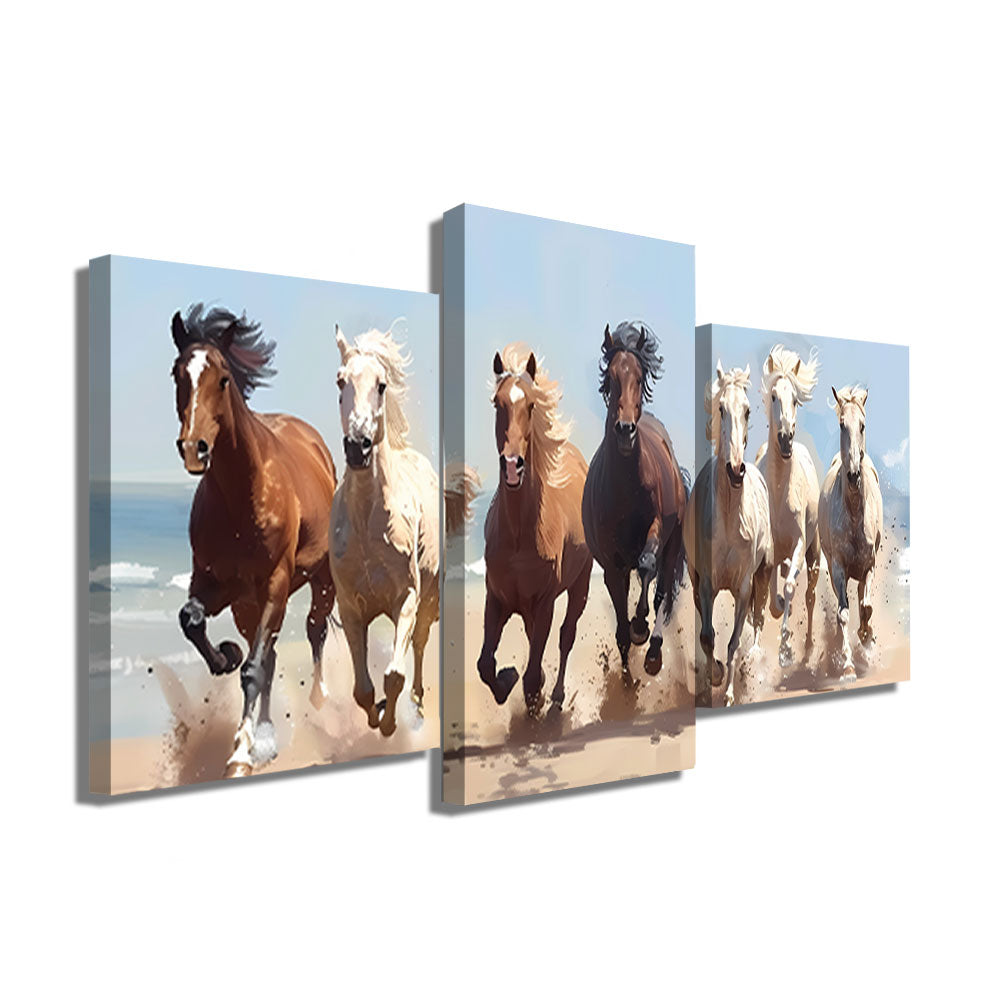
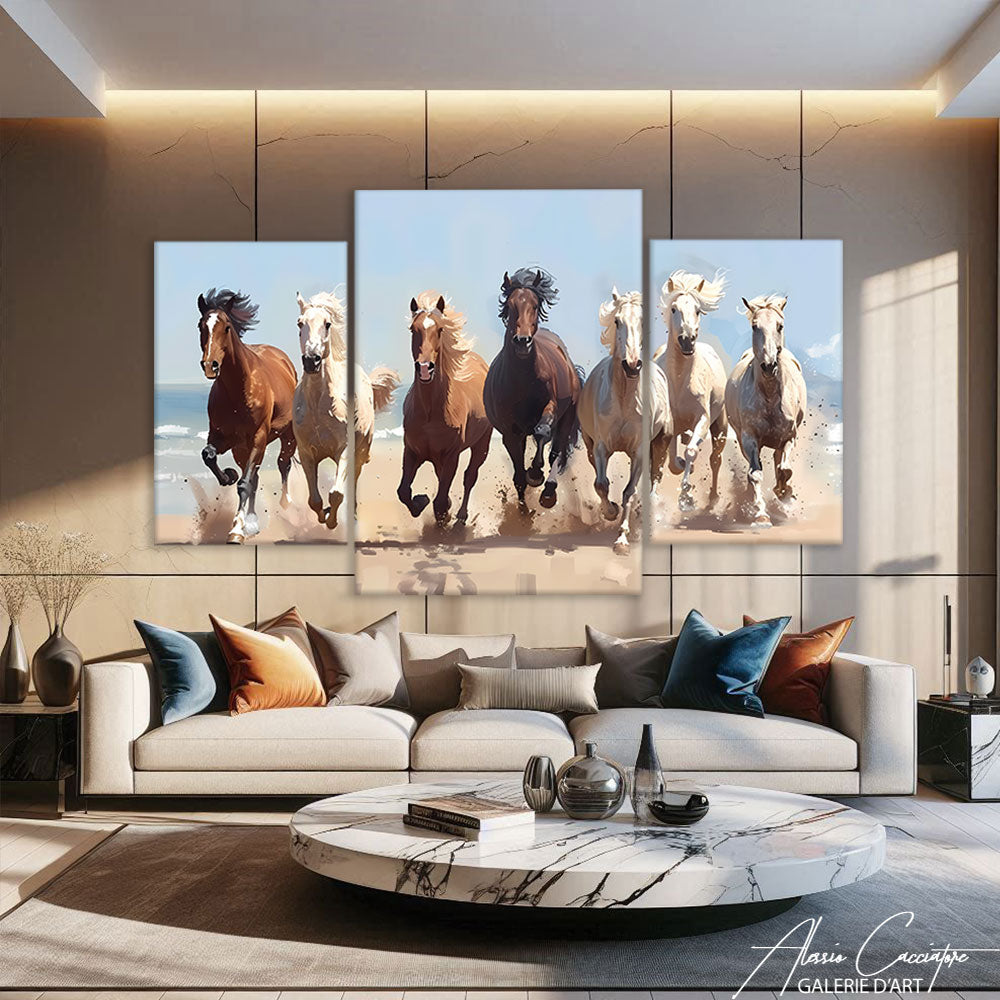
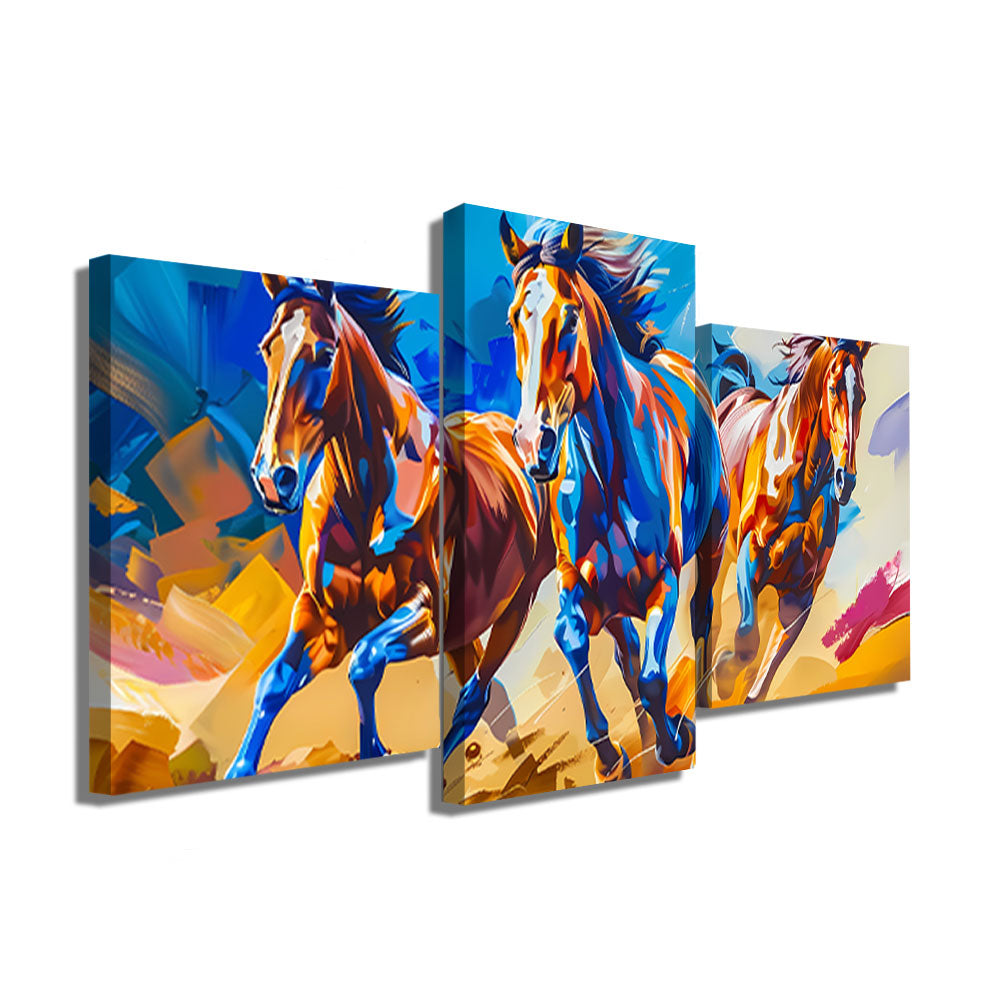
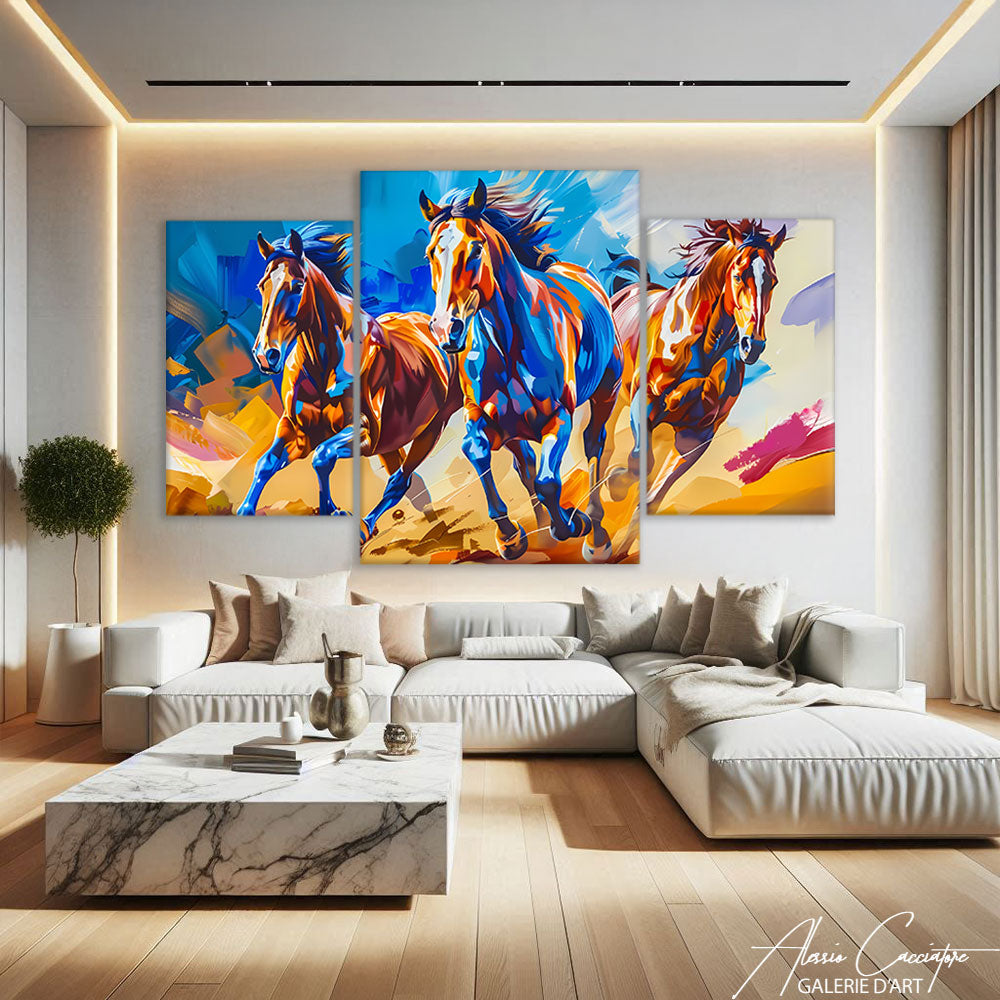
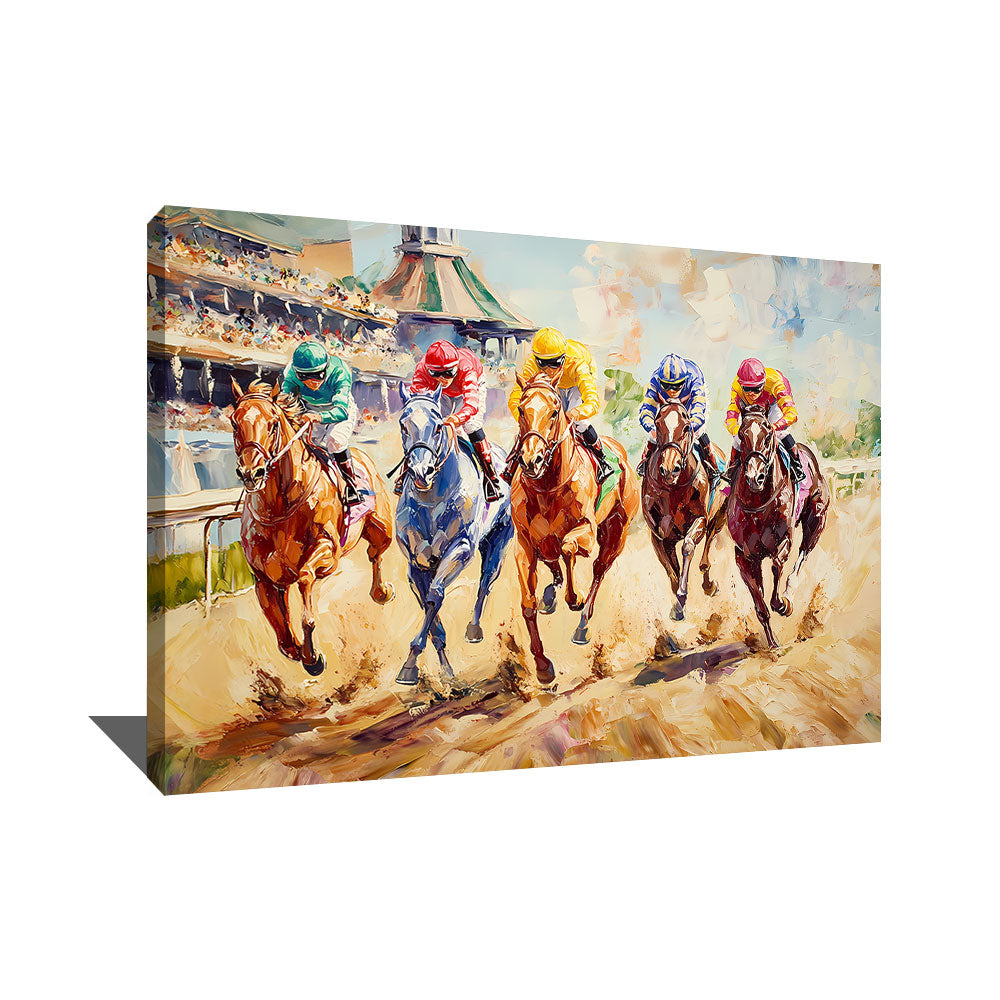
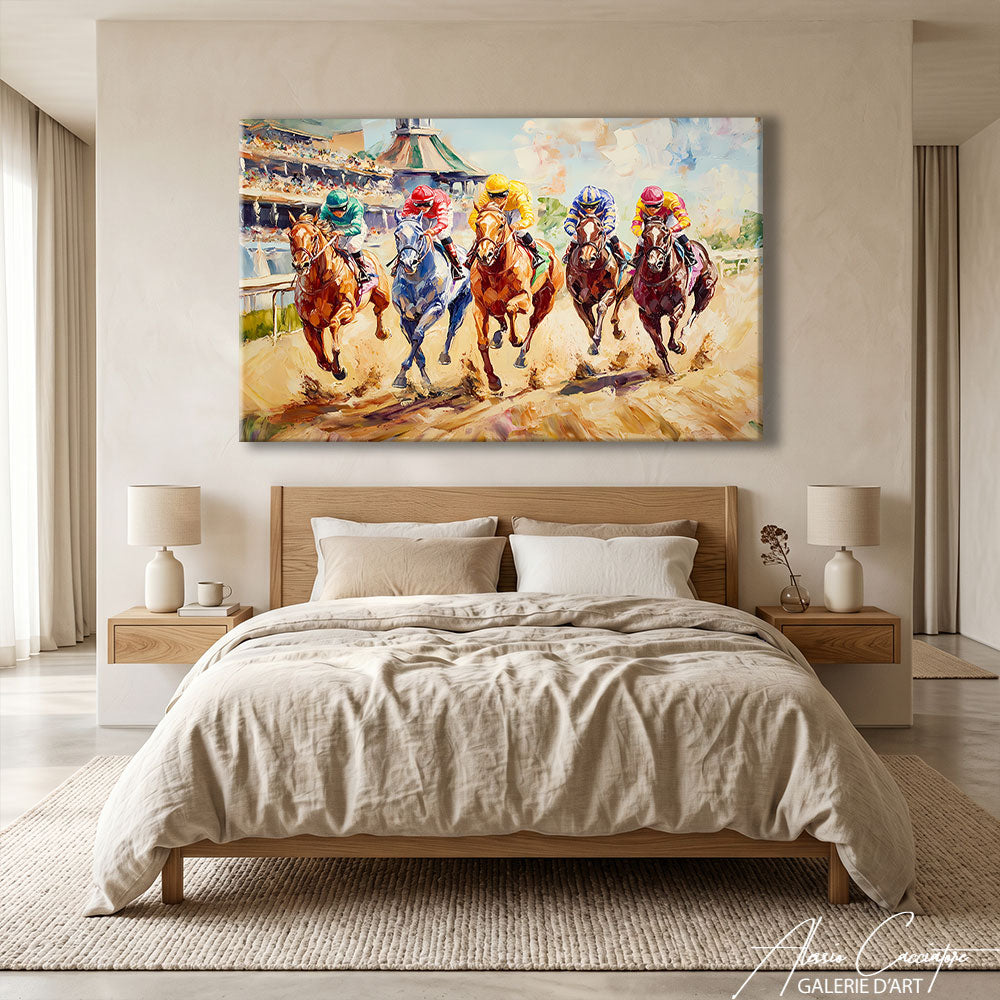
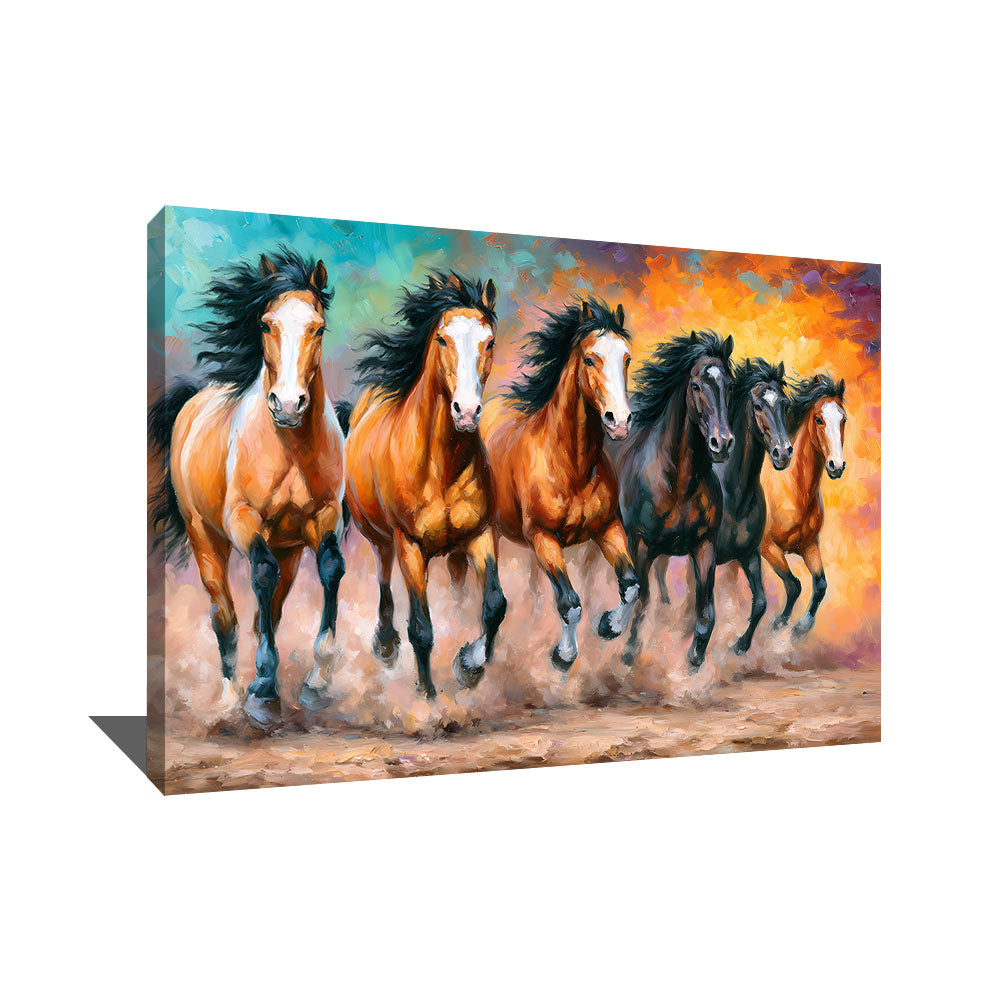
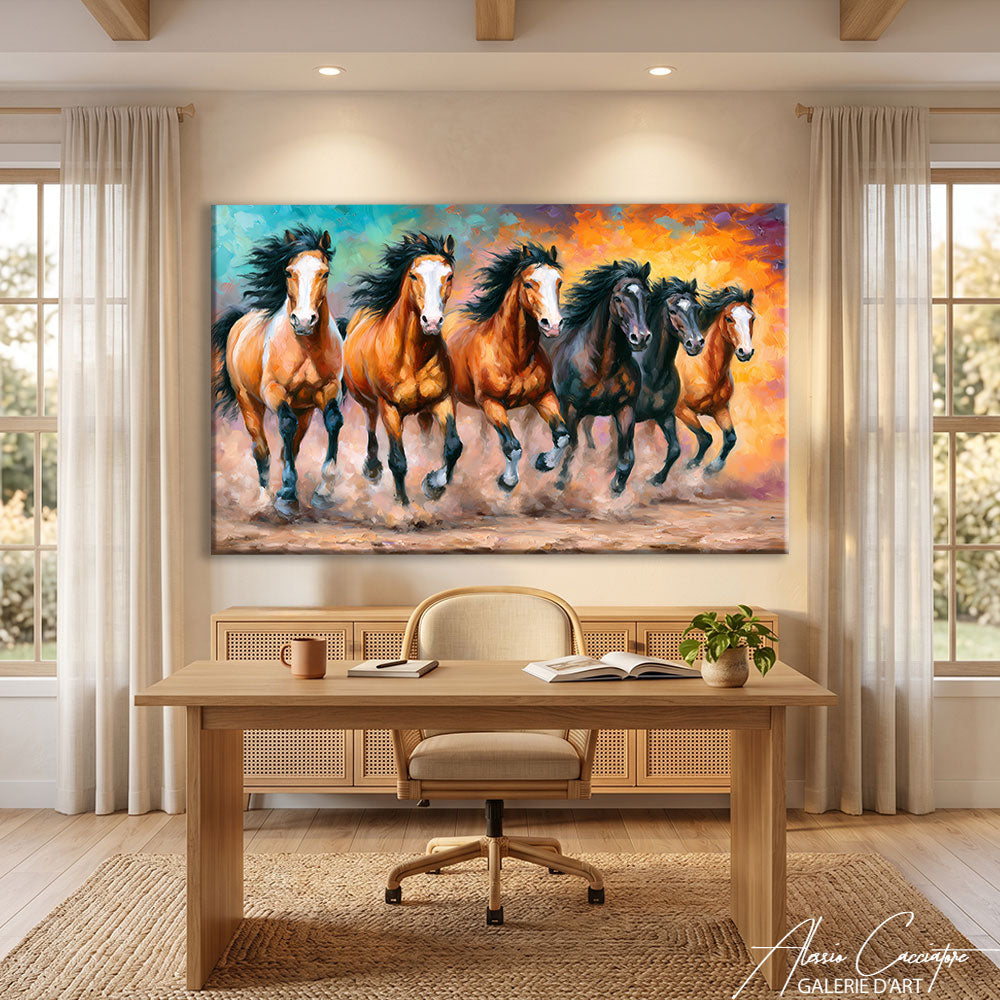
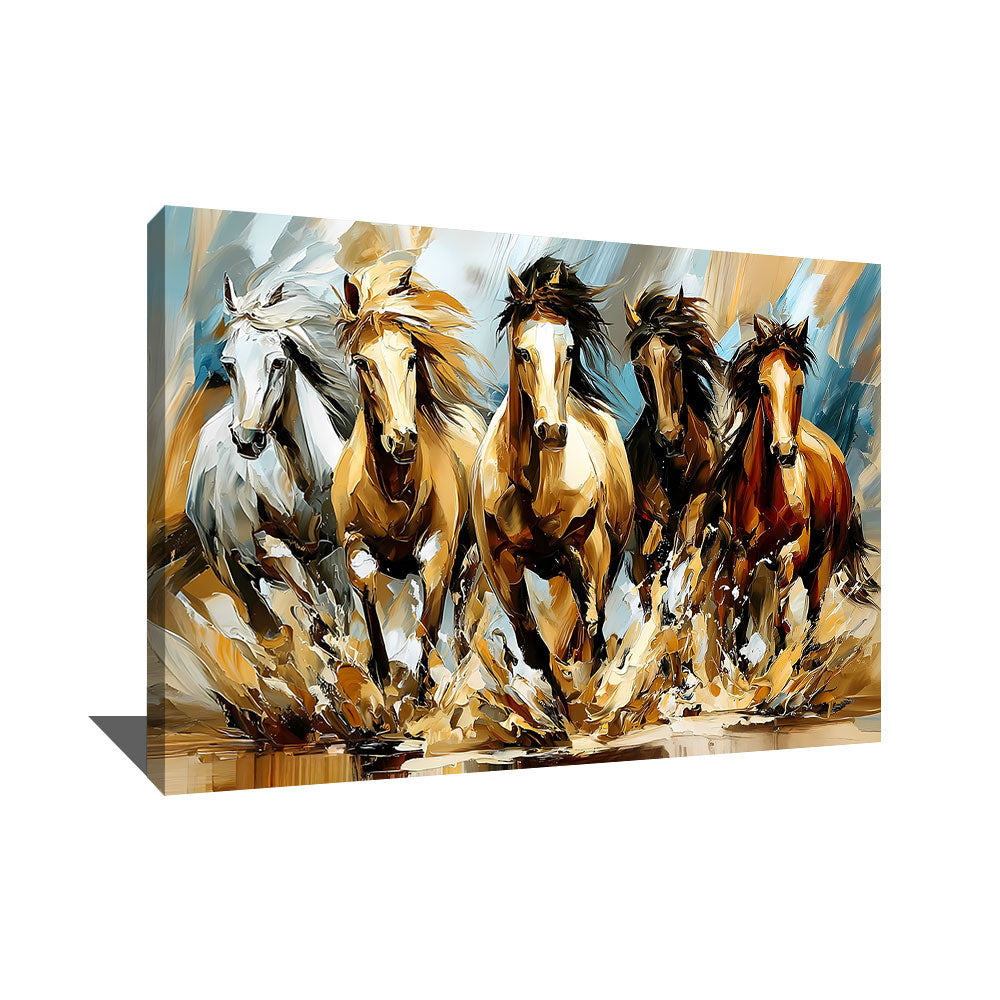
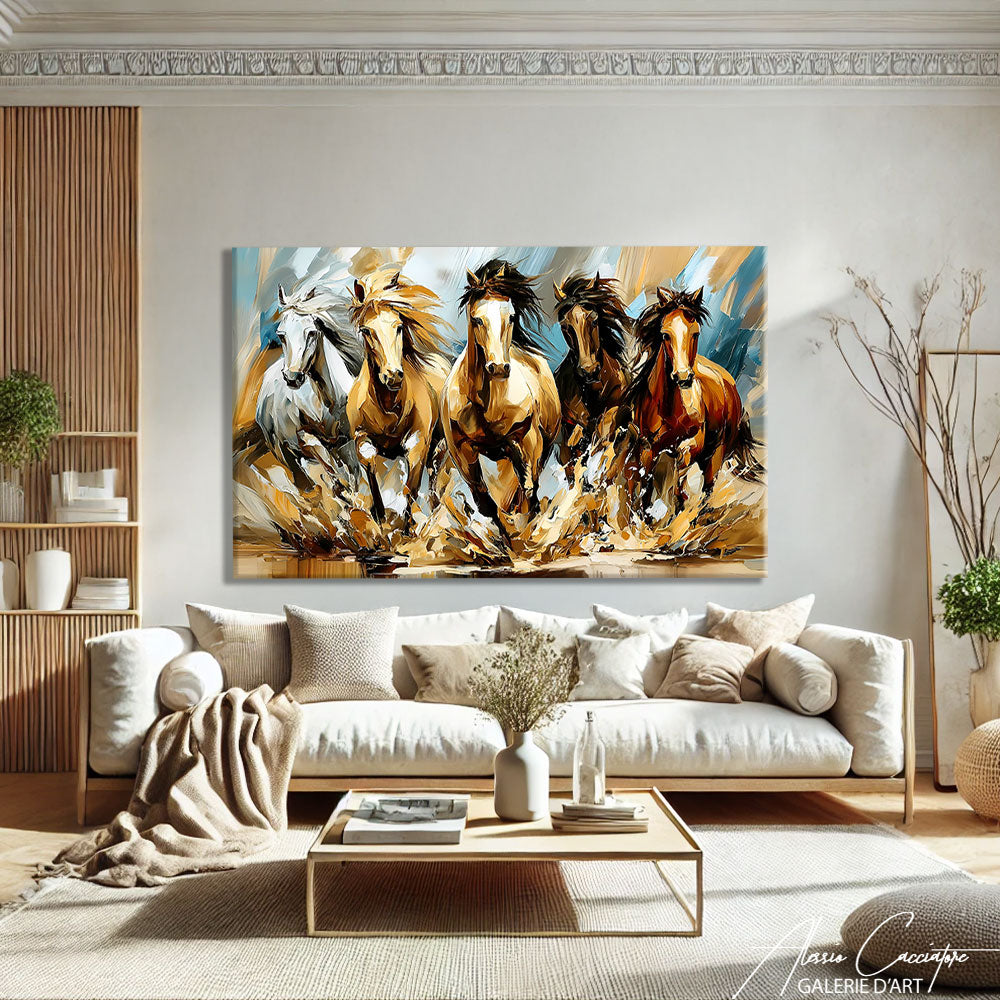
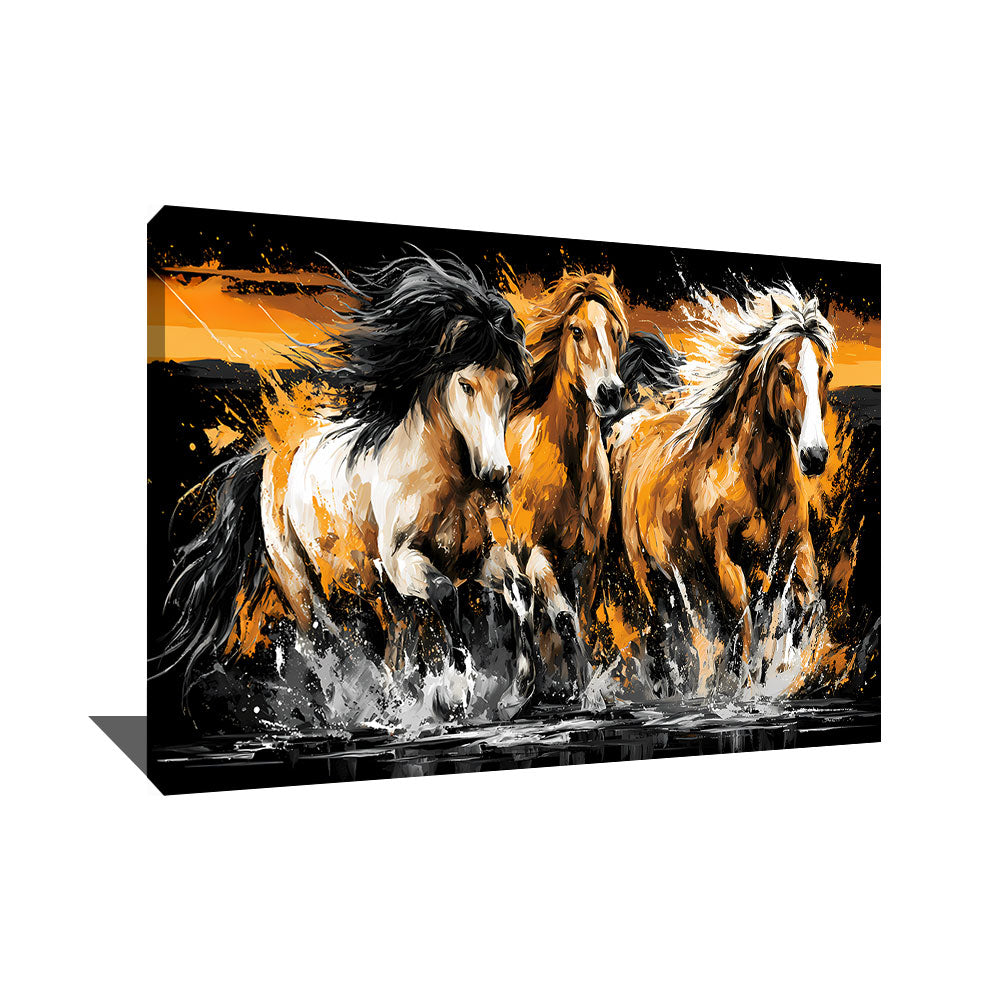
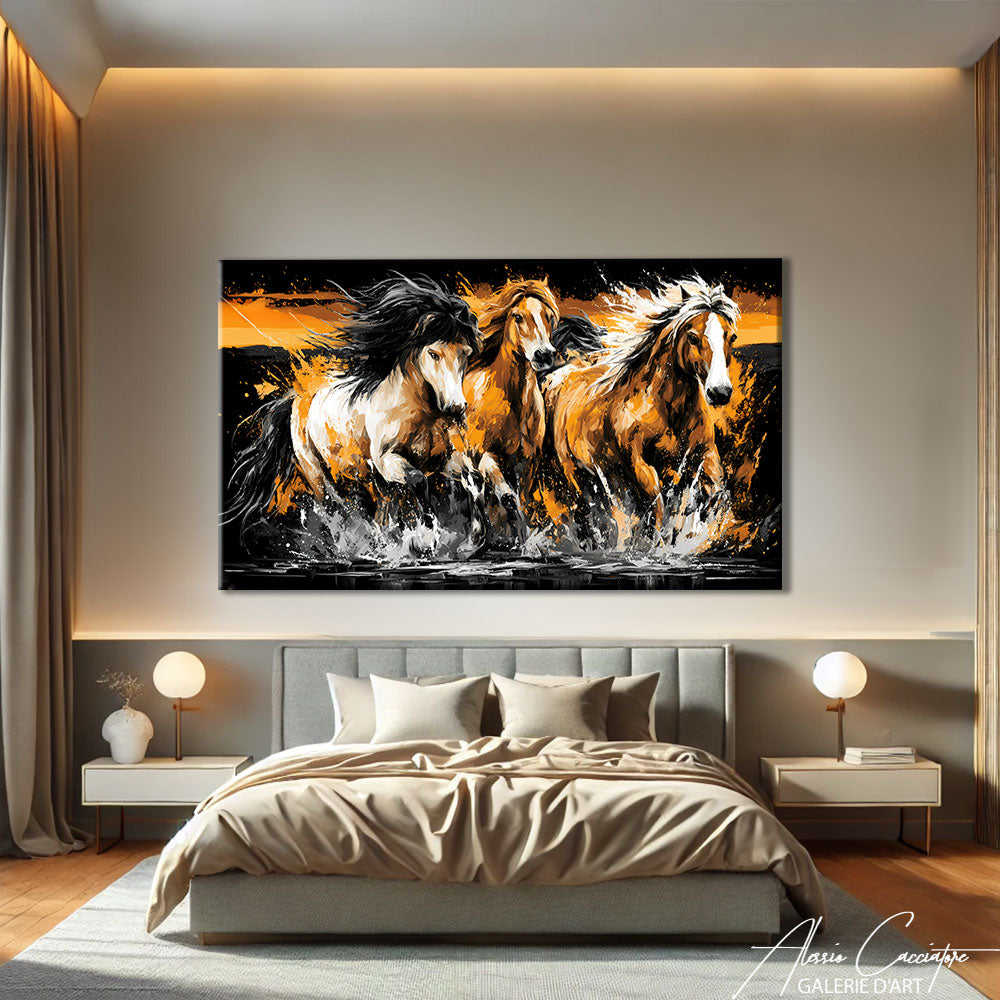
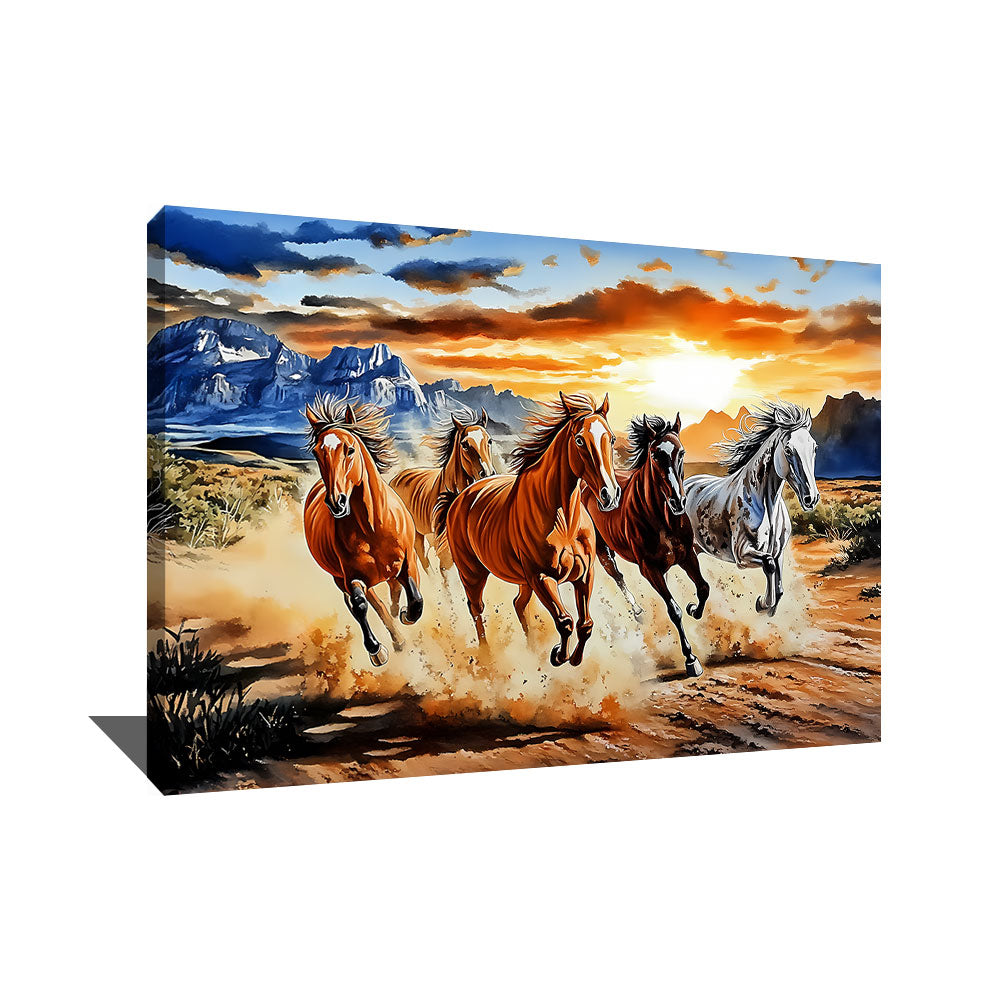
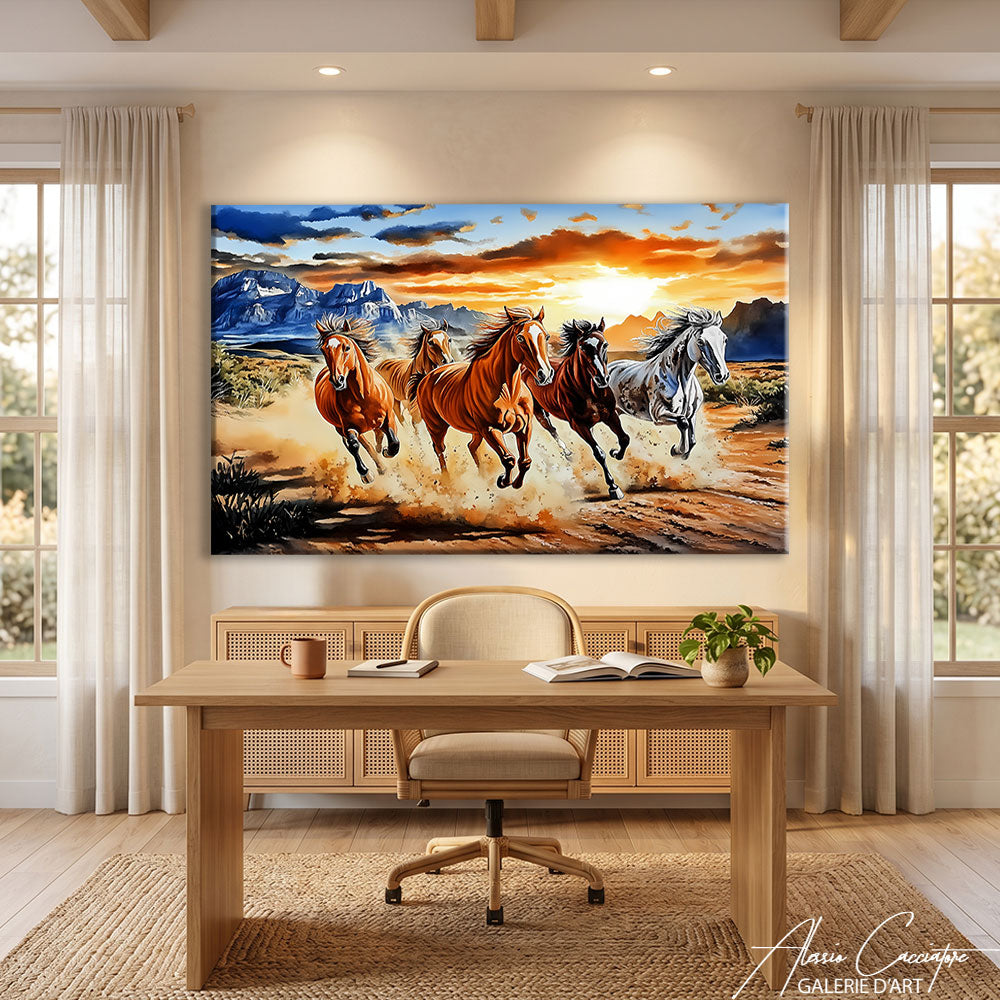
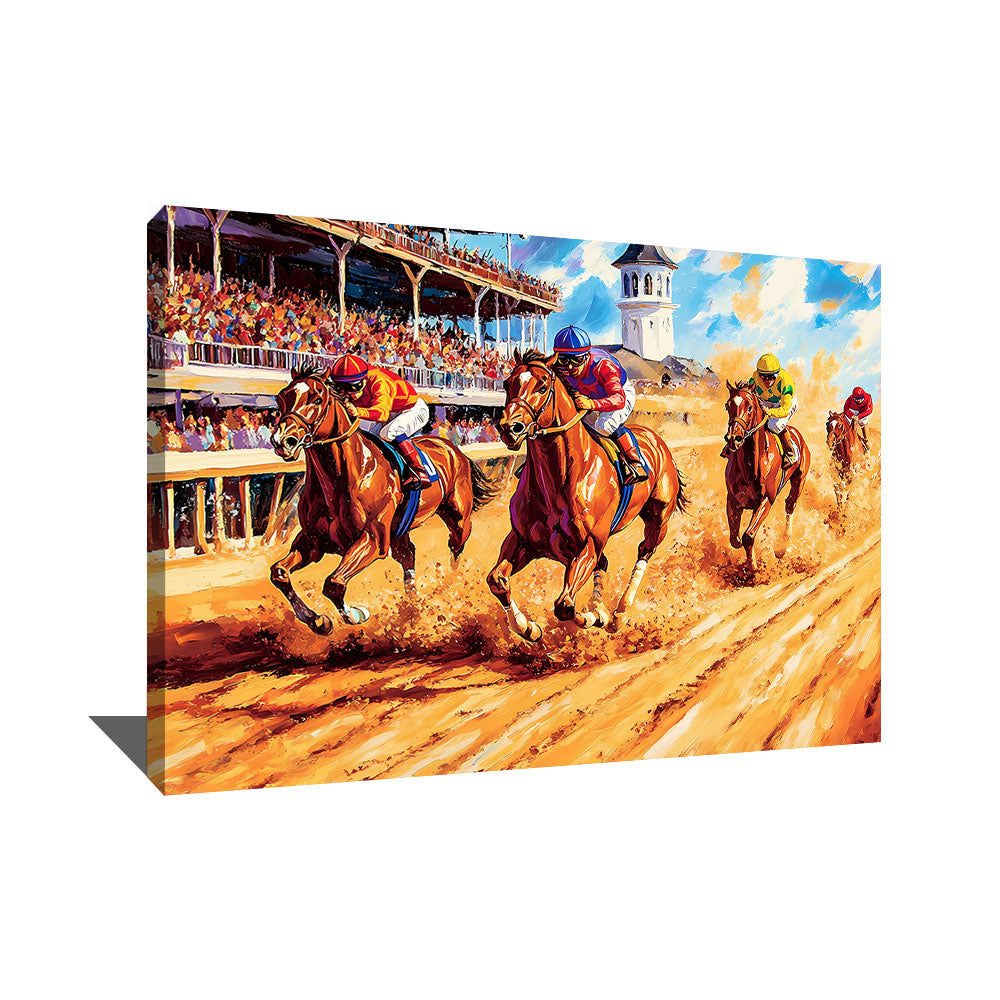
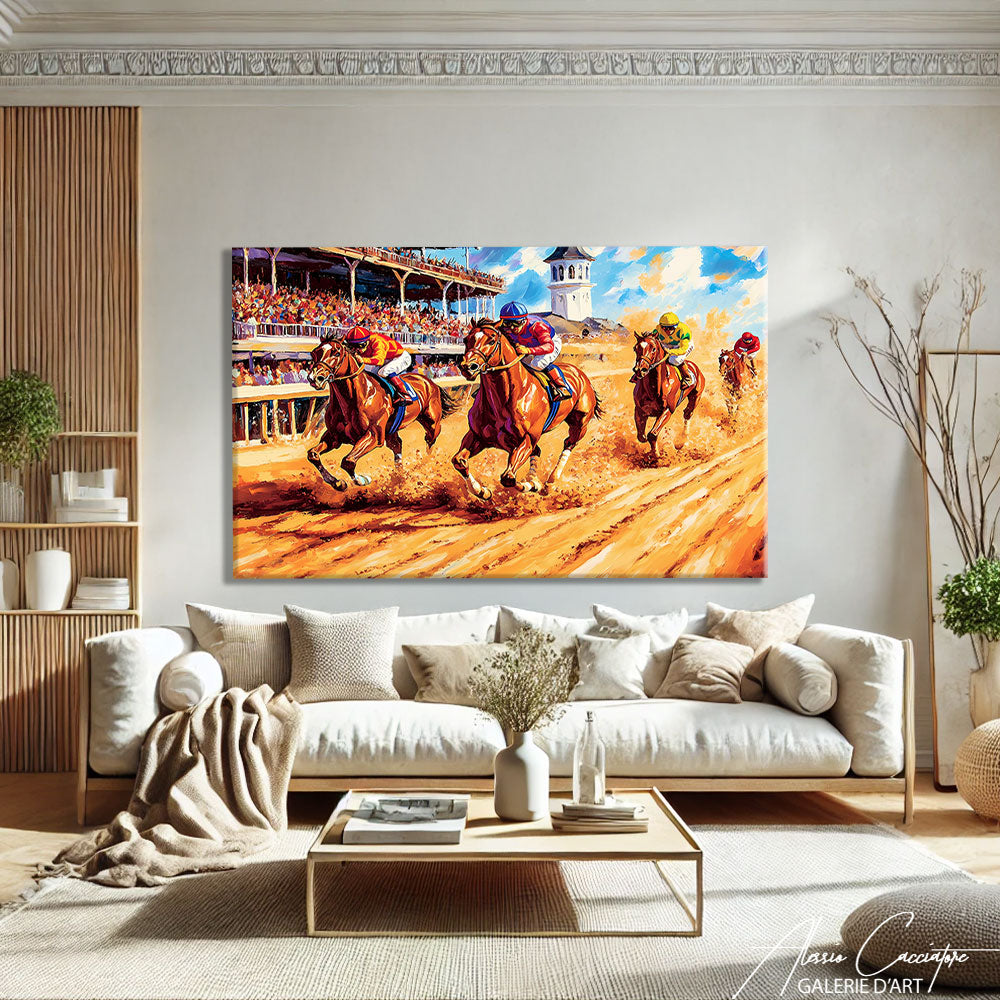
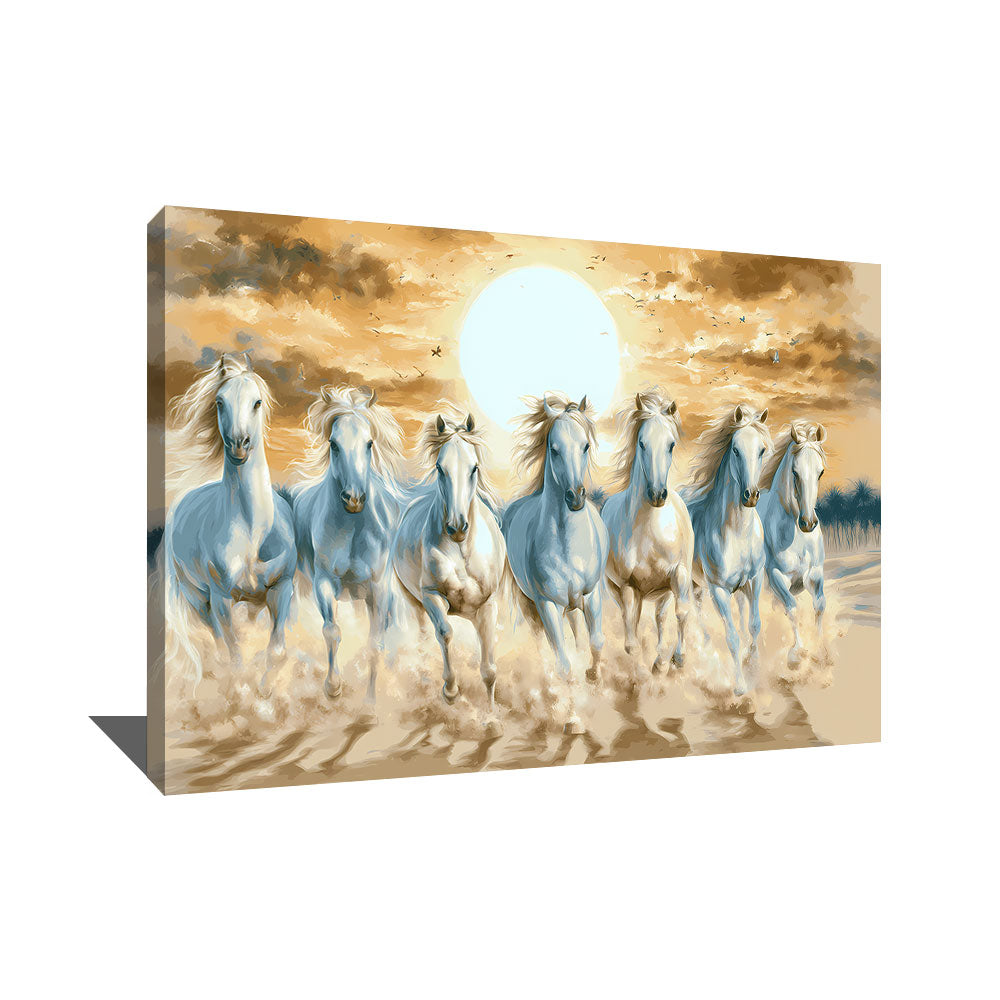
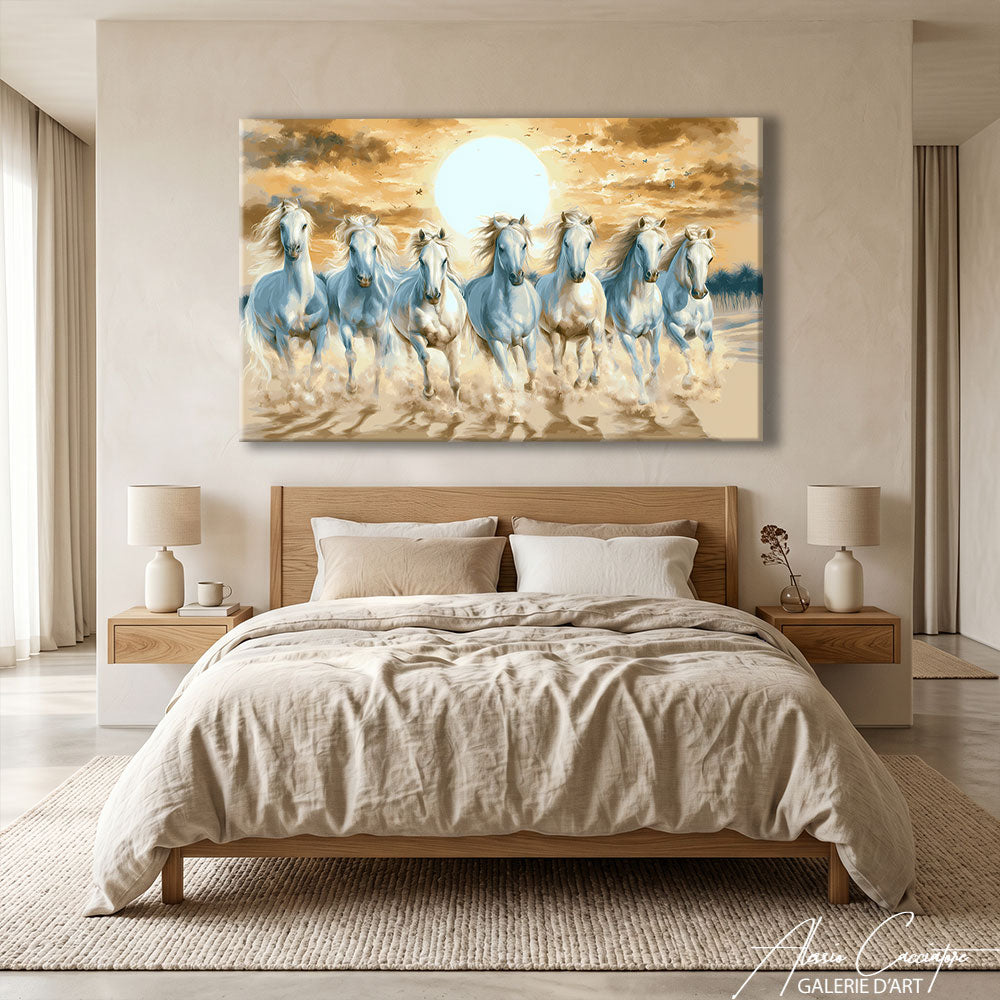
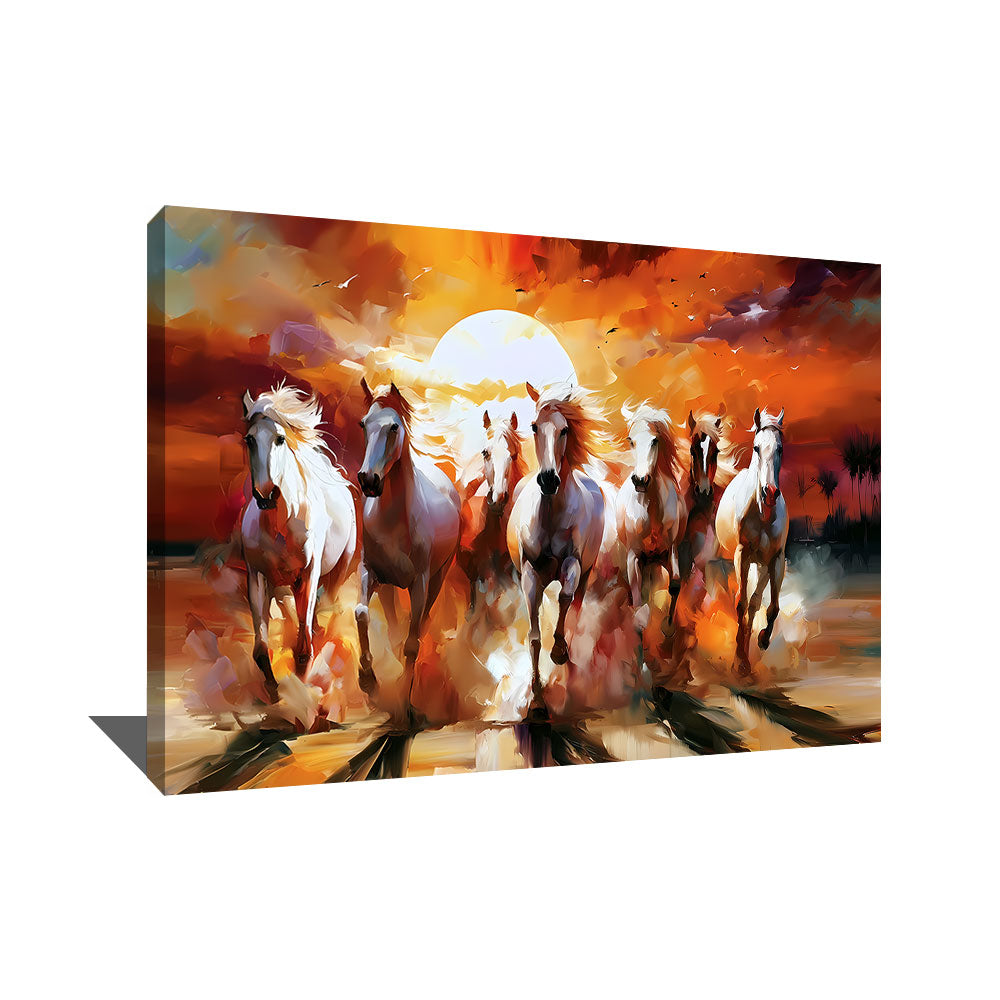
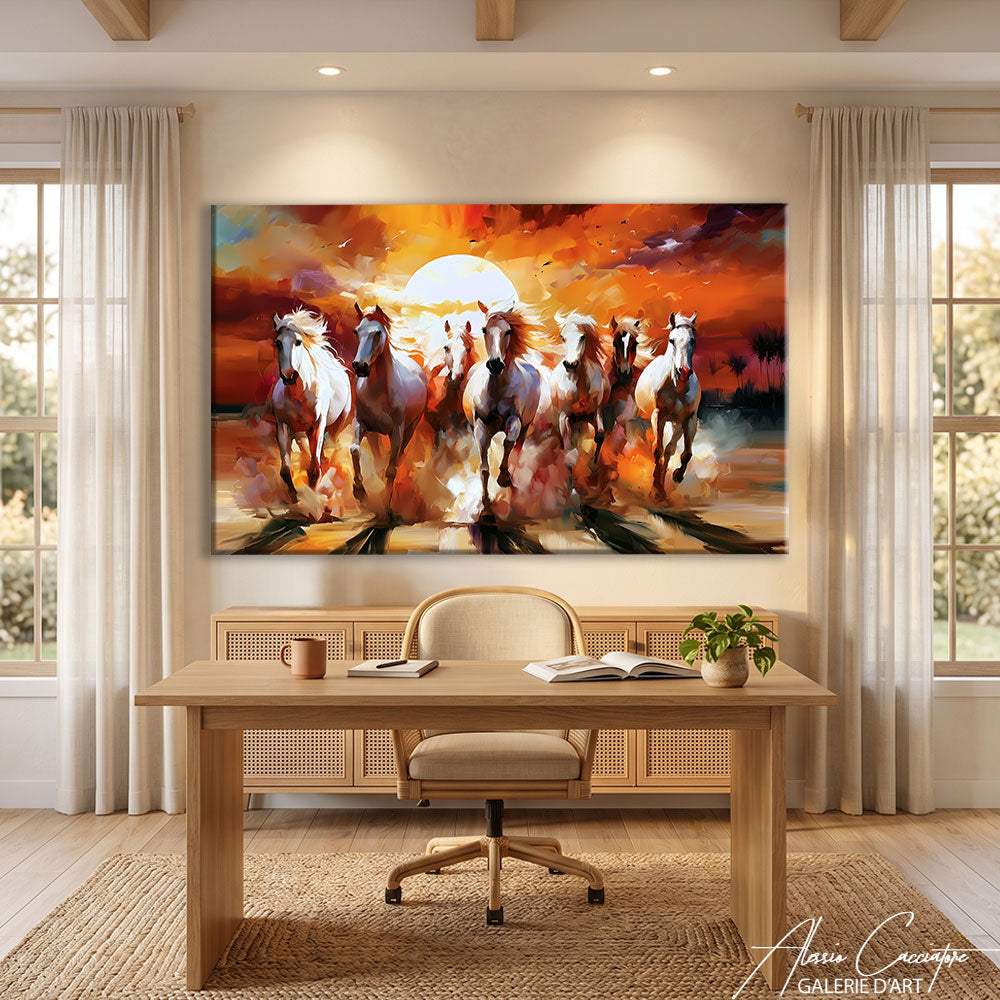
After millennia of presence in our lives, the horse remains one of the most demanding and moving subjects a wall can host. Its very morphology is a lesson in composition: a neck curved like a perfect bow, a topline that subtly slopes down from the withers, a rounded hindquarters in a single stroke, slender legs stretched like quill strokes on the ground. No other animal offers the eye such graphic density, such natural elegance that has made the horse, from the caves of Lascaux to contemporary equestrian schools, one of the most represented motifs in the entire history of art. It is this plastic nobility that our collection of horse paintings brings together: over a hundred compositions printed on premium canvas and glossy plexiglass in our German workshop, chosen for the accuracy of their framing, the precision of their anatomical treatment, and their ability to transform a wall into a tribute to this exceptional animal presence.
Arabian thoroughbreds caught galloping across golden plains, close-up horse heads revealing the delicacy of their nostrils and the depth of their eyes, black stallions rearing in dramatic compositions, equestrian scenes at sunset, modern treatments in pop art or colorful abstraction, solemn Chinese portraits where the animal becomes a mythological figure: each painting in this gallery has been conceived as a decorative object imbued with presence, capable of becoming the centerpiece of an elegant living room, a refined bedroom, or a distinctive office. A true staging of equestrian grace in the domestic space.
Why the horse holds a unique place in wall decor
The horse is probably the only animal whose image carries so many intersecting symbolic meanings: aristocratic nobility, untamed freedom, refined elegance, controlled power, ancestral loyalty. These multiple dimensions explain why it works in wall decor across such a wide range of styles, from the most classic living rooms to the most contemporary designer interiors. A true iconographic versatility that has no equivalent in the animal kingdom. For those who appreciate this dimension of natural elegance and majestic presence in decoration, our animal collection broadens the view to other emblematic figures of fauna.
Our selection process prioritizes three essential qualities for this demanding subject. First, anatomical accuracy, because the horse is one of the most difficult animals to represent: the slightest error in proportion is obvious to equestrian enthusiasts. Every composition in our gallery has been chosen for its adherence to this morphological exactness, which distinguishes a thoroughbred work from a rough illustration. Second, the quality of movement, because the horse is never as beautiful as when in action: gallop, rearing, elevated trot, jump. Capturing this kinetic grace requires a sense of timing and composition that all our works possess. Finally, chromatic richness, because the equine coat offers an extraordinary palette: deep blacks with bluish reflections, coppery chestnuts, golden palominos, dappled grays, piebald coats with spectacular contrasts. This breadth allows every enthusiast to find the composition that perfectly matches their interior.
The main families of our horse collection
Our gallery explores all ways of representing this inexhaustible subject, from intimate portraits to dramatic scenes. Here are the main families that make up the selection.
Close-up equestrian portrait: the majesty of the gaze
Probably our most captivating compositions. A close-up of a horse's head, pulsating nostrils, deep eyes through which an almost human intelligence seems to pass, a mane falling in silky disarray, a fringe falling over the forehead like a rebellious lock. These portraits reveal the animal in its most intimate aspect: its psychological presence, that quality of gaze that strikes anyone who has stood close to a horse. On our matte canvas, which subtly softens contrasts and gives compositions a pictorial quality worthy of a fine print, the effect is striking. The ideal centerpiece for an adult bedroom, a passionate rider's office, or a distinctive living room.
The galloping horse: the grace of movement
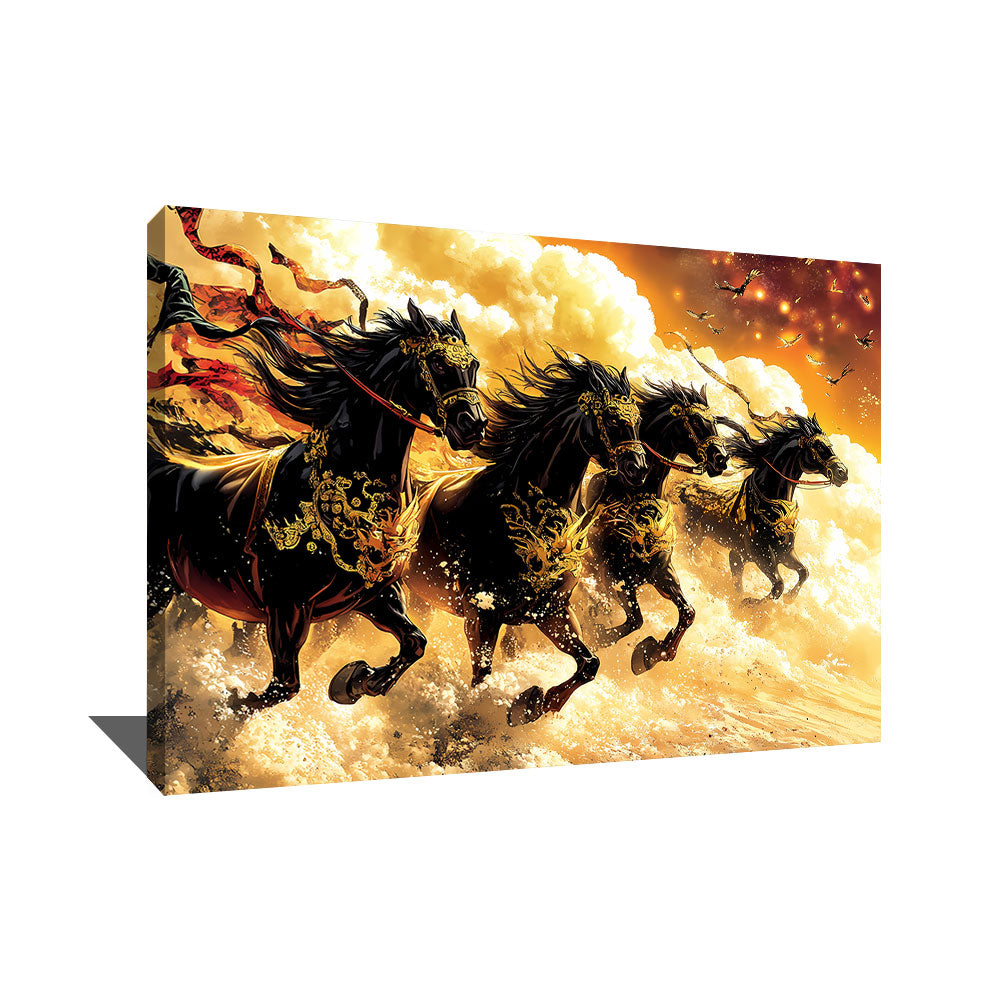
The gait of a gallop has something unique in the animal kingdom: a dimension that is both athletic and choreographic, which has fascinated painters and photographers from Stubbs and Géricault to the pioneers of chronophotography. Our equestrian compositions in motion capture this kinetic grace: an Arabian thoroughbred galloping across a golden plain, a wild stallion streaking through the setting sun, a herd of horses galloping through tall grasses. The palette often plays on contrasts between the animal's dark coat and the golden light of the landscape, in an immediately dramatic composition. For lovers of equestrian aesthetics in relation to landscape and movement, our landscape collection offers complementary compositions.
The wild horse: untamed freedom
A particularly powerful family in our collection. A mustang rearing at dusk, a stallion neighing against a storm, a herd of free horses galloping in a valley, a solitary silhouette silhouetted against the stormy sky. These compositions celebrate the untamable dimension of the animal, its ancestral relationship to freedom, its refusal of any domestication. These paintings bring to an interior that dimension of wild energy that particularly appeals to independent spirits and lovers of wide open spaces. Particularly successful in large format above a sofa or in a distinctive office.
The white horse: symbolic purity
The white horse holds a special place in all global equestrian iconography. A symbol of purity, victory, and spirituality, it transcends all cultural traditions: mount of Christian saints, sacred animal in Japanese Shintoism, dreamlike presence in European folk tales. Our compositions of white horses play on this symbolic charge: an immaculate stallion captured in an ethereal light, a white mare at dusk whose coat seems to glow with an internal luminescence, a cavalcade of white horses in a dreamlike atmosphere. A poetic approach to the subject that is admirably suited for adult bedrooms and refined interiors.
The horse in black and white: graphic elegance
For lovers of pure simplicity, our monochrome compositions treat the horse as a subject of pure graphic composition. Sculptural contrast between the black coat and the light background, plays of light that reveal anatomical volumes, economy of means that reveals the formal beauty of the animal. These paintings retain all the emotional power of the subject while integrating into contemporary design interiors where chromatic sobriety is valued. Matte canvas particularly enhances these compositions by giving the blacks that velvety quality associated with large gallery photographic prints.
The black and gold horse: controlled luxury
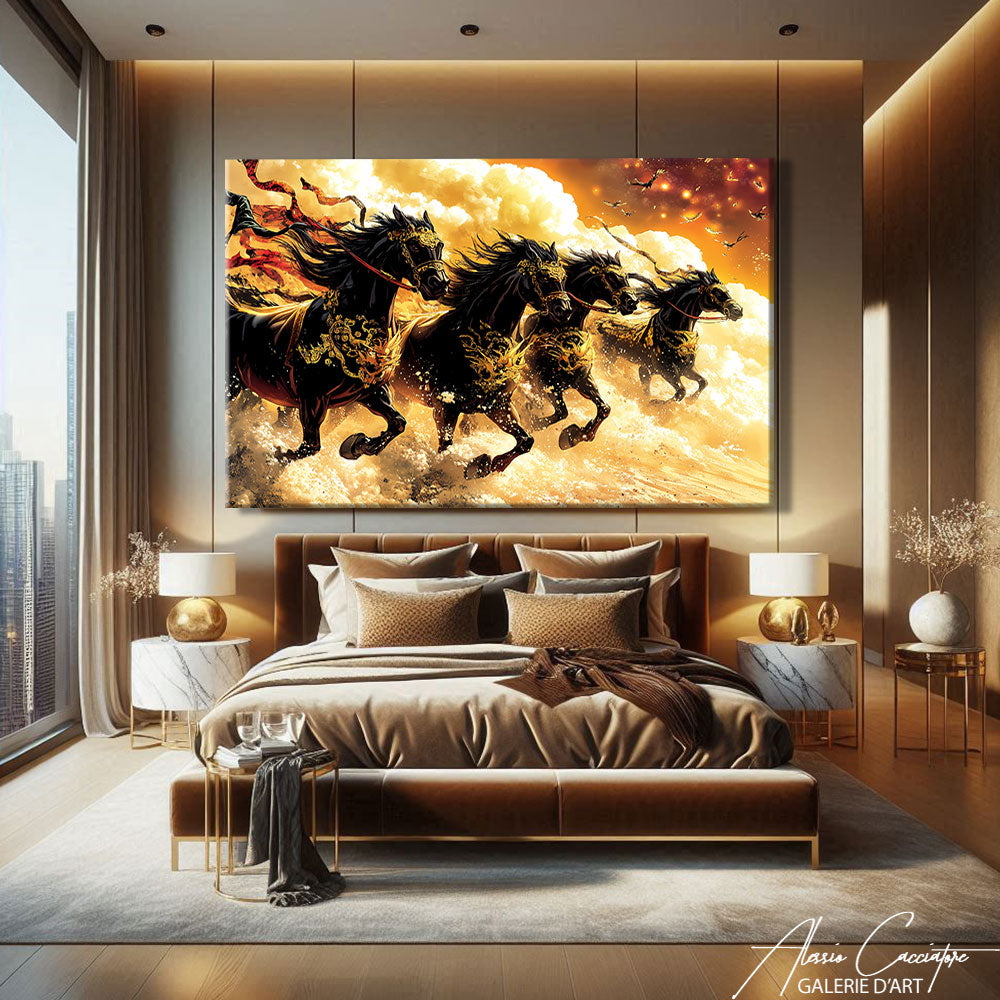
A particularly chic variation of the equestrian portrait. The deep black coat of the animal enhanced with golden touches (on harness ornaments, in the background, as a luminous frame), sometimes accompanied by a mane treated like a cascade of gold threads. This opulent palette evokes the controlled luxury of grand racing stables, the aristocracy of equestrian sport, the refinement of classic English interiors. Particularly successful in large format on glossy plexiglass, which enhances the brilliance of the gilding. A centerpiece for an elegant living room or a distinctive office.
Colored horse and equestrian pop art
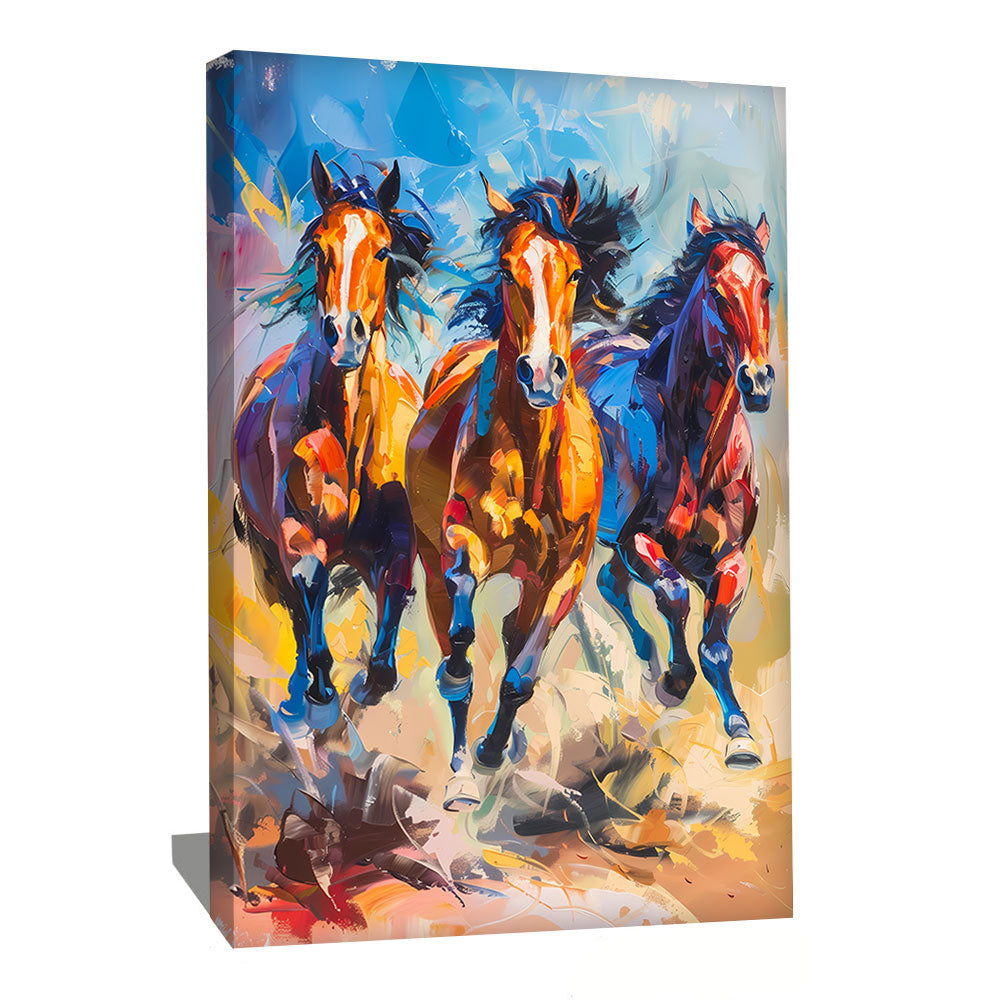
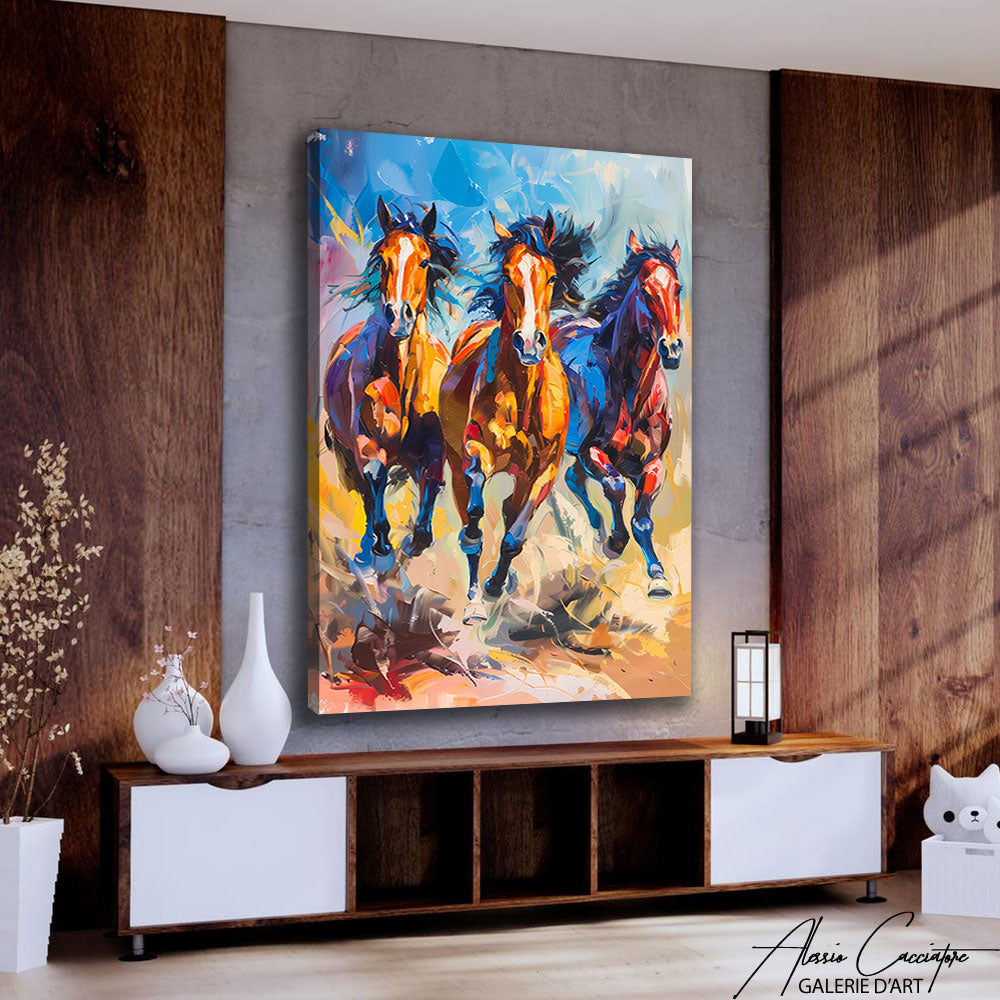
For contemporary interiors, our colorful and pop art compositions revisit the equestrian subject with an assumed visual vitality. Coat treated in fluorescent flat colors, multicolored background that energizes the composition, silkscreen aesthetic reminiscent of the great equestrian pop art works of the 1960s. These paintings bring immediate energy to any room and are admirably suited for teenage girls' rooms passionate about riding, young living rooms, creative offices that appreciate contemporary visual codes. To explore this chromatic universe beyond just the equestrian subject, our pop art collection offers complementary compositions.
The rearing horse: power unleashed
An emblematic posture in all equestrian iconography. The animal rearing on its hind legs, forelegs spread in the air, mane agitated by movement, an expression of maximum tension. This vertical composition has immediate visual strength that works admirably in spaces that call for an assertive presence. Particularly successful in vertical format between two pieces of furniture or in a stairwell where the verticality of the subject matches that of the wall. A visual statement that leaves no one indifferent.
The Arabian horse: purity of breed
The oldest equine breed in the world, the Arabian thoroughbred possesses unique morphological characteristics that make it a favorite subject for enlightened enthusiasts: fine and concave head, dilated nostrils, high-set neck, tail carried high, incomparable overall elegance. Our compositions dedicated to this breed celebrate these peculiarities with documentary precision. These paintings are aimed at connoisseurs: breeders, long-time riders, classical riding enthusiasts who will immediately recognize the anatomical accuracy of the representation.
Abstract and contemporary horse
For the most demanding design interiors, our abstract compositions treat the horse with a resolutely contemporary language: silhouettes decomposed into colored flat areas in the cubist manner, gestural treatments that evoke movement without literally describing it, compositions where the coat becomes a pretext for purely plastic work. These paintings bring a subtle equestrian reference to a designer interior, which admirably dialogues with our abstract collection to structure a coherent decorative universe around contemporary visual language.
The ambiance you seek determines your equestrian choice
The horse comes in several distinct decorative styles depending on the desired effect. Here are our guidelines for making the right choice.
For an elegant and classic ambiance
Favor close-up equestrian portraits in muted palettes, black and gold horses, and compositions inspired by aristocratic European iconography. On matte canvas, which softens contrasts and creates a pictorial softness, these works are admirably suited for classic living rooms, cultivated libraries, and distinctive offices. A signature that expresses a taste for equestrian excellence and refined elegance.
For a wild and powerful ambiance
Turn to free-roaming mustangs, wild horses galloping, and dramatic compositions of free herds. On glossy plexiglass, which intensifies contrasts and makes the light of the setting sun vibrate, these paintings bring an immediate energetic presence. Ideal for spaces that embrace assertive decoration, nature-inspired offices, and living rooms that like the wall to convey a sense of independence.
For a modern and graphic ambiance
Opt for abstract compositions, pop art horses with saturated palettes, and treatments in line art or stylized silhouette. These paintings affirm a taste for contemporary visual language and integrate admirably into designer interiors that wish to incorporate the equestrian subject without resorting to traditional imagery. A modern approach that appeals to young minds and lovers of modern art.
For a romantic and feminine ambiance
Choose watercolor compositions, white horses treated in a powdery palette, and equestrian portraits with dreamlike atmospheres. On matte canvas, which enhances chromatic transparencies, these works create a particular poetic atmosphere, to be admirably combined with other natural and delicate motifs. For those who appreciate this soft aesthetic, our watercolor collection offers complementary compositions in the same vein.
The horse painting, room by room
Each room calls for its ideal equestrian painting according to its use and atmosphere. Here are our decorative recommendations based on our gallery experience.
In the living room: the assertive visual signature
This is the preferred location for a large horse painting. Above the sofa, a 120x80 cm format or a triptych immediately becomes the centerpiece of the decor. Here, prioritize high-impact compositions: a striking close-up equestrian portrait, a dramatic galloping scene, a rearing horse in a powerful vertical composition. Above a patinated leather or deep velvet sofa, the equestrian painting transforms the living room into a truly distinctive space, where every piece has been chosen with discernment. Our triptych collection also offers several particularly successful equestrian compositions in this panoramic configuration.
In the adult bedroom: a serene presence
Favor contemplative equestrian portraits, white horses in soft compositions, and equine watercolors in a powdery palette. A 80x60 cm format above the headboard, on matte canvas that subtly softens contrasts so as not to disturb the climate conducive to sleep. Avoid overly dramatic compositions (rearing horses, intense galloping scenes) that can disrupt the restful nature of the room. A gentle equestrian presence that accompanies waking and falling asleep with grace.
In a teenage girl's equestrian-themed bedroom
A particularly successful case: the horse painting in a rider's bedroom. Favor compositions that speak to her passion: a thoroughbred in full gallop, a powerful equestrian portrait, a show jumping scene, a wild horse in freedom. An ideal 80x60 cm format, glossy plexiglass for the brilliance of colors and resistance to the daily life of a teenage room. The painting becomes an identity marker, a visual signature of a passion lived since childhood, to be integrated into a global scenography extended by our bedroom collection.
In a rider's or equestrian enthusiast's office
The equestrian painting in a professional office is particularly suitable for enthusiasts who want to integrate their love of horses into their work environment. A close-up equestrian portrait, a rearing horse in a vertical composition, or a classic race scene bring to the space an inspiring presence that daily reminds them of a foundational passion. Compact or medium format to avoid dominating the space, a muted palette to maintain a professional register.
In a stairwell or hallway
A location particularly well suited to vertical equestrian compositions: a rearing horse that matches the height of the staircase, a full-length equestrian portrait, a series of several small formats that structure a long hallway. The verticality of the equestrian subject admirably dialogues with these circulation spaces and brings a dynamic presence to the home's thoroughfares.
In a classic dining room
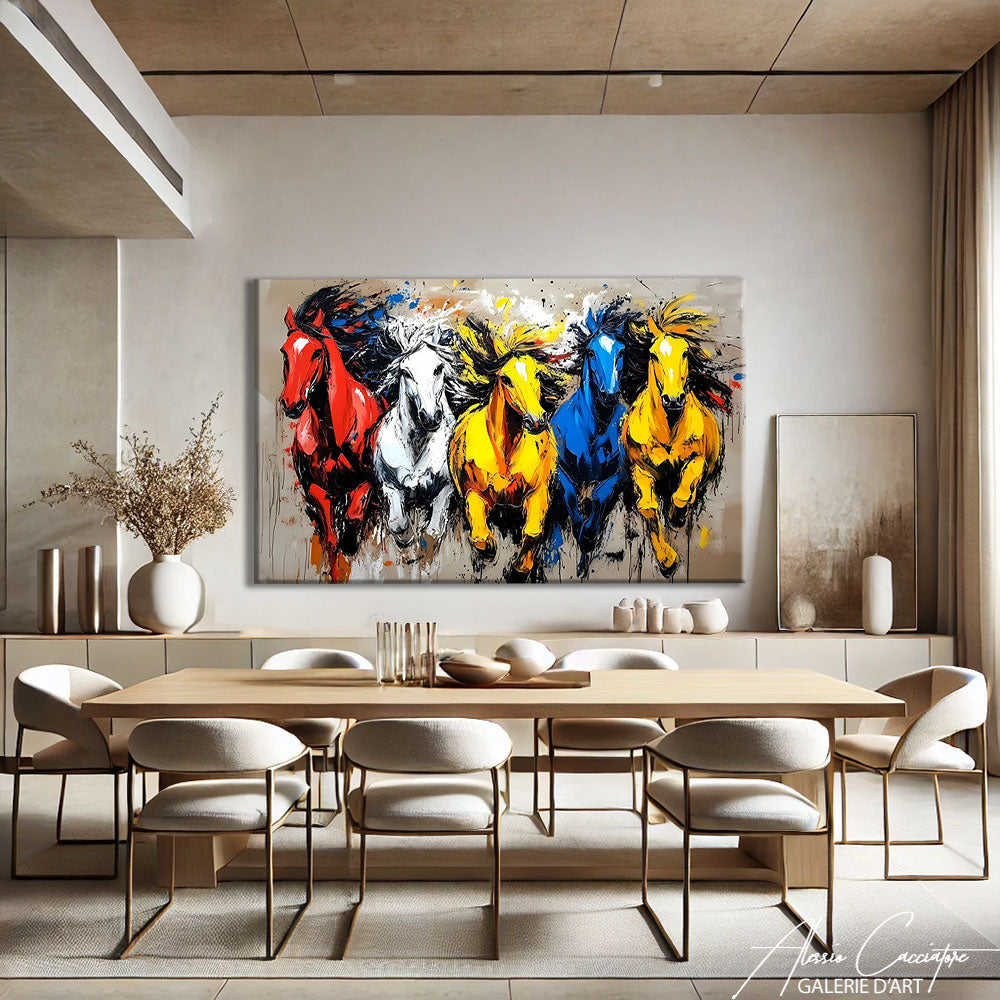
Equestrian compositions naturally find their place in refined dining rooms, particularly those of English or Hispanic inspiration. A large equestrian portrait above the sideboard, a classic hunting scene opposite the table, a triptych of galloping horses on the main wall: these paintings bring to the reception space a cultural dimension that elevates the meal to an experience.
In a professional equestrian space
High-end equestrian centers, private riding clubs, stud farms, specialized veterinary clinics, riding schools: the horse painting is almost a given in these establishments. Favor large, imposing formats that assert the equestrian identity of the place, portraits of thoroughbreds that immediately speak to knowledgeable clients, or show jumping scenes that celebrate the sporting dimension of the discipline.
The choice of format to magnify equestrian grace
The format particularly conditions the effect of an equestrian painting, because this subject often requires precise framing to reveal all its beauty.
The compact format (60x40 cm) is ideal for intimate equestrian portraits, close-up horse heads, intimate compositions. Particularly successful in sets of three to create an equestrian gallery wall (for example, three different coats: black, white, chestnut, or three gaits: walk, trot, gallop). An approach that recalls the classic hangings of grand stables.
The medium format (80x60 cm) remains the versatile size. Suitable for all compositions, from portraits to galloping scenes and more narrative depictions. Above a dresser, as a decorative accent in an office, in a teenage girl's room: it brings an assertive presence without dominating the room. The format that best dialogues with distinctive furniture.
The large format (120x80 cm) is the centerpiece. Particularly suited for monumental galloping scenes that deserve the grandeur, for striking close-up equestrian portraits, and for panoramic compositions of free herds. Above a sofa or on a large living room wall, this format allows the horse to fully display its majestic presence.
The equestrian triptych is a configuration particularly well suited for scenes of movement. Three panels that can present three moments of a gallop (start, full stride, finishing stride), three different coats in a coherent composition, or a panorama of horses cut into continuous sections. A cinematic and structuring effect that transforms a large wall into a true mural scenography.
The vertical format particularly magnifies rearing horses, full-length equestrian portraits, and compositions where the animal's verticality structures the image. It's ideal between two pieces of furniture or in a stairwell, where the subject's vertical silhouette beautifully matches the wall's height. A striking staging that fully showcases the nobility of the animal.
Premium canvas or glossy plexiglass: enhancing equine coats
The medium determines how your horse painting will render the coat's texture, the depth of the gaze, and the mane's brilliance. For this subject, in particular, the choice deserves sustained attention.
Premium canvas print
Our canvas is hand-stretched over a 2 cm thick FSC-certified spruce wood frame. Its matte and delicately granular texture gives equestrian compositions a particularly successful pictorial quality for psychological portraits, equine watercolors, and muted compositions. It subtly softens contrasts and gives coats that velvety quality associated with great classical equestrian works. Canvas remains the best choice for intimate portraits, monochrome compositions, white horses in a powdery palette, and all refined atmospheres that prioritize restrained elegance. A finish that respects the subject's nobility.
Glossy plexiglass print
Plexiglass is the medium that truly makes the equine coat vibrate. Its smooth, glossy finish intensifies the bluish reflection of black coats, enhances the golden brilliance of chestnuts, and gives compositions a particularly spectacular photographic brilliance. In a dramatic composition (a rearing horse against a stormy sky, a gallop at a flamboyant sunset), the effect is striking: the very texture of the animal seems palpable. It is also the ideal medium for pop art and colorful abstract compositions that play on chromatic vibrancy, and which require this vivid rendering to fully produce their effect.
In both cases, our prints use high-definition, odorless, solvent-free ink, safe even in a child's bedroom. The printing technology we employ preserves contrasts and color fidelity for several decades. Each painting comes ready to hang, including the hanging system.
Matching your horse painting to your decor
The horse is one of the most versatile decorative subjects there is, capable of interacting with almost any interior style. Here are a few ideas depending on your style.
In a classic or English interior
The most obvious association. Patinated wood, tufted leather, thick drapes, family furniture: the equestrian painting extends this ensemble with perfect consistency. Prioritize classic equestrian portraits, fox hunting scenes, and compositions inspired by English aristocratic iconography. A decor that exudes timeless elegance.
In a ranch or Western interior
For traditionally American-inspired decor (raw wood, aged leather, hides, rustic furniture), the horse naturally fits in: wild mustangs, galloping scenes on the plains, compositions of Native American riders. An obvious cultural coherence that admirably extends the American universe.
In a contemporary and minimalist interior
Choose the most graphic equestrian compositions: monochrome portraits, stylized silhouettes, colorful abstractions. On a clean white wall, in a space with pure lines, the equestrian painting becomes a cultural focal point that warms the architectural rigor without betraying it. The beauty of the horse treated in the most current visual language.
In a teenage equestrian's bedroom
The world of teenage equestrian passion admirably accommodates colorful compositions, pop art horses, and dynamic scenes. White or light wood furniture, equestrian-patterned textiles, visible riding accessories: the painting becomes the central element that personalizes the room and expresses the teenager's passion.
In an Oriental-inspired interior
More unexpected but magnificent: the horse painting in an Oriental or Chinese-inspired decor. The horse holds an important place in Asian symbolism, particularly Chinese, where it represents speed, perseverance, and success. Prioritize refined Sumi-e inspired compositions or horses treated with a calligraphic aesthetic. A cultural approach that opens up new decorative perspectives, to be combined with our mandala collection for those who love symbolic Oriental iconography.
Frequently Asked Questions about Horse Paintings
Do your paintings depict famous or identifiable horses?
No, out of strict respect for image rights and breeders, our compositions never reproduce identifiable horses (race champions, famous breeding stallions, recognizable competition horses). Our equestrian subjects are generic representations that celebrate the beauty of the animal without appropriating the image of a particular individual. A respectful approach that fully conveys the equestrian spirit without raising legal questions.
Are all your horse paintings prints?
Yes, they are high-definition prints on premium canvas or glossy plexiglass, manufactured in our workshop in Germany. Our compositions are designed and printed with gallery quality, allowing us to offer a highly refined work at an accessible price, without compromising on the quality of color rendering and anatomical detail.
Is a horse painting suitable as a gift?
It is one of the most appreciated gifts for equestrian enthusiasts and horse lovers: experienced riders, young riders in training, stable owners, equine veterinarians, or simply admirers of this noble animal. Its emotional significance for enthusiasts makes it a deeply personal gift. The 80x60 cm canvas format remains one of our most popular choices for these occasions, especially close-up equestrian portraits.
Which subject should I choose for a beginner rider?
For a young rider in training, favor inspiring compositions: a thoroughbred galloping in golden light, a white horse in a soft composition, a noble and approachable equestrian portrait. Avoid overly technical subjects (complex show jumping, high-level competition scenes) which can intimidate rather than motivate. The 60x40 cm format is ideal for a young rider's room, in plexiglass for everyday durability.
Is a horse painting suitable for a man?
Absolutely. The horse has no particular gendered dimension in decoration. Powerful equestrian compositions (rearing horses, wild galloping scenes, black and gold portraits) particularly appeal to men who enjoy riding, hunting, racing, or simply have a passion for animal nobility. A decoration perfectly suited for masculine offices, characterful libraries, and classic-style living rooms.
At what height should a horse painting be hung?
Center the painting at about 1m50 from the floor, which is average eye level. For equestrian portraits, pay attention to the animal's gaze direction: it's best if the gaze naturally meets that of the viewer entering the room. Above a sofa or headboard, leave 20 to 30 cm between the top of the furniture and the bottom of the frame for balanced visual harmony.
Are your paintings delivered ready to hang?
Yes. The canvas is delivered stretched on its frame, with hangers attached to the back. The plexiglass is delivered with its invisible hanging system. In both cases, installation takes less than five minutes.
How do I care for my horse painting?
A dry or slightly damp cloth is sufficient for both media. Avoid abrasive products and prolonged exposure to direct sunlight to preserve the fidelity of deep coats and gilding that make up the charm of these equestrian compositions.