

Morocco Painting
34 œuvresDes œuvres en édition limitée, pensées par l'artiste pour illuminer votre intérieur.
Fait main en AllemagneLivraison offertePrêt à accrocher30 jours pour changer d'avis
-
Add to Wishlist MOROCCAN DECORATIVE PAINTINGDès 89 €
-
Add to Wishlist MOROCCAN LANDSCAPE PAINTINGDès 89 €
-
Add to Wishlist MOROCCAN LIVING ROOM TABLEDès 89 €
-
Add to Wishlist ABSTRACT MOROCCAN PAINTINGDès 89 €
-
Add to Wishlist MOROCCAN DOOR TABLEAUDès 89 €
-
Add to Wishlist ABSTRACT MOROCCAN PAINTINGDès 89 €
-
Add to Wishlist MODERN MOROCCAN PAINTINGDès 89 €
-
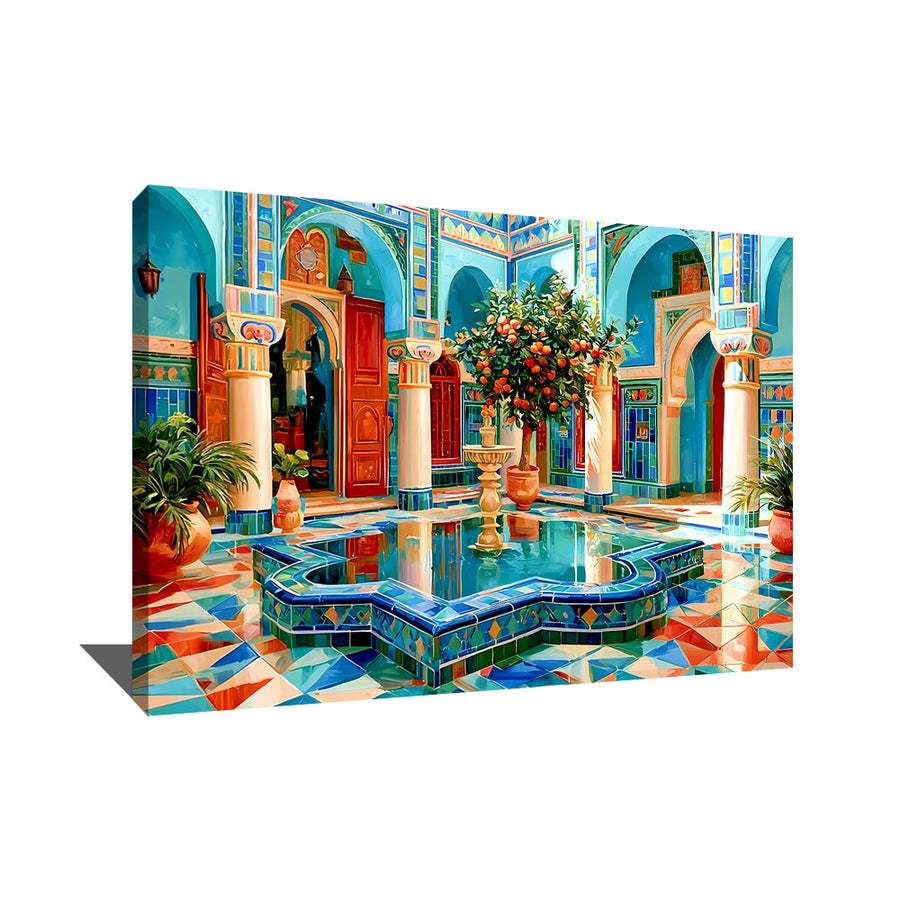
Add to Wishlist MOROCCAN RIAD PAINTINGDès 89 €
-
Add to Wishlist MOROCCAN ART PAINTINGDès 89 €
-
Add to Wishlist MARRAKECH PAINTINGDès 89 €
-
Add to Wishlist MOROCCAN DECORATIVE TABLEAUDès 89 €
-
Add to Wishlist MARRAKECH DECORATIVE PANELDès 89 €
-
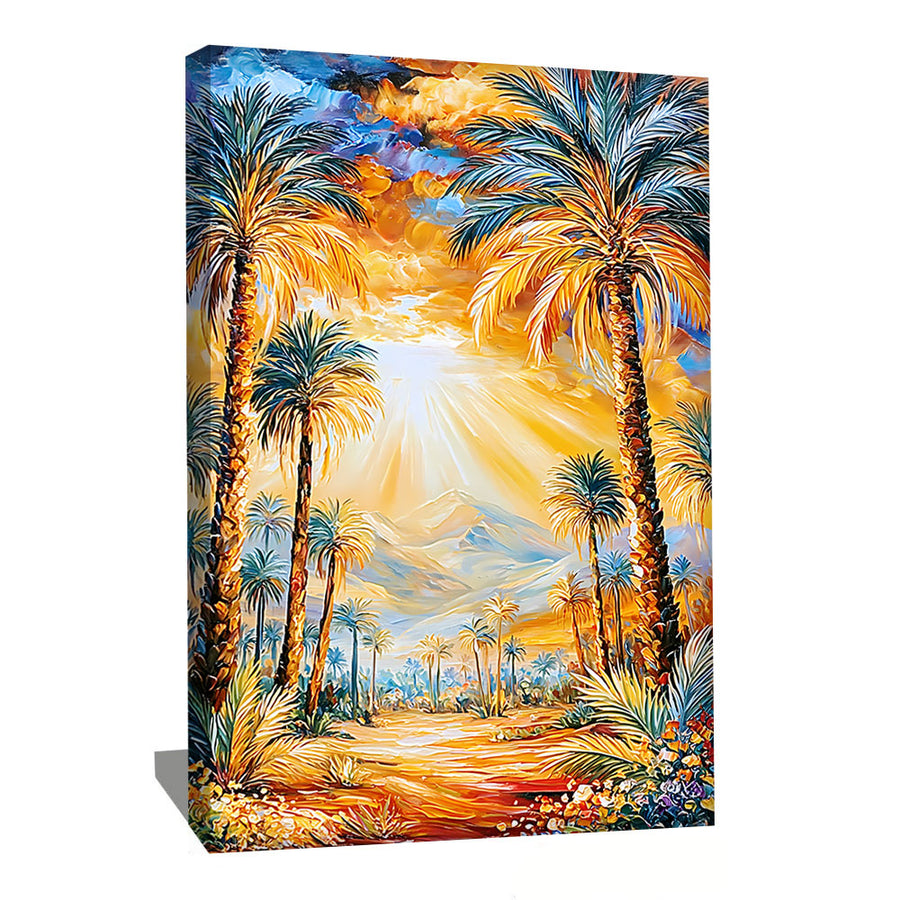
Add to Wishlist MOROCCO DESERT PAINTINGDès 89 €
-
Add to Wishlist MOROCCAN STYLE PAINTINGDès 89 €
-
Add to Wishlist MOROCCAN DECORATIVE PAINTINGDès 89 €
-
Add to Wishlist MODERN MOROCCAN PAINTINGDès 89 €
-
Add to Wishlist MOROCCAN PAINTINGDès 89 €
-
Add to Wishlist PAINTING FOR MOROCCAN LIVING ROOMDès 89 €
-
Add to Wishlist MODERN MOROCCAN PAINTINGDès 89 €
-
Add to Wishlist MARRAKECH SOUK PAINTINGDès 89 €
-
Add to Wishlist MOROCCAN ABSTRACT PAINTINGDès 89 €
-
Add to Wishlist MOROCCAN WOMAN PAINTINGDès 89 €
-
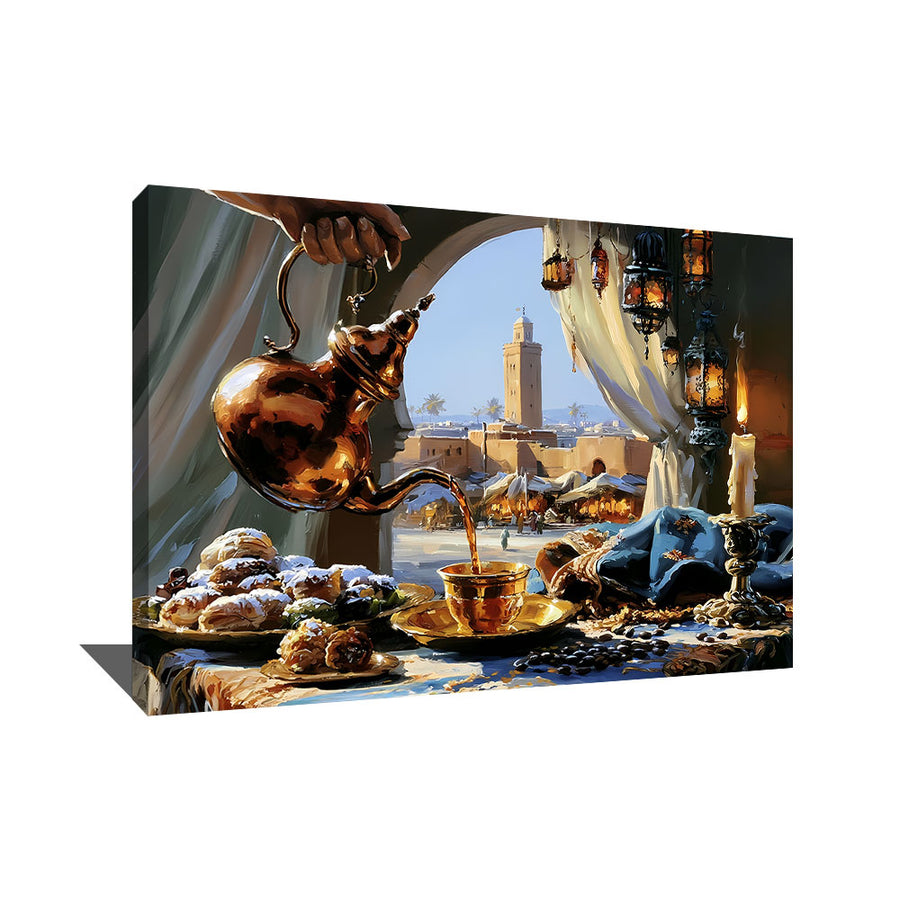
Add to Wishlist MOROCCAN TEA PAINTINGDès 89 €
-
Add to Wishlist TABLE FOR MODERN MOROCCAN LIVING ROOMDès 89 €
-
Add to Wishlist MOROCCAN DECORATION PICTUREDès 89 €
-
Add to Wishlist MOROCCAN TEA PAINTINGDès 89 €
-
Add to Wishlist MOROCCAN ART PAINTINGDès 89 €
-
Add to Wishlist MOROCCAN ORIENTAL PAINTINGDès 89 €
-
Add to Wishlist ORIENTAL PAINTING MOROCCODès 89 €
-
Add to Wishlist MOROCCAN DESERT PAINTINGDès 89 €
-
Add to Wishlist TRADITIONAL MOROCCAN PAINTINGDès 89 €
-
Add to Wishlist MOROCCAN LANDSCAPE PAINTINGDès 89 €
-
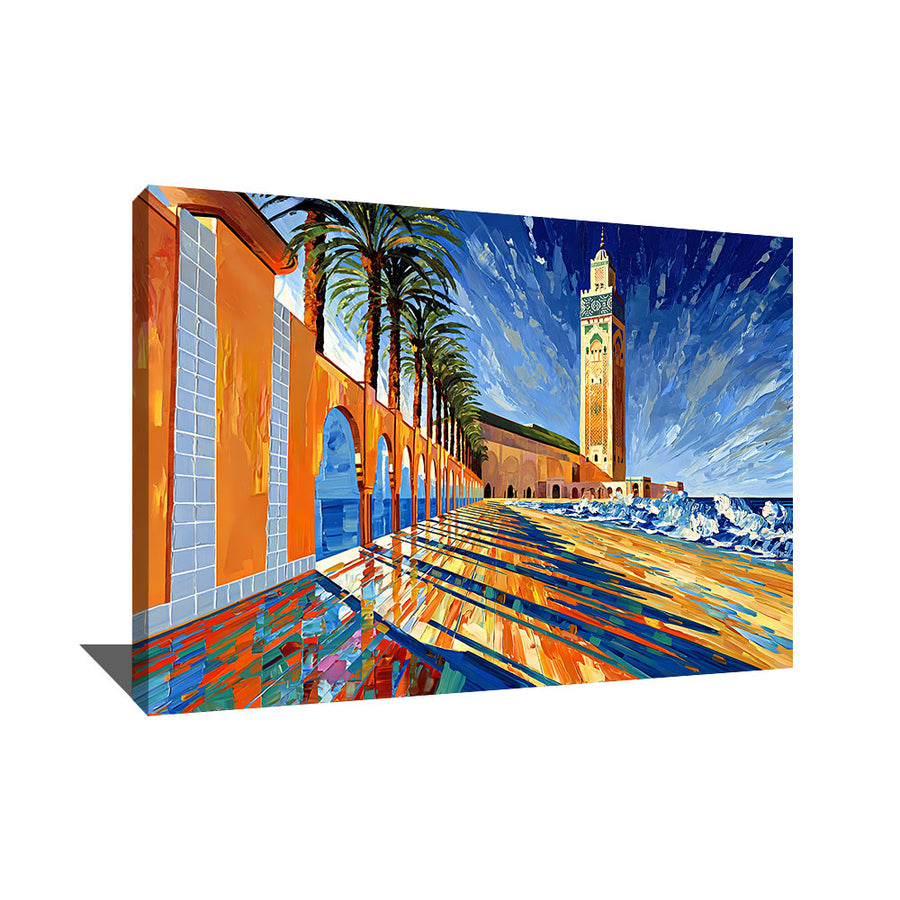
Add to Wishlist MOROCCAN MOSQUE PAINTINGDès 89 €
-
Add to Wishlist TERRACOTTA PAINTING MOROCCODès 89 €


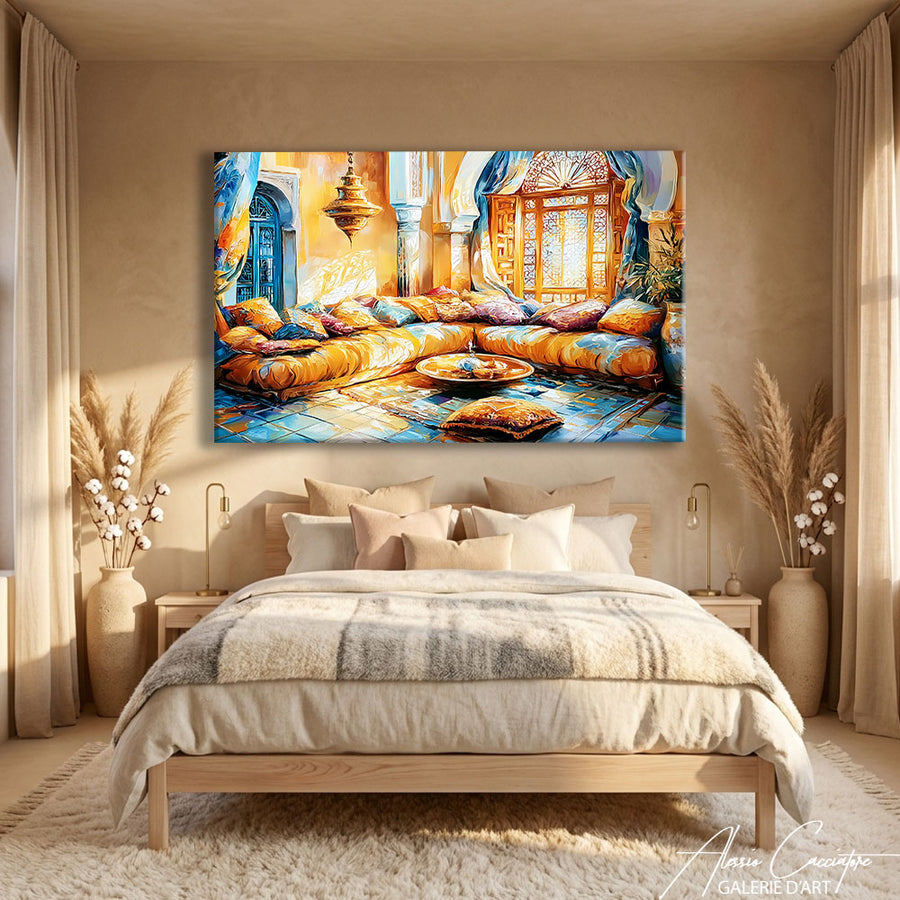


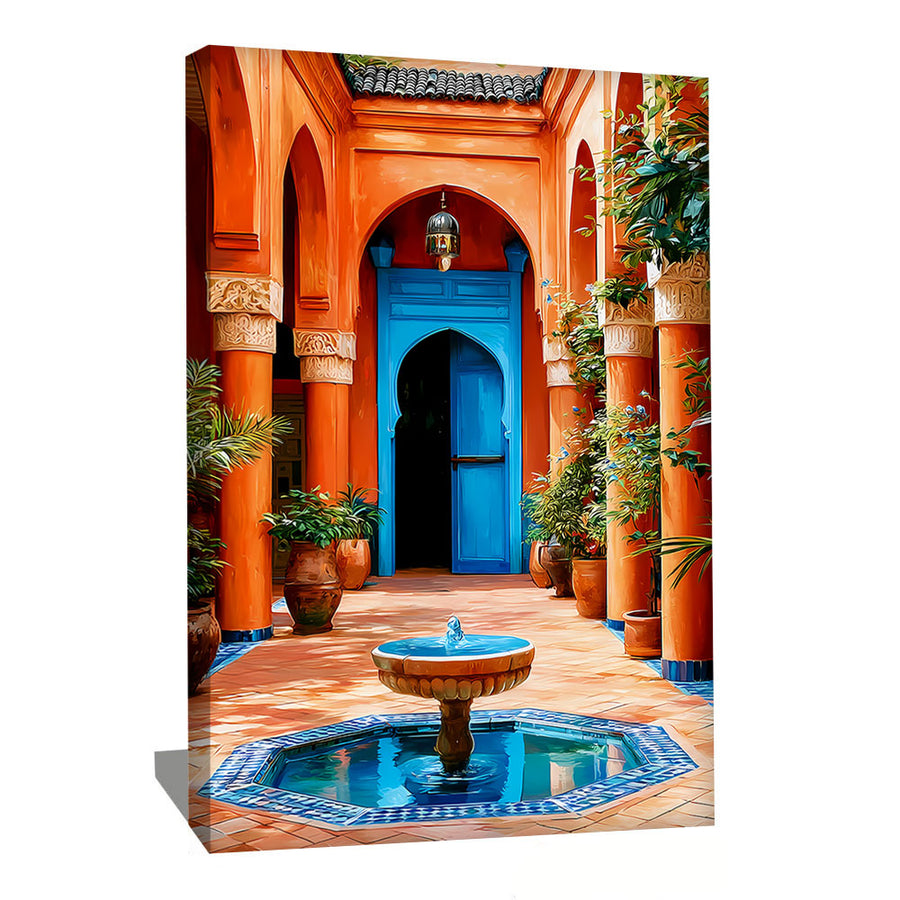


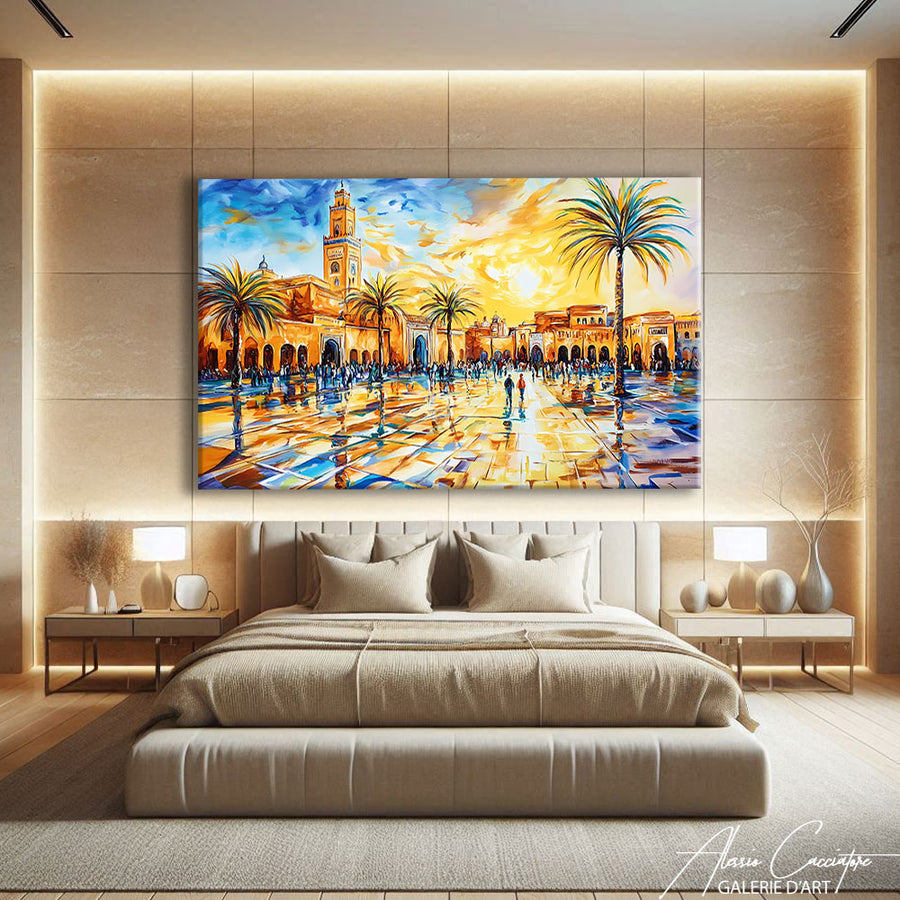


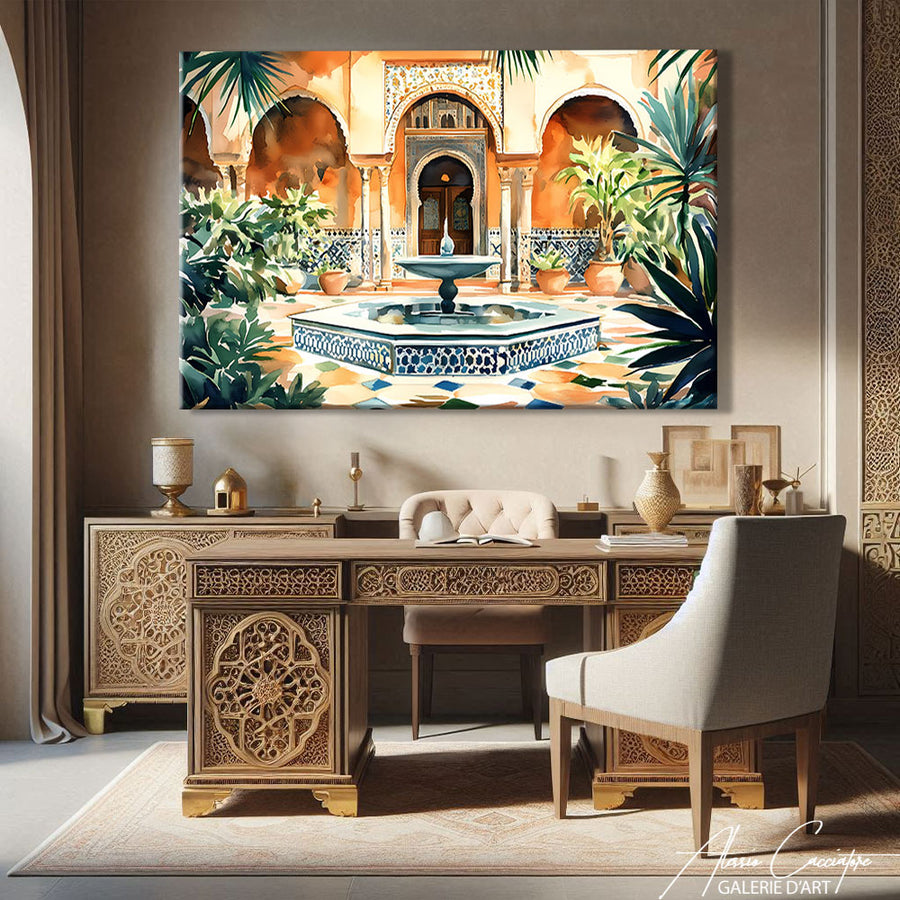










Chargement des œuvres suivantes…
Vous avez vu 20 œuvres sur 34


Few countries have inspired Western painters as much as Morocco. When Delacroix arrived in Tangier in January 1832, following a diplomatic mission by Count de Mornay, the aesthetic shock he experienced there completely reconfigured his palette. He, who until then painted in the muted browns of the Parisian studio, suddenly discovered dazzling whites, deep indigos, and ochre earth reddened by the sun. He wrote to his friend Pierret: "antiquity has nothing more beautiful." Following him, Matisse, Majorelle, and Renoir would make the journey. And each would return changed. This love story between art and Morocco continues today through our Morocco canvas prints, which seek to convey, in a contemporary domestic format, the same chromatic emotion that moved Western painters nearly two centuries ago.
Our gallery brings together a precise selection of compositions inspired by the Cherifian kingdom, printed on premium canvas and glossy plexiglass in our workshop in Germany. Labyrinthine medinas of Marrakech, undulating dunes of the Sahara, Majorelle blue painted doors, mint tea ceremonies, draped female silhouettes: each painting in the collection captures a different face of this country rich in contrasts, where the desert meets the ocean and where a thousand years of architectural history still compose the daily urban landscape.
Morocco through the eyes of painters: two centuries of Orientalism
Before 1832, the West painted the Orient from the West, based on travel accounts and engravings brought back by diplomats. It was Delacroix who truly inaugurated Moroccan painting experienced from within, on site, in the very light that was to be represented. His travel notebooks, preserved at the Louvre, are full of annotated sketches, palettes noted in the margin, observations on the color of walls and the brilliance of fabrics. The major works that would result — Women of Algiers in their Apartment, Jewish Wedding in Morocco, Fanatics of Tangier — established the Orientalist movement, which would occupy a whole section of 19th-century French painting.
Fifty years later, it was Jacques Majorelle's turn to settle in Marrakech. From 1923, he would build the garden and villa that bear his name today, and which Yves Saint Laurent would much later acquire to save it from demolition. It was Majorelle who invented this very particular blue — saturated, electric, almost unreal — which would remain its baptismal name and which a whole generation of decorators would reuse. Henri Matisse, staying in Tangier in 1912 and 1913, also found motifs there that he would continue to rework decades later in his cut-out gouaches. This rich artistic lineage is precisely what our compositions seek to perpetuate, in a contemporary language but faithful to the spirit of these great predecessors.
The main themes of Morocco canvas prints in our gallery
Our collection covers the full visual breadth of the Cherifian kingdom. Here are the main families you will find there.
Marrakech and its medinas
The historic heart of imperial Morocco, Marrakech remains one of the most represented cities in contemporary Orientalist painting. Our compositions focus on its narrow streets, its shaded squares, its semicircular arches, its studded doors that open onto invisible riads. The palette is generally warm: red ochre of the rammed earth walls (the famous terracotta of Marrakech), sandy beige of the ground, deep blue of the high-altitude sky, emerald green accents of the palm trees. These paintings are particularly suitable for lounges with a hushed atmosphere, for travelers' libraries, for offices that want a strong geographical signature. Also discover our oriental collection.
The souks and the hustle and bustle of the markets
A particularly rich category: compositions that capture the effervescence of the souks of Marrakech, Fez or Tangier. Spice stalls with colorful pyramids of saffron, paprika and cumin, copper lanterns hanging in clusters, Berber carpets spread on the cobblestones, intricately carved silver teapots, babouches aligned by color. The palette literally explodes: deep reds, ancient golds, pistachio greens, turquoise blues. These paintings work wonderfully in dining rooms, open kitchens and convivial spaces where they immediately create a travel atmosphere.
The desert and the dunes of the Sahara
In contrast to the urban register, this family captures the majestic silence of the Moroccan desert. Erg Chebbi and its orange dunes of Merzouga, the flat hamada of the far south, the sand sea of Chegaga, the oasis palm groves of the Drâa Valley. The compositions play on absolute simplicity: a horizon line, two dunes against the light, sometimes a tiny caravan that gives scale, or the silhouette of a solitary palm tree. The palette leans towards warm ochres, golden sands, the purples of twilight. These paintings naturally find their place in adult bedrooms, cozy living rooms and spaces where one seeks the calming breath of wide-open spaces.
Moroccan women and Orientalist portraits
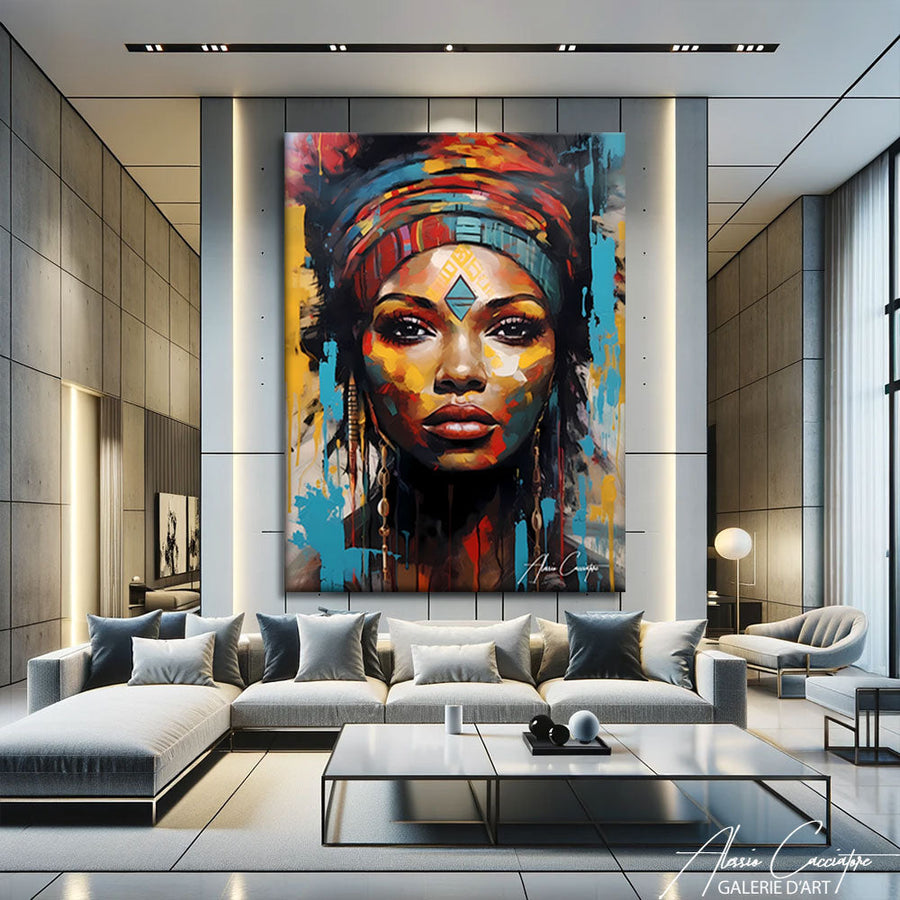
A particularly delicate family to deal with today, because it directly inherits from 19th-century Orientalist painting and its cultural ambiguities. We have chosen a respectful approach: contemporary portraits of Moroccan women in traditional costume (embroidered caftan, ceremonial takchita, Berber scarf), female silhouettes draped in the light of a medina, tea ceremony scenes. The palette plays with deep burgundies, embroidered golds, indigo blues, immaculate whites of fabrics.
Moroccan architecture: doors, arches, zellige

Envoyez une photo de votre mur : nous vous aidons à choisir l'œuvre et la taille, gratuitement.
Fabriqué en Allemagne · Paiement sécurisé · 30 jours pour changer d'avis
Animaux

Villes & cultures
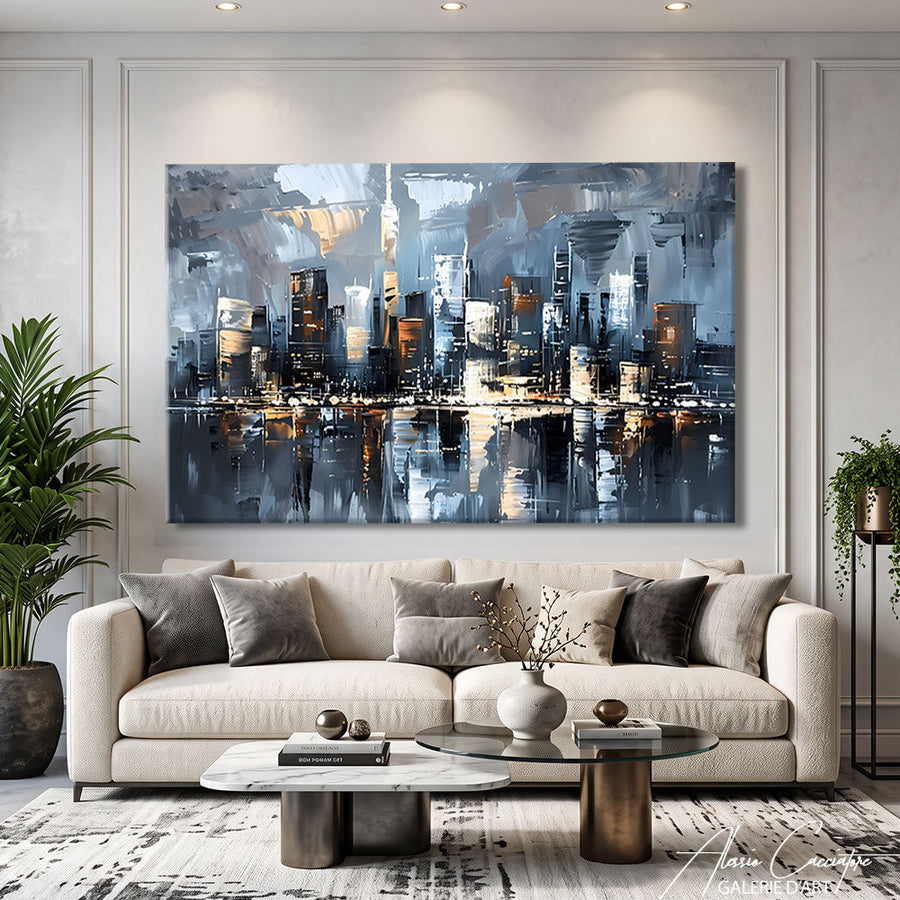
Styles
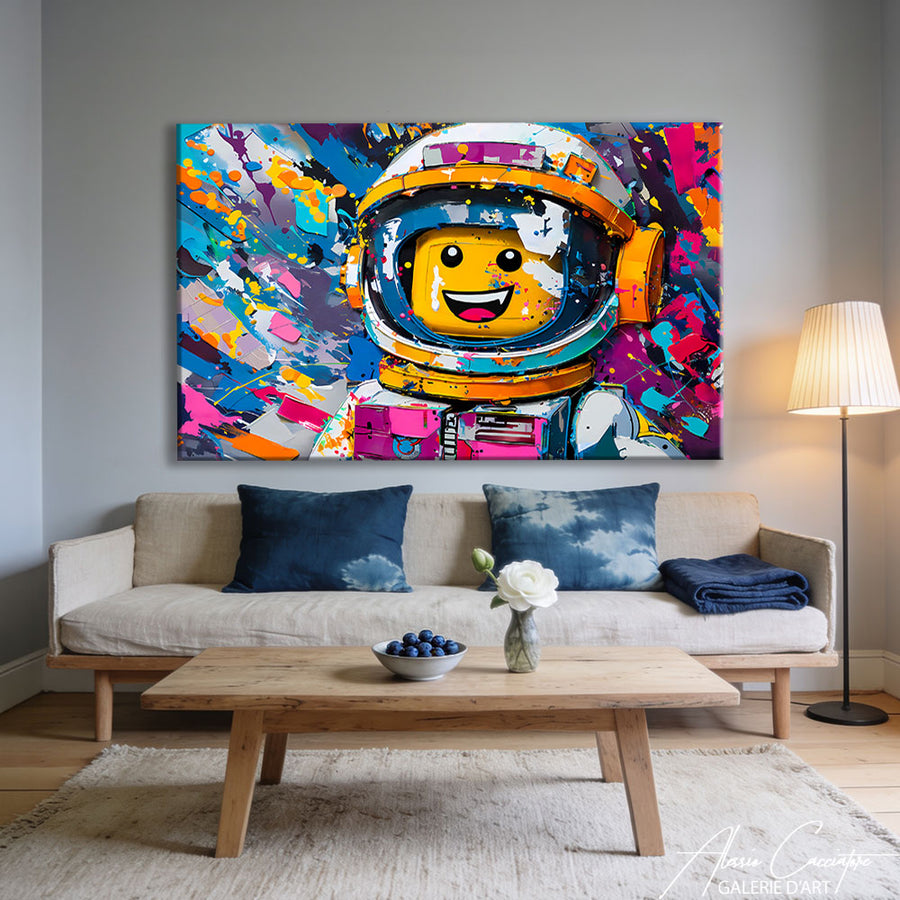 Styles
Spiritualité
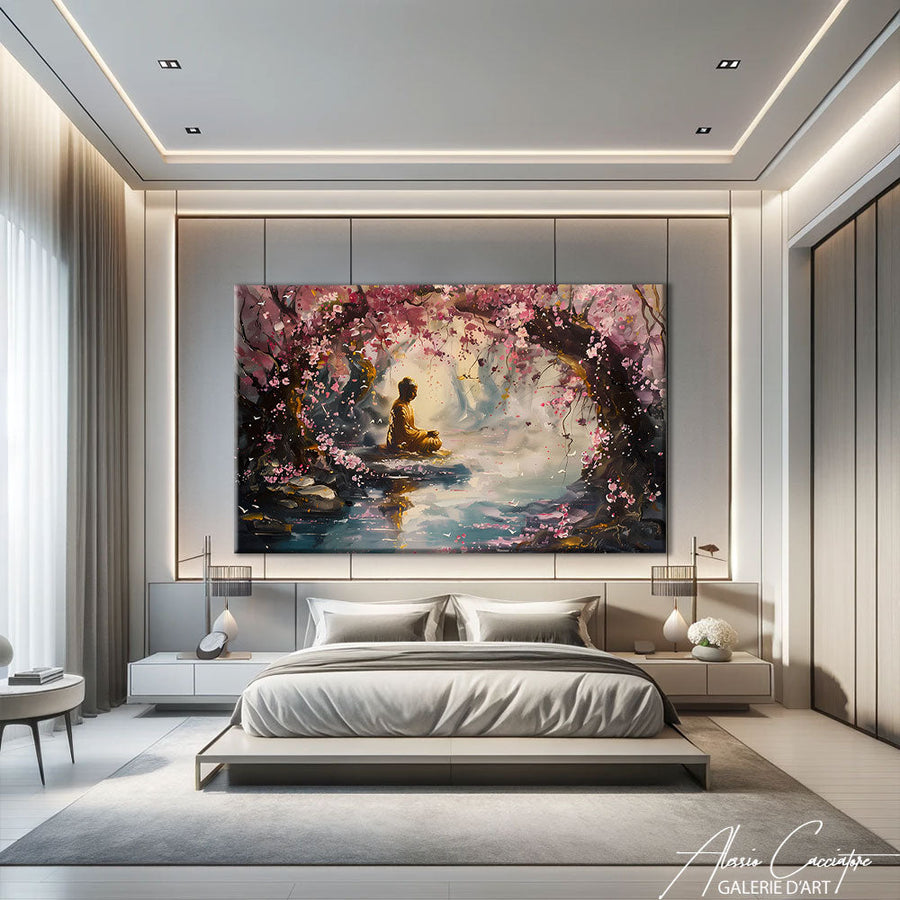
Nature & paysages
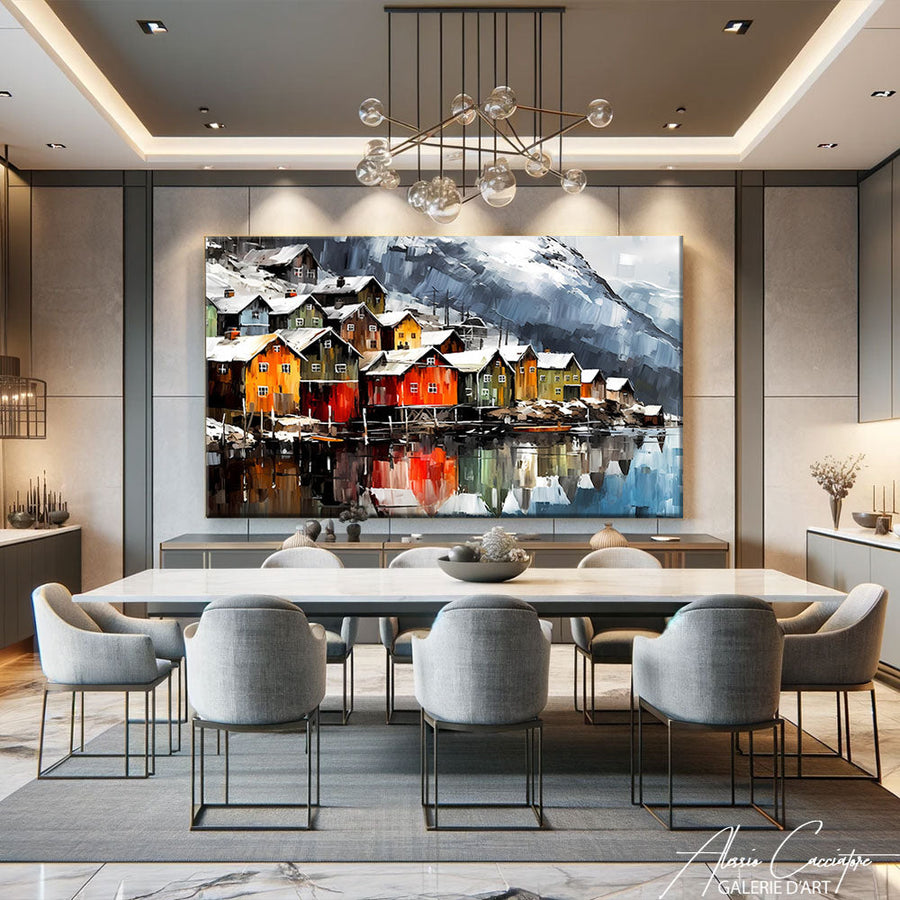 Nature & paysages
Portraits
- Choosing a selection results in a full page refresh.
- Opens in a new window.
- Opens external website.
- Opens external website in a new window.