
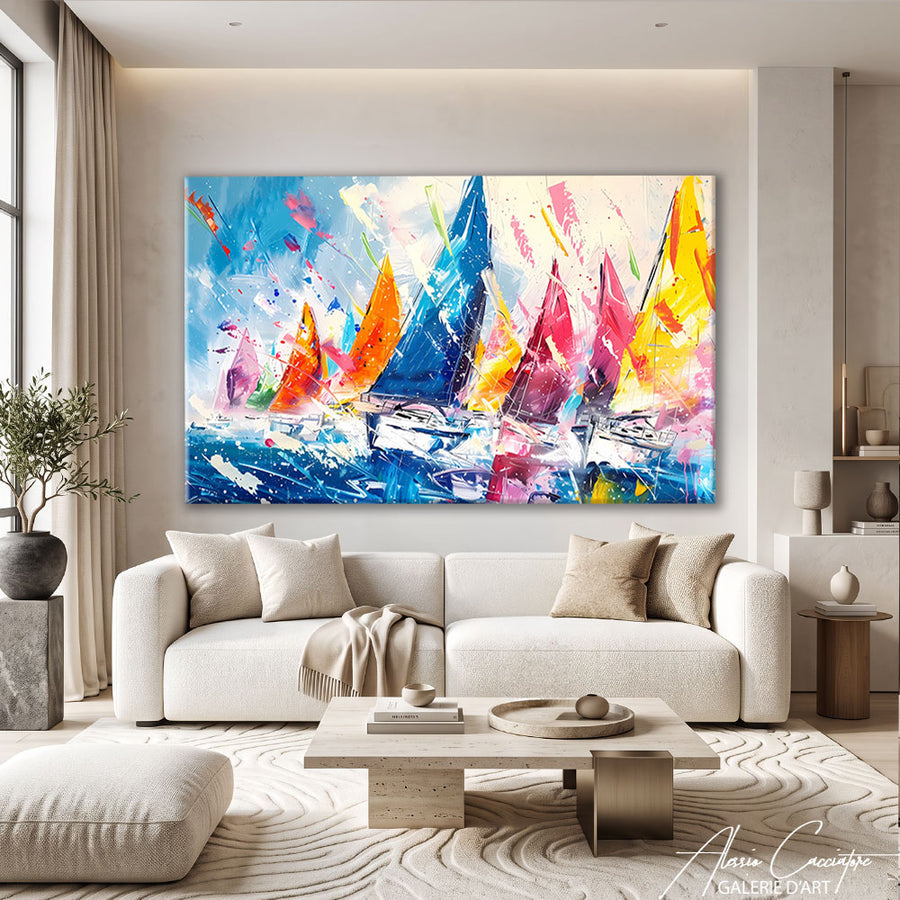
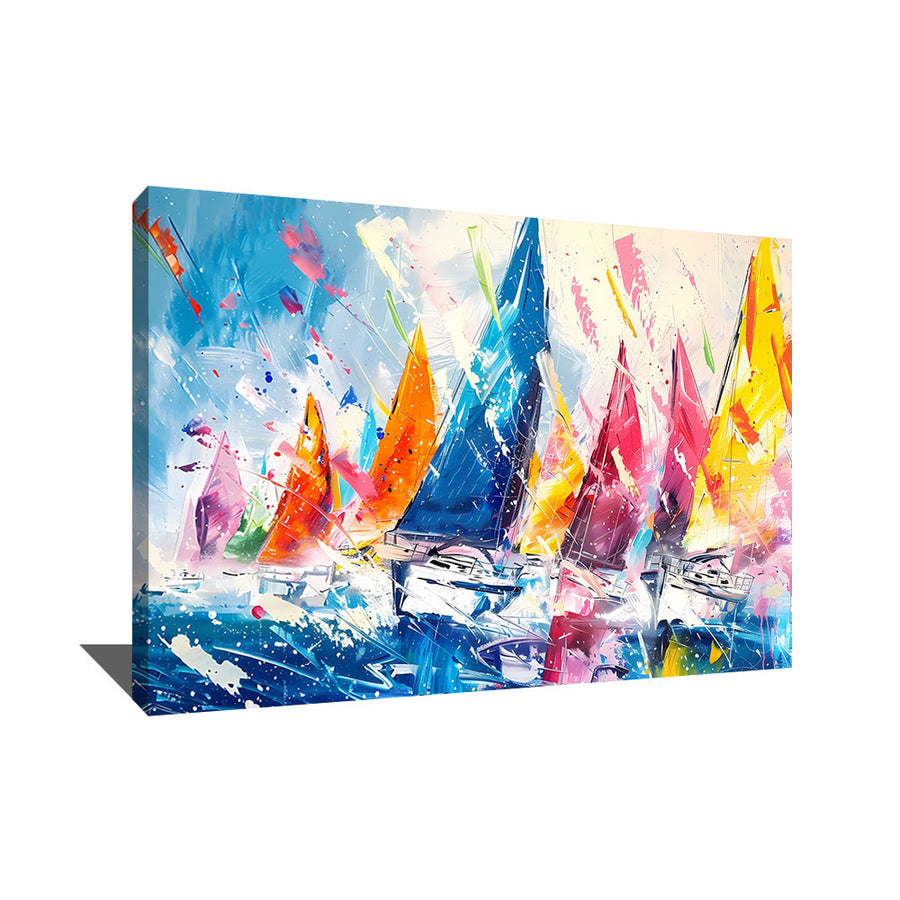
Sailboat Painting
40 œuvresDes œuvres en édition limitée, pensées par l'artiste pour illuminer votre intérieur.
Fait main en AllemagneLivraison offertePrêt à accrocher30 jours pour changer d'avis
-
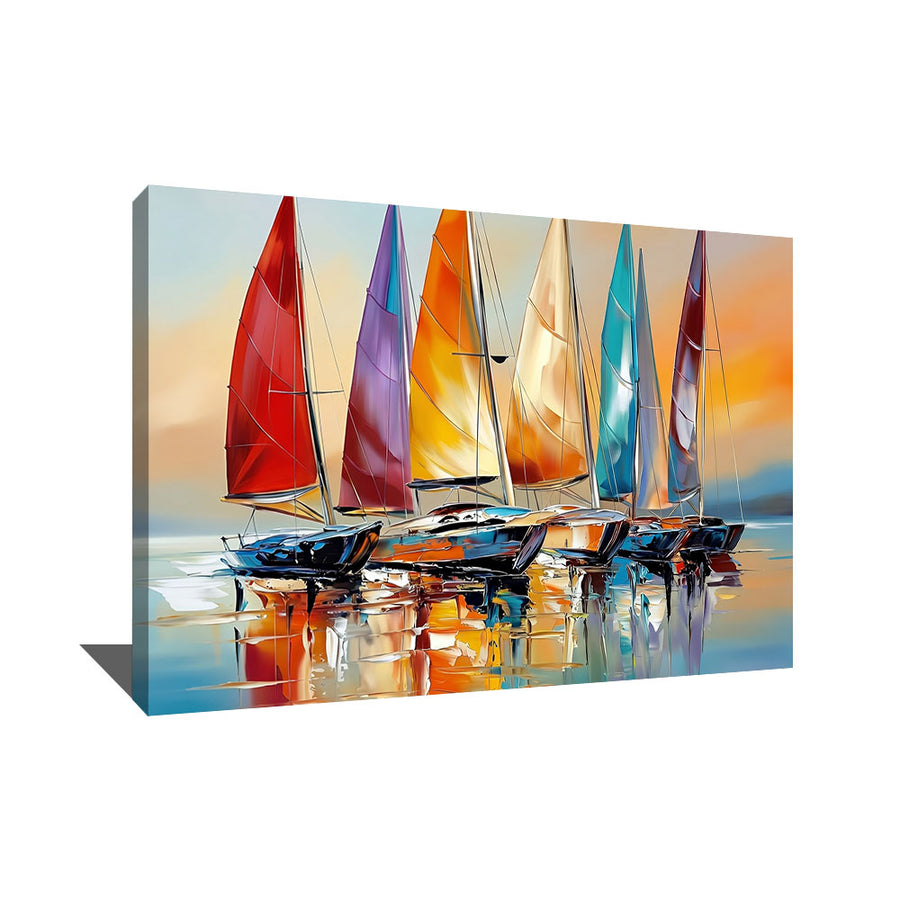
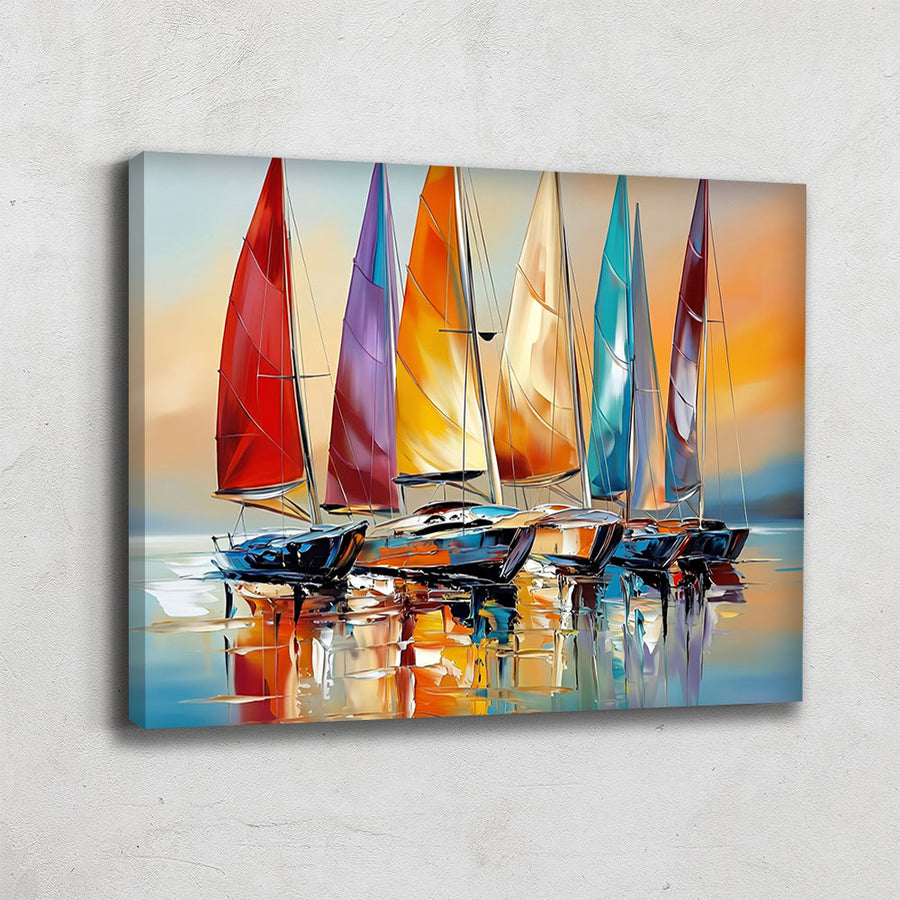
Add to Wishlist ABSTRACT SAILING BOATS PAINTINGDès 89 €
-
Add to Wishlist MODERN SAILBOAT PAINTINGDès 89 €
-
Add to Wishlist SAILING BOATS AT SEA PAINTINGDès 89 €
-
Add to Wishlist SAILING BOATS AT SEA PAINTINGDès 89 €
-
Add to Wishlist MODERN PAINTING SAILING BOATSDès 89 €
-
Add to Wishlist COLORFUL SAILBOATS AT SEA PAINTINGDès 89 €
-
Add to Wishlist SAILING SHIP SEASCAPE PAINTINGDès 89 €
-
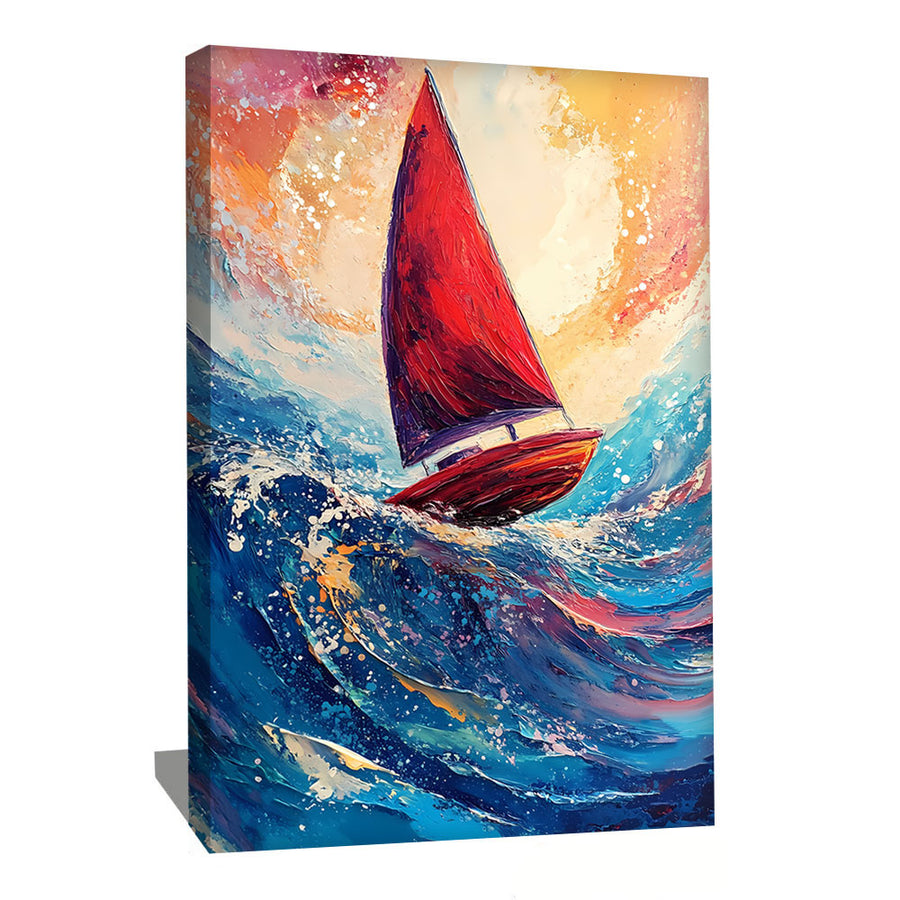
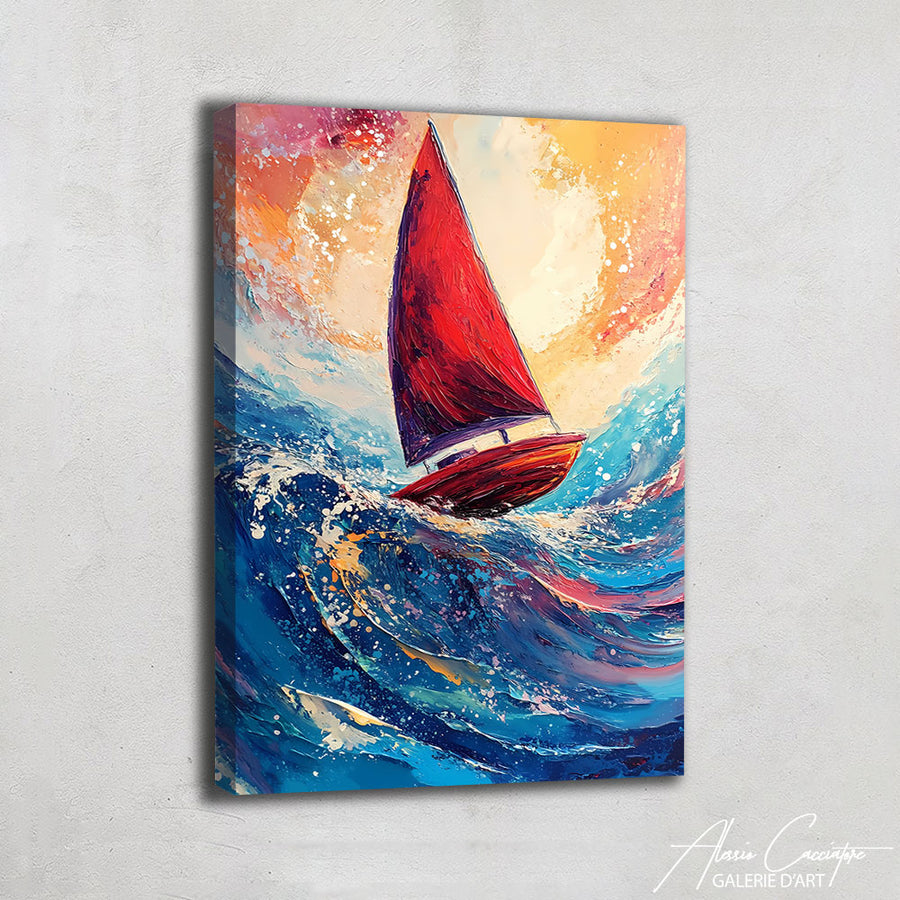
Add to Wishlist SAILBOAT PAINTINGDès 89 €
-
Add to Wishlist ABSTRACT ACRYLIC SAILBOAT PAINTINGDès 89 €
-
Add to Wishlist ABSTRACT SAILING BOATS PAINTINGDès 89 €
-
Add to Wishlist MODERN SAILING BOATS PAINTINGDès 89 €
-
Add to Wishlist SAILBOAT PAINTINGDès 89 €
-
Add to Wishlist SAILBOAT PAINTINGDès 89 €
-
Add to Wishlist SAILING BOAT AT SEA PAINTINGDès 89 €
-
Add to Wishlist ORANGE SAILING BOAT PAINTINGDès 89 €
-
Add to Wishlist SAILBOAT WATERCOLOR PAINTINGDès 89 €
-
Add to Wishlist BOAT SAILING PAINTINGDès 89 €
-
Add to Wishlist WHITE SAILBOAT PAINTINGDès 89 €
-
Add to Wishlist CUBISM SAILBOAT PAINTINGDès 89 €
-
Add to Wishlist BLACK AND WHITE SAILBOAT PAINTINGDès 89 €
-
Add to Wishlist CONTEMPORARY SAILING BOATS PAINTINGDès 89 €
-
Add to Wishlist ABSTRACT PAINTING SAILING BOATSDès 89 €
-
Add to Wishlist SAILING BOAT AT SEA PAINTINGDès 89 €
-
Add to Wishlist RED SAILBOAT PAINTINGDès 89 €
-
Add to Wishlist SAILBOAT WATERCOLOR PAINTINGDès 89 €
-
Add to Wishlist COLORFUL SAILBOAT PAINTINGDès 89 €
-
Add to Wishlist SAILBOAT SUNSET PAINTINGDès 89 €
-
Add to Wishlist ABSTRACT SAILING BOATS PAINTINGDès 89 €
-
Add to Wishlist SAILING BOAT PAINTINGDès 89 €
-
Add to Wishlist SAILING BOAT PAINTINGDès 89 €
-
Add to Wishlist ANCIENT SAILBOAT PAINTINGDès 89 €
-
Add to Wishlist SAILBOAT PAINTINGDès 89 €
-
Add to Wishlist ABSTRACT SAILBOAT PAINTINGDès 89 €
-
Add to Wishlist CONTEMPORARY SAILBOAT PAINTINGDès 89 €
-
Add to Wishlist MODERN SAILBOAT PAINTING PAINTINGDès 89 €
-
Add to Wishlist LUXURY SAILING BOAT PAINTINGDès 89 €
-
Add to Wishlist SAILBOAT AT SEA PAINTINGDès 89 €
-
Add to Wishlist MARINE PAINTING SAILBOATDès 89 €
-
Add to Wishlist PAINTING SEASCAPE SAILBOATSDès 89 €
-
Add to Wishlist PAINTING WOMAN BLUE VEILDès 89 €






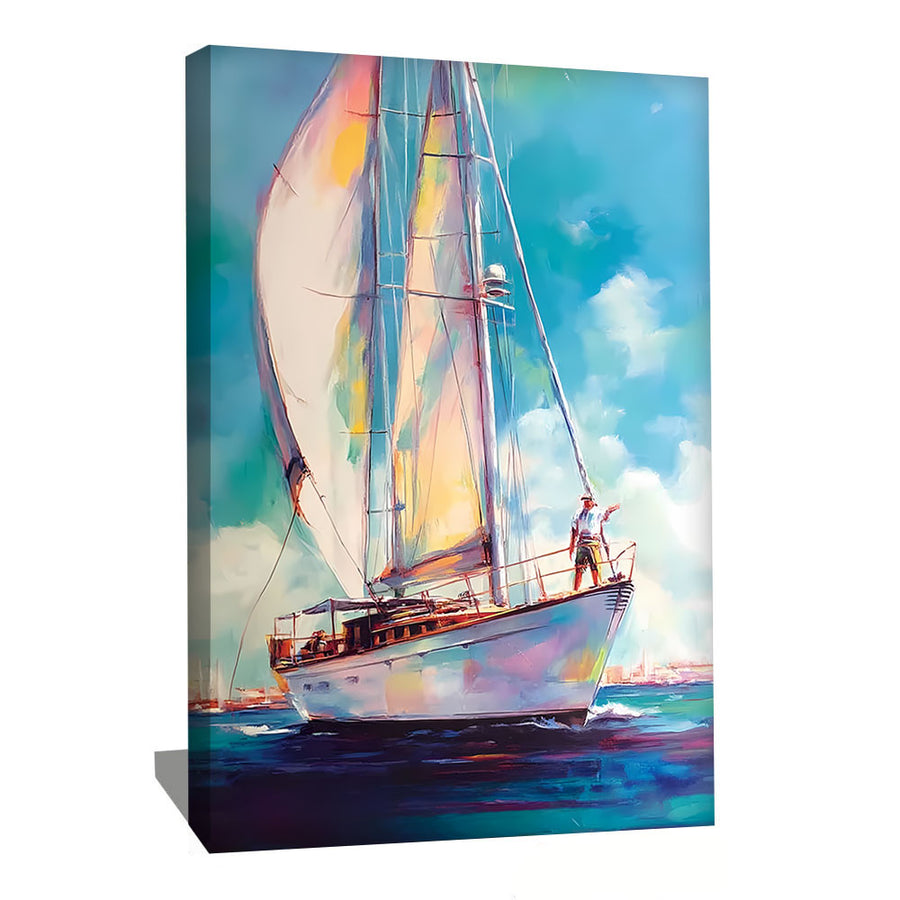
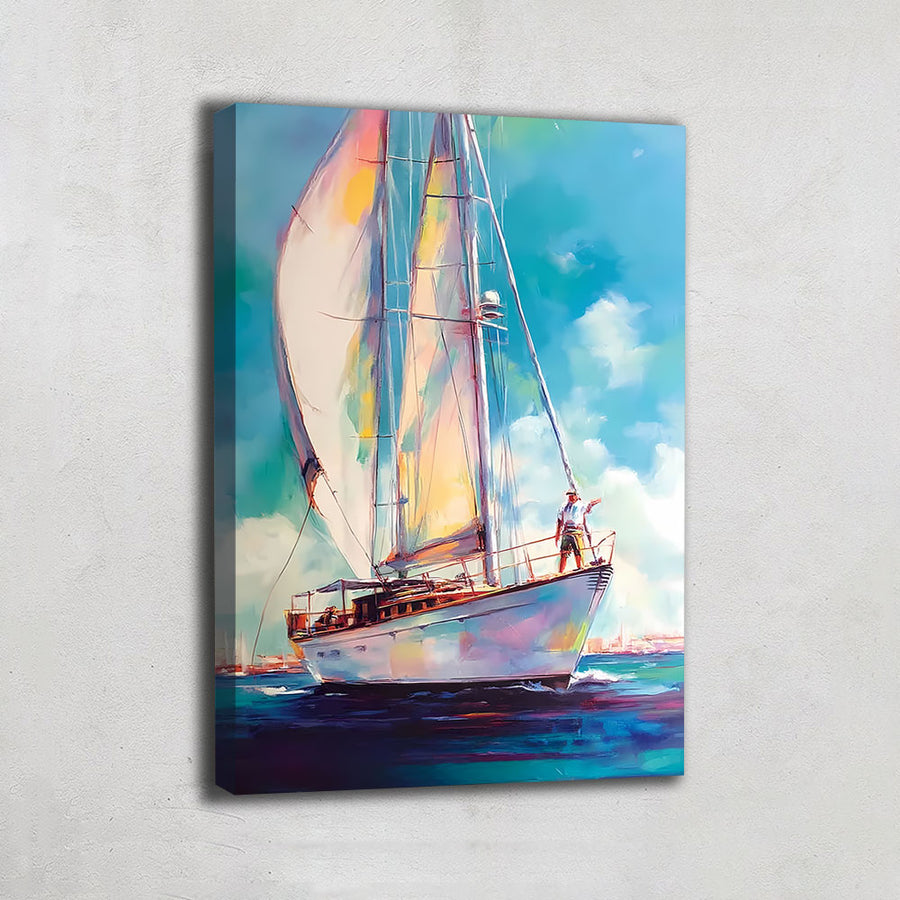


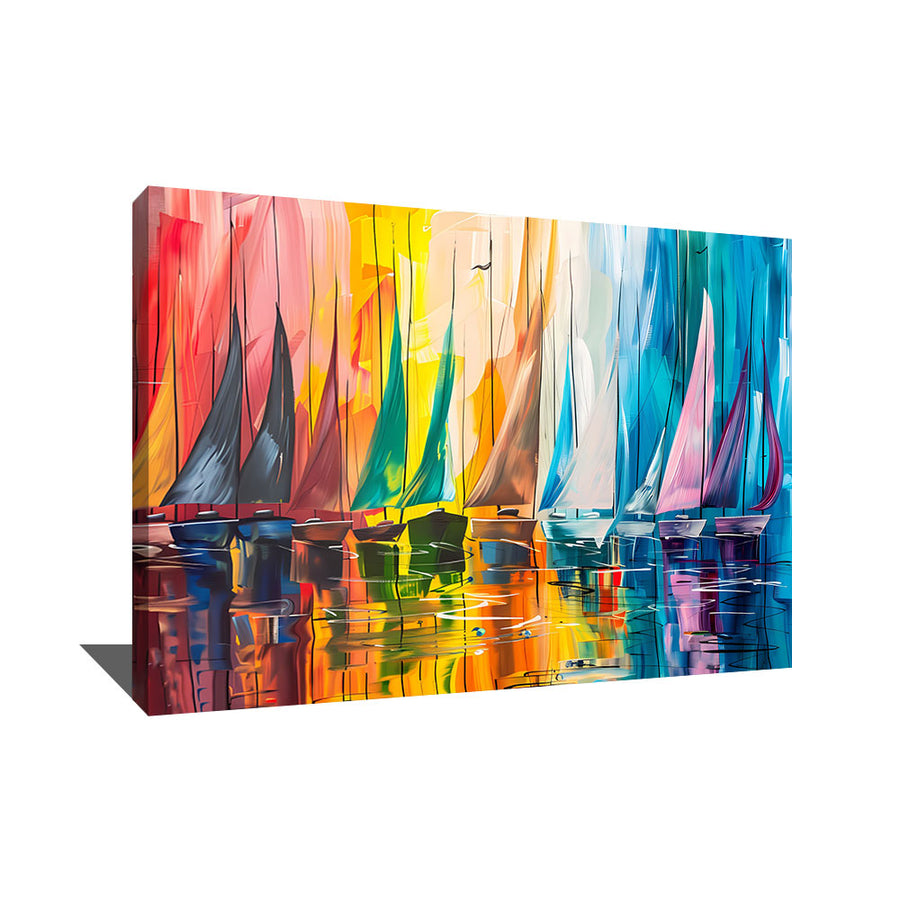
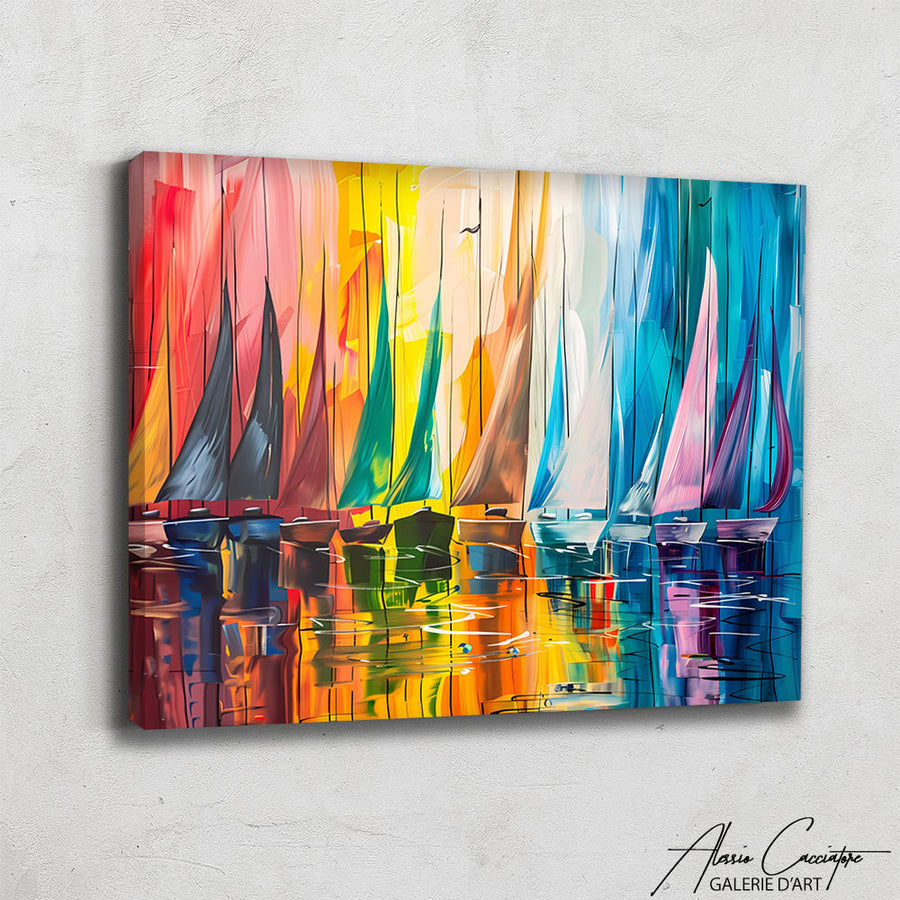
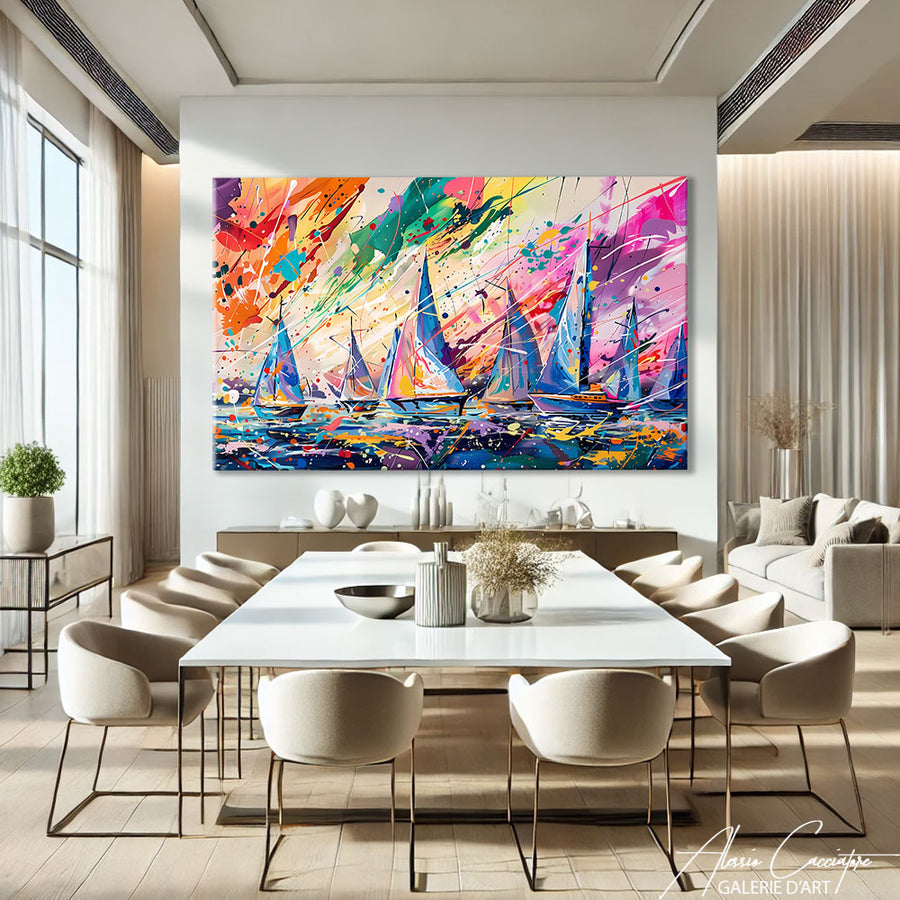
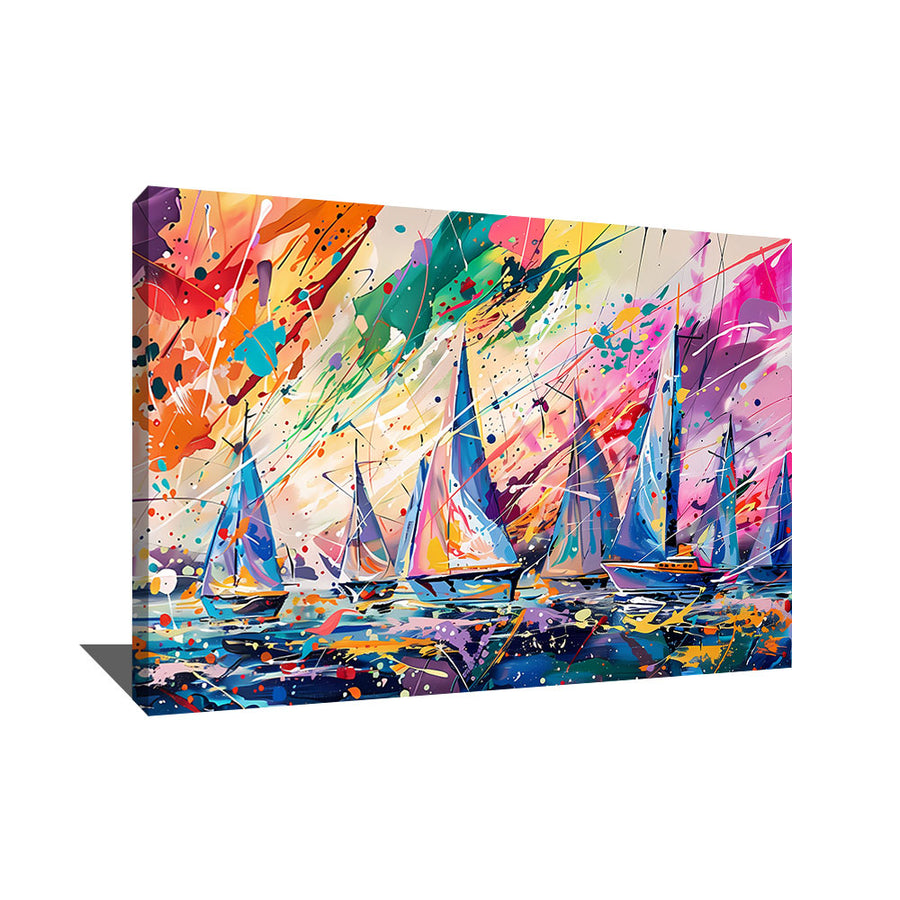
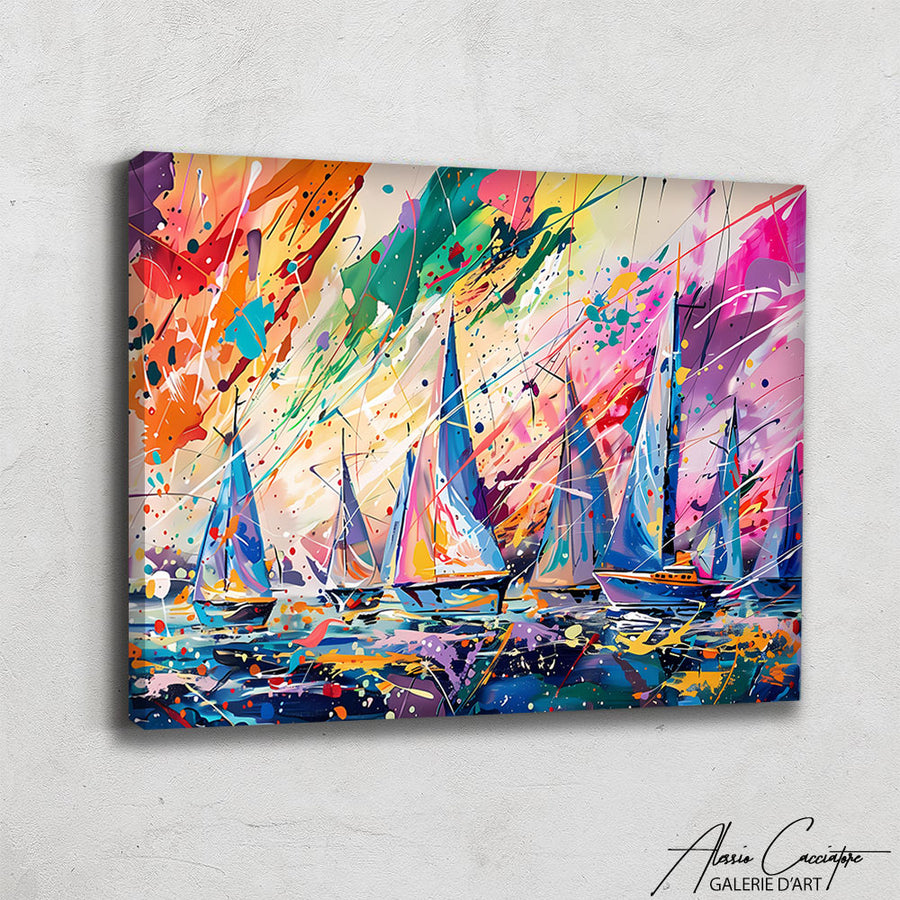
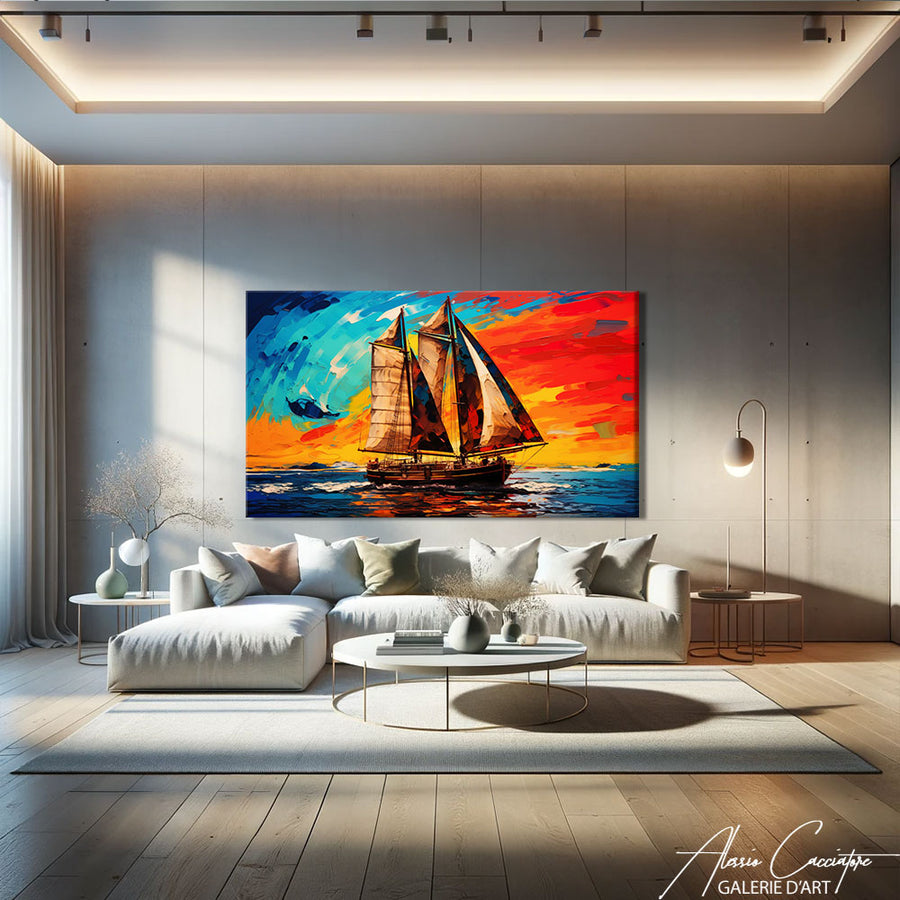
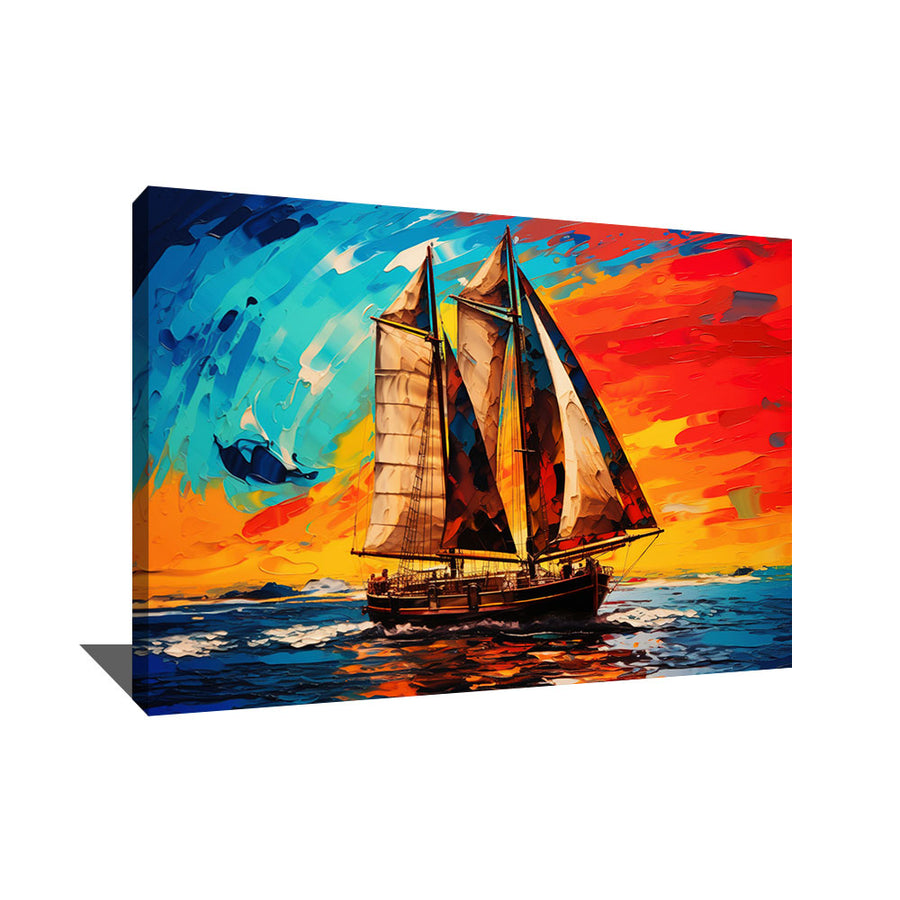
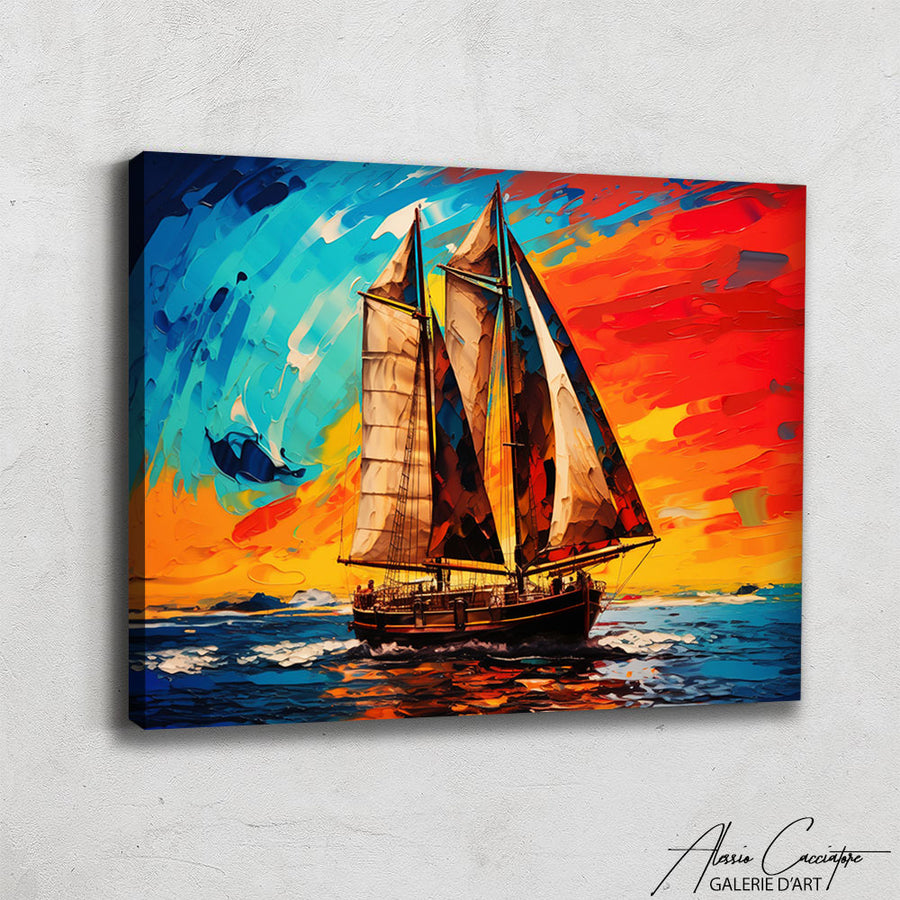


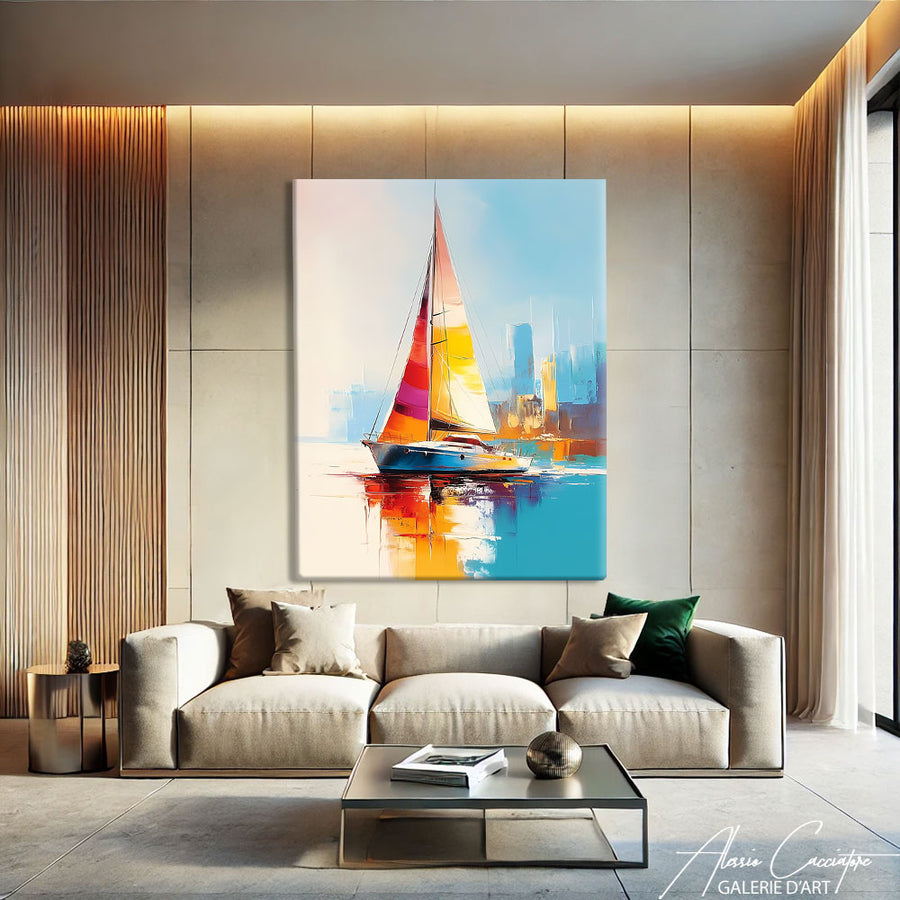
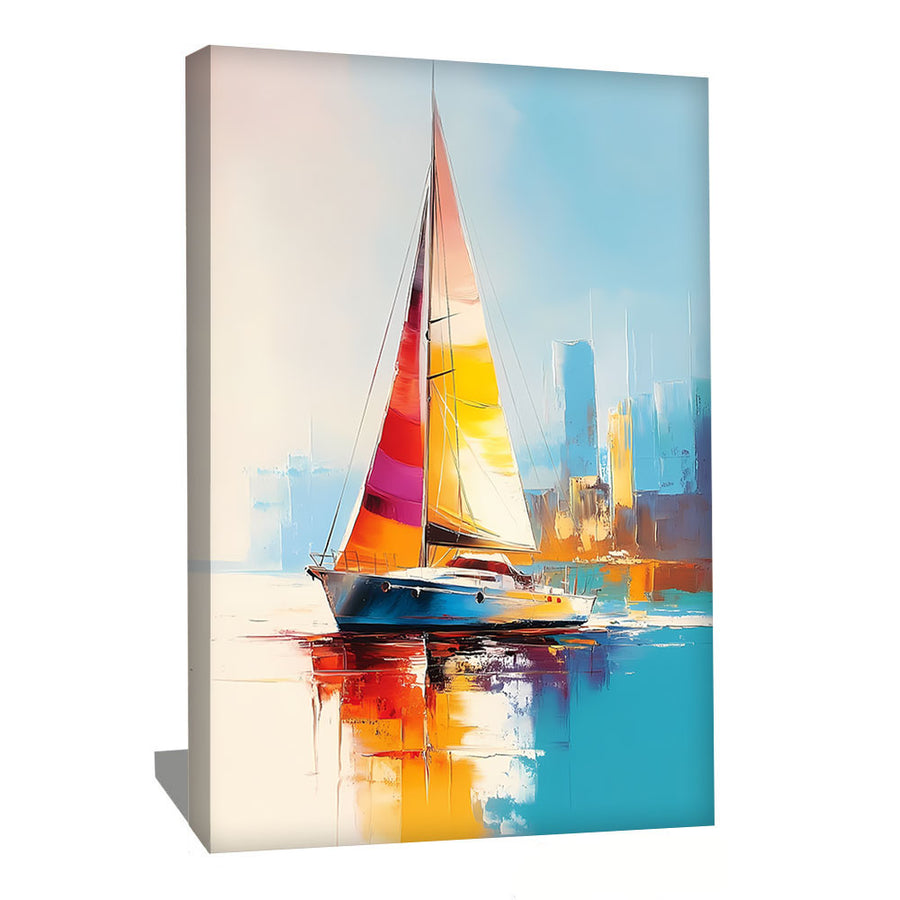













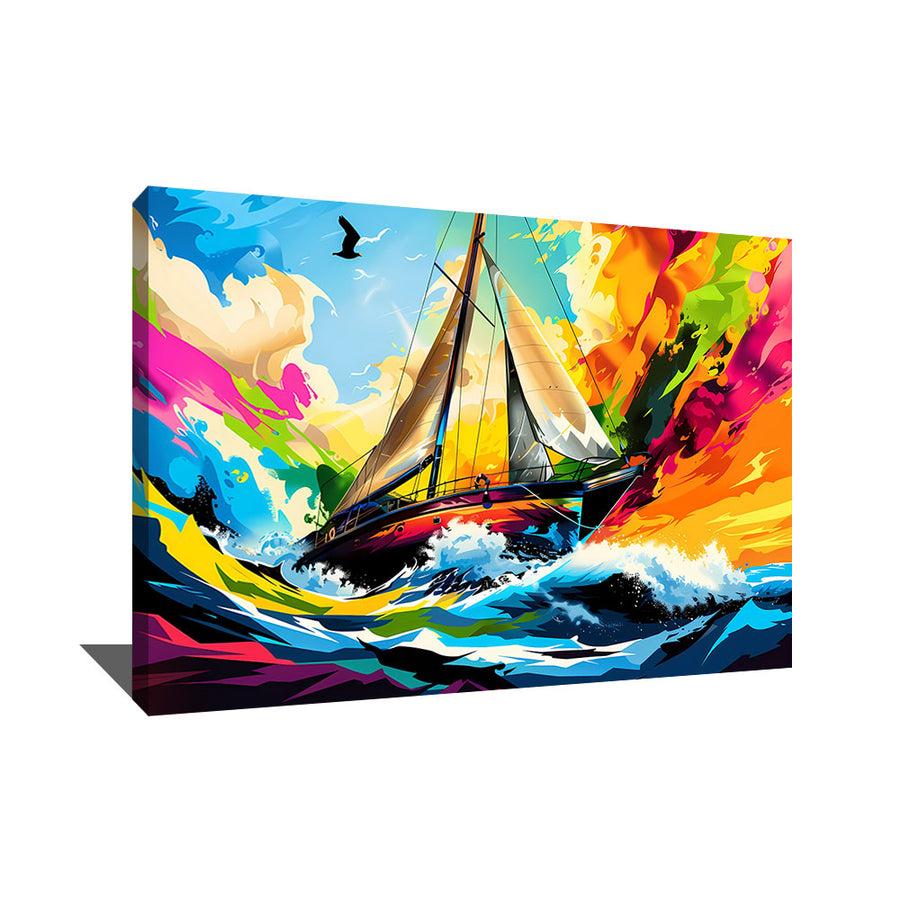
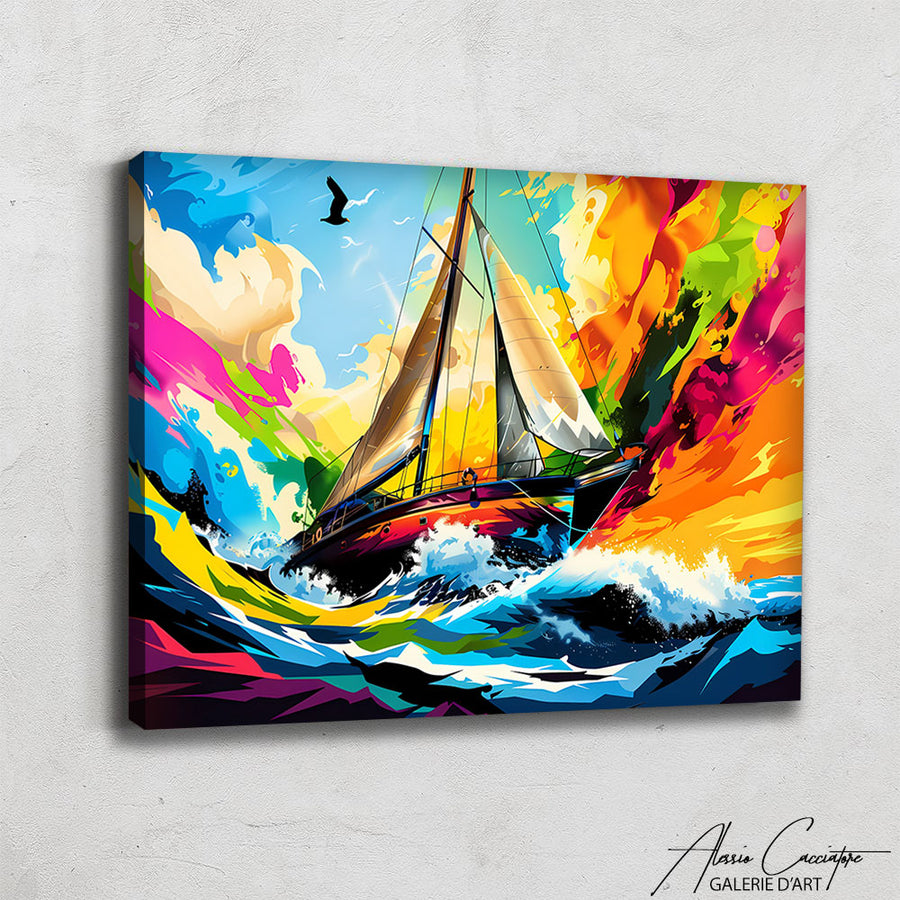
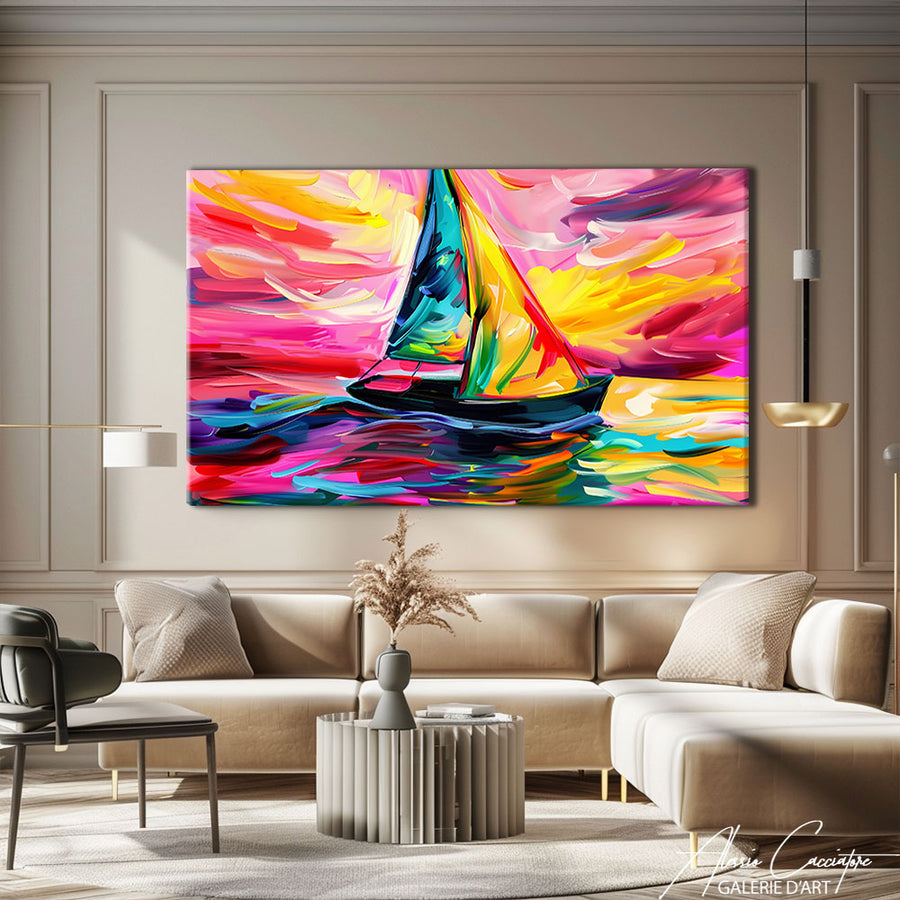
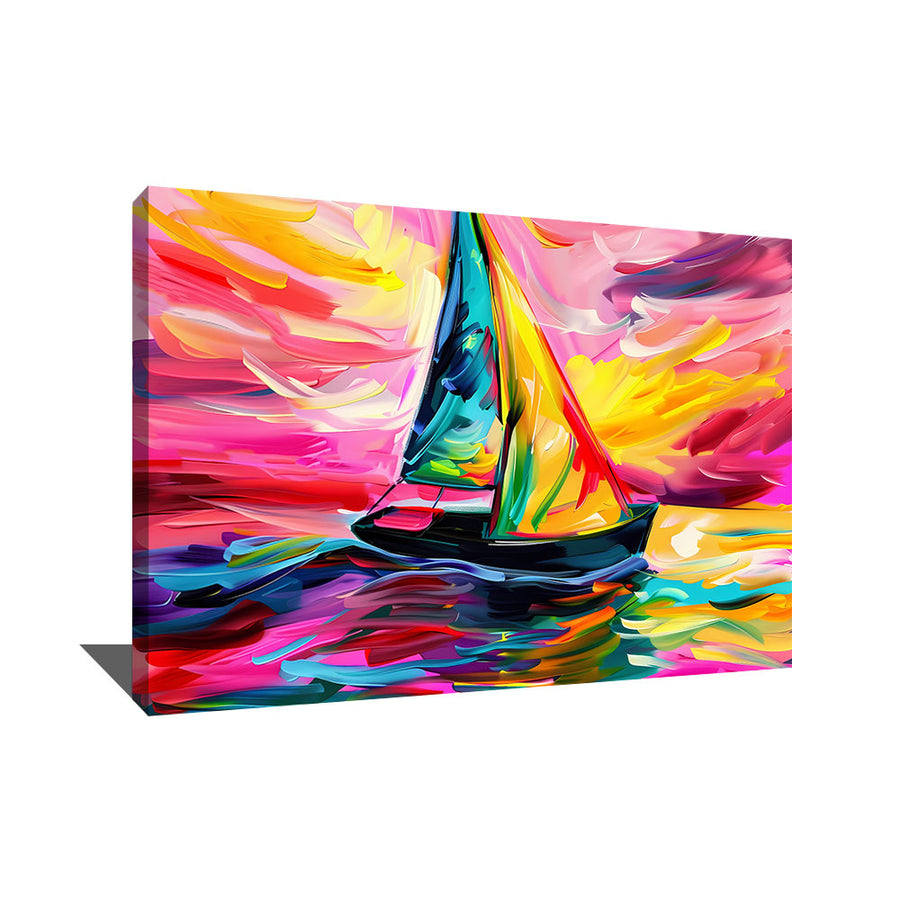




Chargement des œuvres suivantes…
Vous avez vu 20 œuvres sur 40

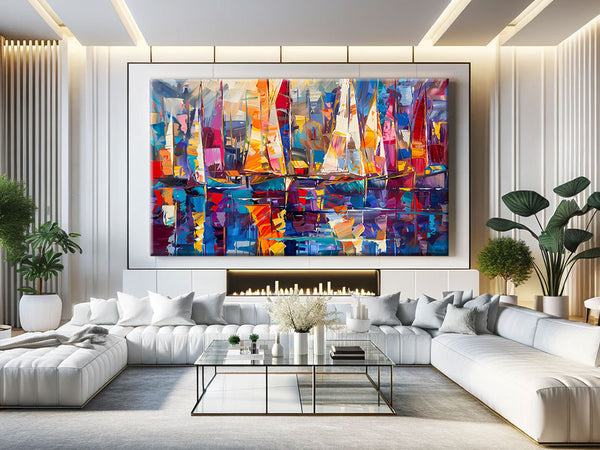


There's a reason why the sailboat has remained, for four centuries, one of the most represented subjects in all of Western painting. Before the airplane, before the train, even before the steam engine, the sailboat was what connected continents, transported spices, ideas, and people. It was the object that allowed Europe to discover the world, and the world to come to it. Today, hanging a sailboat painting in your home means evoking this history — but it also, more simply, means choosing an image that brings peace. A sailboat on the water is movement and silence at the same time. Travel and rest.
Our gallery brings together a precise selection of sailboat paintings printed on premium canvas and brilliant plexiglass, handcrafted in our workshop in Germany. Old seascapes, contemporary regattas, sailboat silhouettes at sunset, abstract compositions where the sail becomes a pure play of forms: we have built this collection to appeal both to sailing enthusiasts and to those who simply love the iconic breath of the sea.
The sailboat in art history: four centuries of inspiration
In the 17th century, in the United Provinces – modern-day Holland – an entire artistic genre emerged: the marine painting. While other European schools painted the court, the sacred, or portraits, the Dutch painted the sea. And with it, their merchant ships, their fluyts, their galleons, which then represented the country's economic power. Willem van de Velde the Younger, Ludolf Bakhuizen, Jan van Goyen: these masters established the visual grammar for everything that would later be painted on the subject – the low horizon line, the elaborate skies, the water as a moving mirror, and of course, the sailboat at the center.
Three centuries later, Joseph Turner would capture the light, Eugène Boudin would capture the Norman ports, Claude Monet would paint Argenteuil and its Sunday regattas. In every era, the sailboat remains a privileged subject for painters because it combines two almost opposite elements: the geometric precision of the rigging, and the absolute unpredictability of water and sky. It is this tension that makes marine paintings so fascinating – and it is this tension that our contemporary sailboat paintings seek to perpetuate.
The main styles of sailboat paintings in our gallery
Our collection spans the actual breadth of the subject, from the most classic to the most contemporary. Here are the main families you'll find there.
Classic marine and old sailboat
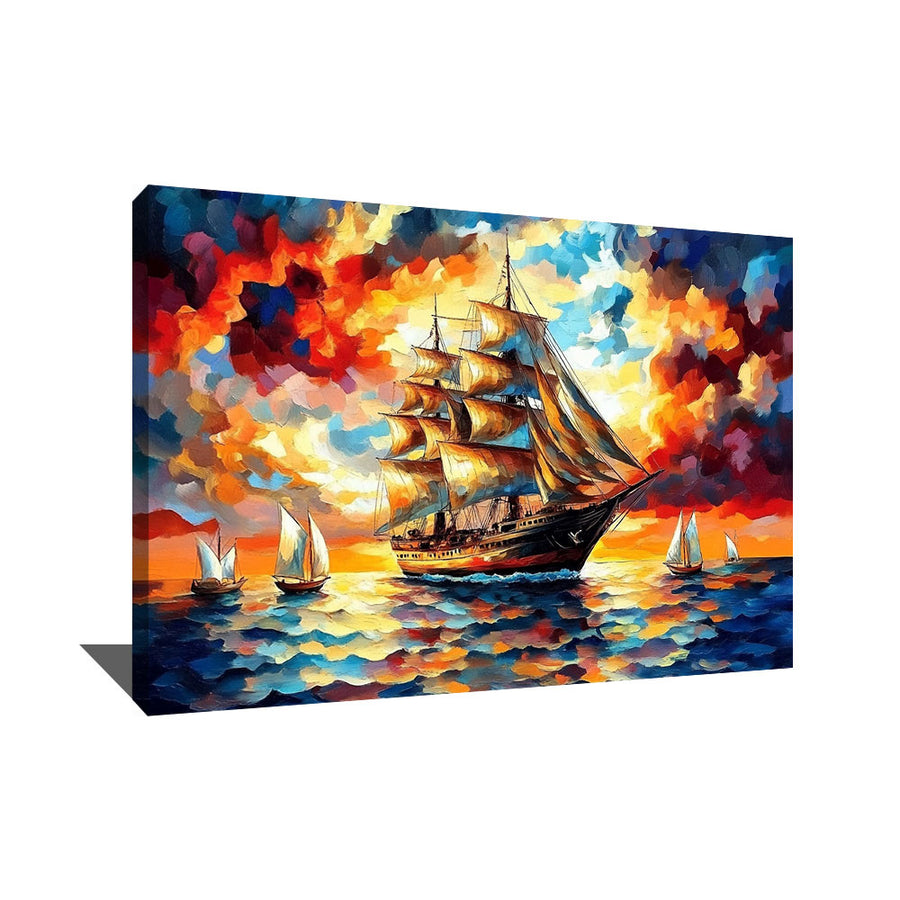
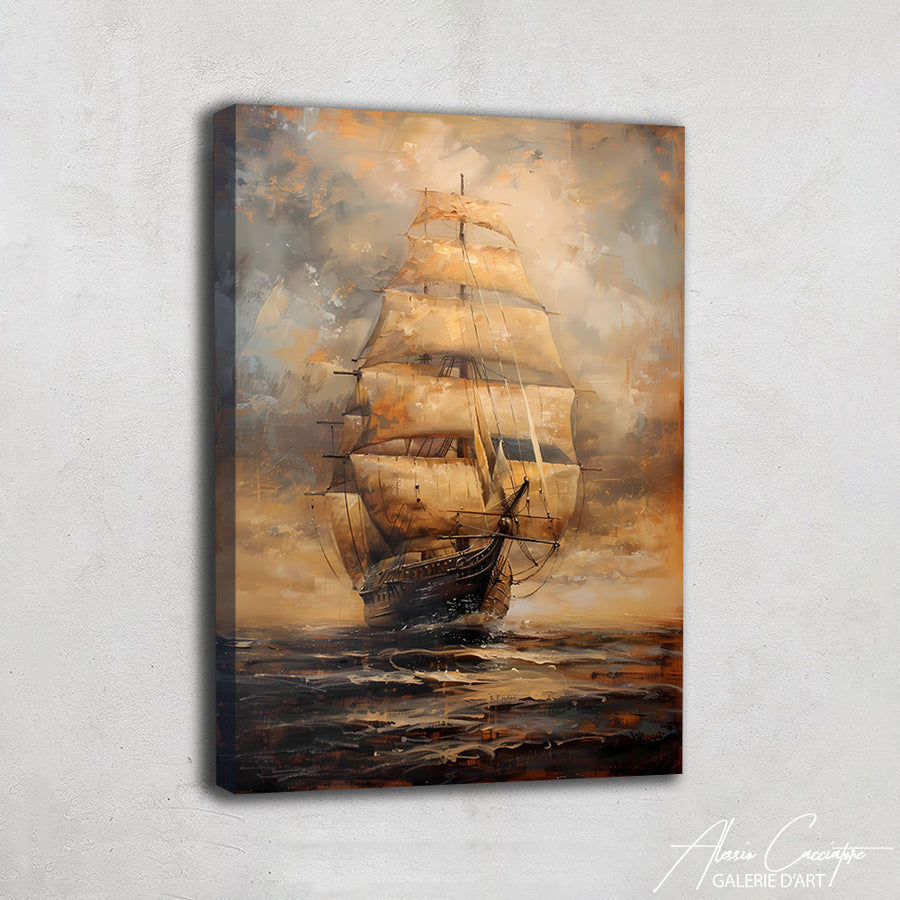
This first family falls within the direct tradition of Dutch painters and 19th-century English Romantic masters. Galleons, three-masted ships, schooners, frigates: old sailboats slicing through waves under a laden sky, precise rigging, unfurled flags. The palette is generally deep — Prussian blues, warm browns, stormy grays — sometimes with a warm burst of light caressing the sails. These paintings are wonderfully suited for classic interiors, wood-paneled libraries, English-style offices, or traditional seaside homes.
Modern sailboat and contemporary regatta
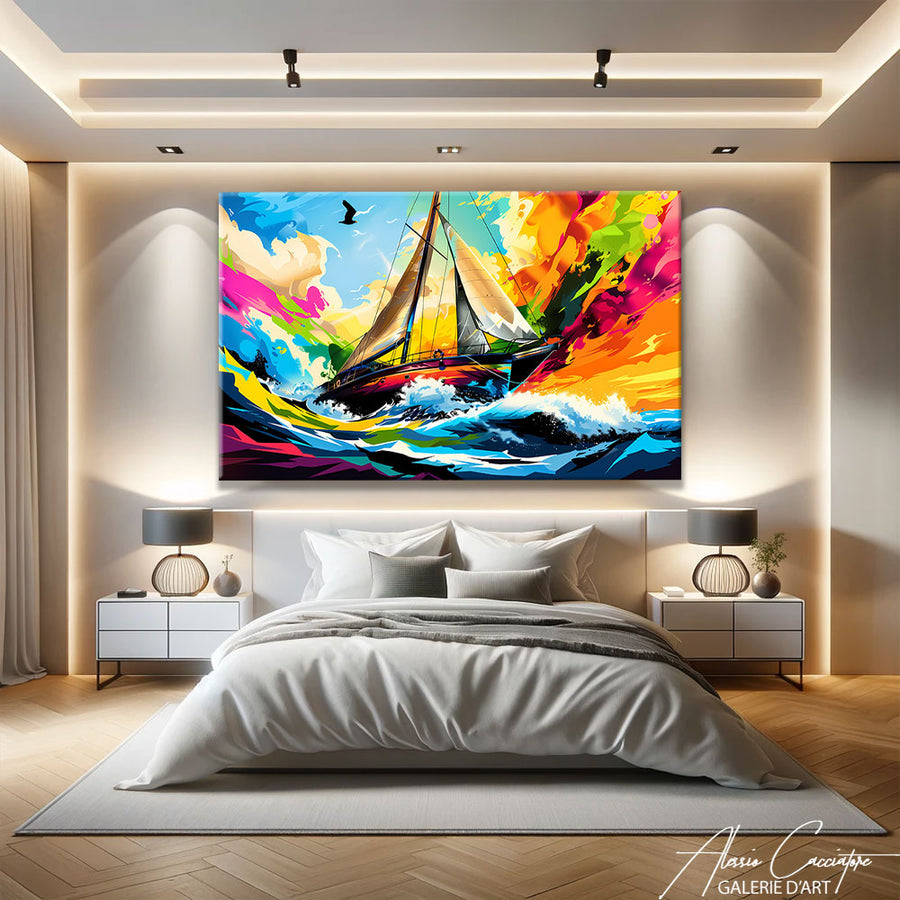
In contrast to the previous category, this family captures today's sporty sailboat. Sleek hulls, brightly colored technical sails, action, and speed. It reflects the aesthetic of major ocean races — Vendée Globe, America's Cup, Route du Rhum — without naming any specific boat or skipper. The palette is clear, luminous, and contrasted. These compositions blend perfectly with designer interiors, contemporary coastal secondary residences, and entrepreneurs' offices.
Sailboat at sunset: the suspended moment
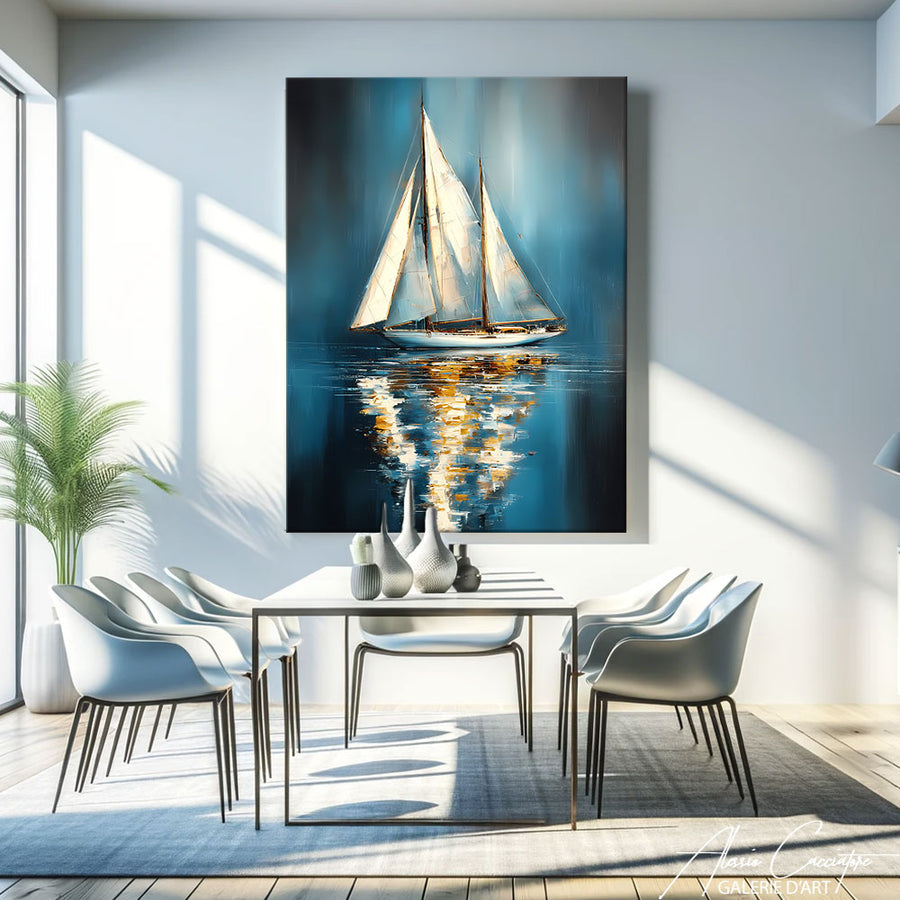
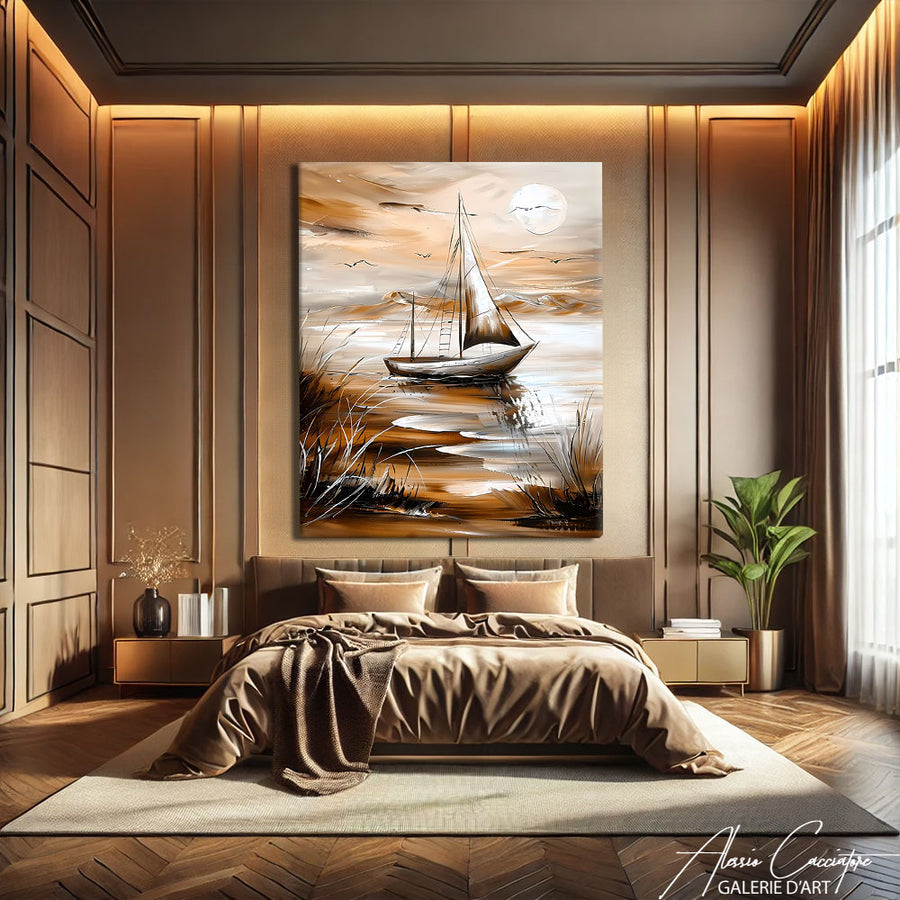
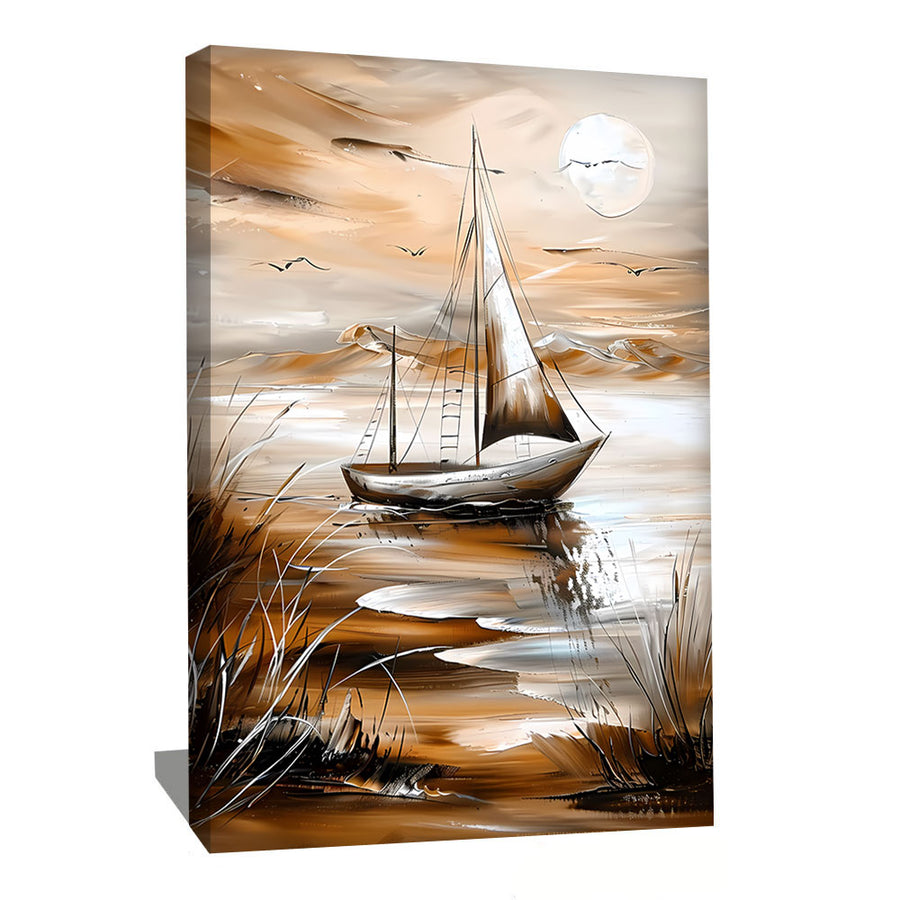
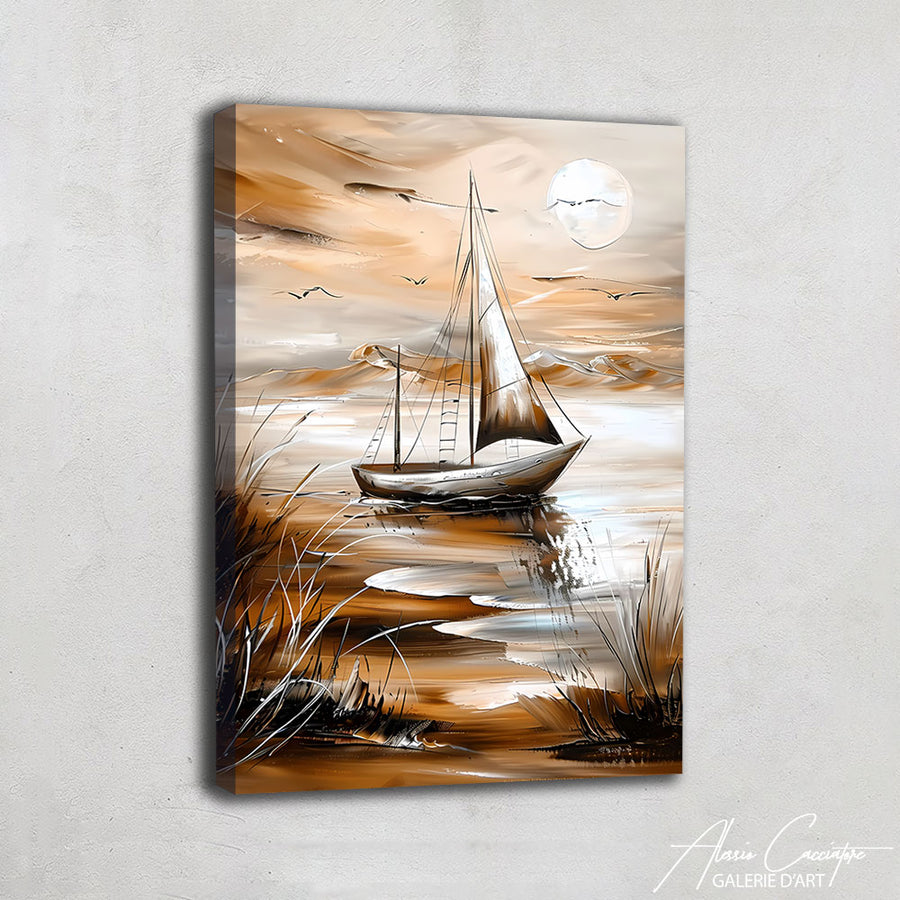
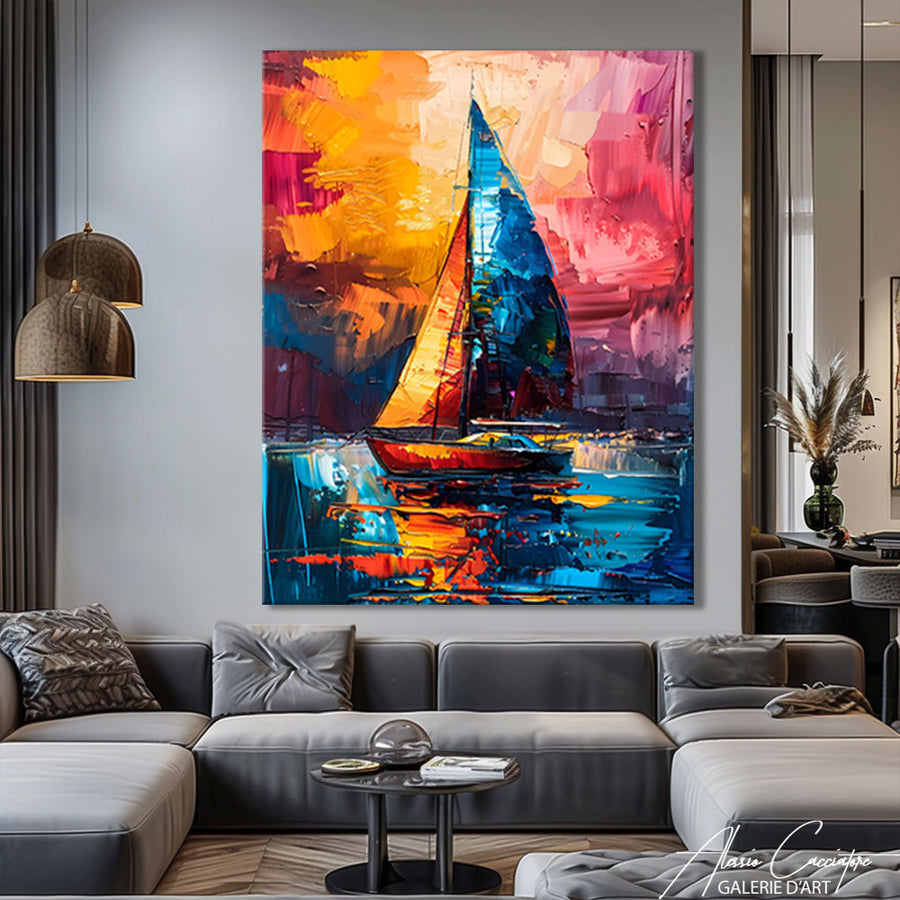
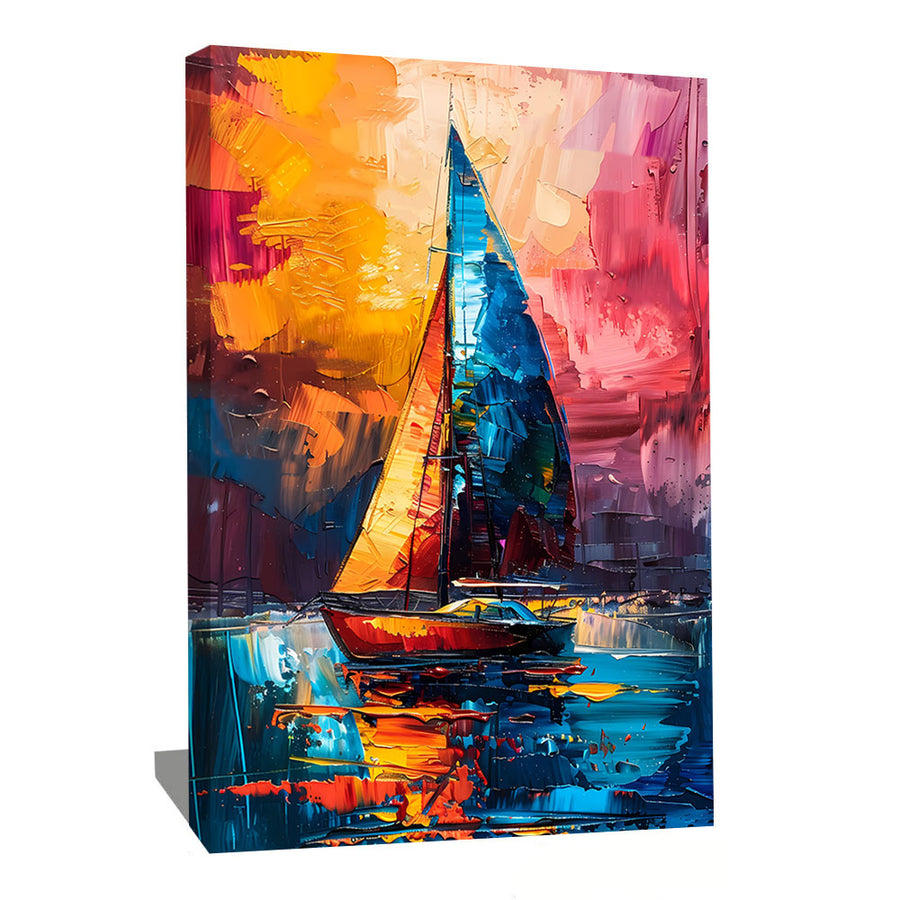
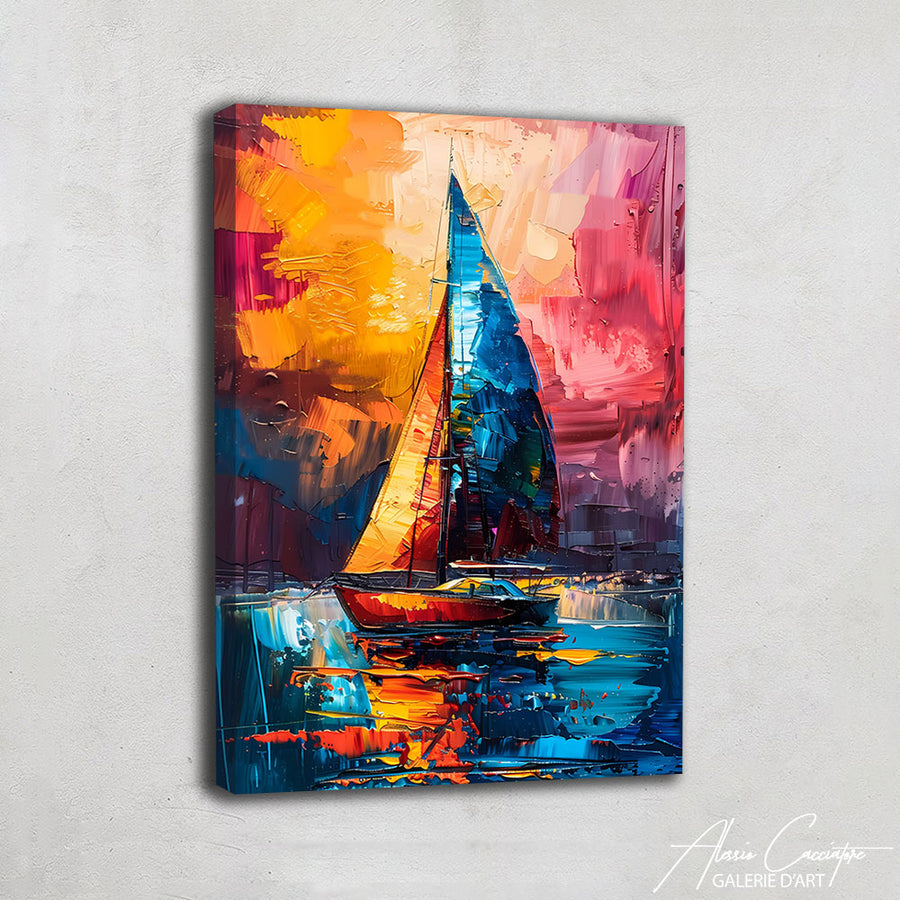
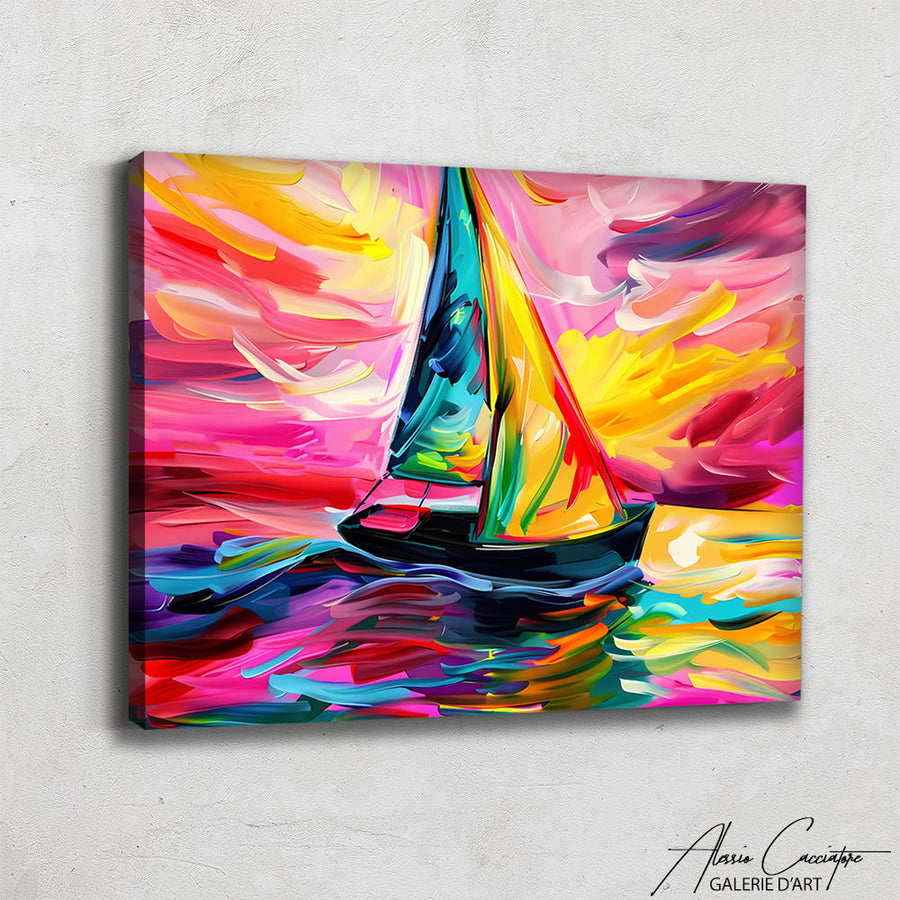
This is one of our most requested categories. The silhouette of a sailboat silhouetted against an orange horizon, sometimes doubled by its reflection on the water. These paintings play on the absolute simplicity of the composition: a sail, a horizon line, a chromatic gradient. The result is immediately soothing. They naturally find their place in adult bedrooms, cozy living rooms, and spaces where one seeks to diffuse a meditative note. The palettes range from coral pink to deep purple, passing through gold and amber.
Abstract and stylized sailboat
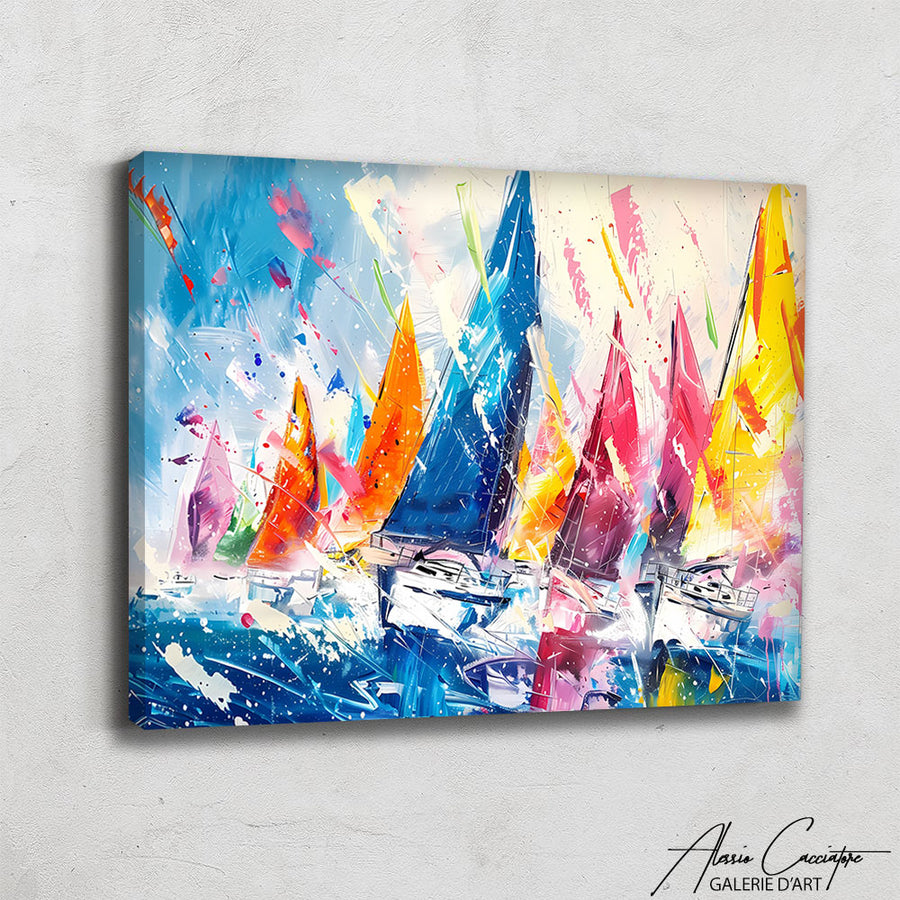
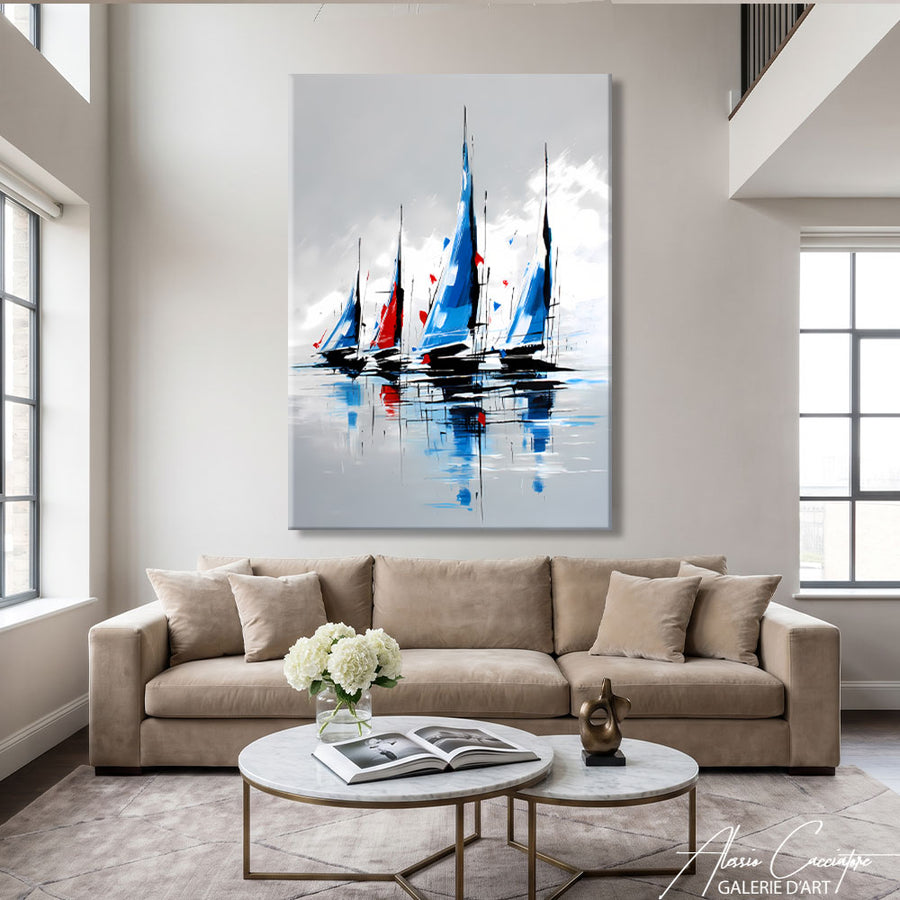
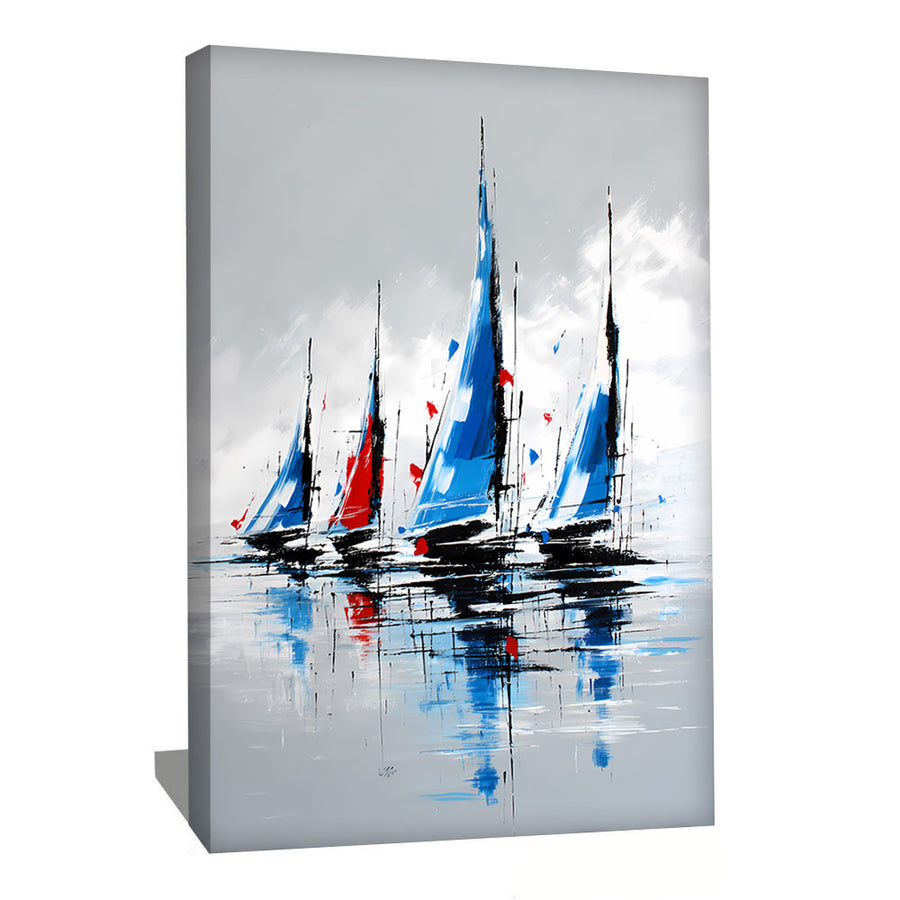
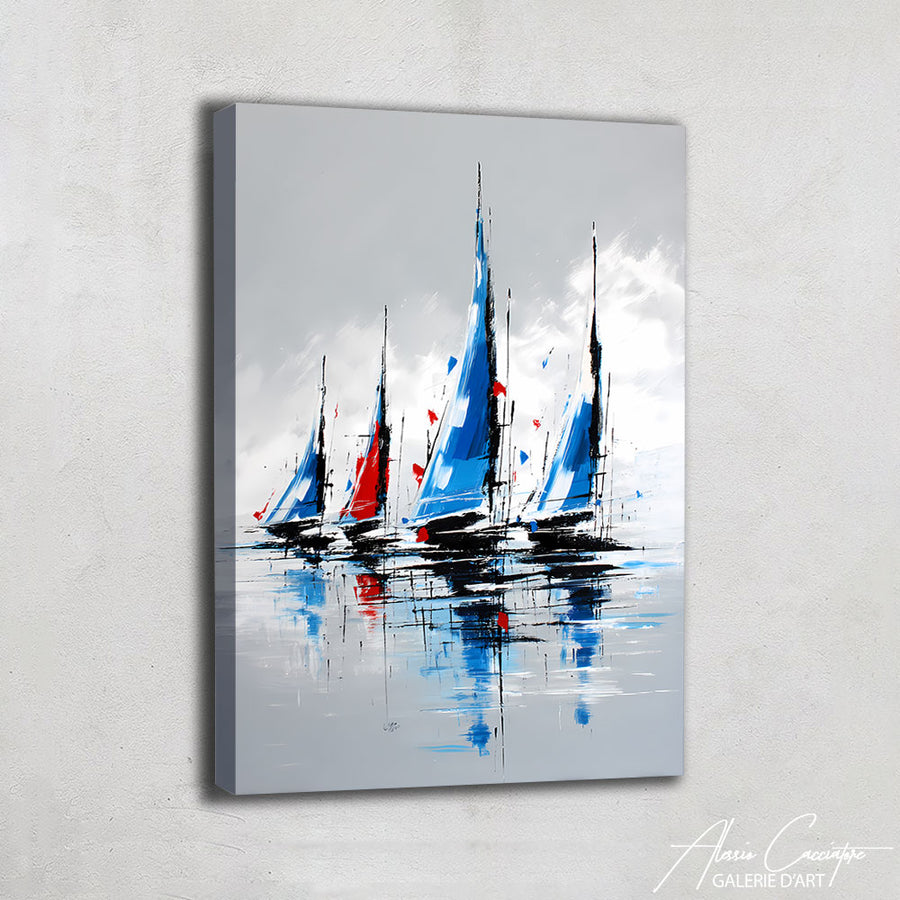
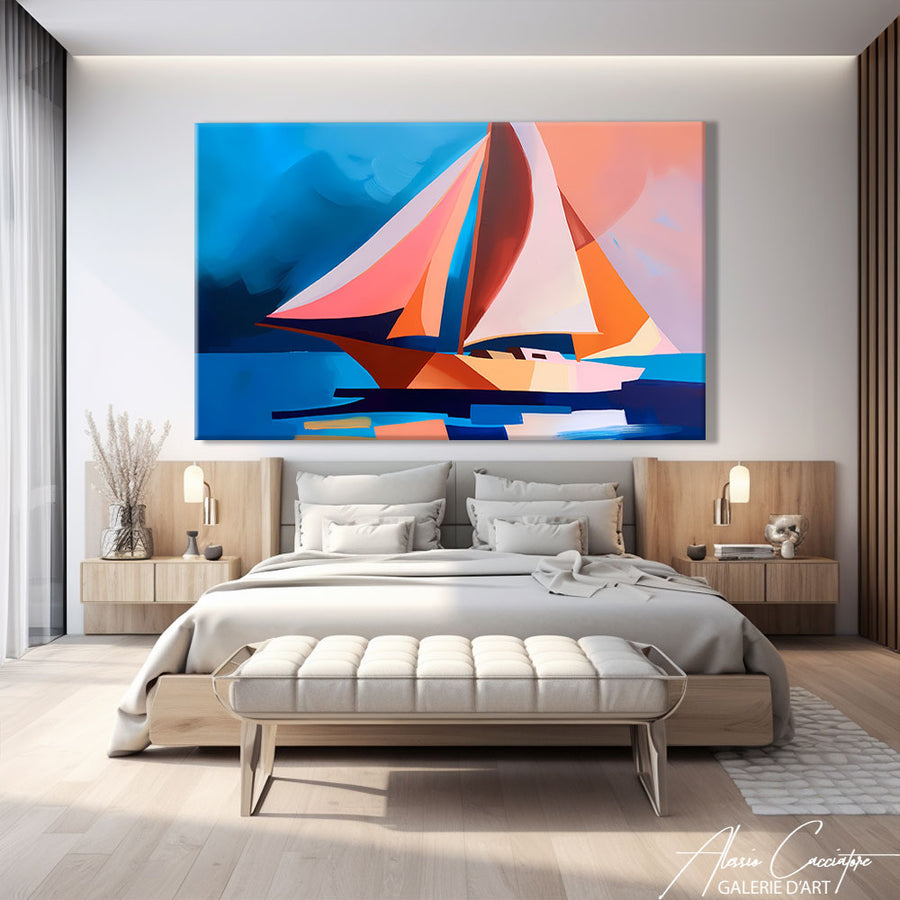
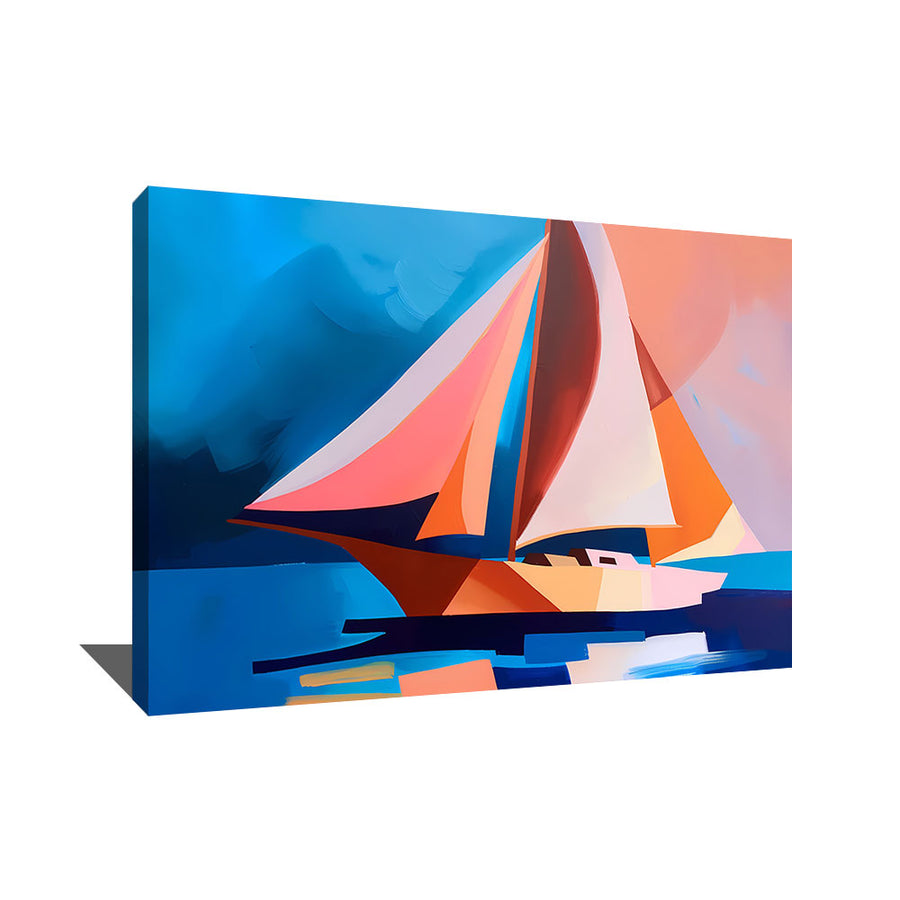
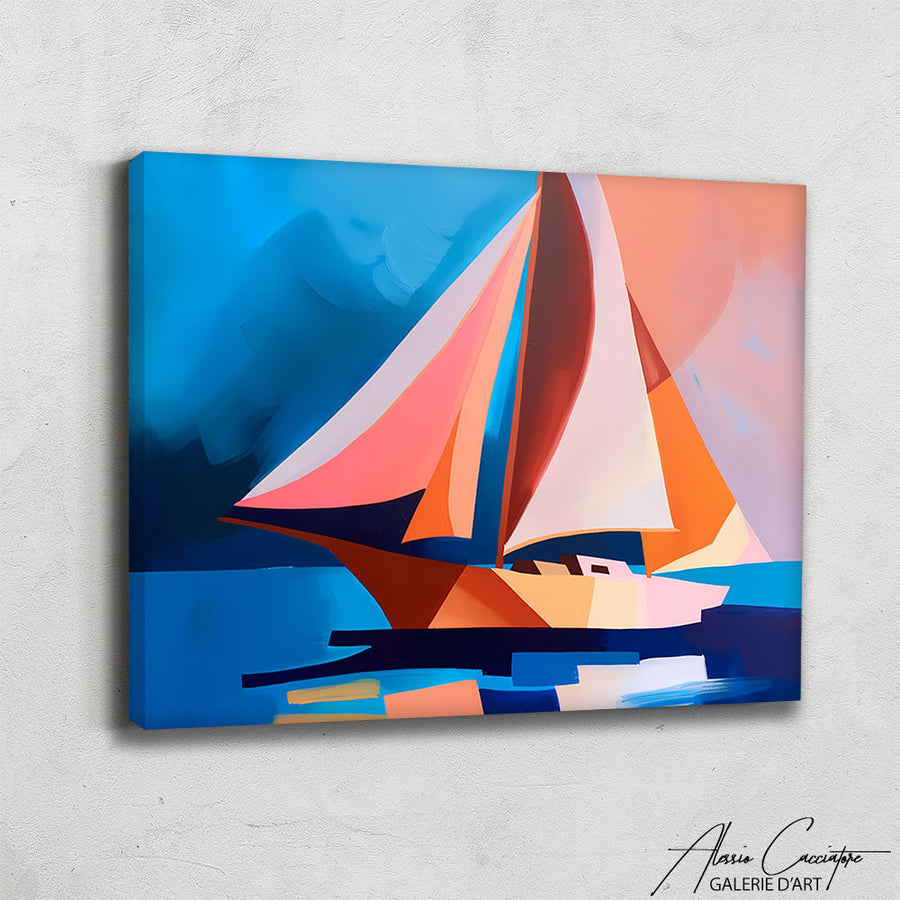
For lovers of contemporary art, we offer a selection where the sailboat becomes a pretext for formal work. Sails broken into flat colored areas in the cubist manner, silhouettes reduced to a few lines in a minimalist approach, geometric compositions where mast and sail triangle interact like in a Mondrian work applied to the sea. These paintings are suitable for design interiors that seek a marine reference without falling into heavy figuration.
Watercolor sailboat and pictorial effect
Another particularly successful family: compositions that adopt the aesthetic of watercolor, with drips, transparencies, and backgrounds that fade into the white of the paper. These paintings retain all the freshness of a sketch on the spot, that moment when the painter, on the quay, quickly captures the light before it changes. To be favored in poetic interiors, children's or teenagers' bedrooms, and reading nooks.
Monochrome sailboat: black and white, sepia
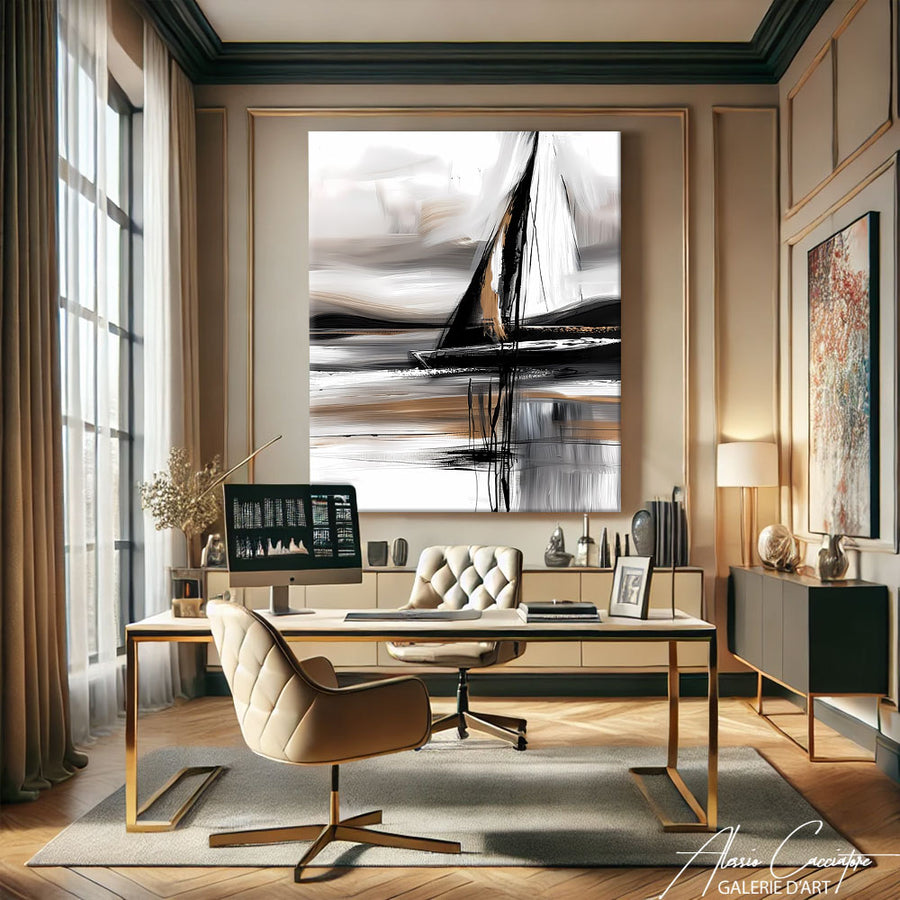
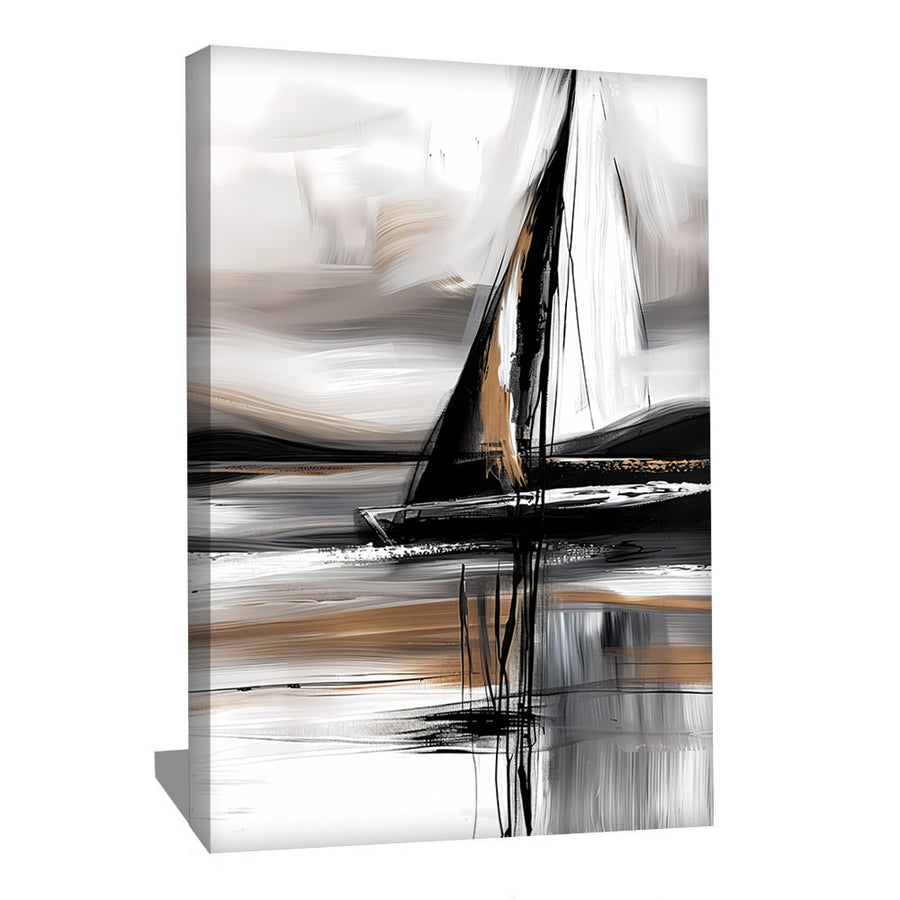
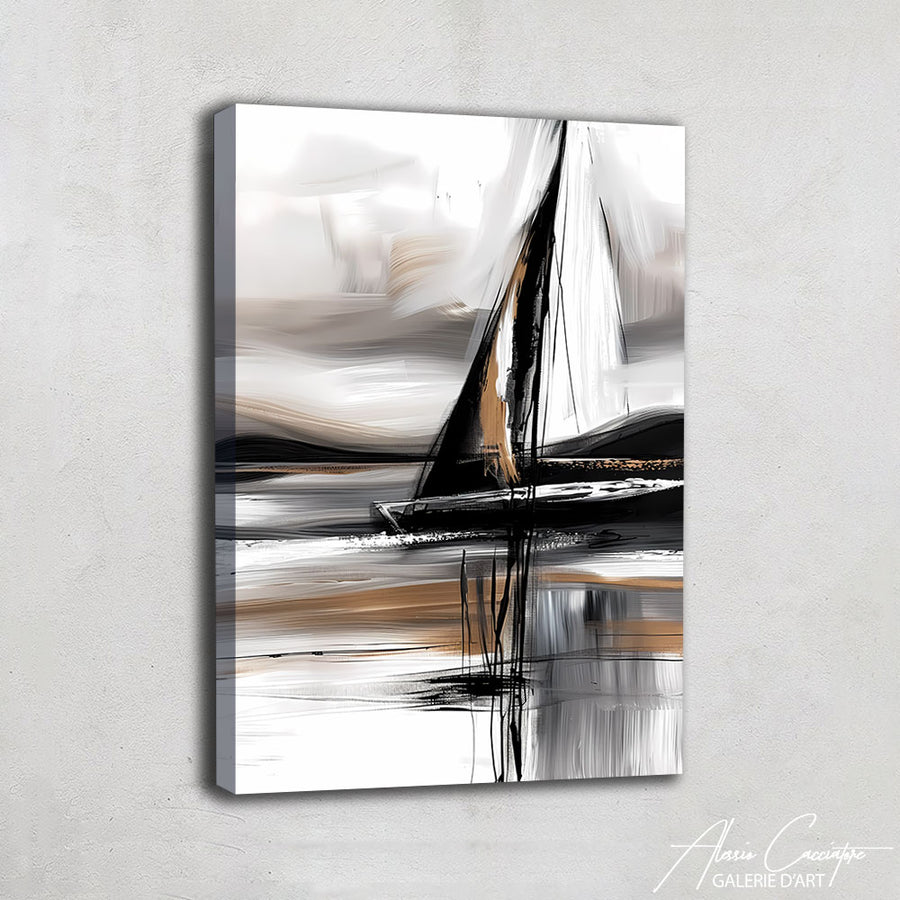
For those who prefer sober compositions, we have developed a selection of black and white or sepia sailboats. These images play on the purity of contrast, the geometry of the rigging, the drape of a swollen sail. They integrate admirably into minimalist, Scandinavian, or industrial interiors, and often provide a focal point for decorating a bookshelf or office without disrupting the overall palette.
The frigate and the exceptional ship
A special but important case: the motif of the three-masted frigate or the large exceptional sailboat (such as Hermione, Belem, Cutty Sark — without always explicitly naming them). These more narrative compositions tell the story of an entire era of maritime history. Very suitable for history enthusiasts' offices, private yacht clubs, and collectors' libraries.
Symbolism of the sailboat: what your choice says
Beyond the immediate aesthetic, the sailboat painting evokes a rich imaginary that deserves to be explored. Understanding this symbolism often helps choose the right painting for the right room.
Travel, escape, the horizon
This is the primary meaning of the sailboat. An archetypal image of departure, the open sea, elsewhere. Hanging a sailboat painting in your living room or entryway is a daily reminder that there is a horizon beyond your own walls. Many of our clients choose this motif during periods of life transition — moving, career change, retirement — as a silent encouragement for inner movement.
Mastery and patience
Sailing is about dealing with what you can't control — the wind, the sea, the weather. It's about making the most of what is, rather than imposing what you want. This particular quality makes the sailboat painting an excellent motif for a professional office or workspace. It reminds us, in difficult moments, that mastery often means tacking rather than forcing.
Family and transmission
In many families, sailing is a story passed down from generation to generation. First sails in an Optimist, summers on the family boat, Channel crossings, Mediterranean cruises. For these people, the sailboat painting is less a decorative image than a personal memory elevated to the status of a wall signature. It says something about the identity of the home.
Connection to a place: Brittany, Normandy, French Riviera
Many sailboat paintings are also, implicitly, tributes to a place. Brittany and its legendary ports, Normandy with Étretat and Honfleur, the calanques of Cassis, the coves of Saint-Tropez or the Bay of Cannes. For those who grew up near the water, or who return there every summer, the sailboat painting carries this precise geographical attachment.
Choosing your palette: colors and atmospheres
The chromatic range of a sailboat painting is wider than one might think. Here are the main tones in our selection.
Deep blues and off-whites: the classic marine
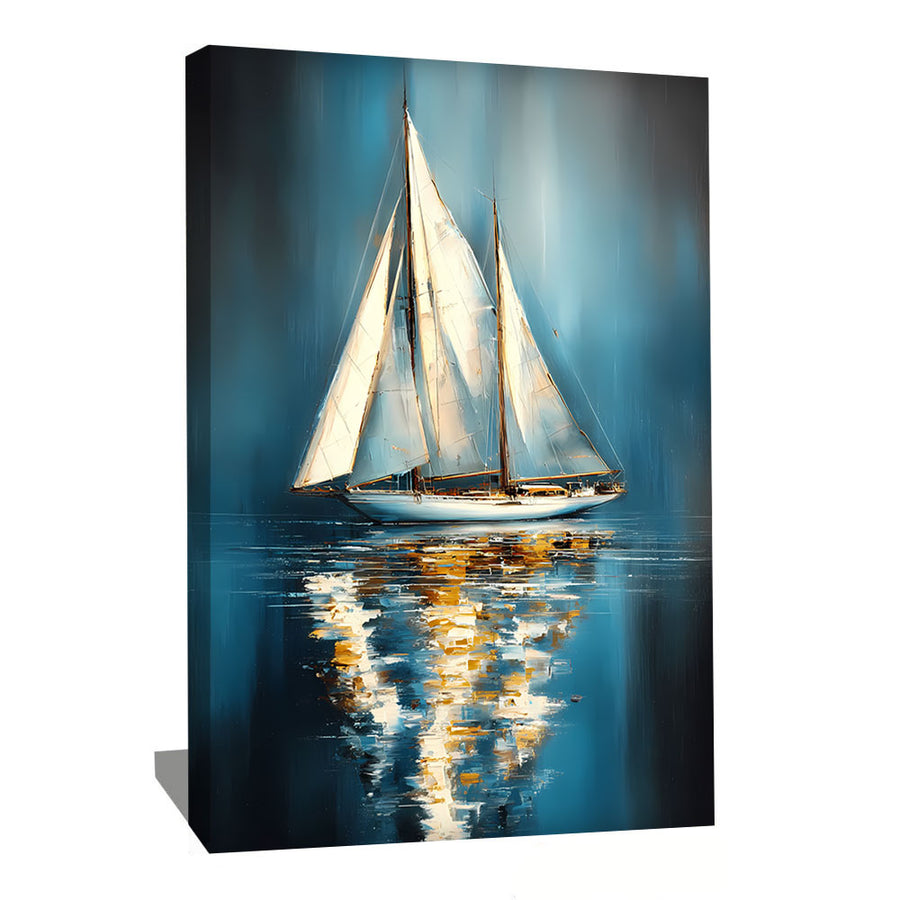
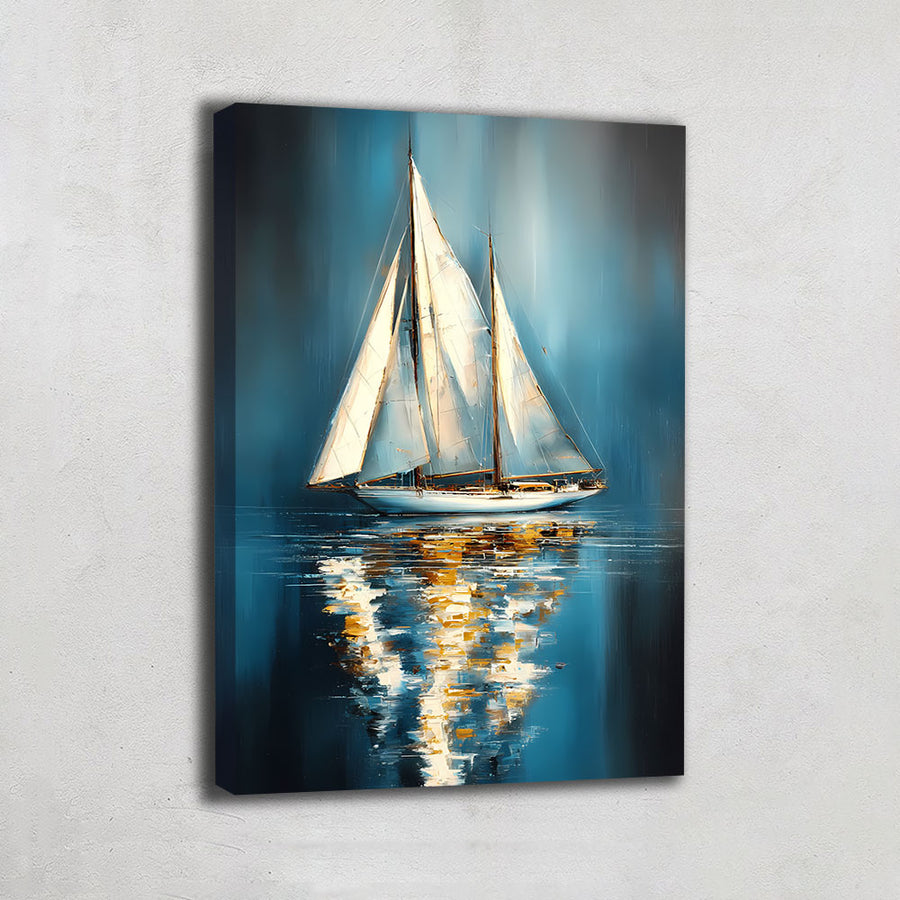
This is the most iconic palette. Navy blue, Prussian blue, midnight blue for the sea and sky, off-whites for sails and clouds. This tonal scheme fits into almost any interior and remains the most universal. Particularly successful in bedrooms, libraries, and English-inspired living rooms.
Oranges and purples: the sunset
For twilight compositions. From coral pink to deep purple, including burnt orange and amber. This palette diffuses immediate warmth and is suitable for rooms where you want to create emotional envelopment — adult bedrooms, cozy living rooms, intimate dining rooms.
Black and white: graphic sobriety
For lovers of understated compositions. The monochrome sailboat painting plays on the purity of contrast and the pure geometry of the rigging. It integrates perfectly into minimalist, Scandinavian, and industrial interiors, and introduces a marine reference without disrupting a minimalist decor.
Multicolor and vibrant palette: the modern regatta
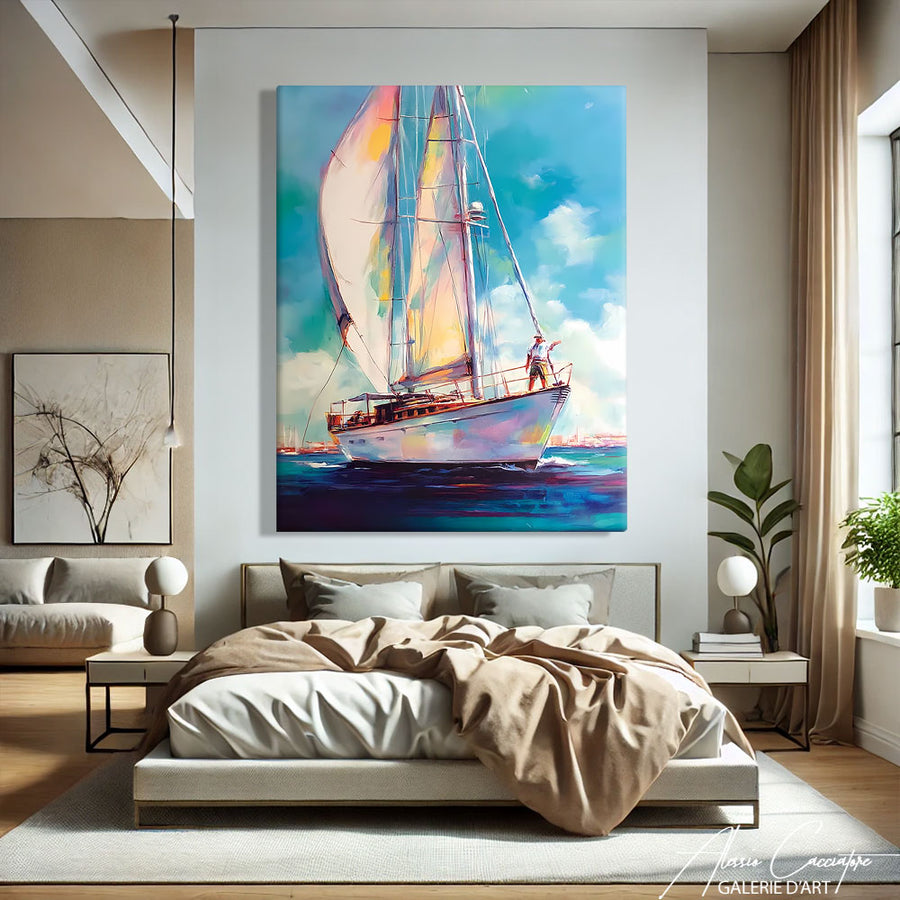
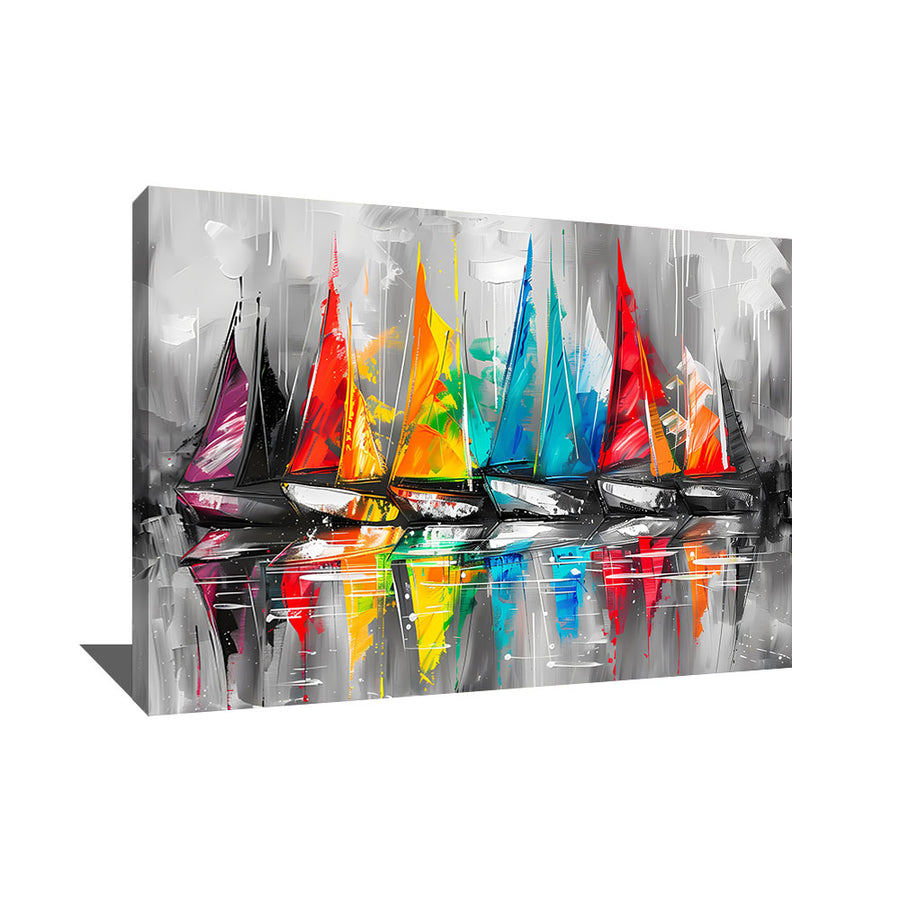
For contemporary sports compositions. Sails in technical sponsor colors, signal flags, white foam on turquoise blues. This dynamic palette suits lively interiors, family spaces, and young entrepreneurs' offices.
Sepia and ochre tones: historical evocation
For antique seascapes and historic frigates. Browns, beiges, ochres, sometimes enhanced with gold. This more subdued palette evokes old maps, logbooks, and ports of yesteryear. It naturally fits into classic interiors, wood-paneled libraries, and English-style offices.
Sailboat painting: for which room in your home?
Every room has its ideal sailboat. Here are our recommendations.
For the living room: open up the space to the horizon
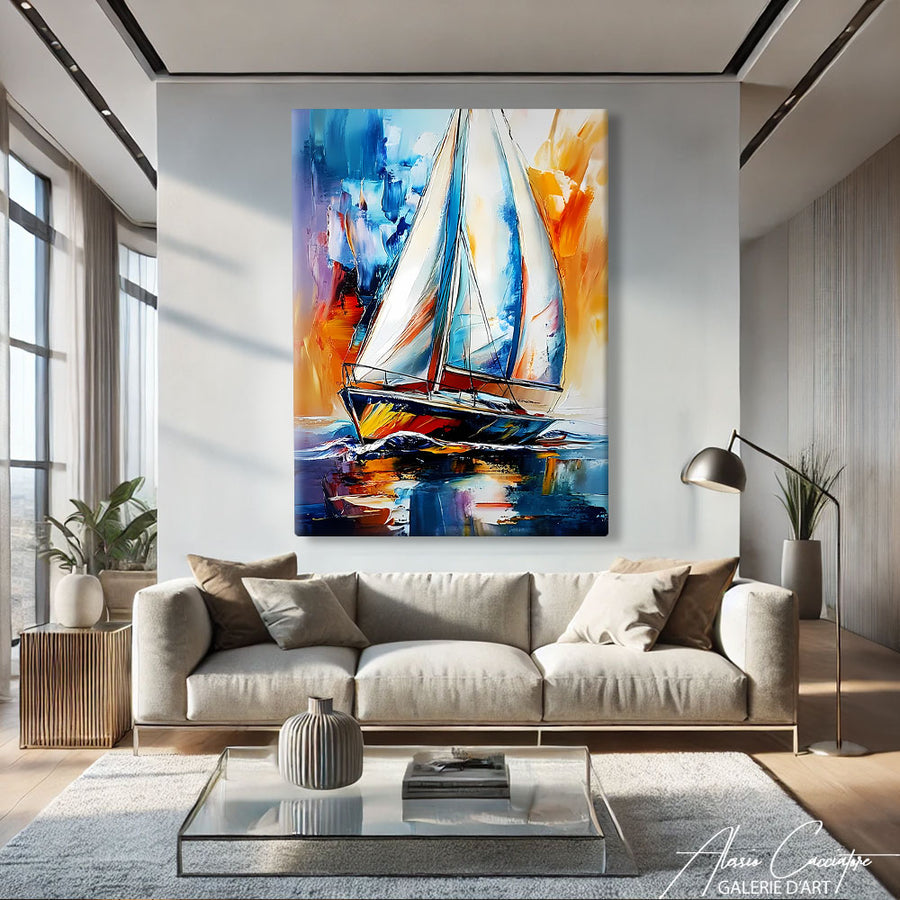
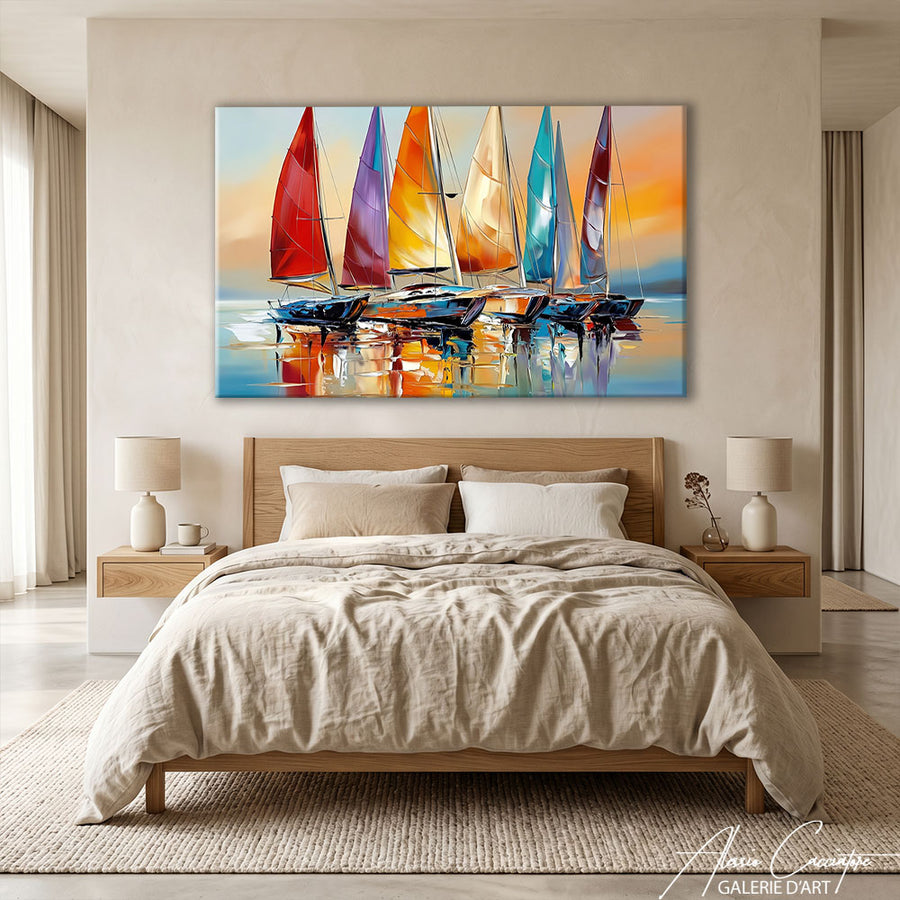
The sailboat at sunset or the classic marine painting are among the most soothing motifs that can be placed above a sofa. A 120x80 cm format for high walls, or a panoramic triptych to give the room a cinematic dimension. The painting visually opens up the space and functions as an additional window — an effect particularly valuable in urban apartments that sometimes lack depth of field. See our living room selection.
For the bedroom: silence and calm
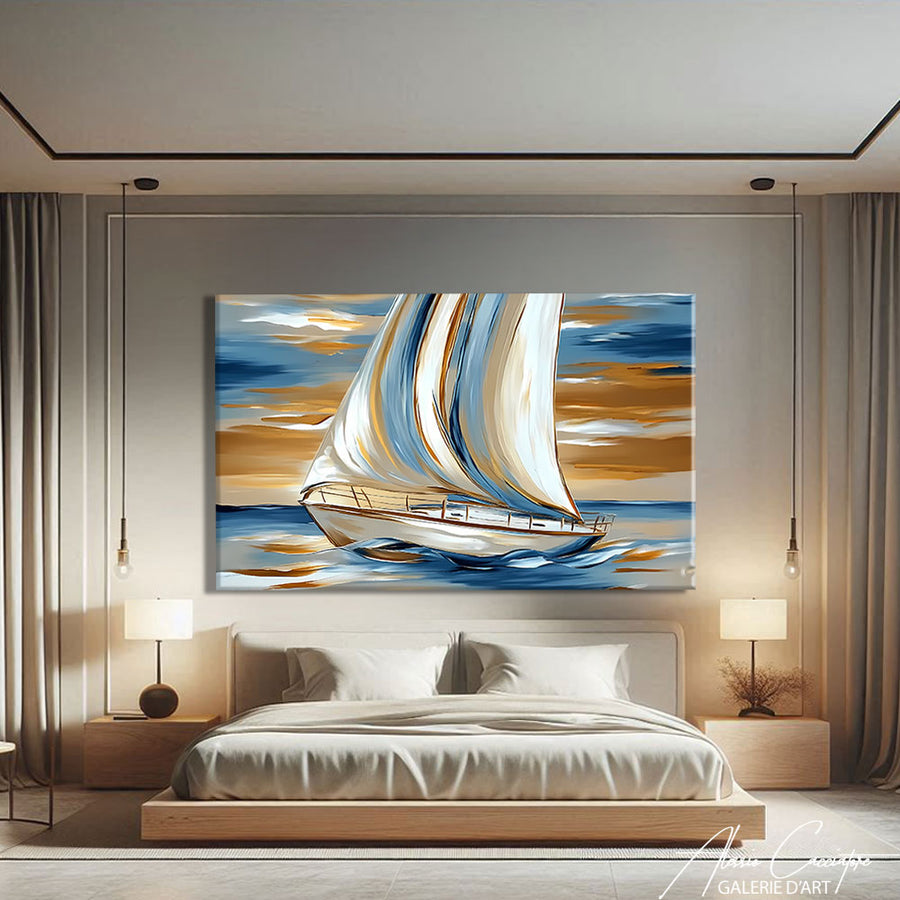
Prioritize the most contemplative compositions here: sailboat at sunset, monochrome seascape, soft watercolor. A 80x60 cm format above the headboard, or vertical compositions on the side wall. Avoid overly dynamic regattas that might disrupt the transition to sleep.
For the office: mastery and inspiration
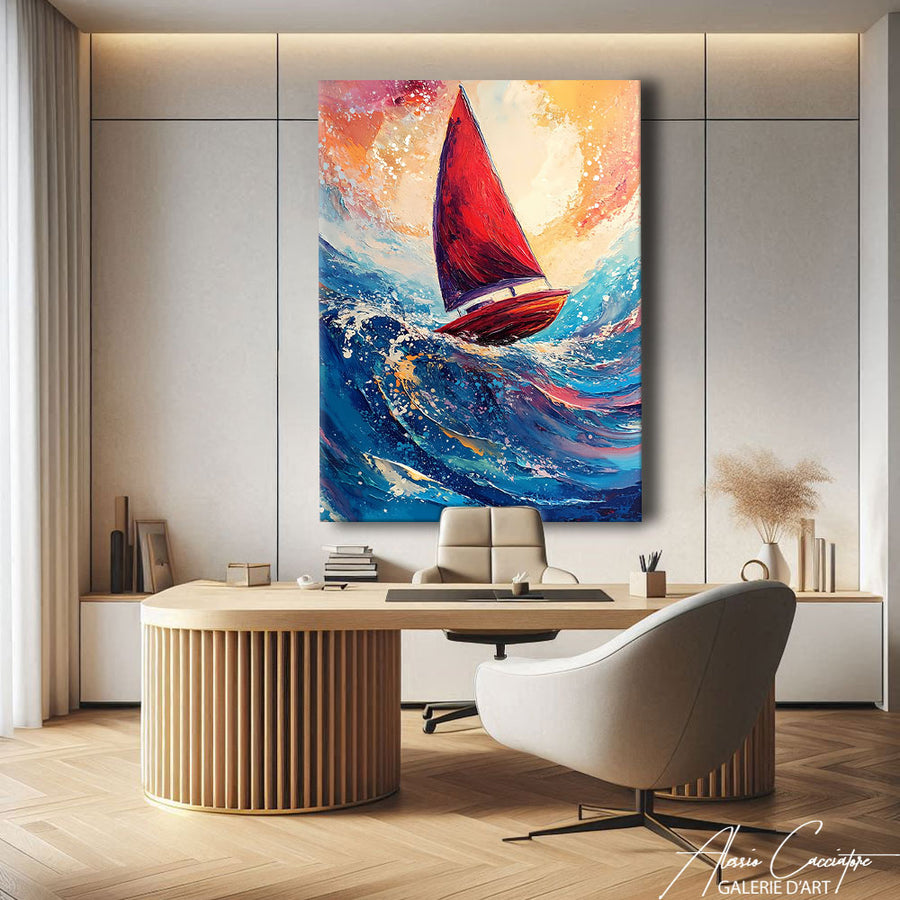
The sailboat is probably one of the best motifs one can install in a professional office. Its symbolism of mastery in the face of unpredictable elements, of patience and strategy, makes it a particularly suitable visual companion for work. Opt for classic marines, historic frigates, or contemporary regattas in a compact format (60x40 or 80x60 cm).
For the entryway: set the tone right at the door
Vertical format, a solitary sailboat on a clear horizon, light palette: the entryway is one of the places where the sailboat painting best deploys its evocative power. Your guest walks through the door, and is immediately invited on a journey. Particularly successful in family homes by the sea or secondary residences.
For the dining room and kitchen
Regatta compositions, bustling ports, and sailboats in motion are perfect for these convivial spaces. They exude a joyful energy and immediately spark conversation during meals. For the kitchen, absolutely prioritize plexiglass for its resistance to splashes and heat.
For children's and teenagers' spaces
The sailboat remains one of the most universally appreciated motifs for children's bedrooms — especially among young boys, but not exclusively. Soft watercolor compositions or colorful stylized sailboats are suitable for younger children. Contemporary regattas and historic frigates are more aimed at pre-teens and teenagers.
For seaside and secondary residences
A special case worth mentioning: seaside houses, coastal chalets, southern villas. In these settings, the sailboat painting almost becomes a must-have. Our advice: avoid overly obvious compositions (a sailboat in a beach house is clichéd) and favor either unexpected angles (close-up view of rigging, abstraction of sails, graphic monochrome), or large panoramic formats that interact with the real view.
Format and dimensions: finding the right scale
The format changes everything — especially for a subject as panoramic as a sailboat at sea.
Compact format (60x40 cm) — Ideal for an office, reading nook, narrow wall, or in a series of three complementary sailboats to create a wall gallery (e.g., an old sailboat, a sunset, a monochrome). Particularly successful when composed with other marine motifs (lighthouses, seaside, marine fauna).
Medium format (80x60 cm) — The versatile size. Above a chest of drawers, a console, a sideboard. Imposing enough to make a statement, compact enough to coexist with other decorative elements without dominating.
Large format (120x80 cm) — The centerpiece. Above a three-seater sofa or a double bed, on a large living room wall. Assertive presence that visually opens up the room like a window to the horizon.
Triptych — A configuration particularly suited to seascapes. Three panels composing a panoramic sea scene, or three moments of the same regatta. The effect is immediately cinematic. See our triptych collection.
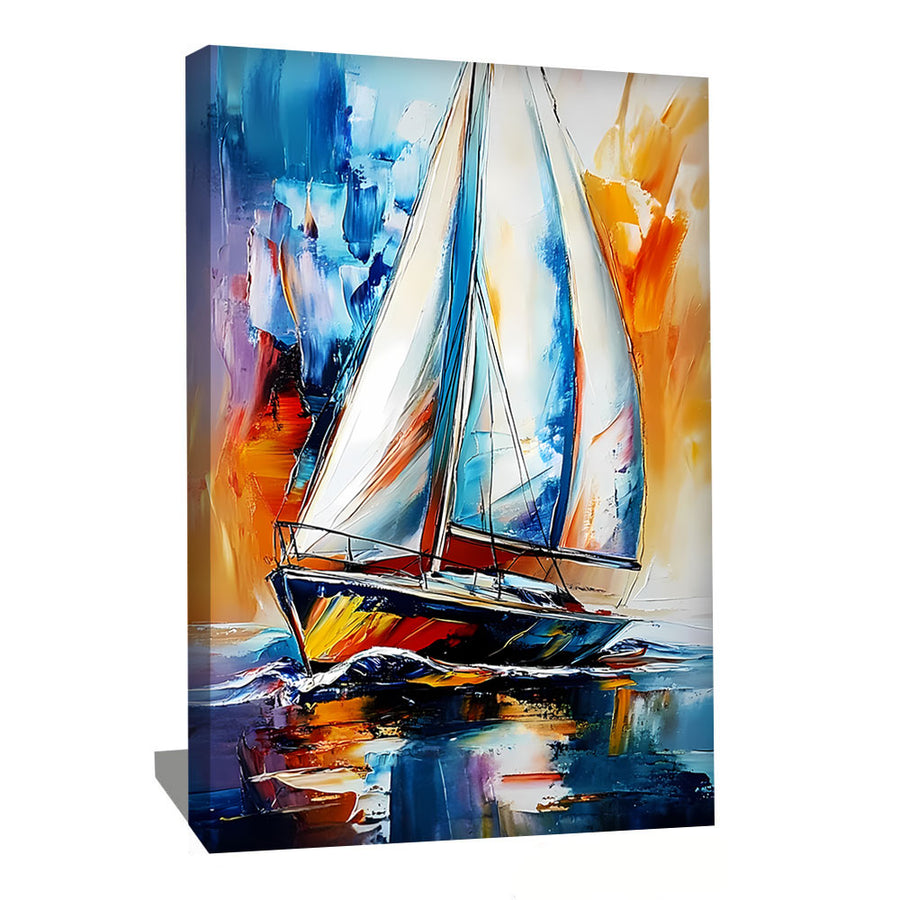
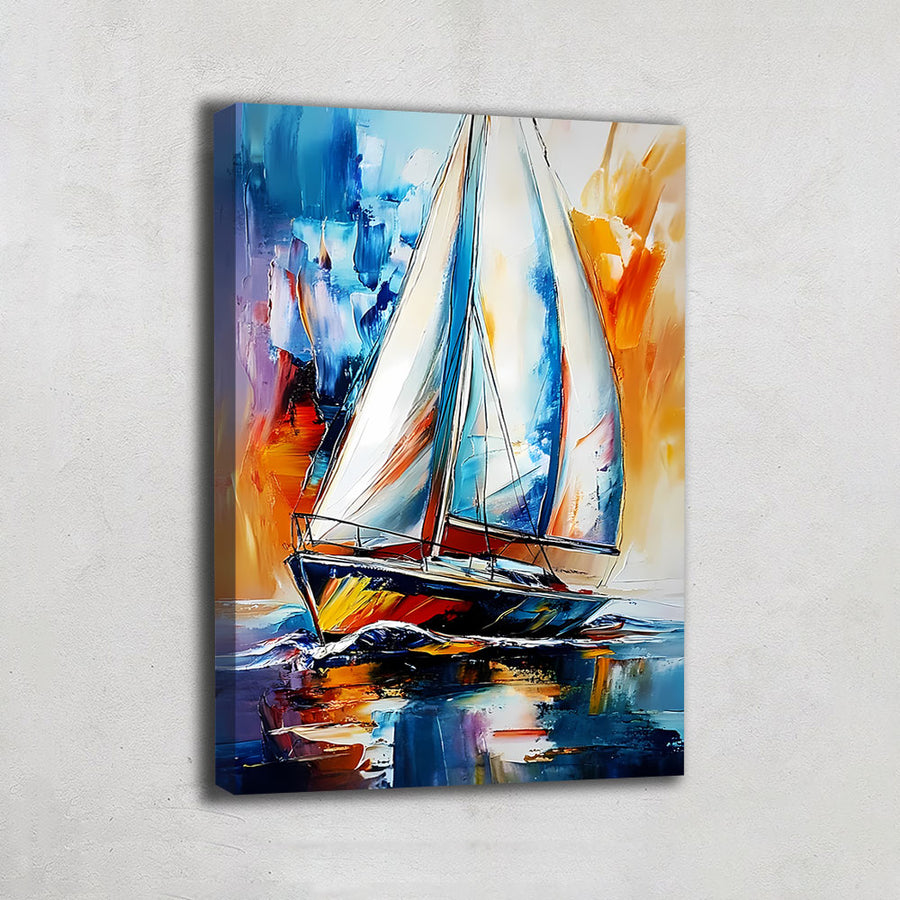
Vertical format — Rarer for this subject but very successful for compositions with a central mast, sailboats seen from the bow, or minimalist approaches. Ideal between two pieces of furniture, in a narrow hallway or a stairwell. See the vertical collection.
Horizontal panoramic format — The most suitable format for classic seascapes and regatta scenes. Above a long sofa or a wide headboard, it fully unfolds the horizontal dimension of the sea.
Premium canvas or glossy plexiglass: choosing the right medium
All our sailboat paintings are available in two versions. The choice depends on the desired finish and the room where it will be displayed.
Premium canvas print
Our canvas is hand-stretched over a 2 cm thick FSC-certified spruce wood frame. The matte and slightly granular texture is reminiscent of traditional gallery artworks. For old seascapes and sunset sailboats, it subtly softens contrasts and gives compositions a particularly successful pictorial depth. The canvas gently absorbs light, creating an intimate and subdued viewing experience — ideal for cozy atmospheres.
We recommend canvas for classic seascapes, monochrome compositions, watercolors, and generally anywhere you want the painting to complement the furniture without dominating the room.
Glossy plexiglass print
Plexiglass offers a smooth, glossy finish that enhances colors and accentuates contrasts. For contemporary regattas, intense sunsets, and colorful abstract compositions, it reveals the full chromatic vibrancy and gives the painting an almost luminescent effect. Its smooth surface is exceptionally resistant to humidity and salt — making it the mandatory choice for bathrooms, kitchens, conservatories, and especially seaside homes where salty air damages more porous materials.
In both cases, our prints use odorless, solvent-free ink, safe even in a child's bedroom. The printing technology we use preserves contrasts and color fidelity for several decades. Each painting is delivered ready to hang, including hanging system.
How to integrate a sailboat painting into an existing decor
The sailboat is one of the most versatile motifs you can choose — it integrates admirably into many aesthetics, provided you choose the right style.
With a classic or bourgeois interior
This is probably the most natural pairing. Dutch marines, historic frigates, old sailboats: these compositions interact admirably with classic furniture, a wooden library, thick drapes. Prioritize matte canvas and sepia or deep blue palettes. The effect is immediate: you feel like you're in a long-haul captain's family home.
With a coastal or seaside interior
The aesthetic of the Hamptons, the Norman coast, or Provençal houses naturally lends itself to sailboat paintings. Blues, whites, beiges, driftwood. Here, prefer clear and luminous compositions, sailboats at anchor, tranquil harbors. Avoid overly dramatic seascapes that would clash with the relaxed atmosphere.
With a contemporary or minimalist interior
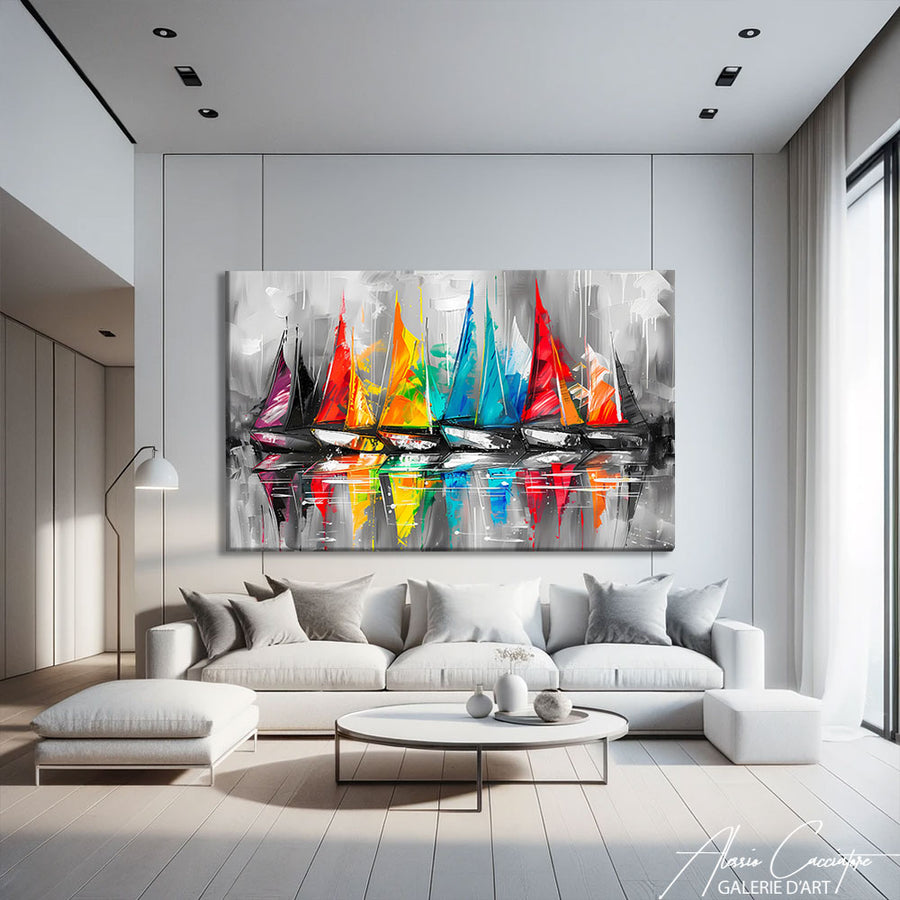
The abstract sailboat, the graphic monochrome, or the streamlined sunset composition find their ideal place here. Against a white, pale grey, or taupe wall, the painting becomes the absolute focal point. Choose a large format or a triptych to fully embrace the statement piece.
With a Scandinavian interior
Soft watercolor sailboats, monochrome compositions, or pastel-toned sunsets naturally fit into the Nordic aesthetic. Light wood, natural textiles, soft palette: the sailboat painting complements the ensemble without disrupting the balance.
For an industrial or loft interior
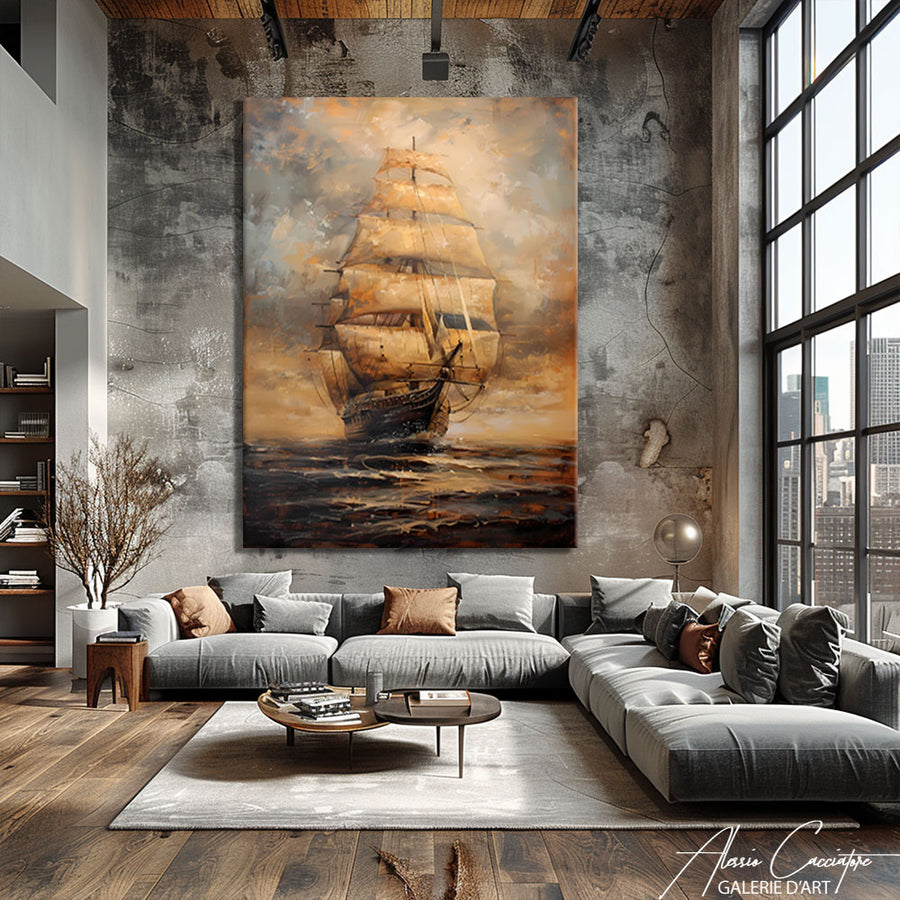
More unexpected but very effective: historical sepia marines or old frigates bring a cultural dimension that warms up the industrial coolness. Prioritize large formats and narrative compositions that can carry the loft's dimension.
Our complementary collections
If the world of sailboats appeals to you, you will probably also like:
- The complete boat painting collection, which brings together all types of vessels beyond sailboats
- The sea paintings which admirably interact with sailboats in a coherent coastal setting
- The landscape paintings for compositions where the sea interacts with other natural horizons
Frequently asked questions about sailboat paintings
Are all your sailboat paintings prints or original paintings?
These are high-definition prints on premium canvas or glossy plexiglass, manufactured in our workshop in Germany. We do not sell original hand-painted works. Our compositions are designed, reworked, and printed with gallery quality, but the medium remains print — this is what allows us to offer work of this level at an accessible price.
Is the sailboat painting suitable as a gift?
Very much so. Its symbolism of travel, mastery, and family legacy makes it a particularly suitable gift for retirement, a professional promotion, a wedding, or for a loved one passionate about sailing. The 80x60 cm format on canvas remains the best compromise between visual impact and ease of transport.
How high should a sailboat painting be hung?
The classic rule: center the painting approximately 1.50 meters from the floor, which corresponds to the average eye level. Above a sofa or a headboard, leave 20 to 30 cm between the top of the furniture and the bottom of the painting. For panoramic compositions with a horizon, ensure that the horizon line is at eye level to maximize the immersion effect.
What size should I choose for my wall?
The golden rule: the painting should represent approximately two-thirds of the width of the furniture or wall it overhangs. Above a 2-meter sofa, opt for a 120x80 cm format or a triptych. For a free wall in a large room, you can go bigger and create a real statement piece. For a narrow wall or a panel between two pieces of furniture, the vertical format is essential.
Is plexiglass suitable for seaside homes?
Yes, it is even the medium we recommend first and foremost for these environments. Salty air and coastal humidity gradually damage porous supports, whereas the smooth surface of plexiglass remains perfectly stable and can be cleaned with a simple wipe. It is the most durable choice for a seaside secondary residence.
Are your paintings delivered ready to hang?
Yes. The canvas is delivered stretched on its frame with the hangers already attached to the back. The plexiglass is delivered with its invisible mounting system. In both cases, you can hang it in less than five minutes.
How to care for a printed canvas or plexiglass painting?
A dry or slightly damp cloth is sufficient for both media. Avoid abrasive chemical products and direct, prolonged exposure to the sun to preserve color fidelity — especially deep blues and oranges, which are more sensitive to UV rays.
How long does color fidelity last?
Our solvent-free inks and professional media guarantee color fastness for several decades under normal conditions of use, away from prolonged direct sunlight. This is what durably distinguishes our prints from cheap reproductions that fade in a few years.
Questions fréquentes
Quels sont les délais de livraison ?
La livraison est offerte dans le monde entier, sous 4 à 7 jours. Vous pouvez suivre votre colis à tout moment depuis la page « Suivre le colis ».
Le tableau est-il prêt à accrocher ?
Oui, le système d'accroche est inclus. Les toiles sont tendues sur un châssis en bois d'épicéa de 2 cm (4 cm en option) et les plexiglas sont livrés avec des rails d'accroche en aluminium invisibles.
Toile ou plexiglas : quelle différence ?
La toile est une vraie toile tendue sur un châssis en bois. Le plexiglas est incassable, protégé des rayures et du vieillissement, et travaillé à la main par nos artisans en Allemagne.
Puis-je retourner mon tableau ?
Oui, vous avez 30 jours pour changer d'avis : contactez-nous par e-mail ou par le chat. Et si votre œuvre arrive abîmée, nous la réimprimons, sans retour à faire.
Livraison offerte sous 4 à 7 jours
Fabriqué à la main en Allemagne
30 jours pour changer d'avis