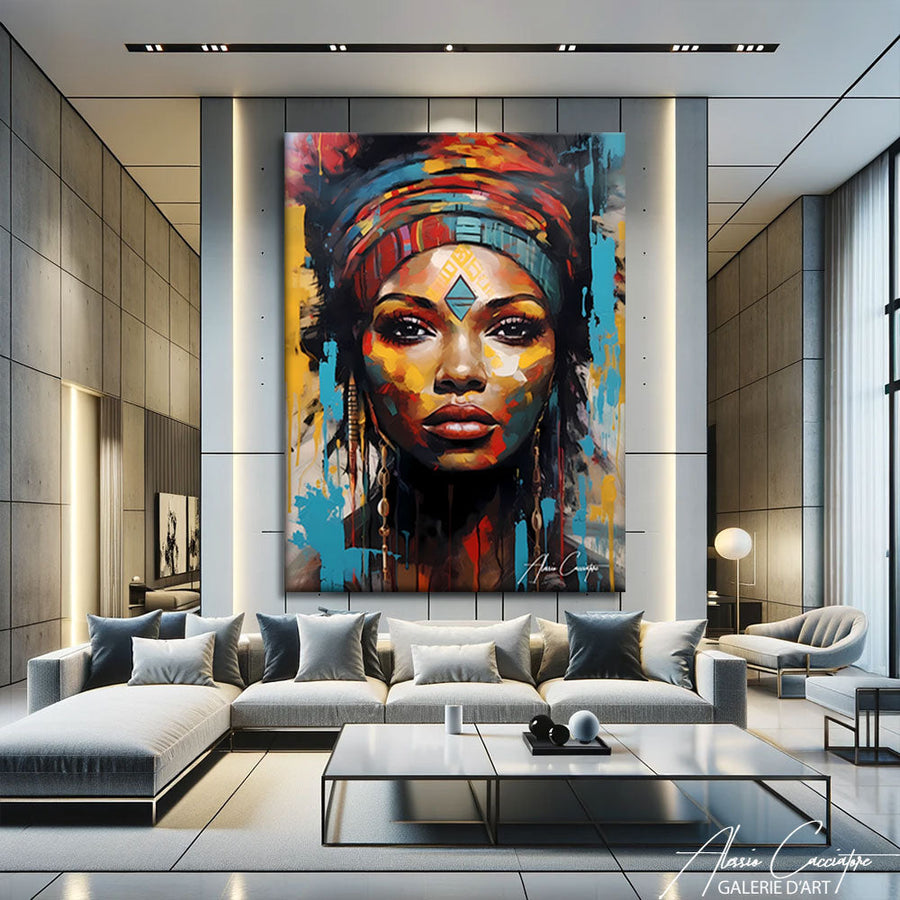

Arabic Painting
17 œuvresDes œuvres en édition limitée, pensées par l'artiste pour illuminer votre intérieur.
Fait main en AllemagneLivraison offertePrêt à accrocher30 jours pour changer d'avis
-
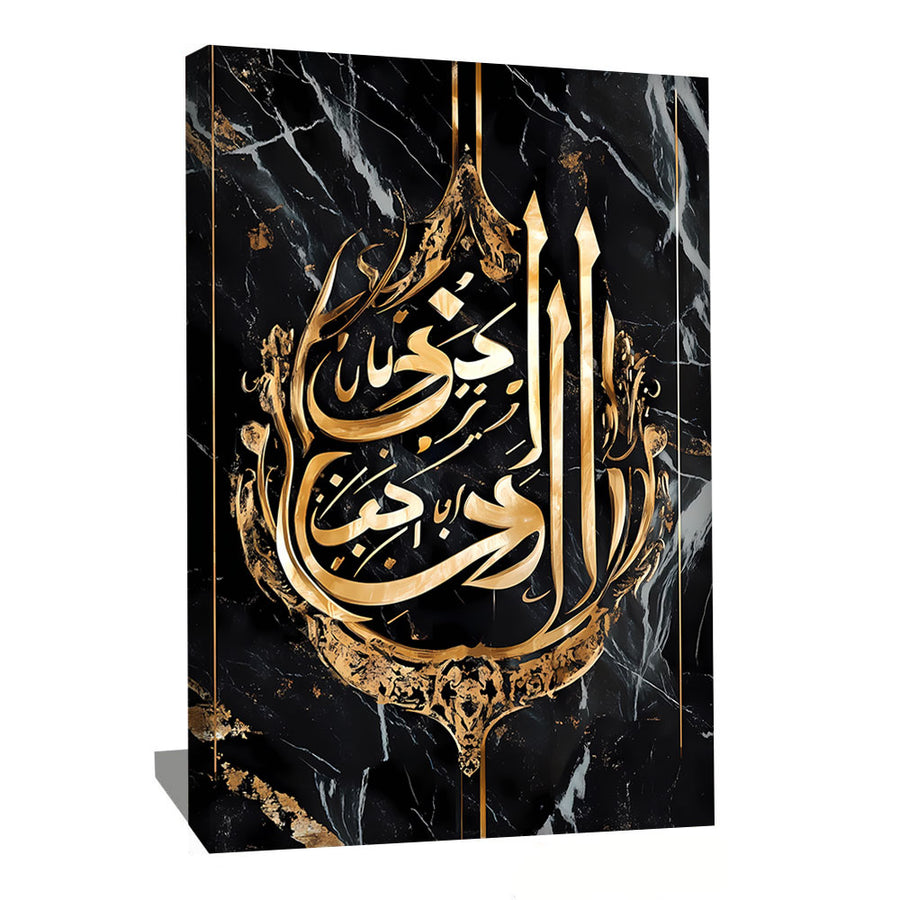
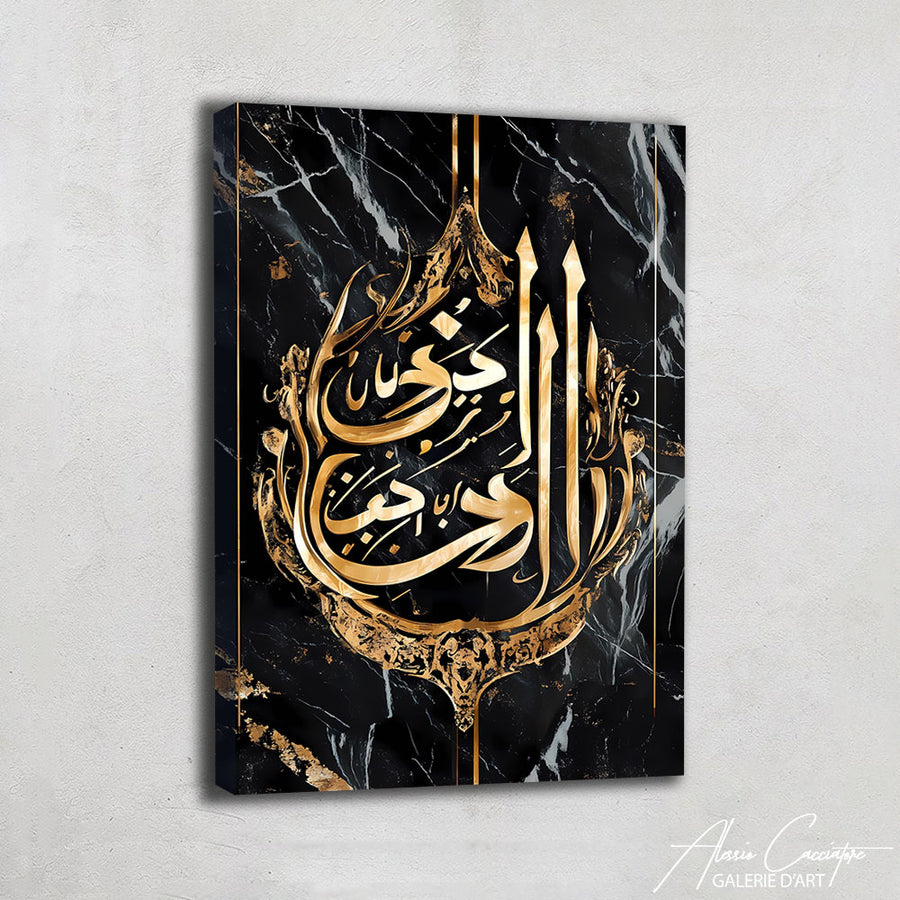
Add to Wishlist ARABIC CALLIGRAPHY PAINTINGDès 89 €
-
Add to Wishlist ARABIC CALLIGRAPHY PAINTINGDès 89 €
-
Add to Wishlist BEIGE ARABIC PAINTINGDès 89 €
-
Add to Wishlist ARABIC PATTERN PAINTINGDès 89 €
-
Add to Wishlist ARABESQUE TABLEAUDès 89 €
-
Add to Wishlist ARABIAN LANDSCAPE PAINTINGDès 89 €
-
Add to Wishlist ABSTRACT ARABIC CALLIGRAPHY PAINTINGDès 89 €
-
Add to Wishlist CHIC ARABIAN PAINTINGDès 89 €
-
Add to Wishlist MODERN ARABIC PAINTINGDès 89 €
-
Add to Wishlist ARABIAN HORSE PAINTINGDès 89 €
-
Add to Wishlist MODERN ARABIC CALLIGRAPHY PAINTINGDès 89 €
-
Add to Wishlist ARABIC CALLIGRAPHY PAINTINGDès 89 €
-
Add to Wishlist ARABIC CALLIGRAPHY PAINTINGDès 89 €
-
Add to Wishlist ARAB RELIGIOUS PAINTINGDès 89 €
-
Add to Wishlist ARABIC WRITING TABLEDès 89 €
-
Add to Wishlist ORIENTAL ARABESQUE PAINTINGDès 89 €
-
Add to Wishlist ARABIAN HORSE PAINTINGDès 89 €






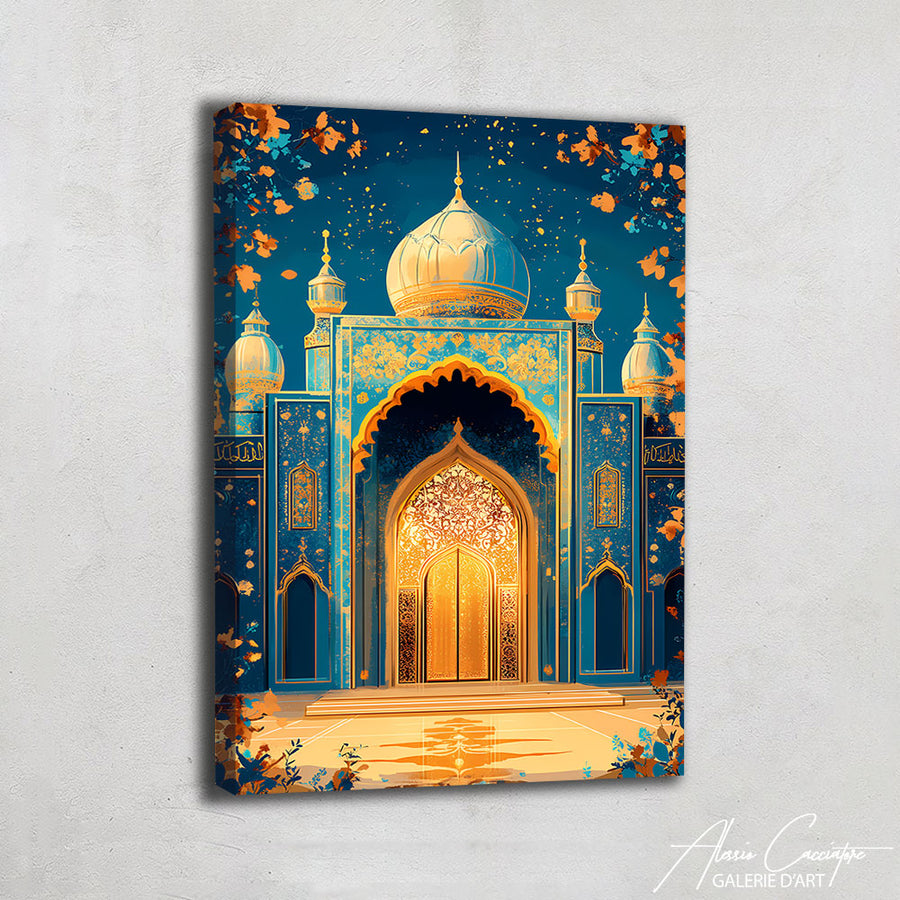
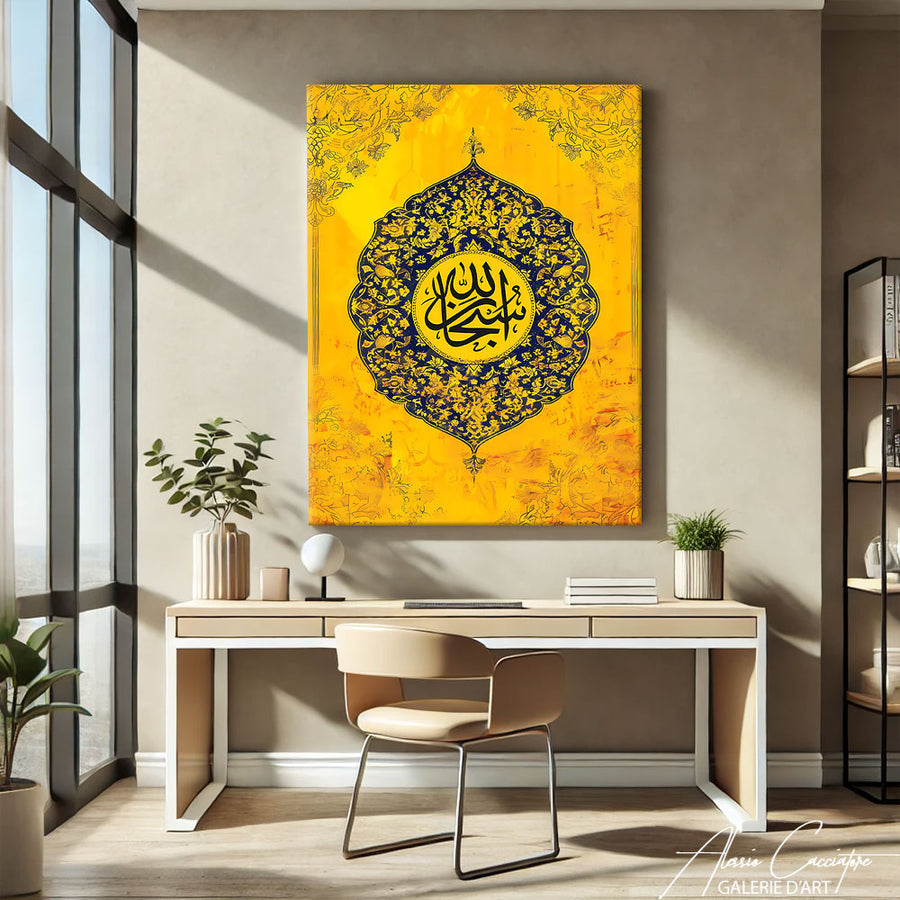
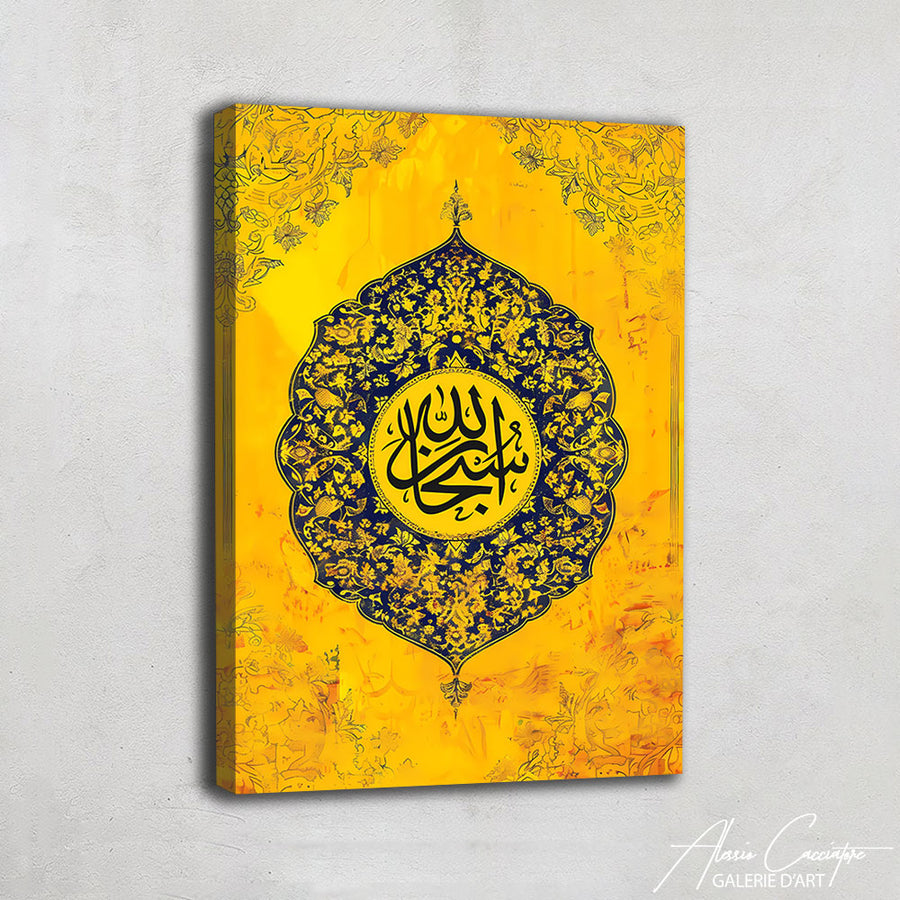


Chargement des œuvres suivantes…
Vous avez vu 17 œuvres sur 17


The Arab world cannot be reduced to a single cliché. It is the Andalusia of the Alhambra and the Baghdad of the Abbasid caliphs, the Damascus of the Umayyads and the Cairo of the Mamluks, the caravans of the Sahara and the flourishing ports of the Eastern Mediterranean. It is also thirteen centuries of a civilization that transmitted Greek philosophy to Europe, invented algebra, theorized optics, wrote One Thousand and One Nights, and built some of the most refined monuments ever constructed. All this creates a visual universe of dizzying richness that our Arab paintings seek to convey, in a contemporary domestic format that does justice to this cultural grandeur.
Our gallery brings together a precise selection of compositions inspired by the Arab world in all its breadth, printed on premium canvas and glossy plexiglass in our workshop in Germany. Geometric arabesques inherited from Andalusian art, desert landscapes of the vast Saharan and Arabian expanses, souk and spice market scenes, traditional zellige and mashrabiya motifs, galloping Arab horses, compositions inspired by the illuminated manuscripts of Baghdad's golden age: each painting in the collection captures a different facet of this civilization that has shaped much of our common heritage.
The Arab world as an artistic territory: thirteen centuries of art and civilization
Arab art emerged in the 7th century, simultaneously with the expansion of Islam. However, it is important to understand a significant nuance: Arab art and Islamic art are not entirely coextensive. While the majority of artistic productions in the Arab world between the 7th and 19th centuries are indeed linked to Muslim culture, there is also a rich Arab Christian heritage (Copts of Egypt, Maronites of Lebanon, Syrian Christians), Jewish heritage (Sephardic and Mizrahi communities), and pre-Islamic pagan heritage (petroglyphs of Wadi Rum, Nabataean remains of Petra). This diversity is fundamental to understanding the historical depth of Arab visuals.
The Golden Age of Baghdad under the Abbasid Caliphate (8th-13th century) marks one of the peaks of all global cultural history. Under Harun al-Rashid, the caliph of One Thousand and One Nights, and his son Al-Ma'mun, founder of the House of Wisdom, Baghdad became the intellectual capital of humanity. Scholars there translated Aristotle, Plato, Galen, Ptolemy, Euclid into Arabic, thus saving much of the ancient Greek heritage that medieval Europe would otherwise have lost. It was in this Baghdad that the first great schools of miniature painting developed, along with refined manuscript calligraphy, and a whole ornamental grammar that would permeate Arab visual arts to this day. This heritage lineage is precisely what our contemporary Arab paintings seek to perpetuate.
The main themes of Arab paintings in our gallery
Our collection covers the entire breadth of Arab culture. Here are the main categories you will find.
The arabesque: the ornamental grammar of the Arab world
The arabesque is probably the most recognizable visual signature of all Arab art. It is a complex ornamental system where geometric motifs (six, eight, twelve-pointed stars, interlocking polygons) combine with stylized plant elements (rinceaux, palmettes, fleurons) to create compositions of fascinating complexity. Far from being purely decorative, the arabesque visually expresses a certain philosophy of unity in multiplicity, inherited from Islamic metaphysics. Particularly spectacular in large format and symmetrical composition, the arabesque finds its place in refined interiors and grand reception rooms. To explore this aesthetic more broadly, see our Islamic collection.
Landscapes of the Arab world
The territory covered by the contemporary Arab world stretches from the Mauritanian Atlantic to the Persian Gulf, from the Sahara Desert to the Red Sea. This geographical breadth nourishes a diverse landscape iconography. Dunes of the Moroccan Erg Chebbi, mountains of the Algerian Atlas, lush oases of the Drâa, white desert of Egypt, ruins of Palmyra, palm groves of Tunisian Tozeur, cliffs of Jordanian Petra, coves of the Dead Sea. Our landscape compositions capture this geographical diversity with palettes that vary by region: red ochres of the Maghreb, golden sands of the Arabian desert, deep greens of the oases. Recommended for living rooms open to travel and offices of geography enthusiasts.
Souks, medinas, madrasas: the Arab city
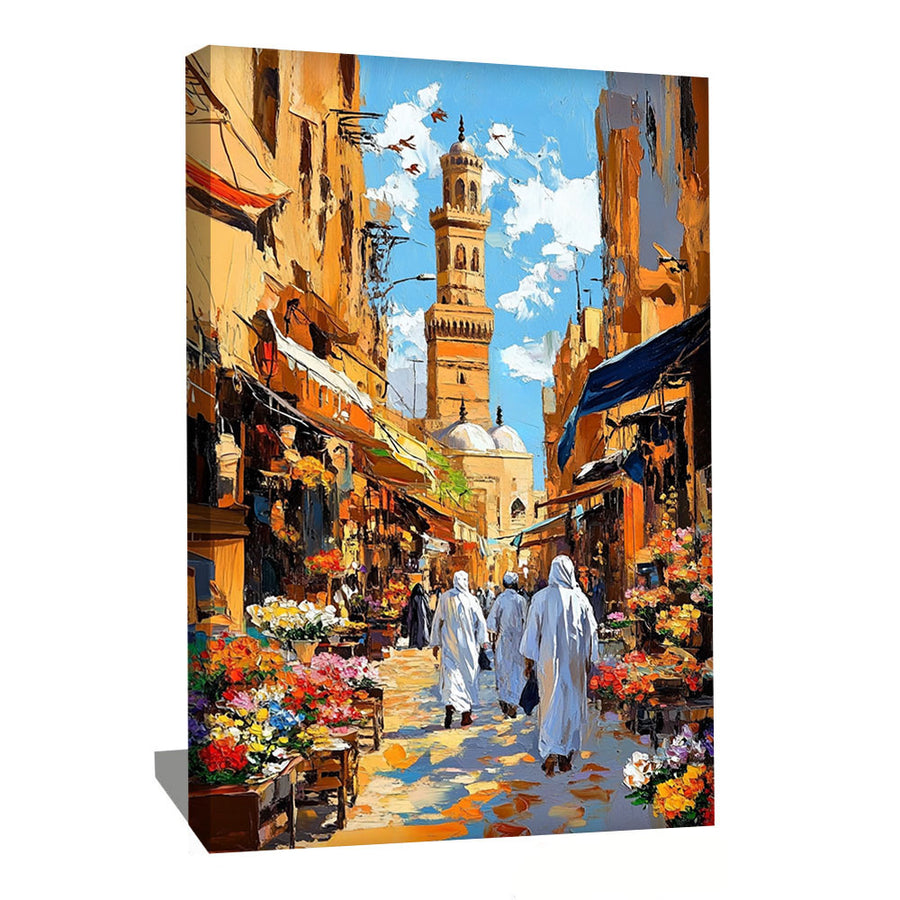
Arab civilization is deeply urban. Baghdad was the largest city in the world in the 9th century. Damascus, Cairo, Fez, Marrakech, Aleppo, Cordoba, Granada, Tunis: each possesses an architecture, an atmosphere, a light that makes them exceptional visual subjects. Our urban compositions capture this historical Arab urbanity: shaded medina alleys, colorful souk stalls, central madrasa fountains, whitewashed facades of coastal villages, terraced balconies overlooking the sea. The palette plays with ochres, bright whites, Mediterranean blues, sometimes enhanced by the vibrant colors of fabrics and spices.
The Arabian horse: millennia of equestrian nobility
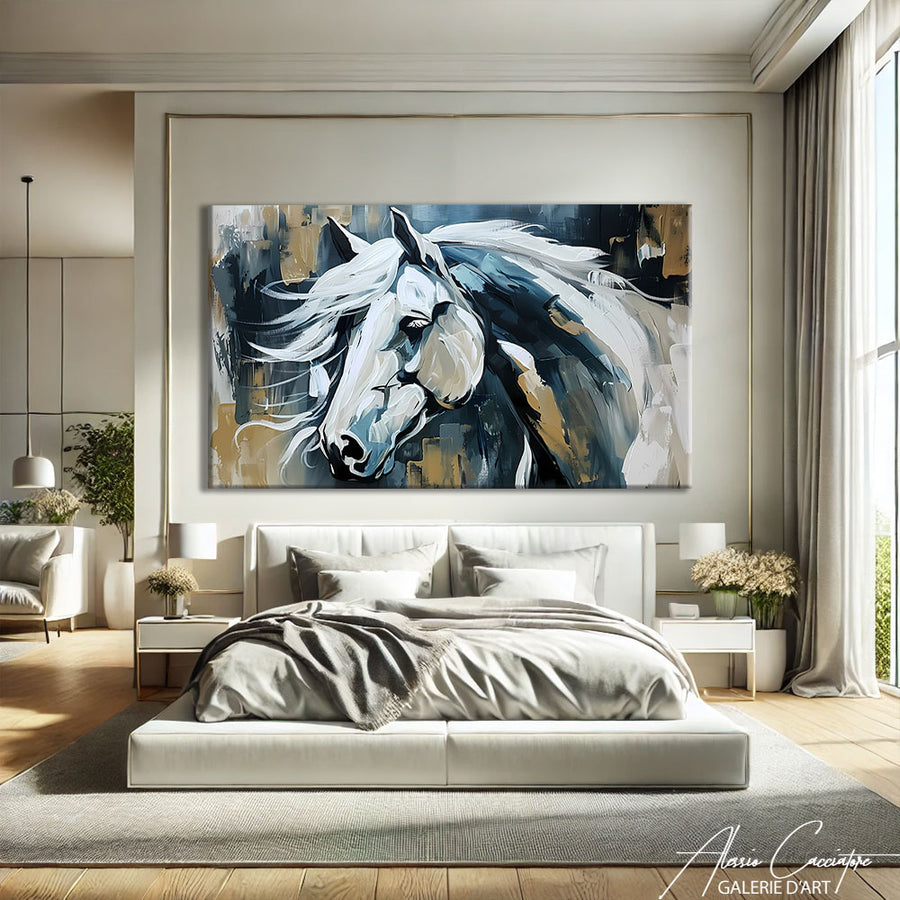
The Arabian horse (or Arabian purebred) is one of the oldest equine breeds in the world, bred by Bedouins of the Arabian Peninsula for over four thousand years. Recognizable by its fine, concave head, high-carried tail, dilated nostrils, and overall elegance, it has influenced all modern equine breeds: the English thoroughbred is directly descended from it, as are most current racehorses. Our equestrian compositions pay homage to this millennia-old nobility through intimate portraits or dynamic scenes of wild galloping. Particularly appreciated by riding enthusiasts, fans of Bedouin culture, and elegant interiors.
Traditional motifs: zellige, mashrabiya, sculpted plaster
Arab decorative genius is particularly expressed in three signature techniques: zellige (enameled ceramic mosaic cut into thousands of geometric elements, perfected in the Maghreb), mashrabiya (perforated turned wood panels that filter light in traditional harems and reception rooms), and sculpted stucco (finely worked plaster that covers the walls and domes of grand mosques and palaces). These traditional motifs constitute one of the richest ornamental grammars in the world. Our traditional motif paintings celebrate this artisanal virtuosity by highlighting details of these millennia-old compositions.
The aesthetic of One Thousand and One Nights
Compiled between the 9th and 14th centuries in the Arab world and then translated into French by Antoine Galland in the 18th century, One Thousand and One Nights has profoundly shaped the Western imagination of the Arab world. Flying carpets, magic lanterns, marvelous palaces, princesses in flowering gardens, merchants in caravans crossing the desert: this fairy-tale imagery, though partially fantasized, is rooted in authentic visual realities of historical Arab culture. Our compositions inspired by this imaginary world find their place in poetic interiors, children's rooms for adventure lovers, and spaces that appreciate wonder.
Horses and desert caravans
The imagery of the Arabian desert nourishes a specific iconography. Camel caravans at the edge of the dunes, Bedouin camps under black tents, oasis palm groves appearing at the end of the journey, meharis under the stars. This nomadic imagery evokes freedom, adventure, and a long relationship with time. Particularly appreciated by fans of travel stories (Wilfred Thesiger, T.E. Lawrence, Théodore Monod) and interiors that embrace a sense of escape.
Arab sciences: the intellectual golden age
A rarer but precious category: compositions that pay homage to the extraordinary scientific golden age of the Arab world between the 8th and 13th centuries. Gilded astrolabes, illuminated astronomy manuscripts, medical instruments by Rhazes and Avicenna, Arab anatomical plates, Persian miniatures depicting observatories. These scholarly compositions are for a specific audience: history of science enthusiasts, medical and pharmaceutical professionals, academics, personal libraries. But for this audience, they carry exceptional cultural significance.
Symbolism and imagination: what your choice says
Choosing an Arab painting for your interior evokes a dense imagery that deserves to be unfolded, whether one approaches the subject for cultural, mnemonic, or aesthetic reasons.
Attachment to a cultural heritage
For people of Arab origin (Maghreb, Levant, Egypt, Arabian Peninsula), the Arab painting touches a deep dimension of identity. Seeing this aesthetic on their walls in France, Belgium, Switzerland, or Quebec means keeping alive the connection to a culture that transcends geographical borders. It also means, for children growing up in the diaspora, seeing the daily beauty of a civilization to which they belong. This dimension of silent transmission is probably the most frequently cited reason by our Arab-descendant clients for their choice.
Admiration for an ancient civilization
Beyond personal belonging, Arab civilization inspires universal admiration among history and culture enthusiasts. The Golden Age of Baghdad, the glorious caliphates, Andalusia where three religions coexisted for centuries, the expeditions of great travelers (Ibn Battuta traveled 120,000 kilometers in the 14th century), Arab contributions to mathematics, astronomy, medicine: all this forms a history of which Europe is partly an heir. For lovers of this great history, the Arab painting is a tribute to a shared intellectual heritage.
Travel and escape
The Arab world remains, for many Europeans, one of the destinations that leave a lasting impression. Trips to Egypt in the footsteps of the pharaohs, stays in Morocco in the medina of Marrakech or the dunes of Merzouga, Mediterranean cruises arriving in Beirut or Alexandria, expeditions into the Jordanian desert to Petra. For those who have made these journeys, the Arab painting becomes a precious memory anchor that extends the experience beyond phone photographs.
The aesthetic of mastered ornamentation
Regardless of any cultural or personal connotation, Arab art is also simply an aesthetic statement. The ability of this civilization to produce prodigiously complex ornamentations without ever falling into overload, to combine richness and refinement, to make geometry and organic elements dialogue, is among the most admired artistic qualities in the world. For lovers of this ornamental virtuosity, the Arab painting is a high-level decorative choice.
Choosing your palette: the colors of the Arab world
The palette of Arab painting varies considerably depending on the regions and themes represented. Here are the main tones in our selection.
Ochres and earth tones: the Maghreb palette
For compositions inspired by Morocco, Tunisia, Algeria. Red ochre of the pisé walls of Marrakech, terracotta of the Drâa kasbahs, sandy beige of the medinas, warm brown of beaten earth floors. This earthy and warm palette is probably the most representative of Maghrebi iconography and fits admirably into ethnic chic interiors, cozy libraries, and hushed living rooms.
Cobalt blue and turquoise: the Levant and Persian palette
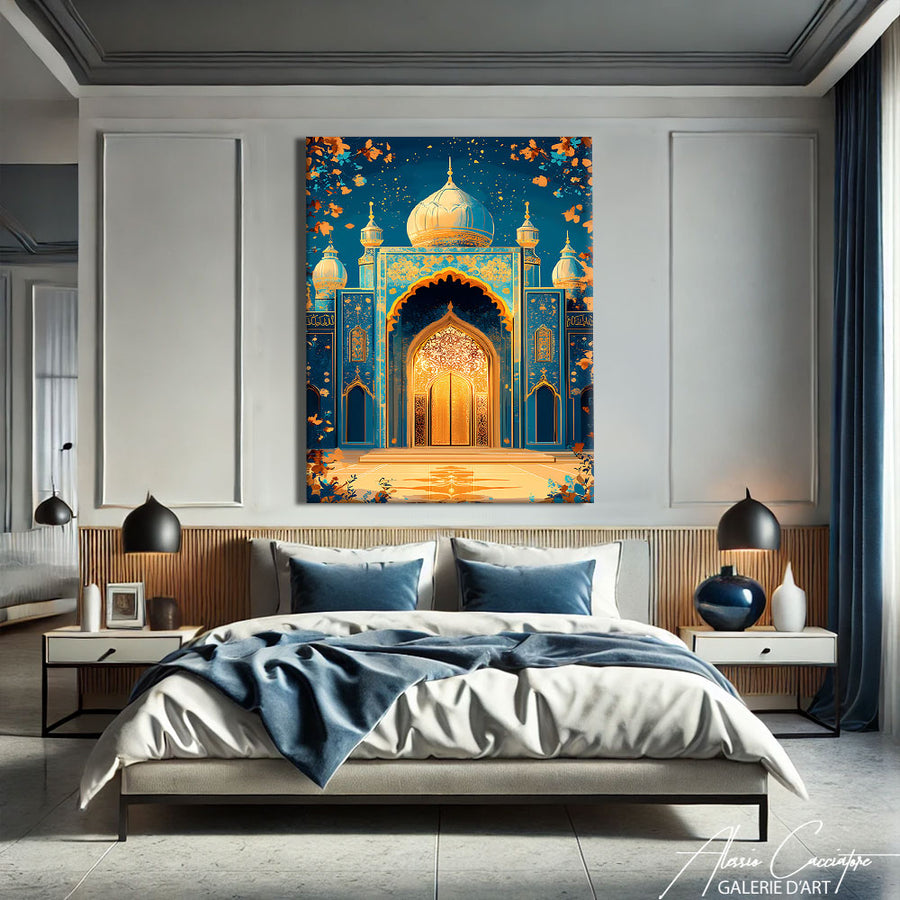
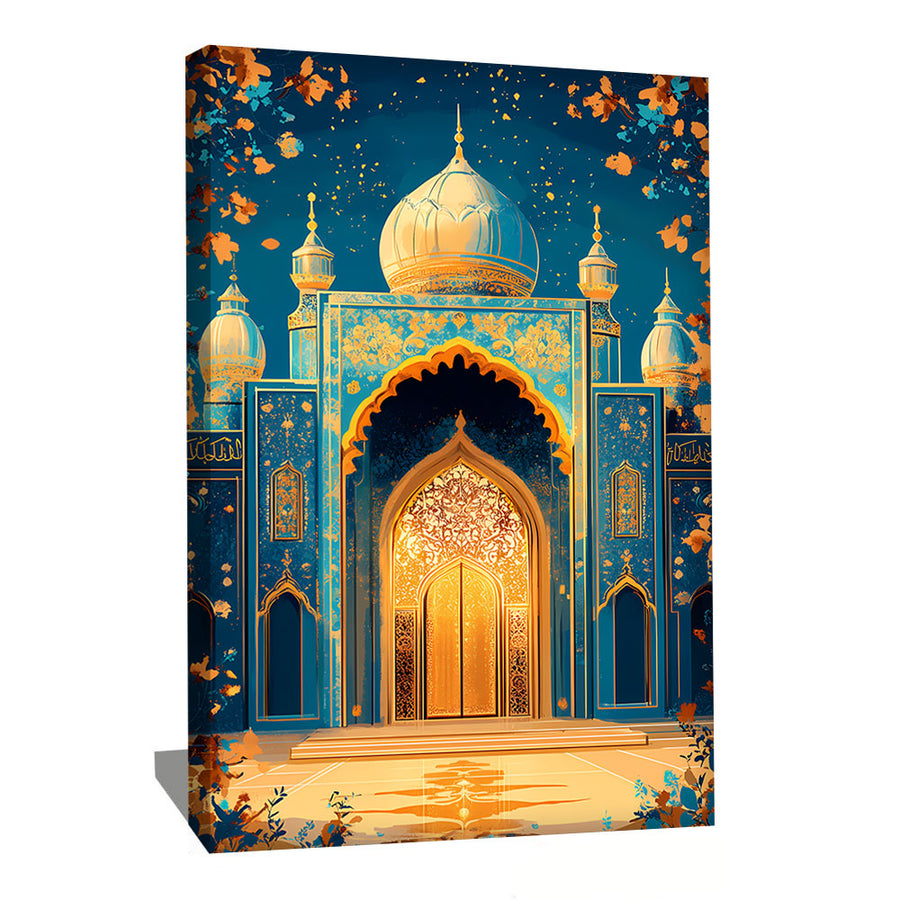
Inspired by Iznik ceramics, Isfahan domes, and the mosaics of the Umayyad Mosque in Damascus. Deep cobalt blue, luminous turquoise, immaculate white. This iconic palette immediately brings an elegant oriental dimension and suits interiors that desire a strong Mediterranean touch.
Gold, burgundy, and emerald: the palace palette
For ceremonial compositions inspired by the great caliphal and Ottoman palaces. Gold of gilding, deep burgundy of fabrics, emerald of embroidery, deep blacks of silks. This opulent palette suits grand reception rooms and entrances that embrace luxurious decor.
Golden sands and desert roses
For Saharan and Arabian compositions. Golden sand under the sun, powdery pink of the dunes at dusk, lunar white of the full moon over the ergs, warm amber of the sunset. This soft and luminous palette suits adult bedrooms and Zen spaces that appreciate a contemplative dimension.
White and indigo: the Arab Mediterranean palette
Inspired by the coastal villages of Tunisia, from Sidi Bou Saïd to Hammamet, and Moroccan coastal architecture. Luminous whites of whitewashed facades, deep indigo of shutters, sometimes enhanced with touches of ochre or powdery pink. A summery and luminous palette that immediately brings a Mediterranean vacation dimension.
Saturated multi-color: the souk palette
For compositions on spice markets, dyers' workshops, carpet stalls. Deep reds of henna and paprika, vibrant yellows of saffron, bright greens of fresh herbs, saturated blues of indigo dyes. This explosive palette naturally finds its place in kitchens, dining rooms, and spaces that desire cheerful and lively decor.
Arab painting: for which room in your home?
Arab iconography integrates into almost any space. Here are our recommendations.
For the living room: establishing a cultural signature
Above the sofa, a large Arab painting in 120x80 cm format immediately becomes the signature of the room. Here, prioritize high-impact compositions: large arabesque, medina landscape, equestrian scene. Particularly successful in living rooms that embrace oriental or ethnic chic decor, but also in more contemporary interiors where the painting brings a strong cosmopolitan dimension.
For the entrance: an invitation to travel
The entrance is one of the most evocative locations for an Arab painting. Vertical format, perspective on a medina alley, traditional carved door, vertical arabesque motif: your guest crosses the threshold and is immediately transported to another universe. Particularly successful in long corridors where several small formats can compose a gallery of traditional motifs.
For the dining room: Arab dining atmosphere
Compositions featuring spice souks, exotic fruits, Arab feast tables, mint tea, and oriental pastries (gazelle horns, makroud, baklava) find their natural place in the dining room. They immediately bring a dimension of conviviality and hospitality that extends the traditional Arab spirit of welcome.
For the kitchen: colors and energy of the souks
Multi-colored compositions inspired by spice markets work admirably in the kitchen. Plexiglass is mandatory in this room for resistance to humidity and splashes. Compact format (60x40 cm) above a countertop or medium format on a free wall, for an immediate visual vitamin effect.
For the bedroom: oriental serenity
Here, prioritize more soothing compositions: desert landscape, soft arabesque, sand and indigo palette. 80x60 cm format above the headboard or vertical compositions. Avoid overly saturated souks and very high-contrast arabesques that can hinder the transition to sleep. The sand and desert rose palette is particularly suitable for this resting space.
For the office: intellectual atmosphere
An Arab painting inspired by the scientific golden age (illuminated manuscripts, astrolabes, miniatures of scholars) creates a particularly rich intellectual atmosphere in an office. Compact or medium format, gold and burgundy palette or muted tones. Particularly suitable for lawyers', doctors', academics', and writers' offices.
For children's rooms: the wonder of One Thousand and One Nights
The fairy-tale imagery of Arab tales greatly appeals to children. Flying carpets, magical palaces, perforated lanterns, flowering gardens populated by peacocks: these compositions stimulate imagination while transmitting a precious cultural heritage. Compact or medium format above the desk or bed.
Format and dimensions: composing with Arab art
Arab painting lends itself particularly well to certain formats depending on the type of composition.
Compact format (60x40 cm): ideal for ornamental compositions (a detail of an arabesque, a zellige motif, a mashrabiya window) or in a series of three to create a coherent gallery. Particularly successful in corridors and offices.
Medium format (80x60 cm): the versatile size. Suitable for all subjects, from portraits to landscapes and ornamental compositions. Above a console, a chest of drawers, or as a decorative accent in a bedroom.
Large format (120x80 cm): the centerpiece. Particularly suitable for panoramic landscapes (medinas, dunes, lively souks) and large ornamental compositions (monumental arabesques, complex zelliges). Above a sofa or on a large wall, it fully unfolds the immersive dimension of Arab art.
Oriental triptych: perfect configuration for narrative compositions. Three panels that can tell a scene (entrance to a medina, heart of a souk, exit at dusk) or present three complementary aspects of the same theme. Immediately spectacular and structured effect.
Vertical format: essential for traditional Arab doors, minaret compositions, arabesques with a strong vertical axis, Arabian horses in a rearing posture. Particularly successful between two pieces of furniture, in a stairwell, or as an accent in an entrance.
Premium canvas or glossy plexiglass: choosing the right support
All our Arabic paintings are available in two versions, and the choice has a real impact on the rendering of these chromatically rich compositions.
Premium Canvas Print
Our canvas is hand-stretched over a 2 cm thick FSC-certified spruce wood frame. For Arabic compositions, the matte, slightly grainy texture of the canvas subtly evokes traditional Arabic art materials: manuscript paper, tapestry fabric, sculpted plaster of domes. It gently softens contrasts and gives the compositions a particularly successful, almost archaeological depth. We recommend canvas for desert landscapes, equestrian portraits, traditional medinas, and generally for all subdued atmospheres that prioritize evocation over saturation.
Glossy Plexiglas Print
Plexiglas remains relevant for compositions where chromatic richness needs to burst forth: multicolored spice souks, flamboyant gold arabesques, saturated cobalt blue zelliges, One Thousand and One Nights scenes with magical palettes. Its smooth, glossy finish enhances vibrant colors and reveals every detail of complex ornamental patterns. Its resistance to humidity and heat also makes it the mandatory choice for kitchens and bathrooms with an Oriental inspiration.
In both cases, our prints use odorless, solvent-free ink, safe even in a child's room. The printing technology we use preserves contrasts and color fidelity for several decades. Each painting is delivered ready to hang, hanging system included.
How to incorporate an Arabic painting into an existing decor
Arabic iconography interacts with many decorative styles, provided the combination is well-balanced.
With an Oriental and ethnic chic interior
This is the most natural combination. Berber or Kilim rugs, patinated leather poufs, openwork copper lanterns, carved wooden furniture, traditional patterned textiles: the Arabic painting complements without clashing. Opt for traditional compositions in ochre and blue palettes, which visually extend the universe you are building.
With a Mediterranean and Provençal interior
Homes in the south of France, Italy, and Spain share with the Arab world a light, a palette, and a relationship with the climate. Whitewashed walls, indigo blue shutters, terracotta tiles on the floor, patinated wooden furniture: an Arabic painting in a Mediterranean palette (white and indigo, light ochres) integrates admirably. Particularly coherent in a Provençal or Andalusian house.
With a contemporary and minimalist interior
Against an off-white, grey, or taupe wall, in a clean space with sharp lines, an Arabic painting becomes the cultural focal point that warms up the architectural purity. Choose a strong composition rather than an accumulation: a large arabesque, a monumental desert landscape, a black and white equestrian scene. The contrast between sobriety and ornamental richness creates a particularly successful visual tension.
With a classic or Haussmannian interior
19th-century Orientalism deeply inhabited French bourgeois interiors. An Arabic painting in an apartment with mouldings and French parquet flooring reconnects with this decorative tradition. Opt for richly ornamented compositions in gold and burgundy palettes that interact with antique furniture.
With an Andalusian design interior
The Neo-Andalusian aesthetic, particularly vibrant in recent years (modernized riads in Morocco, boutique hotels in Seville and Cordoba), combines historical Arab-Muslim architecture with contemporary comfort. This precise aesthetic admirably accommodates Arabic paintings in ornamental or landscape compositions.
Frequently Asked Questions about Arabic Paintings
What is the difference between an Arabic painting, an Islamic painting, and an Arabic calligraphy painting?
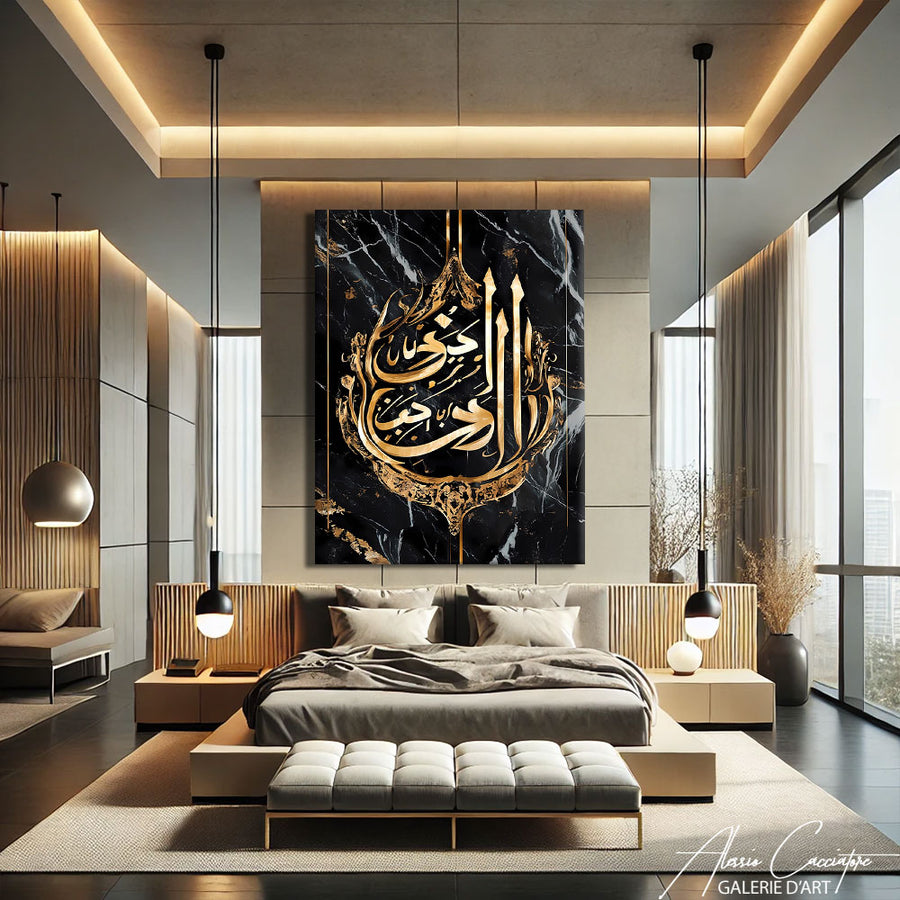
Our Arabic painting collection covers the culture of the Arab world in a broad sense: architectural heritage, landscapes, traditional motifs, daily life scenes, civilization aesthetics. Our Islamic painting collection focuses on the Muslim religious dimension: Mecca, mosques, devotion, lived faith. Our Arabic calligraphy collection focuses on the art of Arabic writing: styles, verses, calligraphic technique. These three collections are complementary and address distinct research intentions.
Are all your Arabic paintings prints or original paintings?
They are high-definition prints on premium canvas or glossy plexiglass, manufactured in our workshop in Germany. We do not sell original hand-painted works. Our compositions are original creations inspired by the great Arabic artistic traditions, printed with gallery quality.
Do you have to be of Arab origin to hang an Arabic painting in your home?
No, absolutely not. Arab culture belongs to universal heritage and its aesthetics are appreciated by a much wider audience than just people of Arab origin: orientalism enthusiasts, travelers who have stayed in the Arab world, Islamic architecture enthusiasts, collectors of ornamental art, simple lovers of beautiful decoration. An Arabic painting can be chosen for strictly cultural, aesthetic, or travel-related reasons.
Is an Arabic painting suitable as a gift?
An excellent gift choice, especially for lovers of Arab culture, travelers who have had a significant stay in Morocco, Egypt, Jordan or elsewhere, people of Arab origin in the diaspora, or simply enthusiasts of ornamental art. Its cultural and aesthetic richness makes it an emotionally significant present. The 80x60 cm canvas format remains the fairest compromise between visual impact and ease of transport.
What subject should I choose if I am new to Arab culture?
If you are approaching Arab culture through our paintings for the first time, opt for iconic subjects that immediately appeal to any orientalism enthusiast: the medina of Marrakech or Fes, the dunes of the Sahara, a monumental arabesque, a galloping Arab horse, a colorful souk scene. Initially, avoid more niche compositions (scientific manuscripts, Persian miniatures, One Thousand and One Nights scenes) which are more aimed at an audience already familiar with Arab culture.
How high should an Arabic painting be hung?
The classic rule: center the painting at approximately 1.50m from the ground, which corresponds to the average eye level. For panoramic compositions (medinas, desert landscapes), remember to preserve horizontality and allow the image to breathe. For highly detailed ornamental compositions (complex arabesques), ensure a height that allows comfortable viewing of the motifs.
Are your paintings delivered ready to hang?
Yes. The canvas is delivered stretched on its frame with the hangers already attached to the back. The plexiglass is delivered with its invisible hanging system. In both cases, you can hang it in less than five minutes.
How to care for a canvas or plexiglass print?
A dry or slightly damp cloth is sufficient for both supports. Avoid abrasive chemical products and direct, prolonged exposure to sunlight to preserve color fidelity, especially red ochres and cobalt blues which are most sensitive to UV.
Questions fréquentes
Quels sont les délais de livraison ?
La livraison est offerte dans le monde entier, sous 4 à 7 jours. Vous pouvez suivre votre colis à tout moment depuis la page « Suivre le colis ».
Le tableau est-il prêt à accrocher ?
Oui, le système d'accroche est inclus. Les toiles sont tendues sur un châssis en bois d'épicéa de 2 cm (4 cm en option) et les plexiglas sont livrés avec des rails d'accroche en aluminium invisibles.
Toile ou plexiglas : quelle différence ?
La toile est une vraie toile tendue sur un châssis en bois. Le plexiglas est incassable, protégé des rayures et du vieillissement, et travaillé à la main par nos artisans en Allemagne.
Puis-je retourner mon tableau ?
Oui, vous avez 30 jours pour changer d'avis : contactez-nous par e-mail ou par le chat. Et si votre œuvre arrive abîmée, nous la réimprimons, sans retour à faire.
Livraison offerte sous 4 à 7 jours
Fabriqué à la main en Allemagne
30 jours pour changer d'avis