
Floral Painting: Our Modern Works | Alessio Cacciatore

Floral Painting
Des oeuvres en édition limitée pensées par l'artiste pour illuminer votre intérieur
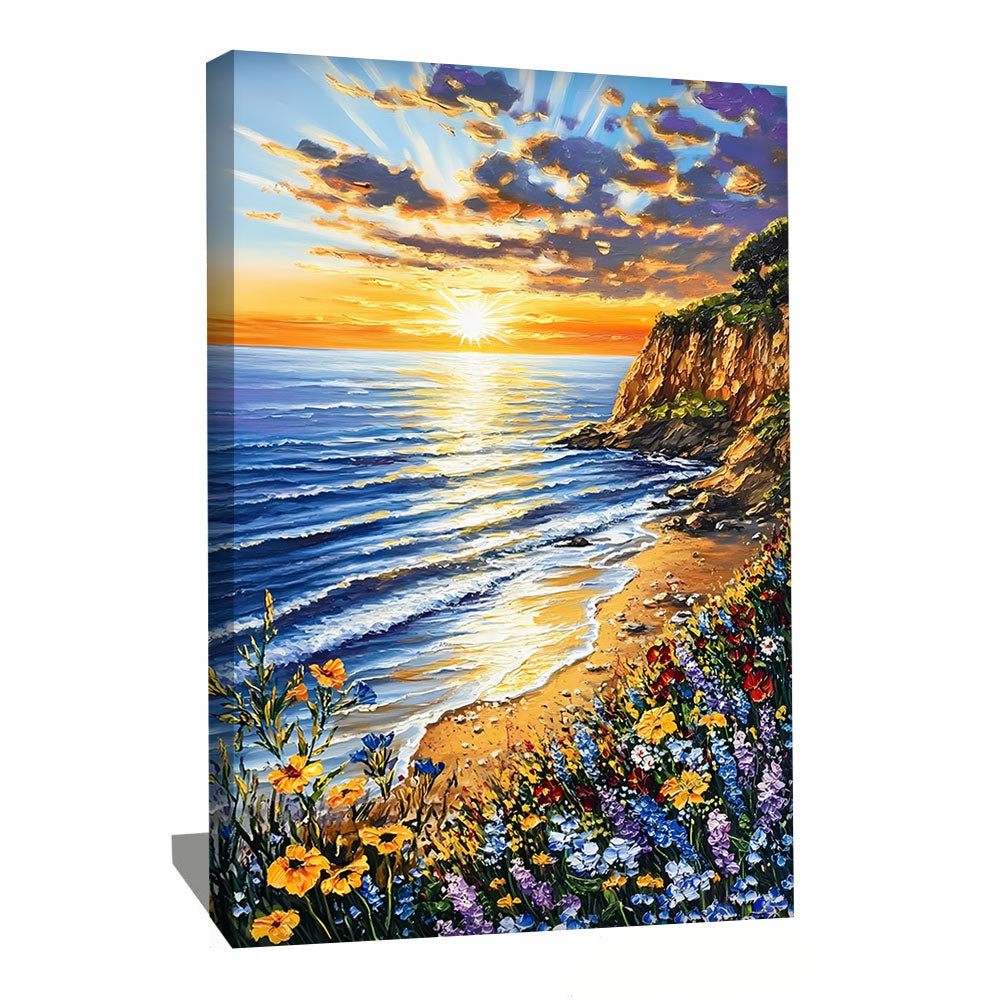
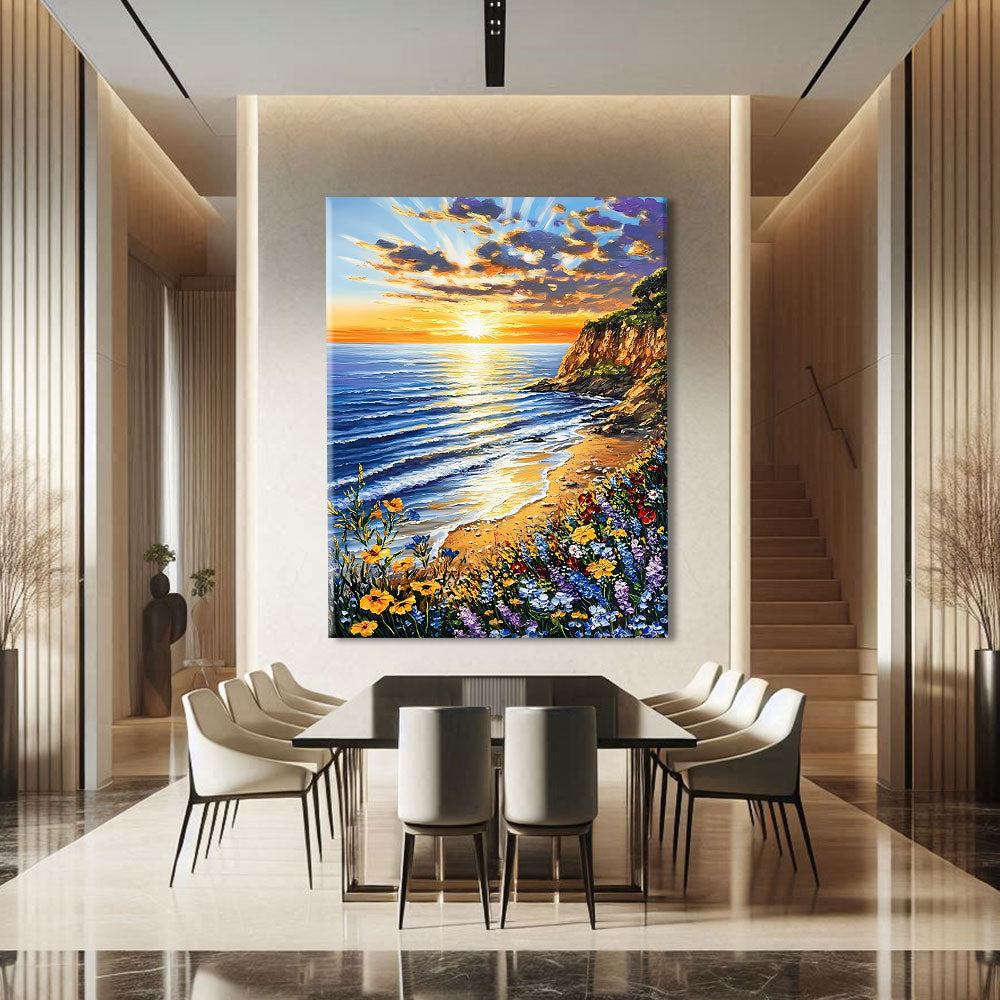
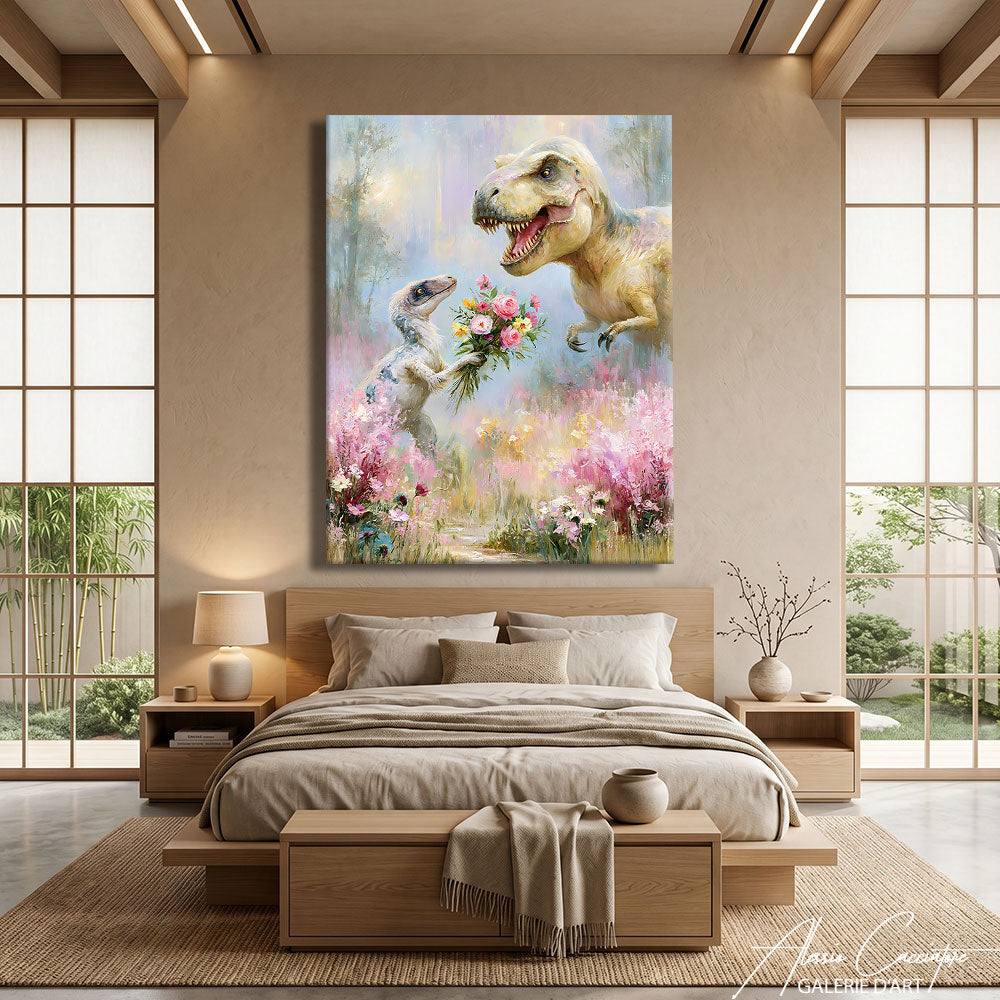
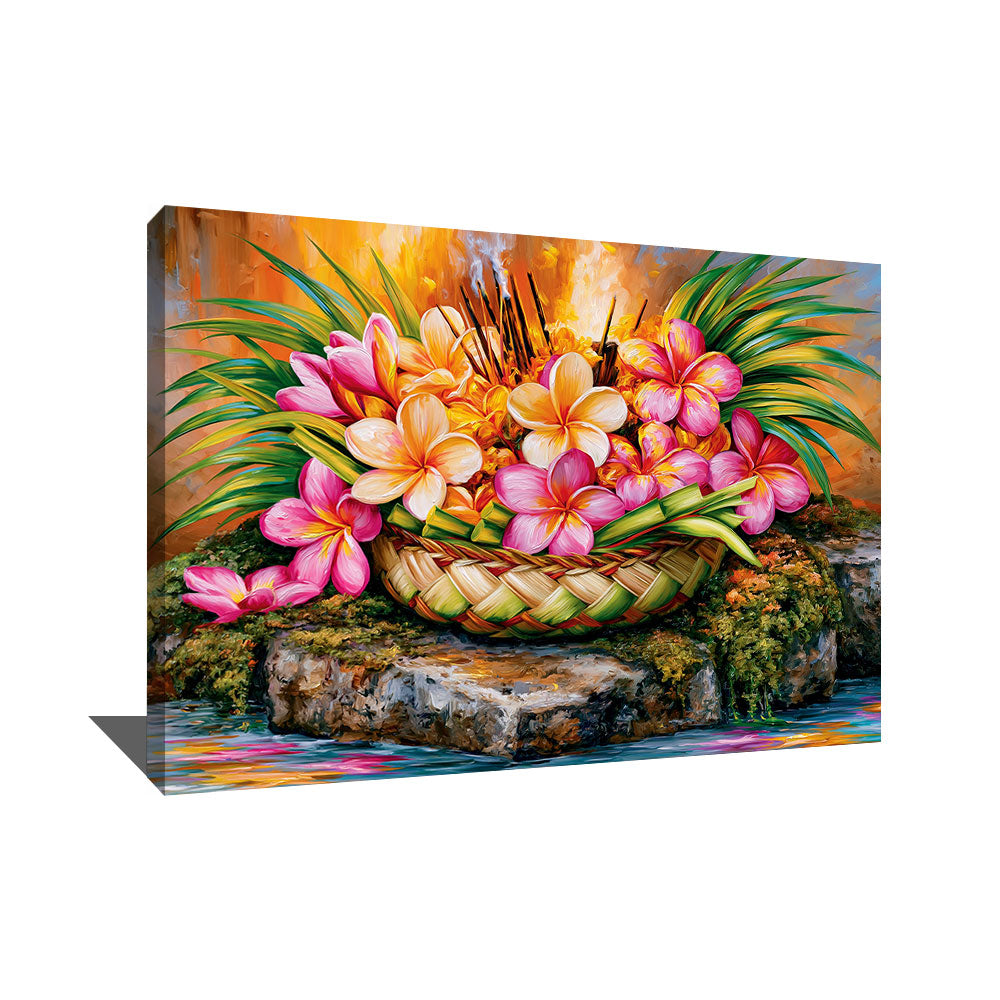
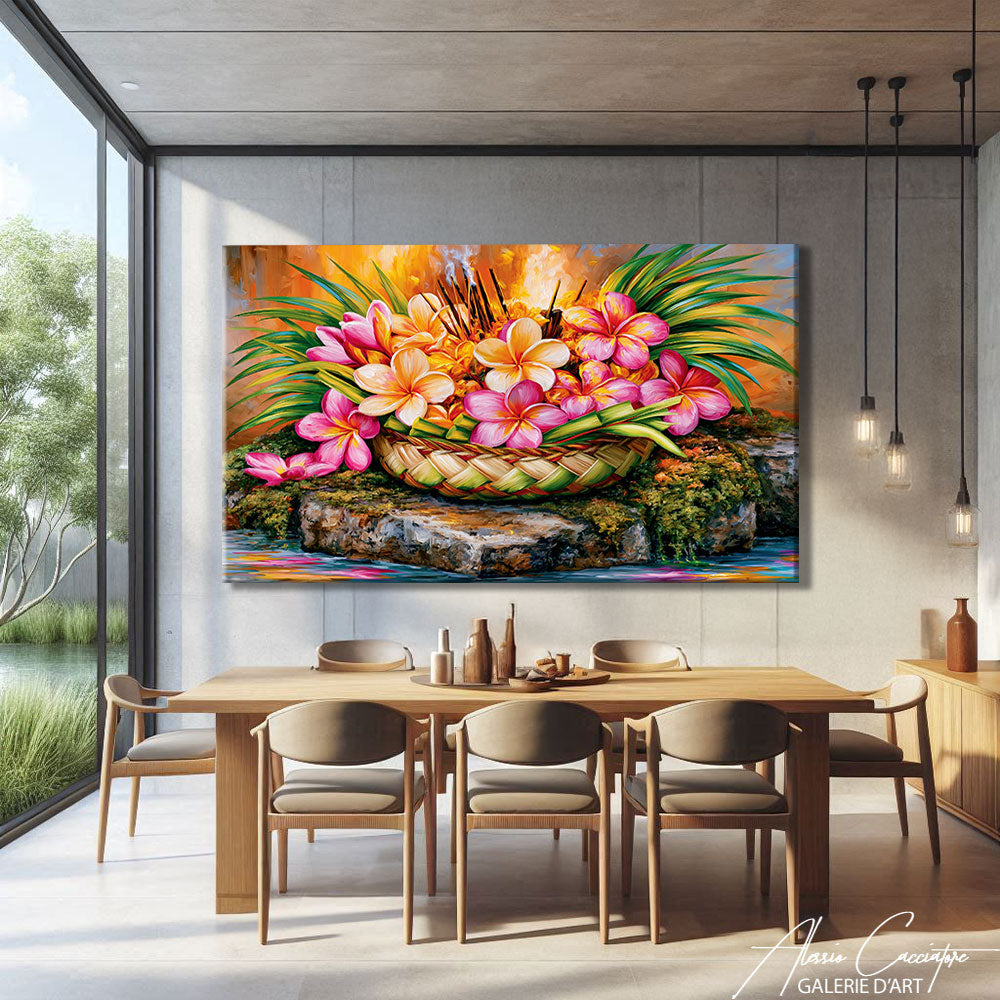
Flowers hold an absolutely unique place in the history of decorative art: that of the most universal, oldest, and most symbolically charged subject in all human visual representation. From the Minoan frescoes of Crete, painted over three thousand five hundred years ago, to the latest Instagram trends of contemporary florilegia, floral iconography spans all civilizations, all eras, and all continents, never exhausting its emotional impact. No other decorative theme can claim such cultural and temporal breadth. It is precisely this exceptional symbolic density that our collection of floral paintings brings together: a selection of wall art printed on premium canvas and glossy Plexiglas in our workshop in Germany, chosen for their ability to transform a wall into a true celebration of plant beauty in all its forms, from sumptuous peonies to vibrant sunflowers, spiritual lotuses, and the poetic poppies of French fields.
Peonies with sumptuously unfurled corollas, each petal seemingly sculpted by a patient hand; heliotropic sunflowers eternally turning towards the light in an almost religious posture; lotuses emerging from troubled waters with their universal symbolism of purity born from mud; poppies scattered in the fields of Provence or Normandy recalling eternal French poetry; roses in multiple palettes from antique to contemporary; orchids of absolute oriental elegance; cherry trees in full Japanese-inspired sakura bloom; abstract compositions where the flower becomes a pretext for purely modern plastic work; revisited Dutch-inspired still lifes with contemporary visual codes; artfully composed bouquets reminiscent of millennia-old floral art: each painting in this gallery has been conceived as a decorative object imbued with plant life, capable of becoming the visual anchor point of a bright living room, a serene bedroom, a poetic entrance, a warm kitchen, or an office that celebrates the beauty of the living world.
Why florals are experiencing a major decorative renaissance today
Over the last century, floral paintings have gone through an absolutely fascinating decorative cycle, which is essential to understand for making choices today. For several centuries, floral representation was considered one of the pinnacles of decorative art: 17th-century Dutch still lifes magnified tulips during speculative mania, 18th-century botanical illustrators produced plates of astonishing scientific precision, and Japanese ikebana elevated floral arrangement to the rank of a major spiritual art. Then came the 20th century, with its conquering modernity that discredited flowers in decoration: deemed "old-fashioned," "grandma," "kitschy," they gradually disappeared from contemporary interiors, replaced by geometric abstractions and minimalist compositions considered more mature. But since the mid-2010s, a reverse movement has occurred: flowers have made a strong comeback in contemporary interiors, driven by cottagecore, wildflower, and botanical trends that have restored plant representation to its full cultural legitimacy. This decorative renaissance explains the current success of floral paintings. For those who particularly appreciate delicate pictorial treatments of nature, our watercolor collection offers a complementary universe that admirably extends the floral spirit to other refined artistic techniques.
Our selection process prioritizes three essential qualities for this demanding subject. First, botanical accuracy, because informed enthusiasts immediately recognize approximations: poorly drawn petals, incorrect floral structure, foliage that does not correspond to the species represented. This precision distinguishes a refined work from an approximate decorative illustration. Next, mastery of the plant palette, because each flower has its own chromatic codes that must be respected: deep muted reds of the antique peony, vibrant sunny yellows of Van Gogh's sunflower, almost bluish whites of the lotus in the early morning, delicate pinks of the cherry blossom, vibrant oranges of the field poppy. Each floral species has its own chromatic orchestration that must be mobilized to produce the desired evocative effect. Finally, the symbolic dimension, because flowers are never mere decorative motifs: each carries a secular symbolic charge built by the cultures that adopted it. The lotus embodies Buddhist spiritual purity, the peony symbolizes wealth and honor in Chinese iconography, the rose carries all Western romantic imagery, the sunflower evokes fidelity and admiration. It is this symbolic density that transforms a floral painting into a true presence full of meaning in an interior.
The main families of our floral collection
Our gallery explores all the major iconic flowers and their contemporary decorative treatments. Here are the main families that make up the selection, each corresponding to a particular sensibility.
The peony: the queen flower of contemporary decor
Probably our most emblematically current family. The peony has become, in recent years, the emblematic flower of contemporary decoration, championed by leading Instagram floral designers and international trend magazines. Its particularly generous corolla with dozens of delicately crumpled petals, its delicate fragrance evoking summer, its short blooming season making it precious, its major symbolic presence in Chinese (wealth, honor, flourishing femininity) and Japanese (courage, homage to ancestors) iconographies make it a flower with an exceptional cultural coefficient. Our compositions celebrate the peony in various treatments: a bouquet of peonies in an elegant vase of revisited Dutch still life inspiration, a close-up of a single peony revealing the full architectural complexity of its corolla, an abstract composition where the peony motif becomes a pretext for purely contemporary plastic work. On matte canvas, which admirably extends the pictorial quality of the subject, the effect is particularly refined.
The sunflower: vibrant sunshine
A particularly iconic family. The sunflower holds a very singular place in the history of decorative art: a symbol of Provençal summer, an emblem of romantic fidelity (the flower eternally turns towards its sun), a subject immortalized by the great Post-Impressionists who made it one of the most recognizable motifs in the world. Its particular geometry with seeds organized according to the Fibonacci sequence, its golden yellow petals radiating from a deep brown heart, its imposing height that can reach several meters, its universal solar symbolism make it a visually fascinating subject. Our compositions celebrate the sunflower in various atmospheres: a panoramic field of Provençal inspiration at sunset, a close-up revealing the fascinating geometry of the floral heart, an isolated sunflower treated in a contemporary graphic composition, a still life ambiance inspired by the great masters. A solar dimension that brings to an interior that Mediterranean warmth particularly precious in more temperate climates.
The lotus: absolute Eastern spirituality
Particularly symbolically charged compositions. The lotus, this flower that emerges from troubled waters to open in absolute purity above the surface, is probably the most universally symbolically charged floral motif in the entire history of Eastern art. A symbol of purity born from impurity in Buddhism, a reference to cosmic creation in Hinduism, an emblem of immortality in ancient Egyptian traditions: the lotus spans all great Eastern spiritualities with unique symbolic density. Our compositions celebrate this flower in various treatments: a lotus in full bloom on the calm waters of an early morning pond, a Zen composition where the flower becomes an object of meditation, an abstract treatment that preserves the spiritual charge of the subject. It pairs admirably with our Japanese collection for those who particularly appreciate Eastern aesthetics in all its expressions.
The poppy: French poetry
A particularly moving family in our collection. The poppy holds an absolutely special place in the French imagination: a symbol of the fields of Normandy and Provence, an emblem of historical remembrance in Anglo-Saxon cultures, a motif immortalized by the great Impressionist painters who captured its vibrant red presence in golden wheat fields. Its extreme fragility (the poppy wilts in a few hours once picked), its absolute chromatic vivacity, its association with the French countryside summer make it a subject charged with emotion. Our compositions celebrate this flower in varied atmospheres: a panoramic field of poppies in ripe wheat, a close-up of a single flower revealing the extreme delicacy of crumpled petals, a triptych composition capturing the full expanse of a French field. A poetic dimension that particularly speaks to spirits attached to the French landscape heritage.
Sakura and Japanese cherry blossom
Particularly refined compositions. Sakura, the cherry blossom that gives rise each spring to the world-renowned celebration of hanami (collective contemplation of cherry blossoms), holds an almost religious place in Japanese culture. Its extraordinarily ephemeral blooming (only a few days), its infinitely delicate pale pink palette, its symbolism of transient beauty recalling the finitude of all existence make it a subject of exceptional cultural depth. Our compositions celebrate sakura in respectful treatments: a flowering branch in a traditional sumi-e inspired composition, an entire cherry tree in full bloom in a Japanese landscape, a close-up capturing the extreme delicacy of the flower. A meditative dimension that brings to an interior this celebrated ephemeral quality characteristic of Japanese sensibility.
Flower women: the floral portrait
A particularly contemporary and poetic family. Our flower-women compositions offer a hybrid iconography that particularly resonates with current sensibilities: a female portrait whose hair extends into a floral composition, a face emerging from a bouquet, a human silhouette partially composed of flowers, an interweaving of feminine features and vegetal blossoming. This metaphorical approach celebrates the floral dimension of feminine beauty and vice versa. It pairs admirably with our women's collection for those who particularly appreciate the female portrait in its various artistic variations.
Butterflies and flowers: life in bloom
Particularly vibrant compositions. The association of butterfly and flower constitutes one of the most universally loved decorative subjects, celebrating the vital link between pollinators and blooming corollas. Our compositions capture these encounters in varied atmospheres: a monarch butterfly pollinating a sunflower in summer light, a gathering of multicolored butterflies around a floral bouquet, a contemporary graphic composition where butterflies mingle with abstract floral motifs. An ecological vitality dimension that particularly speaks to spirits sensitive to the beauty of living things, to be admirably combined with our butterfly collection.
Abstract and gestural floral art
For the most demanding contemporary design interiors, our abstract compositions treat floral art with a resolutely modern language. Floral motifs decomposed into refined geometric shapes, a purely plastic exploration of curves and plant palettes, gestural compositions where the pictorial stroke evokes the flower without representing it figuratively. These modern treatments allow floral art to enter demanding design decors without disrupting the overall aesthetic, to be admirably combined with our abstract collection.
Still life and contemporary bouquet
A particularly refined family. The great tradition of floral still life, magnified by 17th-century Dutch painters and perpetuated to this day by great contemporary artists, offers a particularly rich iconography: a sumptuous bouquet in a precious vase, an elaborate composition where several floral species interact in chromatic and morphological harmony, a contemporary still life revisiting ancient codes with a modern perspective. On a modernized classic-style wall, these compositions establish an immediately recognizable cultural signature that celebrates the great tradition of Western painting.
The ambiance you seek determines your floral choice
Floral art comes in several very distinct decorative registers depending on the desired effect. Here are our guidelines for identifying the painting that perfectly matches your project.
For a romantic and feminine ambiance
Favor compositions of sumptuous peonies in a soft palette, bouquets of roses in refined compositions, delicate watercolor flower women. On matte canvas that softens contrasts and creates a pictorial softness worthy of a beautiful art print, these works are admirably suited for feminine adult bedrooms, refined boudoirs, and spaces that cultivate a personal and poetic dimension. A decor that celebrates the delicate beauty and restrained elegance characteristic of contemporary feminine floral sensibility.
For a sunny and joyful ambiance
Turn to compositions of vibrant sunflowers, sunlit poppy fields, and bouquets with dazzling saturated palettes. On glossy Plexiglas that intensifies chromatic vibrancy, these paintings bring immediate and sunny energy, particularly valuable in less sunny climates. Ideal for warm family living rooms, lively kitchens, and light-filled conservatories. A decor that daily reminds us of the joy of the beautiful season.
For a spiritual and serene ambiance
Opt for compositions of blooming lotuses, delicate Japanese cherry trees, and minimalist Zen floral arrangements. On matte canvas that extends the atmospheric softness of the subject, these paintings create a climate particularly conducive to meditation and inner contemplation. Particularly suitable for personal yoga studios, meditation corners, and adult bedrooms seeking an atmosphere of daily calm sanctuary.
For a design and contemporary ambiance
Choose abstract floral compositions, modern graphic treatments of plant motifs, and revisited contemporary still lifes. These paintings assert a taste for current visual language and integrate admirably into design interiors that want to incorporate the floral dimension without resorting to traditional codes sometimes perceived as dated. A refined approach that celebrates nature in a resolutely modern language.
Floral paintings, room by room
Each room calls for its ideal floral painting according to its use and atmosphere. Here are our decorative recommendations.
In the living room: the floral centerpiece
This is probably the preferred location for a large floral painting. Above the sofa, a 120x80 cm format or a triptych immediately becomes the visual signature of the room. Here, opt for high-impact compositions: a sumptuous peony bouquet, a panoramic poppy field, a monumental close-up sunflower. Above a sofa in ecru linen, forest green velvet, or patinated cognac leather that dialogues with the plant palette, in an atmosphere of warm lighting, the floral painting transforms the living room into a permanent indoor garden. Our living room collection offers other complementary subjects to create a coherent universe in this reception room.
In a serene adult bedroom
Prioritize soft and meditative compositions: a single peony in an intimate close-up, a delicate Japanese cherry tree, a lotus in a calm composition. A 80x60 cm format above the headboard, on matte canvas that softens contrasts so as not to disturb the sleep-inducing atmosphere. The soft floral palette (tender pinks, off-whites, sage greens) naturally creates a particularly soothing cocooning atmosphere. An approach that invites mental breathing and daily appeasement.
In a warm and lively kitchen
A place where floral paintings find a particular resonance. The kitchen, this room in the home where daily meals are prepared and where the family often gathers, admirably welcomes floral compositions that extend the nourishing dimension of plants. Favor sunny compositions: vibrant sunflowers, wild flower fields, colorful bouquets with a Provençal spirit. Plexiglas is essential in this humid room where culinary splashes can reach the walls. A compact format above a work surface, or medium on a main wall.
In a convivial dining room
A particularly successful configuration. A bouquet of flowers above the sideboard, a floral triptych composition facing the table, a still life inspired by Dutch masters on the main wall: these paintings bring to the reception area that vegetal and lively dimension that extends the meal into a shared celebration. Medium or large format depending on the room's dimensions, a palette that dialogues with the tableware and real flower bouquets on the table.
In an entrance with a poetic dimension
The entrance, adorned with a floral arrangement, immediately sets the tone for the home. Your guest steps through the door and is instantly captivated by the plant life within. A lavish close-up peony, a panoramic field of poppies, a lotus in a zen composition: the first impression is that of a home attentive to the beauty of living things. Vertical format suitable for narrow spaces, medium format for more generous entrances.
In a bathroom inspired by a floral spa
A strong contemporary trend: the bathroom transformed into a wellness sanctuary inspired by floral rituals. A floral painting finds perfect resonance in this space: a close-up of a single flower treated in a zen composition, a serene bouquet in a soft palette, or an Asian spa-inspired composition with a floating lotus. Plexiglas is essential for resistance to the intense humidity of this room. Medium format, a palette that dialogues with the essential oils and scented candles of the wellness environment. The immediate effect: transforming the daily routine into an almost ritualistic self-care moment.
In a conservatory or winter garden
A case where a floral painting is almost an iconographic given. A light-filled conservatory, an orangery converted into a living room, a winter garden filled with tropical plants: these spaces admirably welcome large-format floral compositions. Favor immersive compositions that extend the living plants of the space, large still lifes that interact with cacti and natural bouquets. The painting amplifies the spirit of the place and creates a particularly successful stylistic coherence.
In a professional space with a floral or wellness vocation
High-end florists, floral art schools, sophrology practices, yoga studios, Ayurvedic treatment institutes, high-end spas, botanical-themed restaurants and cafes: a floral painting is an obvious decorative choice. Opt for imposing large formats and compositions with a strong plant signature that immediately convey the cultural and sensory identity of the place.
Choosing the format to magnify the bloom
The format particularly conditions the effect of a floral painting, because this subject requires precise adaptation to the nature of the represented plant.
The compact format (60x40 cm) is ideal for intimate compositions (close-up of a single peony, isolated flower in a botanical composition, precise floral detail) or in a series of three to create a coherent floral gallery wall (for example, three different species in botanical plates, three moments of a bloom, three treatments of the same flower). Particularly successful in an aligned hanging reminiscent of the display cases of large natural history cabinets or scientific herbariums.
The medium format (80x60 cm) remains the versatile size and probably the most appropriate for most configurations. Suitable for all compositions, from bouquets to still lifes, as well as monumental close-ups of a single flower. Above a dresser, in a bedroom, as a decorative accent in an office: it brings a strong presence without dominating the room.
The large format (120x80 cm) is particularly suitable for panoramic compositions (fields of poppies, alignments of Provençal sunflowers) and lavish monumental bouquets that require ample space to fully display their chromatic generosity. Floral art needs space to reveal its full dimension of plant exuberance. Above a sofa or on a large wall, thinking big for this subject means giving flowers all the presence they deserve.
The floral triptych is a configuration particularly suited to this subject. Three panels can feature three complementary floral species, three moments of a flower field in a continuous sequence, or three treatments of the same motif in different palettes. An immediately structuring effect that transforms a large wall into a true botanical scenography, admirably combined with our triptych collection for other sequential compositions.
The vertical format particularly magnifies compositions where the verticality of the stem, the trunk of a sunflower reaching for the sky, or a fully ascending corolla structures the image. Ideal between two pieces of furniture, next to a door, or in a stairwell where the vertical impetus admirably accentuates the upward dimension of the bloom unfolding towards the light.
Premium canvas or glossy plexiglass: enhancing the plant palette
The medium determines how your floral painting will render the chromatic richness of the subject and permanently adorn your wall. For this subject, with traditionally delicate or vibrant palettes depending on the species, the choice deserves particular attention depending on the chosen style.
Printing on premium canvas
Our canvas is hand-stretched over a 2 cm thick FSC-certified spruce wood frame. Its matte and delicately grainy texture gives floral compositions a particularly successful pictorial quality for peonies in soft palettes, delicate Japanese cherry blossoms, Dutch-inspired still lifes, and muted dominant compositions. It softens contrasts and gives delicate roses that velvety quality associated with fine art photographic prints. This is the choice of classic refinement, ideal for feminine adult bedrooms and cultured living rooms that prefer understated elegance to immediate brilliance. Particularly suitable for poetic compositions that define the essence of contemporary romantic floral art.
Printing on glossy plexiglass
Plexiglass is the medium that literally makes sunny floral palettes vibrant. Its smooth and glossy finish intensifies the brightness of vivid yellows in sunflowers, sublimates the vibrant reds of poppies, and gives contemporary abstract compositions that particularly spectacular photographic brilliance. On a field of poppies at sunset or a bouquet with saturated palettes, the effect is striking: plant life seems pulsating. It is also the mandatory medium for humid rooms (kitchens, bathrooms, conservatories) where resistance to splashes and steam is necessary.
In both cases, our prints use high-definition, odorless, and solvent-free ink, completely safe even in a child's bedroom. The printing technology we use preserves contrasts and color fidelity for several decades. Each painting is delivered ready to hang, with the mounting system included.
Matching floral art with your existing decor
Floral aesthetics admirably interact with several contemporary decorative universes. Here are some ideas based on your style.
In a cottagecore or romantic interior
The most natural and current trend. Patinated wooden furniture, floral textiles, antique lace, a curated collection of delicate objects, a dominant pastel palette: this decorative universe admirably welcomes floral compositions. Favor peonies, rustic bouquets, and antique-inspired compositions. An immediately perceptible stylistic coherence that celebrates the return to grace of soft and feminine atmospheres in contemporary decoration.
In a botanical and urban jungle interior
An ideal configuration to extend the living plants of the space. Numerous potted green plants, a natural green-earth palette, rattan or bamboo furniture, a permanent indoor garden atmosphere: the floral painting naturally fits into this universe, adding the colorful dimension that green plants alone do not always provide. Tropical compositions with saturated palettes and large monumental flowers are particularly successful.
In a contemporary design interior
For designer interiors (neutral walls, minimalist furniture, clean lines), choose the most graphic floral compositions: abstract treatments of the motif, close-ups in an almost photographic composition, tight palettes of editorial inspiration. These contemporary treatments allow floral art to enter demanding design decors without breaking the overall aesthetic. A refined approach that celebrates nature in the most current visual language.
In a Japanese or Japandi inspired interior
Light woods, ecru textiles, a serene natural palette: this decorative universe admirably welcomes oriental floral compositions. Favor delicate Japanese cherry blossoms, lotus in a zen composition, and ikebana-inspired compositions. A particularly successful stylistic harmony that celebrates the Asian sensibility applied to floral art, admirably extended in our more vitalized multicolored universes offered by our multicolored collection.
In a Provençal or Mediterranean interior
Whitewashed walls, terracotta tiles, patinated wooden furniture, locally inspired ceramics: Mediterranean aesthetics naturally share a common geography with floral art (Provence of lavender, Tuscany of sunflowers, Mediterranean lands of poppies). Sunny floral compositions in a saturated palette naturally fit into this universe with particular obviousness. A geographical and cultural coherence that celebrates the beauty of sun-drenched lands.
In a modernized classic interior
Family furniture, French parquet flooring, light wood paneling, a muted palette: this decorative universe admirably welcomes classic Dutch-inspired floral compositions. Still lifes of lavish bouquets, antique roses in refined compositions, compositions inspired by the great masters: all works that extend the traditional nobility of the place. A stylistic continuity that places the interior within the great Western decorative tradition.
Frequently asked questions about floral paintings
Isn't floral art outdated or "grandma-like"?
On the contrary, it is probably one of the most current decorative subjects today. After being discredited for several decades by the conquering modernity of the twentieth century that deemed flowers "old-fashioned," floral art has made a spectacular comeback since the mid-2010s, driven by cottagecore, wildflower, botanical trends, and by prominent floral designers on Instagram. Today, a beautiful floral painting is perceived as an assumed contemporary signature, particularly when it plays on modern graphic treatments rather than ancient codes. The outdated perception of floral art definitely belongs to the past.
Are all your floral paintings prints?
Yes, they are high-definition prints on premium canvas or glossy plexiglass, manufactured in our workshop in Germany. Our compositions are designed and printed with gallery quality, which allows us to offer a highly refined work at an accessible price, without compromising on the quality of the chromatic rendering and botanical precision that particularly characterizes this subject with high artistic demands.
Is a floral painting suitable as a gift?
It is one of the most universally appreciated gifts, especially for women of all ages, young couples setting up their first home, gardening and botanical enthusiasts, and those sensitive to the beauty of living things. The strong symbolic dimension of the subject makes it a meaningful present. The 60x40 cm format on matte canvas remains one of our most popular choices for these occasions, especially peony compositions which are universally appealing regardless of the recipient's age and sensibility.
Which flower to choose for which room?
The peony is admirably suited for feminine bedrooms and romantic living rooms due to its delicate elegance. The sunflower brings joy and energy to kitchens and conservatories thanks to its sunny palette. The lotus creates the ideal serene atmosphere for meditation rooms and spa bathrooms with its spiritual charge. The poetic poppy is perfectly suited for entrances and country-style living rooms due to its French landscape roots. The Japanese cherry blossom creates a refined atmosphere in cultivated offices and adult bedrooms with its oriental delicacy. This diversity allows for precise adaptation of the painting to the particular ambiance of each room.
What composition for a minimalist design interior?
For this demanding universe, turn to the most minimalist floral compositions: a single flower in a photographic close-up on a neutral background, abstract treatment of the plant motif, or a modern graphic composition in a tight palette. Avoid lavish bouquets of classical inspiration that could break the characteristic sobriety of the style. A zen lotus in a minimalist composition, a single peony in a refined close-up, or a sunflower in a modern graphic treatment are probably the most universally successful choices for this setting.
How high should a floral painting be hung?
Center the painting at about 1.50 meters from the floor, which is average eye level. For vertical compositions where the stem reaches for the sky (upright sunflower, ascending tulips), you can slightly increase this height, which naturally accentuates the vital impetus characteristic of floral art. Above a sofa, leave 20 to 30 cm between the top of the backrest and the bottom of the frame for balanced visual harmony.
Are your paintings delivered ready to hang?
Yes. The canvas is delivered stretched on its frame, with hangers fixed on the back. The plexiglass is delivered with its invisible mounting system. In both cases, installation takes less than five minutes.
How do I care for my floral painting?
A dry or slightly damp cloth is sufficient for both media. Avoid abrasive products and prolonged exposure to direct sunlight to preserve the delicacy of the floral palettes and the vibrancy of the colors that make up the charm of these plant compositions.