
A botanical print is chosen first according to the room's atmosphere: graphic foliage for a minimalist interior, more generous flowers for a space that lacks warmth. It can be hung almost anywhere, from the living room to the bedroom and even the kitchen, provided you choose the right size and height. In this guide, we explain what defines botanical style, which colors to choose, which size to select based on the width of your wall, and how to coordinate it with the rest of your décor. You will also find our numbered hanging guidelines and an FAQ to answer any remaining questions.
What is a botanical print?
A botanical print is a piece of wall art centered on plants: a leaf, a branch, a flower, or a bouquet, carefully depicted and often set against a minimalist background. The motif is treated as a subject in its own right, rather than a simple decorative element.
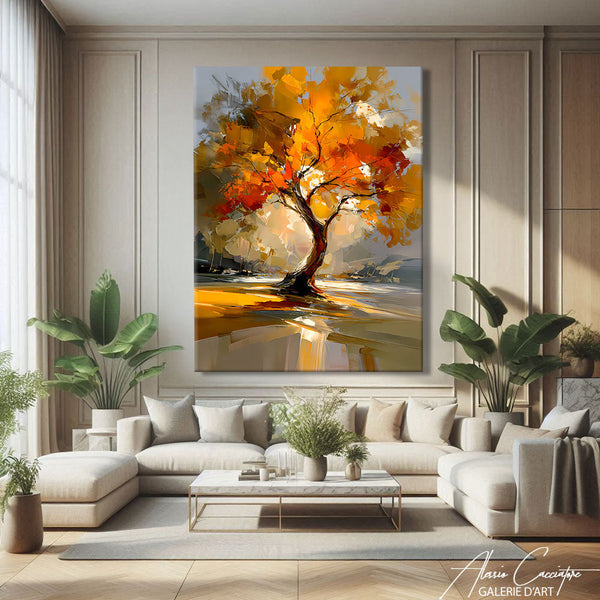
Botanical style actually encompasses several families. Graphic foliage plays with contrast and silhouette, floral compositions focus on the softness of petals, and nature scenes combine flowering trees, water, and light. They all share the same promise: to bring a little garden into a room, whatever the season.
At Alessio Cacciatore, our botanical prints are available on canvas stretched over a wooden frame or on plexiglass, with a hanging rail included. Prices start at €89, delivery is free, and you have 30 days to change your mind if the artwork does not find its place in your home.
In which room should you hang a botanical print?
A botanical print fits in almost every room, but it plays a different role in each. In a living space, it adds a sense of openness; in a more intimate room, it creates a calm atmosphere. Here is how to adapt it to every space in the home.
- The living room: a large format or triptych above the sofa soothes the living space without weighing it down, especially in white, green, or sand tones.
- The bedroom: soft foliage or pale flowers above the headboard create the effect of a window opening onto a garden.
- The kitchen: a colorful plant motif recalls herbs and fruit, and warms up a wall often dominated by cabinets.
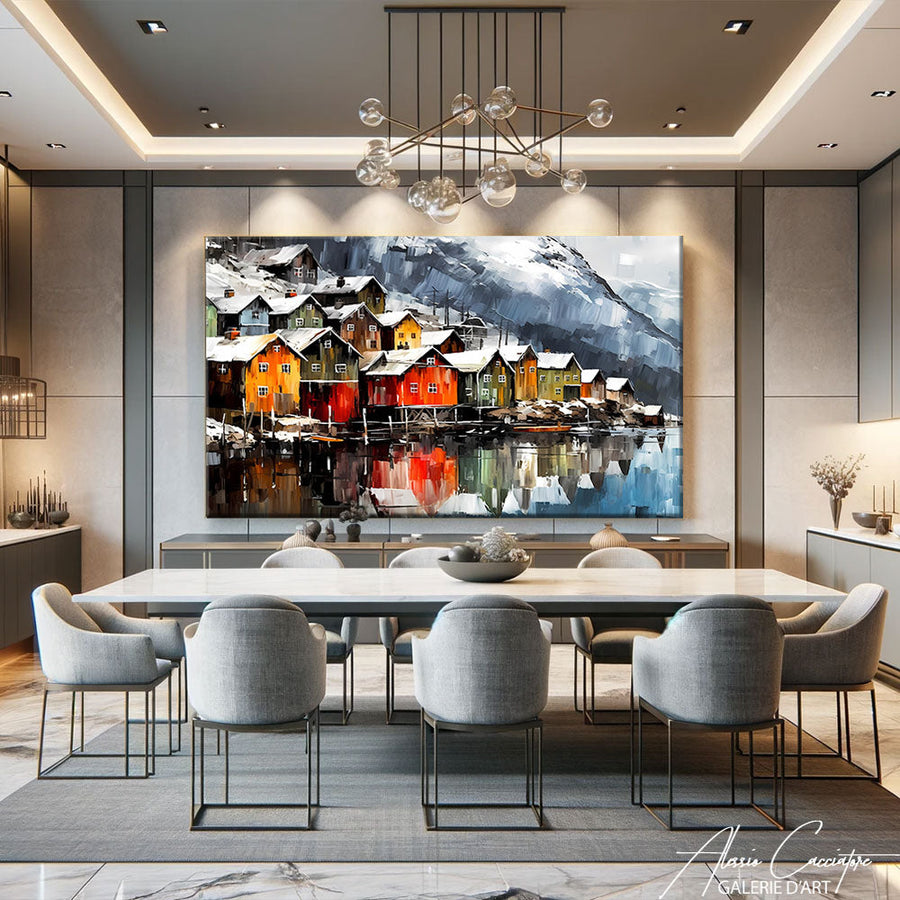
- The dining room: a generous composition facing the table adds character to meals.
- The entryway and hallway: a vertical format with a botanical theme welcomes your guests right at the door.
To explore each room in more detail, our article which flower for which room details the choice of motif according to the use of each space and the light available. You will see which flowers to choose for a living room, bedroom, or dining area.
In a bedroom, the triptych of white flowers perfectly illustrates the softness of botanical style. Its three panels in white, gray, and bluish tones stretch above the bed and add grandeur to the wall without ever overwhelming it. It is an ideal option if you are looking for a soothing and bright atmosphere.

White flower triptych on canvas, available on canvas or plexiglass, from €149.
Which colors should you choose for a botanical print?
The colors of a botanical print are chosen based on the existing atmosphere of the room. Two main families dominate: natural tones such as green, sand, and terracotta, and brighter versions enhanced with pink, coral, or yellow. The right choice depends on the materials and shades surrounding you.
Natural tones for a warm interior
Soft greens, beiges, and browns pair well with wood, rattan, linen, and ceramics. They are suitable for Scandinavian, bohemian, or chic country interiors where a soft atmosphere is desired. If green appeals to you, our guide to decorating with green shows the best combinations.
Touches of pink or color to brighten up the room
A print with pink or coral flowers brings warmth to a white or gray room. It works particularly well in a kitchen or dining room, where it recalls the conviviality of meals. To avoid an overly sweet effect, use its dominant color in only one or two objects: a cushion, a vase, or a tea towel.
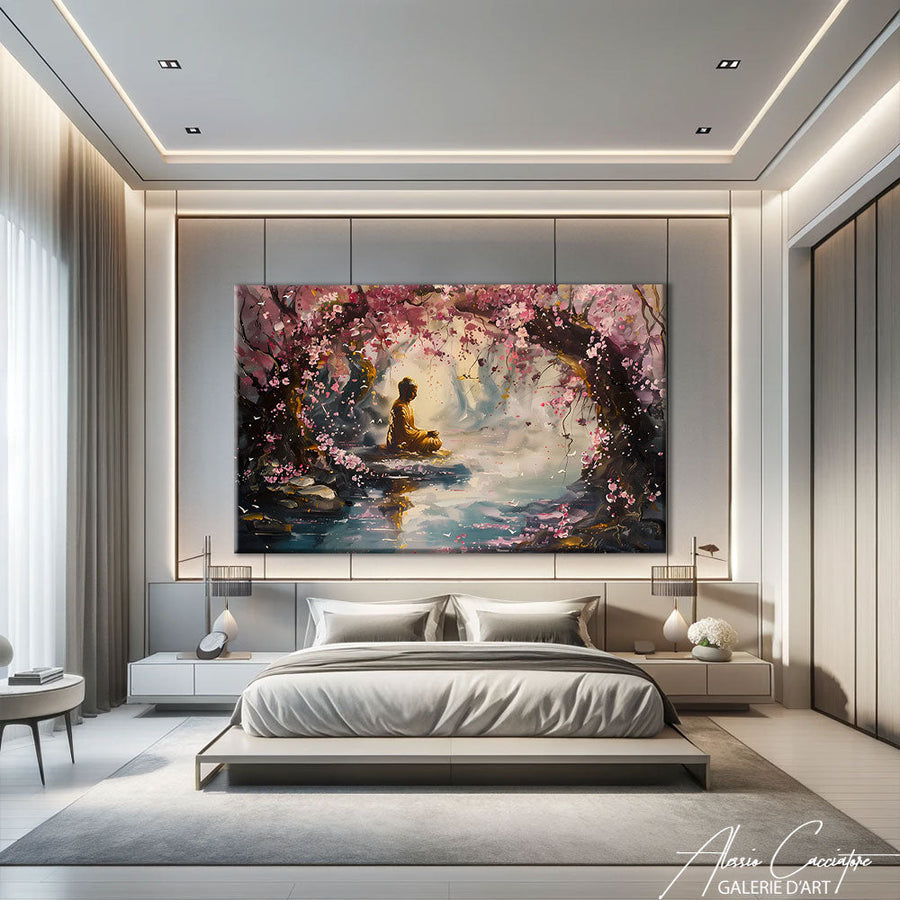
The modern cherry blossom print is a good example. Its pink branches are reflected in turquoise water, and its vertical format fits easily next to a countertop or a window. It brings a spring touch to a kitchen with wooden cabinets without competing with them.

Modern cherry blossom print, on canvas or plexiglass, from 60x40 cm to 120x80 cm.
Which size should you choose for a botanical print?
The size of a botanical print is chosen first according to the width of the piece of furniture or wall it overlooks. Our guideline: the artwork, or composition, should occupy about two-thirds of this width. A print that is too small for a large wall loses all its impact, while a well-proportioned size structures the room.
| Width of the furniture or wall | Recommended size | Example of use |
|---|---|---|
| About 90 cm | 60x40 cm | Entryway console, small sideboard, kitchen wall |
| About 120 cm | 80x60 cm | Dresser, single headboard, desk |
| About 180 cm | 120x80 cm | Three-seater sofa, large sideboard, double headboard |
The triptych: an option for large walls
A triptych allows a branch or bouquet to be spread across three canvases, giving grandeur to a wide wall. The white flower triptych presented above combines a central panel and two side panels, from 60x40 cm and 2 x 40x30 cm up to 100x75 cm and 2 x 80x60 cm. Leave 5 to 8 cm between each panel so that the whole remains cohesive.
For a contemporary living room, a more colorful landscape format also works very well. The modern flower print combines daisies, orange flowers, and black-and-white motifs: above a large gray sofa, it becomes the focal point of the room. At 120x80 cm, it follows the two-thirds rule on a sofa measuring about 180 cm.

Modern flower print, available on canvas or plexiglass, in 60x40, 80x60, or 120x80 cm.
At what height should you hang a botanical print?
A botanical print is hung with its center between 145 and 160 cm from the floor, at the eye level of a standing person. This rule applies to a bare wall, an entryway, a hallway, or a dining room. It helps avoid the most common mistake: placing a print too high, making it appear to float above the room.
- Above a sofa or headboard, leave 20 to 25 cm between the top of the furniture and the bottom of the frame.
- Check that the artwork occupies about two-thirds of the width of the furniture.
- For a triptych, space the panels 5 to 8 cm apart and align their centers on the same horizontal line.
- Mark the location with a pencil before fixing the hanging rail, then check the level.
For walls that call for more exuberant greenery, our collection of tropical prints offers broader foliage and deeper greens, to be hung using the same guidelines. These generous motifs are particularly suitable for the large walls of a living room or dining room.
How to coordinate a botanical print with the rest of your décor?
A botanical print benefits from interacting with the natural materials surrounding it. Light wood, linen, terracotta, and rattan extend its universe, while warm lighting brings out the nuances of green and pink. Conversely, light that is too cold flattens the colors and makes the motif look duller.
A green plant placed nearby enhances the garden effect, provided it is not placed directly under the print, which would clutter the composition. Also avoid multiplying different plant motifs on the same wall: it is better to stick to a single family of foliage or flowers, coordinated consistently.
If you prefer broader landscapes featuring forests, mountains, or lakes, our collection of nature prints extends the botanical spirit to the scale of a panorama. It pairs well with a floral print placed in another room, creating a common thread throughout the home.
FAQ: botanical print
Is a botanical print a lasting choice for décor?
Yes, a botanical print is one of the most enduring styles in décor. Plants transcend trends because they adapt to Scandinavian, bohemian, classic, or contemporary interiors. To ensure it remains pleasant to look at for a long time, choose a motif you truly like rather than a color strongly influenced by the season.
Can you create an entirely botanical gallery wall?
Yes, a botanical gallery wall works very well if it maintains a consistent color palette. Combine three to five artworks on the same botanical theme, varying the sizes but not the palette. Align them on a common baseline or around a central axis so that the composition remains cohesive and harmonious.
What size botanical print should go above a sofa?
Above a sofa, choose a botanical print that occupies about two-thirds of its width. For a sofa measuring about 180 cm, a 120x80 cm print is a good fit. Leave 20 to 25 cm between the top of the backrest and the bottom of the frame, and opt for a triptych if you want to break up the motif.
Canvas or plexiglass for a botanical print?
Canvas stretched over a wooden frame offers a soft and warm appearance, ideal for botanical prints in natural tones. Plexiglass, with a hanging rail included, provides a brighter and more contemporary finish that highlights vivid colors. Both supports are available for every print mentioned in this article.
In summary
- A botanical print puts plants at the center: foliage, a branch, flowers, or a nature scene.
- It can be hung almost anywhere, with its center between 145 and 160 cm from the floor.
- Above a piece of furniture, it occupies about two-thirds of its width, 20 to 25 cm above it.
- Natural tones for a warm interior, touches of pink or color to brighten up a neutral room.
- Canvas or plexiglass, from €89, with free delivery and 30 days to change your mind.
To find the motif that will add openness to your interior, browse our collection of flower prints.