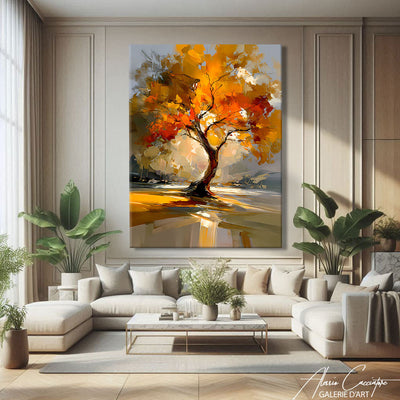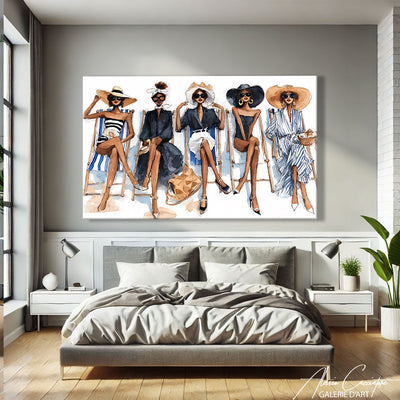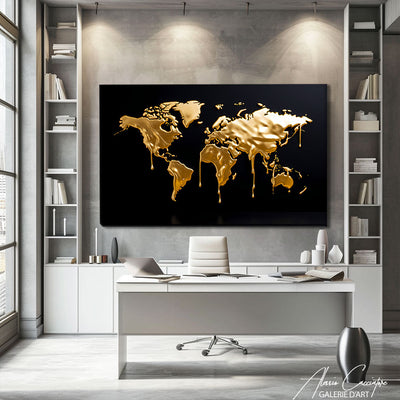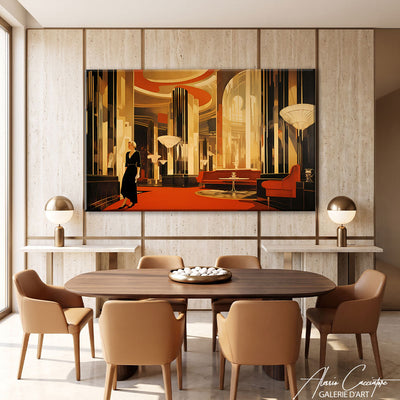

A bare stretch of wall, a longing for nature, and this question that comes up constantly in the studio: does the botanical print really have a place everywhere, or is it a style reserved for fans of winter gardens? Having accompanied dozens of very different interiors, the answer is straightforward: it is one of the easiest styles to integrate into your home, provided you follow a few simple rules. Graphic foliage, herbarium plates, cherry blossoms, or refined floral compositions: here is how to choose yours and where to hang it so that it truly transforms a room.
What exactly is a botanical print?
A botanical print refers to any artwork centered on plant life, represented with an almost scientific intention: a single leaf on a light background, an antique herbarium plate, or a bouquet drawn with precision. It is often confused with the classic floral painting, but a nuance exists. While a floral painting plays on color and emotion, the botanical style relies on lines, texture, and a clean background that lets the motif breathe. This is why you find it in both a Scandinavian living room and a more classic dining room: its sobriety works anywhere.
All our pieces on the botanical theme are created on canvas stretched over wooden frames, with a plexiglass option for a more contemporary, glossy finish, offering a warm rendering that is faithful to the texture of a real painted canvas, regardless of the chosen motif.
In which room should you hang a botanical print?
This is the most frequently asked question, and the real answer is: almost everywhere, but not in the same way depending on the room.
- The living room handles a large format or a botanical triptych above the sofa very well: the vegetal motif soothes a living space without weighing it down, especially in white and green tones.
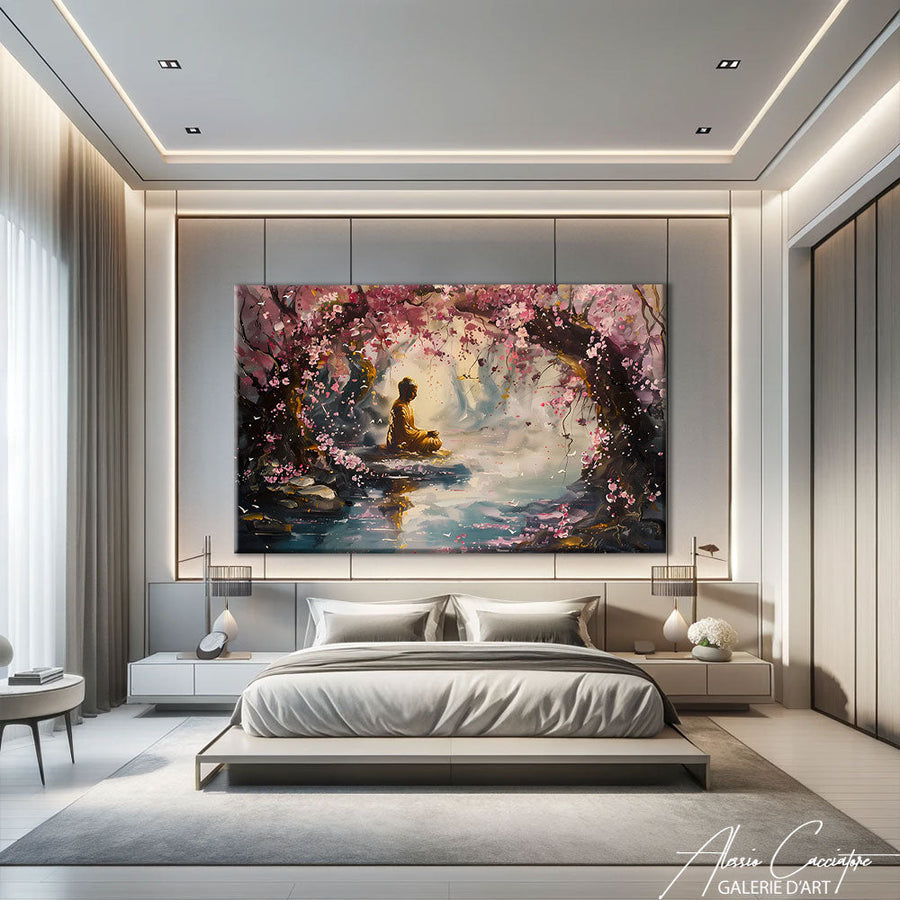
- The bedroom is arguably the room where a botanical print makes the most sense: soft foliage or cherry blossoms above the headboard create a Zen atmosphere, almost like a window opening onto a garden.
- The dining room loves large, organic formats: a generous floral motif above a sideboard or facing the table immediately gives the meal character.
- Entryways and hallways, often neglected, are perfect for a botanical plate in a vertical format, like a subtle nod as soon as you walk through the door.
Our article on choosing a flower according to the room details this logic further if you want to explore the subject room by room.
Which colors and style should you choose?
Botanical art lends itself to two major families, and the choice depends above all on the atmosphere already present in your home. The naturalist style, in green, kraft, or terracotta tones, suits an interior where wood, rattan, and linen dominate: it is the rawest and most timeless version. The graphic style, in black and white or with a single touch of color, is better suited to an interior already filled with various materials and statement furniture, where you want a painting that structures the space without shouting.
If your decor is already colorful and cheerful, botanical art is not incompatible: our article on colorful abstract paintings shows how plants can dialogue very well with a brighter accent.
Beware of a frequent trap: multiplying different botanical motifs in the same room without a common thread. A tropical leaf, a peony, and an antique herbarium side-by-side rarely work well. It is better to choose a single family of motifs and let it breathe.
Which format and combination for a real decorative effect?
The triptych is particularly successful in the botanical register: it allows you to spread a large motif, a branch, or foliage across three canvases without needing a massive wall. This is actually one of the reasons many of our clients opt for this version above a sofa or bed.
For a single format, you must think big: a small botanical print isolated on a large wall loses all its impact. It is better to have a generous canvas, even choosing it slightly oversized, than a piece that is too timid and gets lost in the decor.

In a bedroom, a more intimate composition like cherry blossoms brings the same softness without taking up the entire wall.

And for a dining room that needs character, a large floral format always makes an impression above a sideboard.

How to pair a botanical print with the rest of the room?
A botanical print is never as beautiful on its own: it dialogues with its surroundings. A few simple habits are enough: a real green plant nearby, but not directly underneath, as it weighs down the composition; a neutral light wood or matte black frame rather than an overly ornate one; and warm lighting rather than cool white, so as not to flatten the shades of green.
If you are still hesitating between several styles of natural motifs, our guide on nature reinvented in abstract art can help you decide. To complement a plant-themed wall without ever competing with it, decorative wall butterflies and bird motif wall decor integrate very naturally into this type of composition.
And if you like the botanical style but are looking for something a bit more generous in terms of foliage, our collection of tropical prints pushes the motif further, with wider leaves and deeper colors.
FAQ: your questions about botanical prints
Is there a risk that botanical prints will go out of style?
That is actually one of its strengths: unlike a color trend or a motif that is very marked by a specific era, plant life has transcended fashions for decades. Well-chosen foliage, on a quality canvas, is still a pleasure to look at ten years later.
Can you create a wall of only botanical frames?
Yes, and it is even one of the most harmonious compositions to create, provided you maintain consistency in hues or frames between the pieces. Three to five canvases of different sizes, on the same botanical theme, create a very successful winter garden effect without ever appearing cluttered.
What size should I choose for a botanical print above a sofa?
Count on about two-thirds of the width of the sofa for a single format, or distribute this same width across a triptych if you prefer to break up the motif. A painting that is too small above a large sofa remains the most frequent mistake observed during home visits.
The botanical print has the rare quality of adapting to almost all interior styles without ever imposing its presence. Discover all of our canvas prints on the botanical theme, in stretched canvas or plexiglass versions, in our floral print collection.