
Chinese painting
15 œuvresDes œuvres en édition limitée, pensées par l'artiste pour illuminer votre intérieur.
Fait main en AllemagneLivraison offertePrêt à accrocher30 jours pour changer d'avis
-
Add to Wishlist CHINESE TIGER PAINTINGDès 89 €
-
Add to Wishlist CHINESE PEACOCK PAINTINGDès 89 €
-
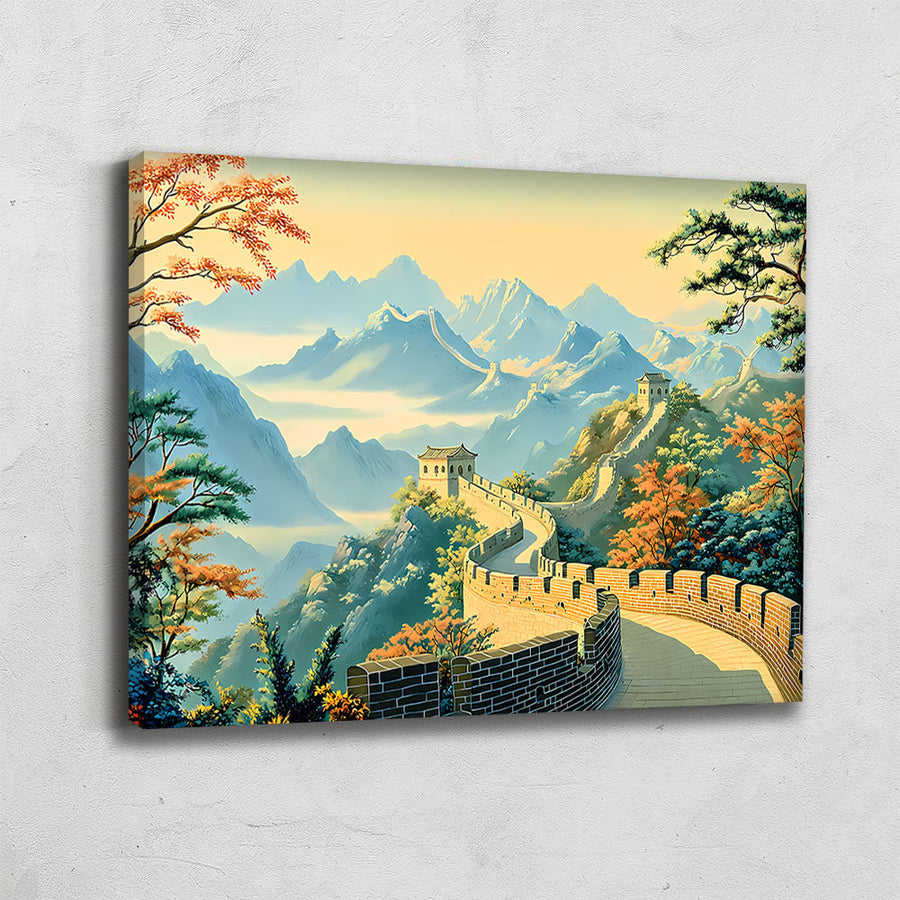
Add to Wishlist GREAT WALL PAINTINGDès 89 €
-
Add to Wishlist CHINESE HORSE PAINTINGDès 89 €
-
Add to Wishlist CHINESE PANDA PAINTINGDès 89 €
-
Add to Wishlist CHINESE PAINTINGDès 89 €
-
Add to Wishlist CHINESE ART PAINTINGDès 89 €
-
Add to Wishlist MODERN CHINESE PAINTINGDès 89 €
-
Add to Wishlist CHINESE LANDSCAPE PAINTINGDès 89 €
-
Add to Wishlist CHINESE DECORATIVE PAINTINGDès 89 €
-
Add to Wishlist ANTIQUE CHINESE PAINTINGDès 89 €
-
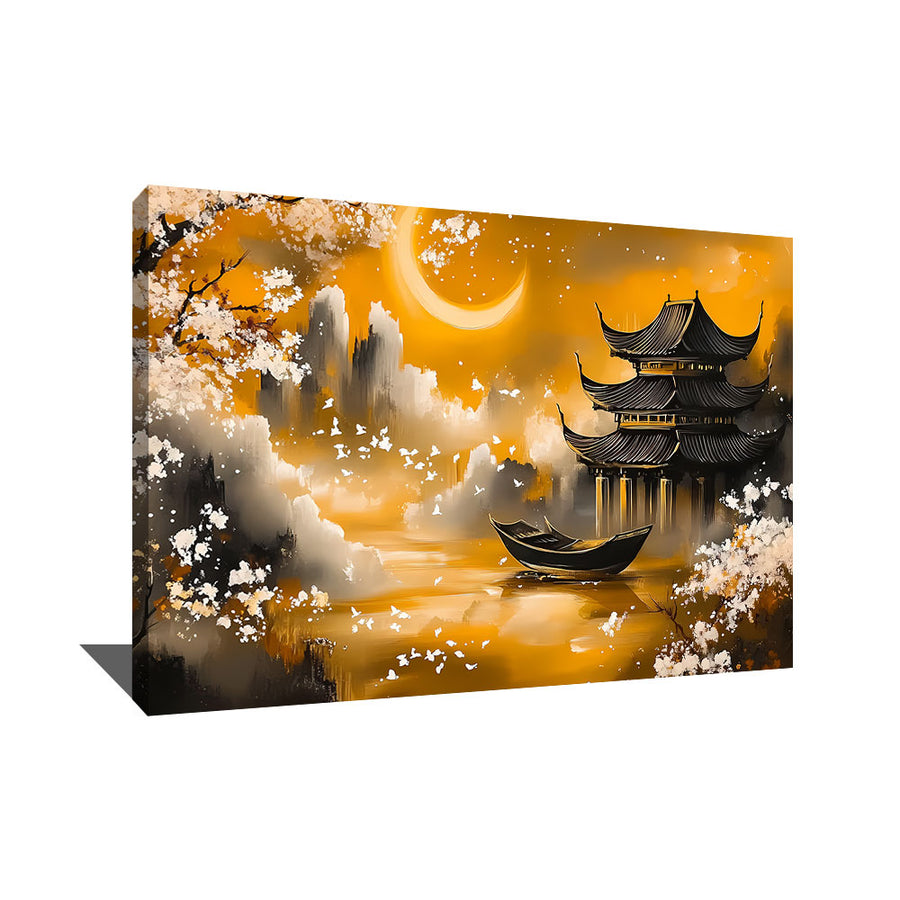
Add to Wishlist CHINESE TEMPLE PAINTINGDès 89 €
-
Add to Wishlist CHINESE LANDSCAPE PAINTINGDès 89 €
-
Add to Wishlist CHINESE STYLE PAINTINGDès 89 €
-
Add to Wishlist CHINESE DRAGON PAINTINGDès 89 €









Chargement des œuvres suivantes…
Vous avez vu 15 œuvres sur 15


China occupies a singular place in decorative iconography that no other culture can truly claim: it possesses the oldest continuous pictorial tradition in the world, practiced without interruption for over two thousand years, and, above all, the only aesthetic in the world founded on emptiness as an active element of composition. Where the entire Western tradition fills the canvas to the edges, driven by the fear of emptiness that art historians call horror vacui, the Chinese tradition lets the white of the paper or silk carry the meaning: mist, sky, water, and snow are not depicted; they are left empty, and this void often occupies half or two-thirds of the composition. This principle, inherited from Taoism, which makes the void the source of all things, is exactly what contemporary minimalism is rediscovering two thousand years later, without always knowing its origin. This tradition has invented forms that no other culture possesses: shanshui, literally "mountain and water," the landscape of misty mountains in ink wash that was born during the Tang Dynasty in the seventh century and remains the major genre today; floating perspective, without a single vanishing point, which allows one to travel through the landscape as one unrolls a scroll; the three perfections, poetry, calligraphy, and painting combined in a single work, China being the only culture to have made writing and painting one and the same art; and the red seal that signs and punctuates the composition. Alongside this literati tradition exists a popular iconography of extraordinary richness, codified by centuries of symbolism: the imperial dragon, phoenix, crane of longevity, peony as queen of flowers, carp leaping over the dragon gate, guardian tiger, red lanterns of the lunar new year, red and gold for prosperity, blue and white porcelain, yin and yang, and feng shui. It is exactly this dimension of the iconography of the art of the void and the symbol that our collection of Chinese paintings brings together: a selection of wall art printed on premium canvas and glossy plexiglass in our studio in Germany, chosen for their ability to transform a wall into a true window onto the oldest pictorial civilization in the world.
Landscapes of misty mountains in ink wash in the spirit of traditional shanshui with their peaks emerging from the white void, sugarloaf hills of Guilin reflecting in the Li River at dawn, twisted pines clinging to the cliffs of the Yellow Mountains amidst a sea of clouds, serpent-like imperial dragons in red and gold palettes or black ink, calligraphies in graphic composition with red seals, peonies in bloom in the tradition of flowers and birds, cranes of longevity in flight above the pines, red carp swimming upstream towards the dragon gate, guardian tigers in the spirit of traditional scrolls, tiered pagodas standing out against the mists, the Great Wall winding over the ridges in the evening light, red lanterns hanging in ancient alleys, red lacquered doors of temples, blue and white porcelain in decorative composition, stylized cloud and wave motifs in the spirit of imperial textiles, yin and yang symbols in contemporary composition, ink bamboos on an empty background, pandas in the forests of Sichuan, galloping horses in the spirit of literati painting, red and gold compositions for the lunar new year, chinoiserie in the spirit of the European eighteenth century: every painting in this gallery has been designed as a decorative object charged with palpable symbolic depth, capable of becoming the visual anchor for a scholar-inspired living room, a contemplative office, a bedroom calmed by the void, or an interior that fully celebrates this civilization in all its dimensions of millenary refinement.
Why China occupies a unique decorative place
In recent years, the Chinese painting has undergone a particularly interesting cultural transformation that is essential to understand in order to appreciate its current decorative value. Long confused with an undifferentiated Asian exoticism or reduced to the slightly kitschy chinoiserie of restaurants, Chinese art has regained its place over the last fifteen years as a major tradition in world art history, driven by several cultural convergences that are important to measure precisely. First, there is the international recognition of classical Chinese painting on the art market and in major exhibitions: ink landscape scrolls from the Song, Yuan, Ming, and Qing dynasties are now exhibited in the world's greatest museums and reach prices in auction rooms that rival those of the great Western masters, which has considerably raised the perception of this tradition. Then, there is the rediscovery by contemporary minimalism of the Chinese principle of active void: clean interiors, "warm minimalism," japandi, and all contemporary decoration that values empty space and breathing room rediscover, often without knowing it, the Taoist principle that Chinese painting has been applying for two thousand years, which makes ink landscapes surprisingly modern in a design interior. There is also the global craze for feng shui, this millenary Chinese art of harmonizing spaces, which has conquered Western decoration and which grants certain motifs (dragon, carp, peony, mountain, water) a symbolic charge of prosperity and balance that many actively seek for their home. It is also the growing media coverage of the lunar new year in France, celebrated each year by parades in major cities, whose red and gold aesthetic, lanterns, and zodiac animals have become familiar to the general public. Finally, there is the enduring fascination for China's monumental heritage—the Great Wall, the Forbidden City, the Terracotta Army, the mountains of Huangshan and Guilin—which rank among the most dreamed-of destinations for distant travel. For those who particularly love Asia in its broadest diversity, our Asian collection offers an umbrella universe that admirably extends the spirit of this collection to the other great cultures of the continent.
Our selection process prioritizes three essential qualities for this subject with its particular requirements. Cultural accuracy first, because confusion between China and Japan is the most frequent error and is immediately spotted by enlightened enthusiasts: the Chinese dragon has five claws when it is imperial and a mustache-clad serpent silhouette, without wings; the Chinese pagoda has roofs with upturned corners different from those of Japan; Chinese ink wash leaves the void where the Japanese print uses colored flat tints; Chinese calligraphy has its own styles; the round red lanterns, lacquered doors, stylized clouds, and blue and white porcelain motifs belong to a precise visual vocabulary. This precision distinguishes a refined work from an approximate exoticism. The mastery of the void comes next, because Chinese composition requires a grammar that is radically different from the Western one: the void is not a background but an element; the mist that separates two planes of a mountain is just as important as the mountains themselves; the balance between the filled and the empty is the very heart of the work. This orchestration requires real understanding so that the composition breathes instead of appearing unfinished. The symbolic dimension finally, because a successful Chinese painting does not merely represent a motif: each element carries a meaning codified for centuries (the crane for longevity, the peony for wealth and honor, the carp for perseverance and success, the bamboo for uprightness, the pine for constancy, the bat for happiness), and the painting becomes as much a wish as an image. It is this purely symbolic quality that transforms a Chinese painting into a true presence that carries meaning in the home.
The major families of our Chinese collection
Our gallery explores all the great iconographies of this civilization. Here are the main families that make up the selection.
The shanshui landscape and misty mountains
Probably our most emblematic and refined family. Shanshui, the landscape of mountains and water in ink wash, has been the major genre of Chinese painting since the Tang Dynasty: peaks emerging from the white mist, twisted pines clinging to cliffs, waterfalls falling into the void, a tiny fisherman on his boat, a temple perched on a ridge, all in a floating perspective that invites the gaze to travel. The Yellow Mountains of Huangshan with their sea of clouds and the sugarloaf hills of Guilin along the Li River are the most famous natural models. Our compositions celebrate this dimension in varied treatments: monochrome ink wash in the traditional spirit, misty landscape in a vertical composition inspired by the hanging scroll, Guilin at dawn in shades of grey and water-green, Huangshan in the sea of clouds, mountain and waterfall in a minimalist composition where the void dominates. On matte canvas that respects the grain of the paper and the softness of the ink, the effect is particularly accurate. To be paired admirably with our mountain collection to explore great high-altitude landscapes in other traditions.
The imperial dragon
A particularly powerful family. The Chinese dragon has nothing to do with the Western dragon: a benevolent rather than evil creature, serpent-like and wingless, with whiskers and a mane, master of water and rain, symbol of the emperor (five claws for the imperial dragon, four for princes, three for others), it is the most powerful of animals in Chinese mythology and one of the twelve signs of the zodiac. Our compositions celebrate this dimension in varied treatments: dragon winding through the clouds in red and gold, dragon in black ink in the spirit of literati scrolls, dragon and pearl of wisdom in a traditional composition, dragon in a contemporary graphic composition. These compositions are particularly suitable for offices and entryways, where their charge of protective power is fully expressed. To be paired admirably with our red collection to amplify the color of Chinese prosperity.
Calligraphy and the three perfections
Particularly scholarly compositions. In China, calligraphy is a major art, even superior to painting in the traditional hierarchy, and characters traced with a brush (happiness, longevity, harmony, prosperity, love, peace) constitute one of the oldest forms of decoration in the world. The tradition of the three perfections brings together the poem, its calligraphy, and the accompanying image on a single work, punctuated by the artist's red seal. Our compositions celebrate this dimension in varied treatments: single character in a graphic composition on an empty background, calligraphy and bamboo in ink, scroll-inspired composition with poem and landscape, characters in a contemporary red and black composition. These compositions bring to an interior this purely intellectual and refined dimension of the literati culture.
Flowers and birds
A particularly graceful family. The genre of flowers and birds is, along with shanshui, the other great genre of Chinese painting: peonies in bloom, queens of flowers and symbols of wealth and honor, plum blossoms announcing spring, orchids of uprightness, chrysanthemums of autumn, lotuses of purity, along with cranes, peacocks, pheasants, kingfishers, and sparrows perched on branches. Our compositions celebrate this dimension in varied treatments: red peony on an empty background, crane of longevity above the pines, imperial peacock in a sumptuous composition, plum blossom branch in ink, kingfisher on a lotus stem. To be paired admirably with our peacock collection to delve deeper into this emblematic bird, and with our lotus collection for the sacred flower in all its expressions.
Monumental heritage
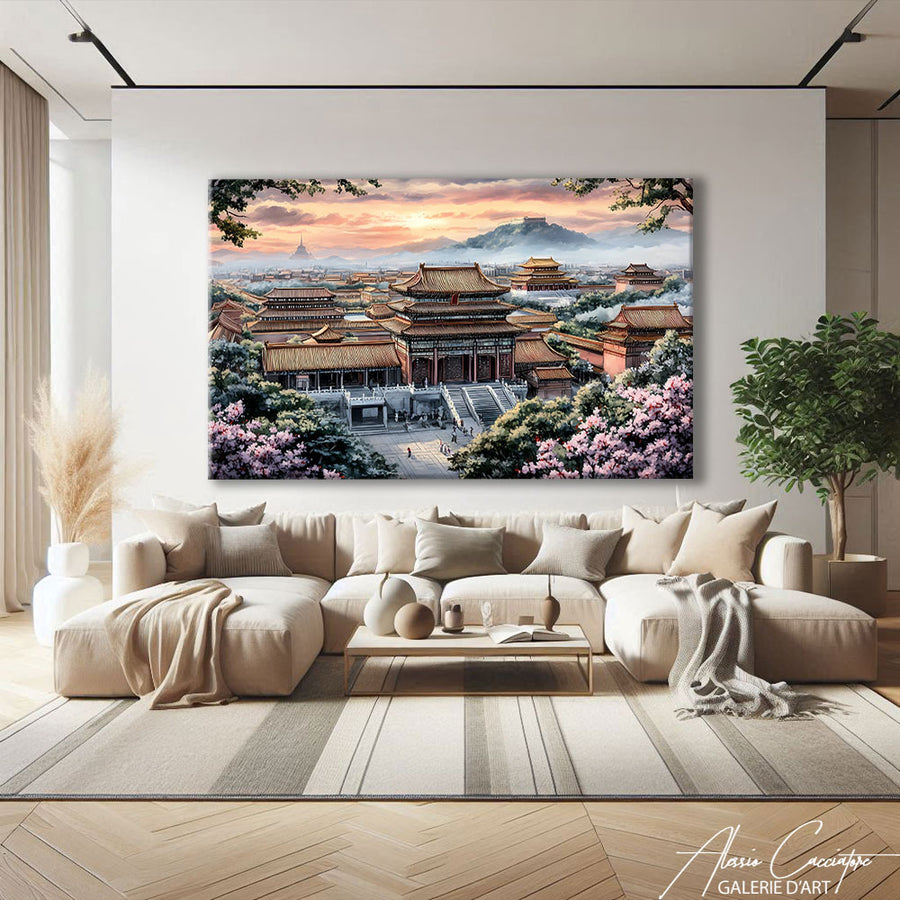
Particularly immersive compositions. China possesses one of the most impressive monumental heritages on the planet: the Great Wall winding over the ridges for over twenty thousand kilometers, the Forbidden City and its yellow-tiled roofs, the Terracotta Army and its eight thousand soldiers, tiered pagodas, humpback bridges in the gardens of Suzhou, the Temple of Heaven. Our compositions celebrate this dimension in varied treatments: the Great Wall in the evening light, a pagoda standing out against the mists, the roofs of the Forbidden City in a graphic composition, a classic garden with a bridge and pavilion, terracotta warriors in a heritage composition.
Red and gold and the lunar new year
A particularly festive family. Red, the color of happiness and luck, and gold, the color of wealth, form the palette of all Chinese celebrations, and particularly the lunar new year with its round lanterns, red envelopes, parade dragons, and zodiac animals. Our compositions celebrate this dimension in varied treatments: red lanterns hanging in an ancient alley, red lacquered door with golden knockers, red and gold composition of stylized clouds, the zodiac animal of the year in a contemporary composition, dragon dance in a festive composition. To be paired admirably with our gold collection to extend the radiance of imperial gold.
Yin yang, feng shui, and Taoism
Particularly symbolic compositions. Taoism has given China its most universal symbols: the yin and the yang, these two complementary principles whose balance governs the universe, and feng shui, this millenary art of harmonizing spaces, which grants motifs and their placement a charge of balance and prosperity. Our compositions celebrate this dimension in varied treatments: yin yang in a contemporary abstract composition, mountain and water in a balanced feng shui composition, red carp swimming upstream (symbol of perseverance and success), bamboo of uprightness in ink. To be paired admirably with our zen collection to extend the contemplative spirit into other expressions.
Blue and white porcelain and chinoiserie
A particularly decorative family. Blue and white porcelain, born under the Yuan and magnified under the Ming, fascinated Europe to the point of giving birth in the eighteenth century to "chinoiserie," this European decorative style inspired by a dreamed-of China: pagodas, bridges, fishermen, willows, and birds in cobalt blue on a white background, vase and plate motifs, imaginary gardens. Our compositions celebrate this dimension in varied treatments: blue and white porcelain motif in a contemporary composition, Ming vase in a decorative composition, chinoiserie landscape in the eighteenth-century spirit, stylized clouds and waves in blue and white. These compositions fit particularly well in classic interiors and cultivated living rooms.
Symbolic animals
Particularly codified compositions. Beyond the dragon, China has codified an entire symbolic bestiary: the tiger as guardian of the west and protector of the home, the horse of success and vitality, the crane of longevity, the carp of perseverance, the panda as a national emblem, the phoenix of the empress, the tortoise of wisdom, the twelve animals of the zodiac. Our compositions celebrate this dimension in varied treatments that respect the symbolic charge of each animal.
Spirit and atmosphere determine your choice
The Chinese painting is available in several distinct decorative registers depending on the atmosphere sought. Here are our benchmarks to identify the painting that corresponds exactly to your project.
For a scholarly and contemplative atmosphere
Favor shanshui ink landscapes, calligraphy on empty backgrounds, bamboo and plum blossoms, and compositions where the void dominates. On matte canvas. Particularly suitable for offices, libraries, calm bedrooms, and minimalist interiors.
For a festive and prosperous atmosphere
Turn towards red and gold, imperial dragons, lanterns, peonies in bloom, and red carp. On glossy plexiglass, which intensifies the reds and golds. Particularly suitable for entryways, dining rooms, and reception areas.
For a heritage and travel-inspired atmosphere
Opt for the Great Wall, pagodas, the Forbidden City, Guilin and Huangshan, and terracotta warriors. Particularly suitable for travelers' living rooms and spaces that celebrate discovery.
For a classic and decorative atmosphere
Choose blue and white porcelains, eighteenth-century style chinoiserie, and traditional flowers and birds. Particularly suitable for classic interiors, cultivated living rooms, and Haussmann-style apartments.
The Chinese painting, room by room
Each room calls for its ideal Chinese painting according to its use and the desired atmosphere. Here are our decorative recommendations.
In a scholarly or cultivated living room
This is probably the ideal location for a large shanshui landscape. Above the sofa, a 120x80 cm format of misty mountains in ink installs a contemplative depth that few subjects can equal. Above an ecru linen or water-green velvet sofa, in an atmosphere of dark wood, ceramics, and plants, the Chinese painting transforms the living room into a scholar's study. For more festive living rooms, a red and gold dragon or a peony composition brings, on the contrary, prosperity and radiance.
In a contemplative office
A particularly relevant configuration. Chinese culture invented the scholar's study, that office where calligraphy, painting, and poetry accompany reflection. Calligraphy on an empty background, ink bamboo, a misty landscape, or for business offices, a dragon or red carp, whose symbolism of success and perseverance is particularly sought after in the tradition of feng shui. 80x60 cm format on matte canvas.
In a bedroom calmed by the void
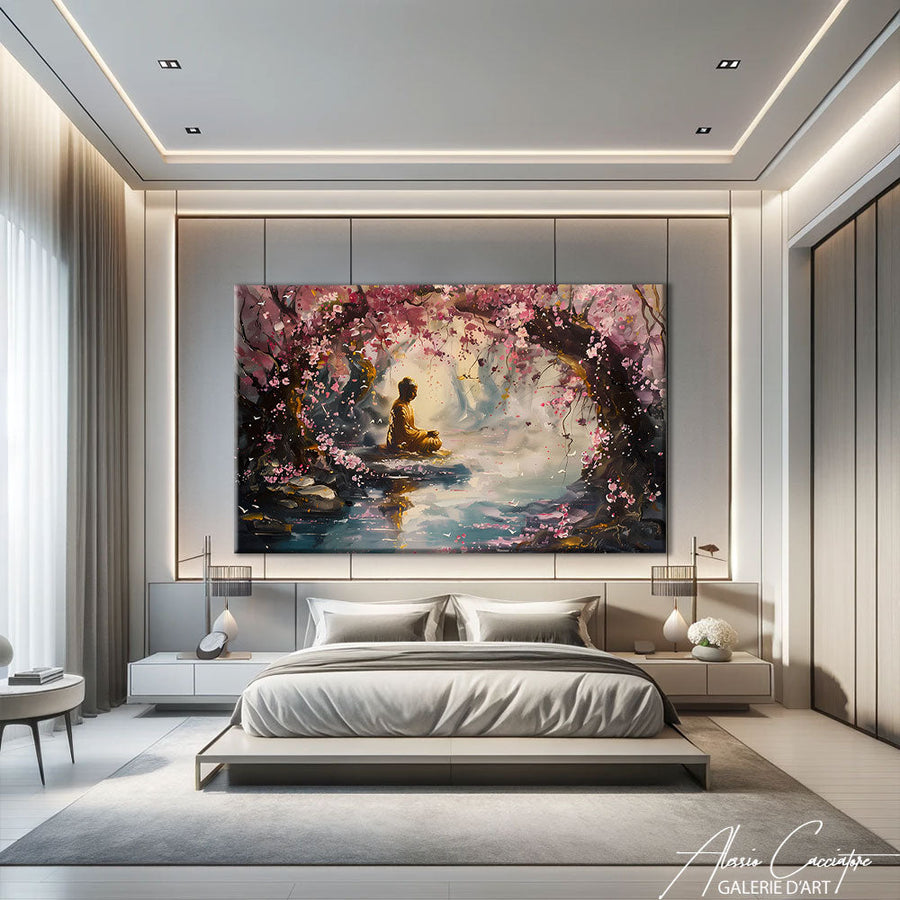
Contemplative setup. The Chinese principle of active void makes shanshui landscapes the most restful compositions you can hang in a bedroom: the mist, water, and sky left as white space soothe the gaze. 80x60 cm format above the headboard, on matte canvas. Avoid red and gold compositions, as they are too stimulating for this space.
In a protective entryway
Symbolic setup. In the feng shui tradition, the entryway is the place through which energy enters the home, and the dragon, guardian tiger, or red carp play a role in protection and welcoming prosperity. Vertical format suitable for narrow spaces, inspired by hanging scrolls.
In a formal dining room
Festive setup. The dining room beautifully accommodates red and gold, peonies, lanterns, and Lunar New Year compositions that extend the convivial and prosperous dimension of a shared meal.
In a stairwell
Ideal configuration for vertical hanging scroll-inspired compositions: mist landscapes in height, vertical calligraphy, bamboos rising toward the sky. The gaze follows the composition while climbing the stairs, just as one unrolls a scroll.
In a meditation or practice space
Natural setup. Spaces dedicated to tai chi, qi gong, or meditation beautifully welcome shanshui landscapes, calligraphy, yin yang, and bamboo, which visually extend the practice.
In a professional space with an Asian or wellness focus
Chinese restaurants and tea houses, traditional Chinese medicine and acupuncture clinics, martial arts schools, tea shops, Oriental-inspired spas, travel agencies specializing in Asia, galleries and Asian antique shops, feng shui offices, corporate offices working with China: a Chinese painting is an obvious decorative choice.
Choosing the format to magnify Chinese art
The format significantly influences the effect of a Chinese painting because this tradition invented two formats unique to it: the vertical hanging scroll and the unrolled horizontal scroll.
The compact format (60x40 cm) is ideal for intimate compositions (calligraphic character, plum branch, kingfisher on a lotus) or in a series of three to create a coherent Chinese wall (for example, the four noble plants as a quadriptych: orchid, bamboo, chrysanthemum, plum, or three seasons of the same landscape).
The medium format (80x60 cm) remains the go-to size. Suitable for all compositions, from landscapes to dragons. Above a dresser, as an accent in an office, or in a bedroom: it provides a refined presence without dominating the room.
The large format (120x80 cm) is particularly suited to immersive shanshui landscapes and majestic dragons that require scale to deploy the void and the movement.
The vertical format is the historical format of the hanging scroll, that of mountain landscapes, calligraphy, and bamboo. It is the format we recommend for all traditionally-inspired compositions, and it is admirably suited for entryways, hallways, and stairwells.
The horizontal panoramic format captures the spirit of the unrolled scroll and is suitable for landscapes of Guilin along the river, the Great Wall on the ridges, or compositions where the eye travels from right to left.
The Chinese triptych is a configuration particularly adapted to this tradition, which has practiced panel composition for centuries. Three panels that can present a continuous landscape of mountains and mist, three symbolic flowers, or a dragon composition framed by two pieces of calligraphy.
Premium canvas or glossy plexiglass: sublimating ink and gold
The medium determines how your Chinese painting will render the unique quality of the ink or gold, and on this subject, the choice is clearly defined according to the style.
Printing on premium canvas
Our canvas is hand-stretched on a 2 cm thick FSC-certified spruce wood frame. Its matte, delicately grainy texture is the natural medium for everything involving ink and paper: shanshui landscapes, calligraphy, bamboo, flowers, and birds, for which it respects the grain, the washes, and the white void that should never shine. This is the choice we recommend for the majority of traditional and literati compositions, for cultured living rooms, offices, and bedrooms.
Printing on glossy plexiglass
Plexiglass makes everything involving red and gold vibrate: imperial dragons, lanterns, New Year compositions, vibrant peonies, and blue-and-white porcelain, whose glaze finds a natural echo in the brilliance of the medium. This is the choice we recommend for festive and decorative compositions, entryways, dining rooms, and professional spaces.
In both cases, our prints use high-definition, odorless, solvent-free ink, safe even in a child's bedroom. The printing technology we use preserves contrast and color fidelity for several decades. Each painting is delivered ready to hang, mounting system included.
Marrying Chinese art with your existing decor
Chinese aesthetics dialogue beautifully with several contemporary decorative worlds, often in unexpected ways. Here are a few suggestions.
In a minimalist contemporary interior
The most accurate and least-known combination. The principle of the active void in Chinese painting is exactly that of contemporary minimalism: a shanshui landscape or a piece of calligraphy on an empty background integrates into a sleek interior with an obviousness that few figurative subjects achieve.
In a Japandi or Scandinavian interior
Natural setup. Light wood, linen, raw materials: opt for ink bamboos, mist landscapes, plum blossoms, and compositions where the void dominates.
In a classic or Haussmann-style interior
Historical setup. Chinoiserie was invented for eighteenth-century European interiors: blue-and-white porcelain, flowers and birds, pagodas, and imaginary gardens integrate with particular ease into apartments with old moldings and parquet floors.
In a contemporary interior with dark walls
On a black, midnight blue, or deep green wall, a red and gold dragon, a vibrant peony, or white calligraphy produce a contrast of great sophistication.
In an eclectic, well-traveled interior
Items brought back from travels, textiles, ceramics: prioritize monumental heritage, lanterns, symbolic animals, and red and gold compositions.
In a zen and wellness interior
Natural materials, plants, calm palette: prioritize mist landscapes, yin yang, bamboo, and carp in a contemplative composition. To be combined beautifully with our Japanese collection when you wish to have the two great pictorial traditions of East Asia converse on two walls: ink and void on one side, prints and flat colors on the other.
Frequently asked questions about Chinese paintings
What is the difference between a Chinese painting and a Japanese painting?
This is the most important question, and confusion is common. The Chinese tradition is based on ink, wash, and void: misty mountain landscapes, integrated calligraphy, floating perspective, wingless serpentine dragons, red and gold, peonies, upturned-roof pagodas, blue-and-white porcelain, feng shui. The Japanese tradition is based on prints: flat areas of bold color, clean outlines, waves, cherry blossoms, geishas, Mount Fuji, wabi-sabi, zen minimalism. China is the source from which Japan derived its arts before developing its own radically different aesthetic. Our Chinese painting collection and our Japanese painting collection are therefore complementary and distinct; the Asian painting collection brings them together under a broader umbrella.
Do your Chinese paintings reproduce famous museum works?
Out of strict respect for the rights of the institutions that own the great works of classical Chinese painting and their museum reproductions (Palace Museum in Beijing, National Palace Museum in Taipei, Cernuschi and Guimet museums in Paris, major American museums), our compositions never literally reproduce famous scrolls. Our Chinese paintings are original creations that draw freely from the great traditions (shanshui, flowers and birds, calligraphy, chinoiserie) without reproducing any specific identifiable work or licensed character.
Are all your Chinese paintings prints?
Yes, they are high-definition prints on premium canvas or glossy plexiglass, manufactured in our workshop in Germany. Our compositions are designed and printed with gallery quality, which allows us to offer work of great refinement at an accessible price, with a particular attention to the cultural accuracy that distinguishes China from Japan.
Is a Chinese painting suitable as a gift?
It is one of the most symbolically charged gifts one can offer, precisely because every Chinese motif is a wish: the crane to wish a long life to a parent, the carp to wish success to a student or entrepreneur, the peony to wish prosperity to a couple setting up home, the dragon to wish power and protection, the bamboo to salute the integrity of a friend. Ideal for a Lunar New Year, a housewarming, a wedding, a professional success, or a gift for an enthusiast of Asian culture or feng shui. The 60x40 cm format on matte canvas remains one of our most popular gifts.
Which motif should I choose according to feng shui symbolism?
Tradition attributes a precise charge to each motif. The dragon for power and protection, to be placed in the entryway or office. Carp, ideally nine, of which eight are red and one is black, for wealth and perseverance, in the office or living room. The peony for love and prosperity, in a couple's bedroom or the living room. The crane and pine for longevity, in the parents' bedroom. The mountain for stability, behind the desk chair. Water flowing towards the inside of the house for abundance. Bamboo for growth and integrity. These indications belong to a cultural tradition that everyone is free to adopt according to their own sensibility.
At what height should I hang a Chinese painting?
Center the painting about 1.50 meters from the floor, the average eye level. For vertical hanging scroll-inspired compositions, you can raise the top of the frame slightly to reproduce the traditional position of the scroll, where the gaze starts from the top and descends along the landscape.
Are your paintings delivered ready to hang?
Yes. The canvas is delivered stretched on its frame, with hangers attached to the back. The plexiglass is delivered with its invisible mounting system. In both cases, installation takes less than five minutes.
How do I maintain my Chinese painting?
A dry or slightly damp cloth is enough for both supports. Avoid abrasive products and prolonged exposure to direct sunlight to preserve the subtlety of the ink washes and the brilliance of the reds and golds that provide all the depth to these compositions.
Questions fréquentes
Quels sont les délais de livraison ?
La livraison est offerte dans le monde entier, sous 4 à 7 jours. Vous pouvez suivre votre colis à tout moment depuis la page « Suivre le colis ».
Le tableau est-il prêt à accrocher ?
Oui, le système d'accroche est inclus. Les toiles sont tendues sur un châssis en bois d'épicéa de 2 cm (4 cm en option) et les plexiglas sont livrés avec des rails d'accroche en aluminium invisibles.
Toile ou plexiglas : quelle différence ?
La toile est une vraie toile tendue sur un châssis en bois. Le plexiglas est incassable, protégé des rayures et du vieillissement, et travaillé à la main par nos artisans en Allemagne.
Puis-je retourner mon tableau ?
Oui, vous avez 30 jours pour changer d'avis : contactez-nous par e-mail ou par le chat. Et si votre œuvre arrive abîmée, nous la réimprimons, sans retour à faire.
Livraison offerte sous 4 à 7 jours
Fabriqué à la main en Allemagne
30 jours pour changer d'avis