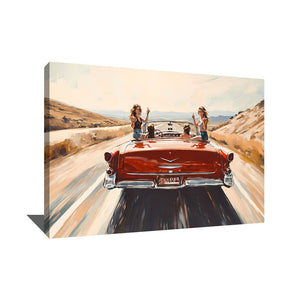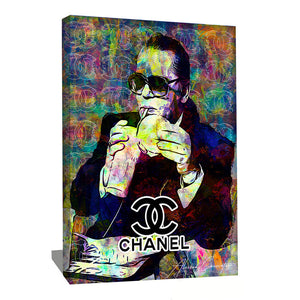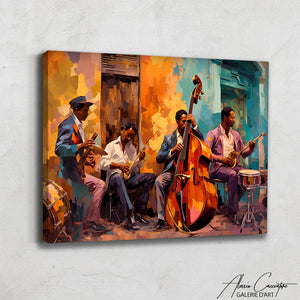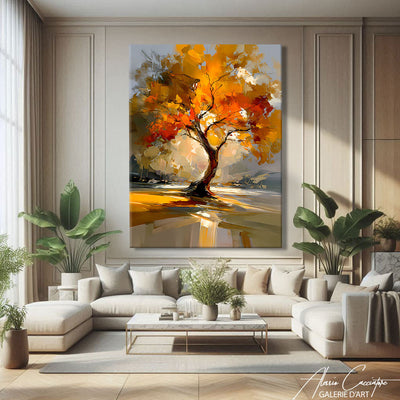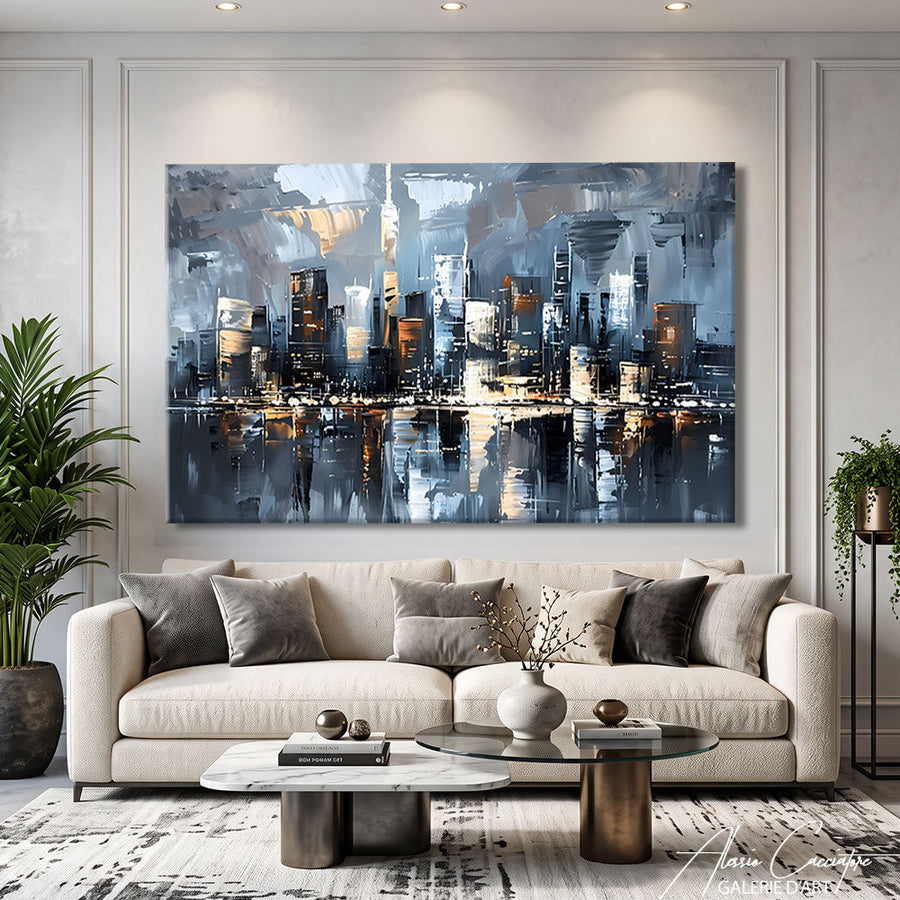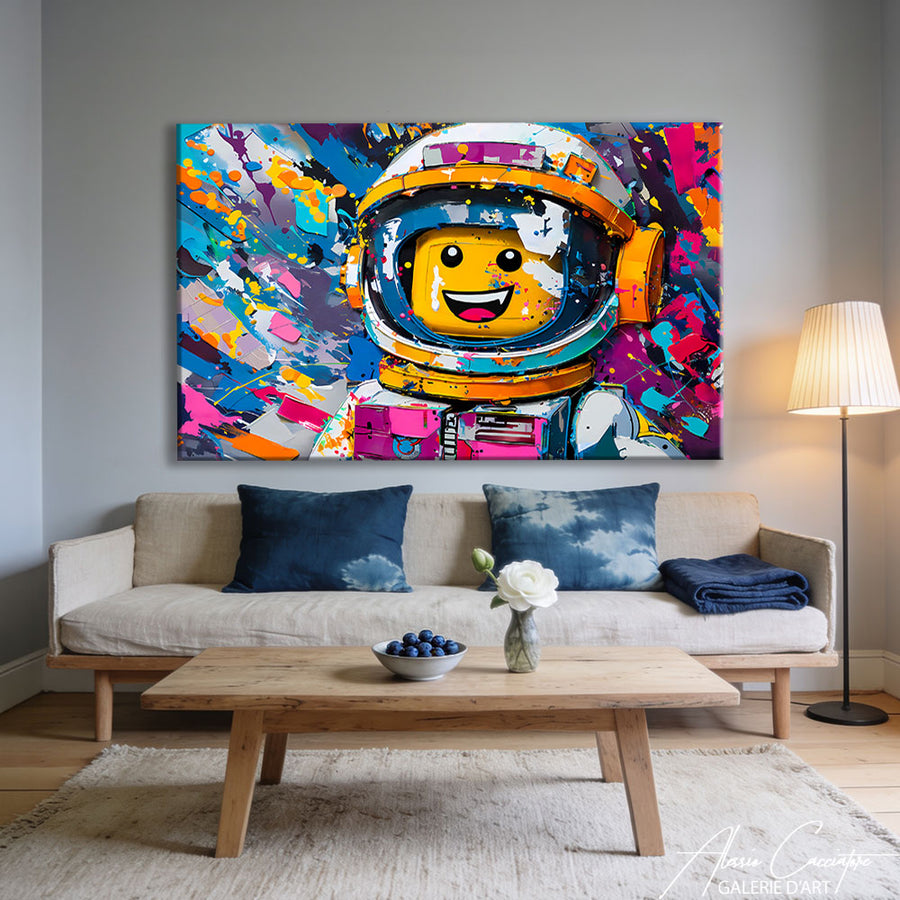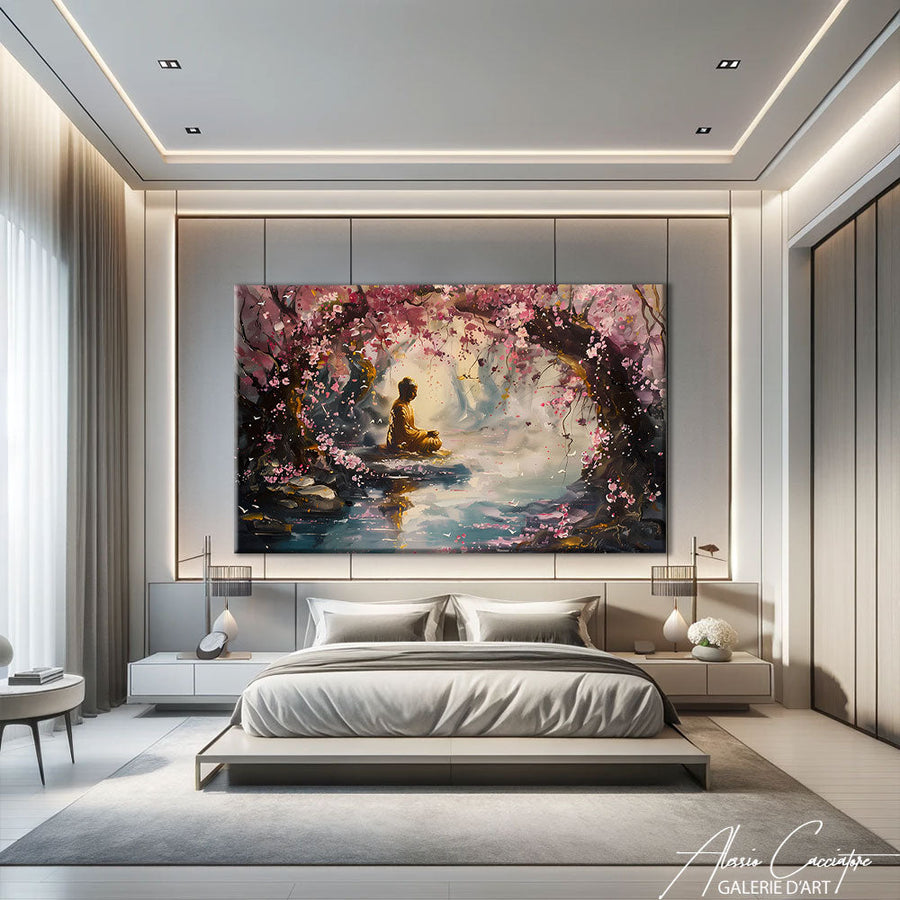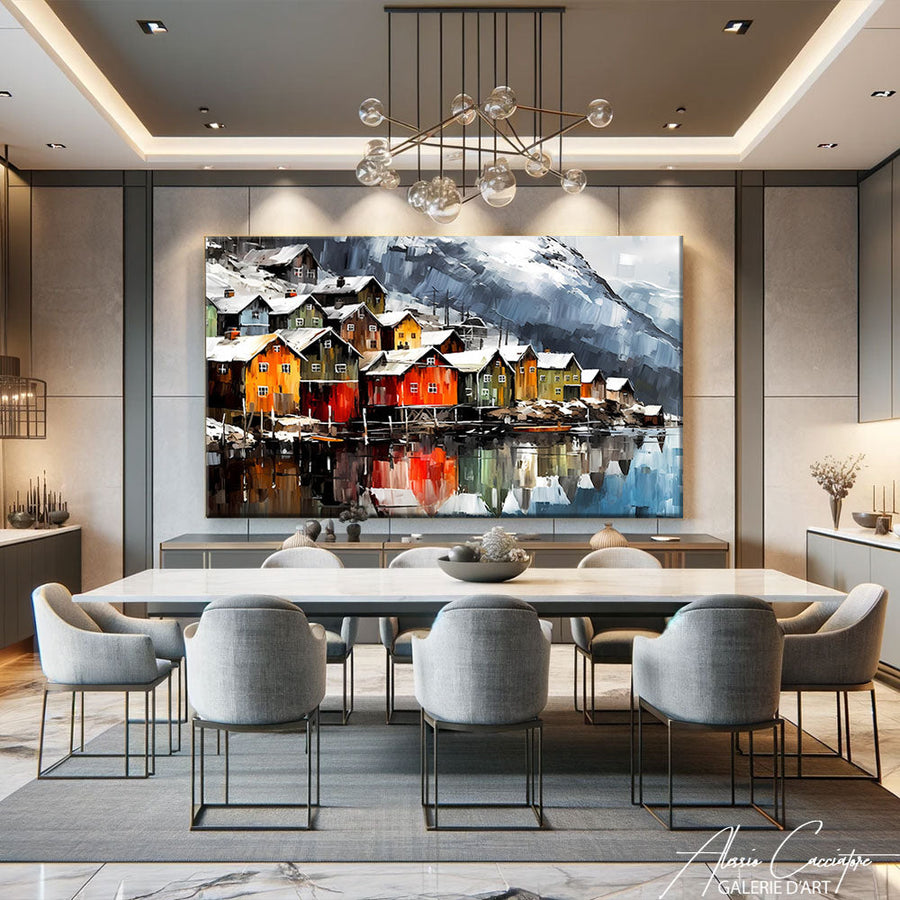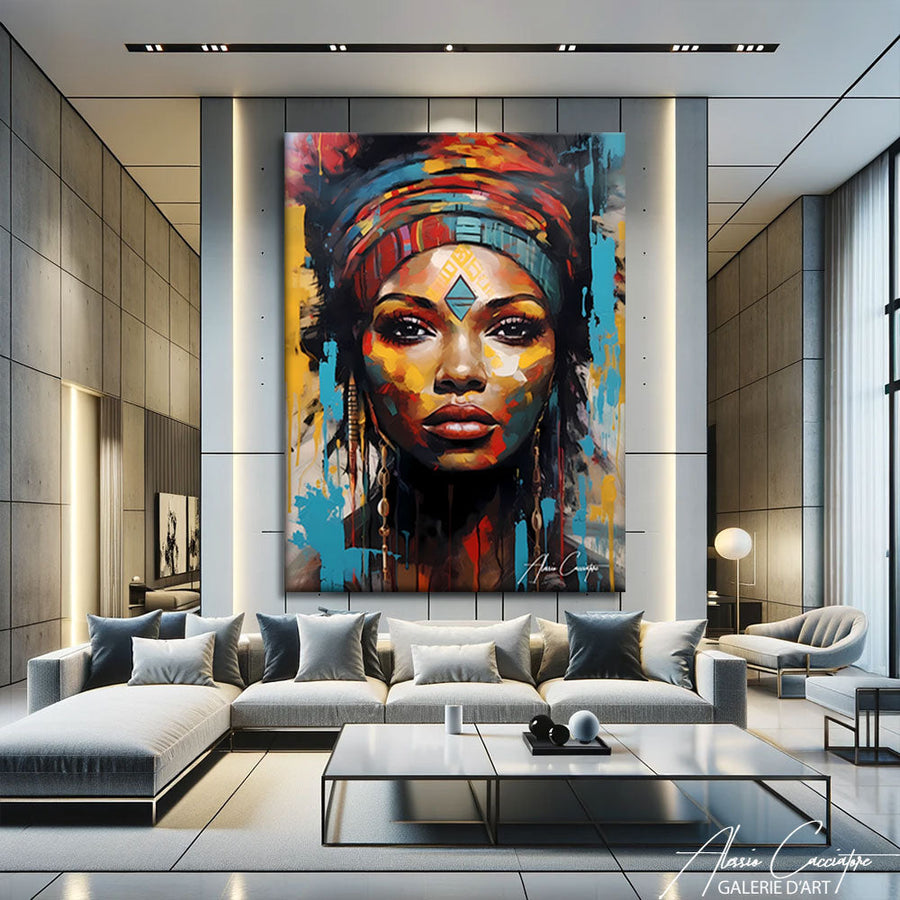

The first time I visited a real industrial loft in Williamsburg, I was 24 years old and fresh out of art school. 4-meter ceilings, exposed metal beams, red brick walls marked by time. That day, I understood that an interior could tell a story without saying a word. Since then, I've been creating works for these kinds of spaces — and frankly, it's become one of the most frequent requests from my Parisian clients. Everyone wants that factory-chic vibe, but few truly know how to achieve it without falling into the cliché of the Ikea "metro" sign.
What truly defines industrial wall decor
Industrial isn't just about gray and metal. It's an aesthetic that comes from old factories rehabilitated into housing in the 70s-80s, first in New York, then in Berlin, Paris, London.
What characterizes this style:
- Raw materials embraced: brick, concrete, oxidized metal, aged wood
- Traces of time: patina, imperfections, industrial markings
- Visible functionality: exposed pipes, metal structures, workshop lighting
- Warm-cold contrast: cold metal vs. aged leather, gray concrete vs. warm wood
For walls, this translates into artworks that converse with the architecture rather than fighting it. A painting that is too polished, too "Parisian gallery," will clash. Conversely, a piece that embraces its raw, graphic, even slightly punk side will fit in perfectly.
In my Berlin studio (a former metalworking shop), I kept the walls bare. My pop-art works with saturated colors create a stark contrast with the concrete — and that's exactly what works. The visual shock is calculated.
Vintage industrial painting: authenticity vs. reproduction
 There's one thing that annoys me about current industrial decor: the proliferation of fake "Garage" enamel signs and reproductions of American advertising posters. It has become so systematic that it loses all meaning.
The true vintage industrial painting, the one that has value (not necessarily monetary, but emotional), is:
Period propaganda posters
1920s-1950s, Art Deco typography, primary colors. Some are available as archival reproductions, others as originals from specialized antique dealers. I framed a series for an architect client: Soviet constructivist posters. Powerful, graphic, and most importantly: they tell a story.
Black and white industrial photographs
Abandoned factories, Ford assembly lines from the 30s, portraits of workers. Photographers Bernd and Hilla Becher built their entire careers on this. For a contemporary interior, a large black and white photograph of industrial architecture (minimum 80x120 cm) makes a huge impact.
Contemporary creations inspired by industrial imagery
This is where I stand. My series on reinterpreted pop icons (Einstein sticking out his tongue, Basquiat in street art mode) use graphic codes inherited from industrial posters: flat, bold colors, strong contrasts, immediate readability. But with a contemporary touch that avoids the "advertising museum" effect.
My advice: mix and match. One true vintage piece + two contemporary pieces that complement it. Not six reproductions of 1950s Coca-Cola posters.
Materials that work (and those to avoid)
I've experimented with a lot of media for my artworks intended for industrial interiors. Some work, others don't.
What works:
- Brushed aluminum or Dibond: lightweight, modern, metallic reflections that catch industrial light (often cold). I print several of my series on aluminum, especially urban portraits.
- Raw, unprimed canvas: visible grain, textile appearance, contrast with the hardness of the surrounding metal. For more organic works.
- Satin Plexiglas: contemporary finish, depth, controlled shine. Perfect for pop art in industrial decor — the display case effect.
- Raw or aged wood: pallet wood frames, sanded plywood supports. Adds warmth.
What does NOT work:
- Gilded frames with moldings: fatal error. This isn't your grandma's house.
- Cheap stretched canvas prints with white frames: that's Conforama 2008.
- Framing under glass with beige matting: too bourgeois, kills the raw energy.
A client bought a triptych of urban lions for his industrial-style office in Lyon. We chose a black Dibond support, frameless, with invisible mounting. The artwork floats in front of the waxed concrete wall. The result: powerful, clean, no frills.
Industrial style wall decoration: color codes
 Industrial isn't necessarily all gray.
Yes, the base is often:
- Concrete gray
- Metal black
- Off-white (plaster, raw plasterboard)
- Rust brown (oxidized metal, brick)
But what brings an industrial space to life is the injection of saturated colors in small touches. This is where wall art comes in.
Industrial red
Brick red, fire truck red, signage red. Works great in large format to energize an entire wall. I have a series on Marilyn where I use an ultra-saturated carmine red on a black background — it really pops in a gray loft.
Mustard yellow or ochre
The quintessential vintage color, reminiscent of factory signage, Caterpillar construction equipment. In wall decor, a painting with a dominant mustard yellow instantly warms up the space.
Neon fluorescents (in homeopathic doses)
Fluorescent pink, lime green, electric blue: a legacy of pop art and street art. Perfect for small areas on a graphic artwork. Be careful: only one fluorescent artwork per room, otherwise it's a nightclub.
Klein blue or midnight blue
Sophisticated, deep, elegant. Works well in large format to create a visual "window" in a gray wall. I often use a deep blue background for my portraits of musicians.
The principle: 60% neutrals (gray, black, white, wood) + 30% raw materials + 10% strong color via wall art.
Size and scale: don't be shy
Classic mistake: buying a 40x60 cm painting for a 4-meter long wall in a loft with 3.20 m high ceilings.
It makes no sense.
Industrial spaces have generous volumes. If you're lucky enough to have height and surface area, use it.
My size recommendations:
- Living room / living area: minimum 100x150 cm, ideally 120x180 cm or more
- Hallway / entrance: vertical format 80x200 cm to emphasize height
- Office / reading nook: 80x120 cm works well, or a triptych (3x 60x90 cm)
- Industrial bedroom: 100x150 cm above the metal headboard
I have a client in Berlin who has a former workshop of 90m² with 4.50m high ceilings. We installed one of my pieces in a 200x300 cm format (yes, 3 meters wide). It changes everything. The artwork becomes architecture.
If the budget doesn't allow for XXL, an alternative: the triptych or diptych. Three 60x90 cm panels side by side visually create a 180 cm wide work, at a lower cost than a single piece of that size. And you can play with the spacing between the panels — very graphic, very industrial.
Lighting your artwork in industrial wall decor

It's never talked about enough, but lighting is 50% of the final result.
In an industrial interior, lighting is often functional: black metal workshop pendants, adjustable spotlights, sometimes converted old cinema projectors. This is great for the overall ambiance, but it's not enough for your artwork.
Track lights
The most flexible solution. You install a track on the ceiling (matte black to stay consistent) and direct the spotlights towards your paintings. Color temperature: 3000K (warm white) for softening, or 4000K (neutral white) for a more "gallery" rendering.
Adjustable wall sconces
Architect lamp style, articulated arm. This illuminates the artwork from above or the side, creating soft shadows that add relief. I love this solution for works in relief or on metal supports.
LED neons (yes, really)
For a very graphic piece — a pop-art portrait, for example — a cool white LED neon tube installed above (industrial tube style) can reinforce the artwork's identity. It's radical, but consistent with the style.
What to avoid: overly yellow lights (halogen type) that kill colors, and especially weak indirect lighting. An artwork in the shadows has no impact.
In my Berlin studio, each hung series has its own track light. I can adjust the intensity depending on the time. In the evening, subdued light. During the day, spotlights at 100% to see details. It's a huge comfort.
Creating a gallery wall in industrial style
The "gallery wall" is the accumulation of several artworks on the same wall. Very Instagrammable, but perilous.
Version that works:
- Choose a common graphic theme: black and white only, or a palette of maximum 3 colors (e.g., black + white + red).
- Mix sizes, but maintain logic: for example, 1 large central piece (100x150) + 4 smaller ones around it (40x60 or 50x70).
- Align on a line: even if sizes vary, align the top or bottom edges. This provides structure.
- Space regularly: 5 to 8 cm between each frame. No more, otherwise it feels too airy and the gallery effect disappears.
Version that doesn't work:
- 15 frames of completely chaotic sizes with no chromatic coherence
- Frames of different styles (vintage wood + black metal + lacquered white)
- No alignment, everything placed "by feel"
I created a gallery wall for a client in Paris (Marais, former jewelry workshop): 7 black and white urban portraits, various sizes, thin black frames, aligned on the bottom line. The result: modern, coherent, exudes industrial without overdoing it.
The secret: lay everything on the floor first, take a photo, adjust, then and only then fix it to the wall. You'll avoid unnecessary holes.
Where to buy your industrial vintage (and contemporary) style paintings
Several options, depending on your budget and level of demand.
Flea markets and garage sales
For true vintage: period posters, authentic enamel signs, old industrial photos. You have to rummage, negotiate, have an eye. Expect 50 to 300€ for a beautiful framed piece.
Specialized online galleries
This is where I stand with alessiocacciatore.com. You buy directly from the artist, without intermediaries, with works created specifically for these types of interiors. Advantage: custom sizes possible, personalized advice, and you know exactly where the piece comes from.
Physical urban galleries
In Paris: Belleville, Marais, Bastille. In Berlin: Kreuzberg, Friedrichshain. You pay for the location and selection, but you see the piece in person before buying. Budget: 500 to 5000€.
My advice: mix sources. A true vintage find + a contemporary artist's creation + possibly an art photograph. This tells your story, not just a "look" bought as a kit.
Frequently asked questions
What color painting for an industrial gray and black living room?
Inject saturated color: brick red, mustard yellow, or deep blue. A large painting with a strong dominant color will energize the space without breaking coherence. Avoid all gray: it's flat and cold.
How much does a real period industrial vintage painting cost?
For an original framed poster from the 1930s-1950s, expect 150 to 800€ depending on rarity. Museum-quality archival reproductions: 80 to 250€. Contemporary creations inspired by vintage: 200 to 2000€ depending on format and artist.What size painting for a 3-meter wide wall?
Minimum 120 cm wide, ideally 150 to 200 cm. You can also opt for a triptych (3 panels of 80-100 cm each). Don't undersize: a small painting on a large industrial wall loses all impact.
Can industrial style and colorful pop art works be mixed?
Absolutely, it's even my favorite combination. The contrast between the raw coolness of industrial and the saturated energy of pop art creates powerful visual tension. Think of New York lofts of the 80s: Warhol on brick walls.
Should a painting for industrial wall decoration be framed?
Not necessarily. Modern supports (Dibond, Plexiglas, thick stretched canvas) can do without a frame for a more contemporary effect. If you do frame: black metal, raw wood, or brushed aluminum. Never gilded or white frames with moldings.
All works mentioned in this article are available on the gallery. Worldwide shipping offered, satisfied or refunded within 30 days.