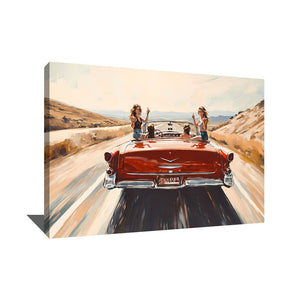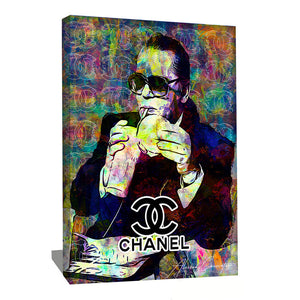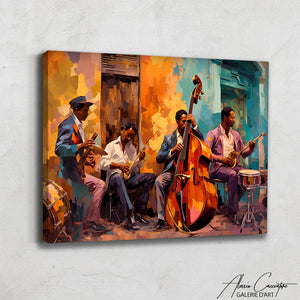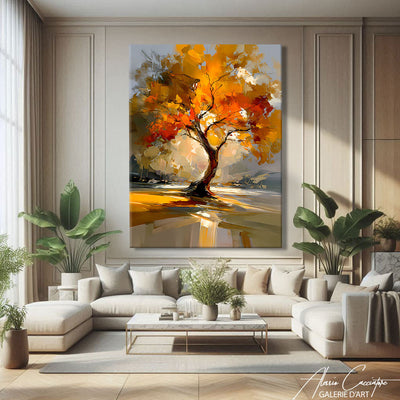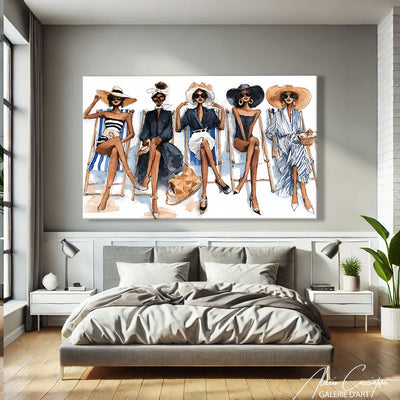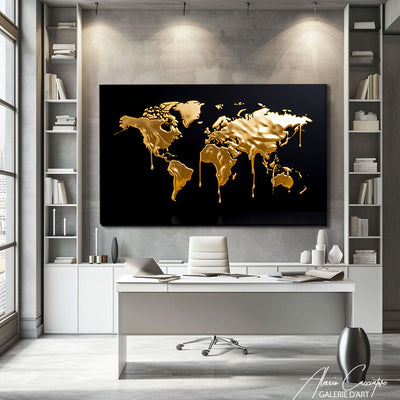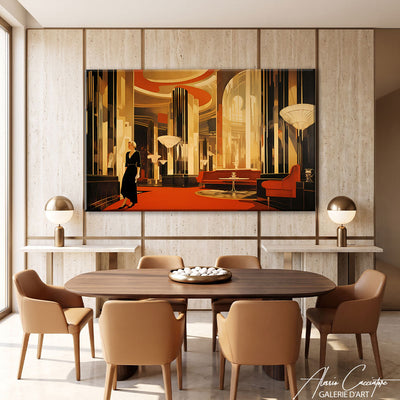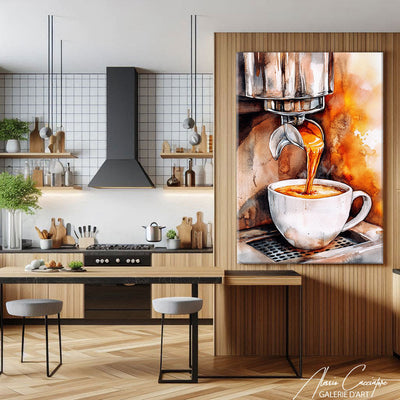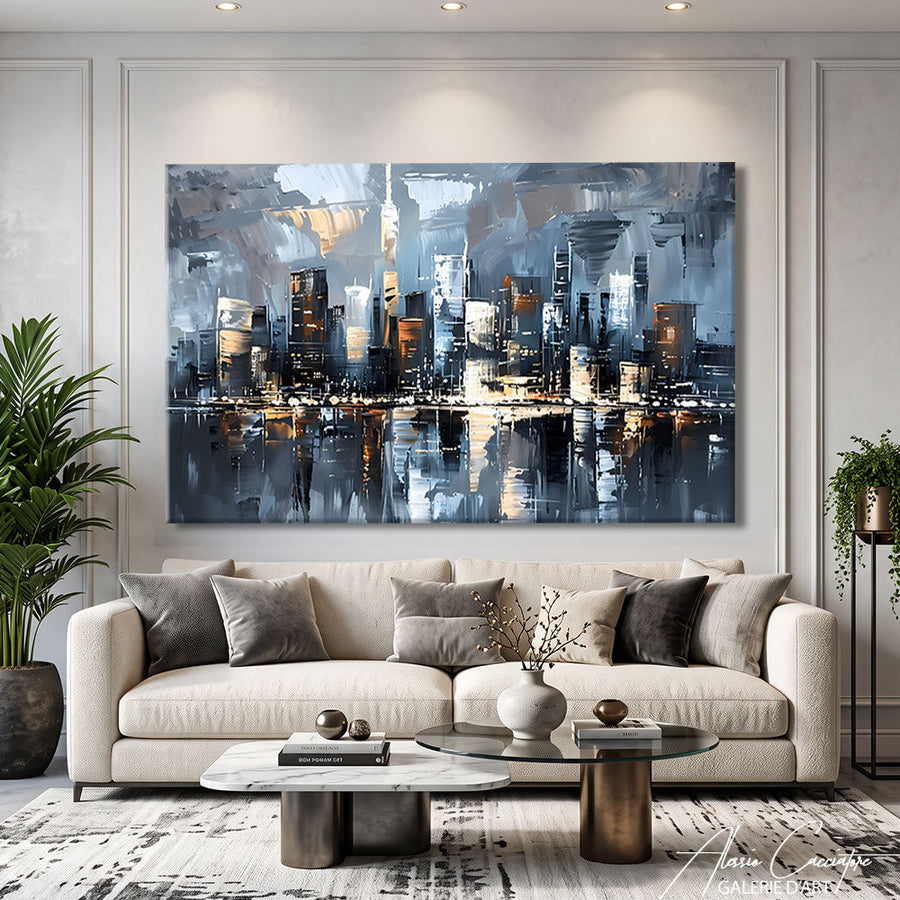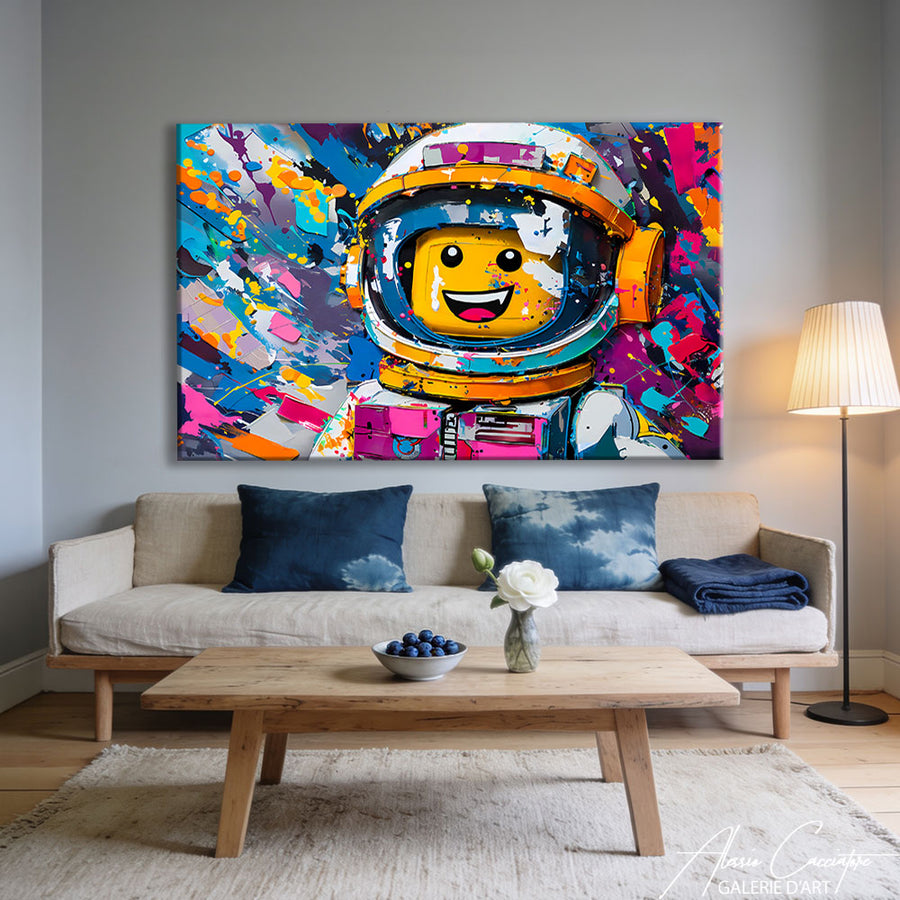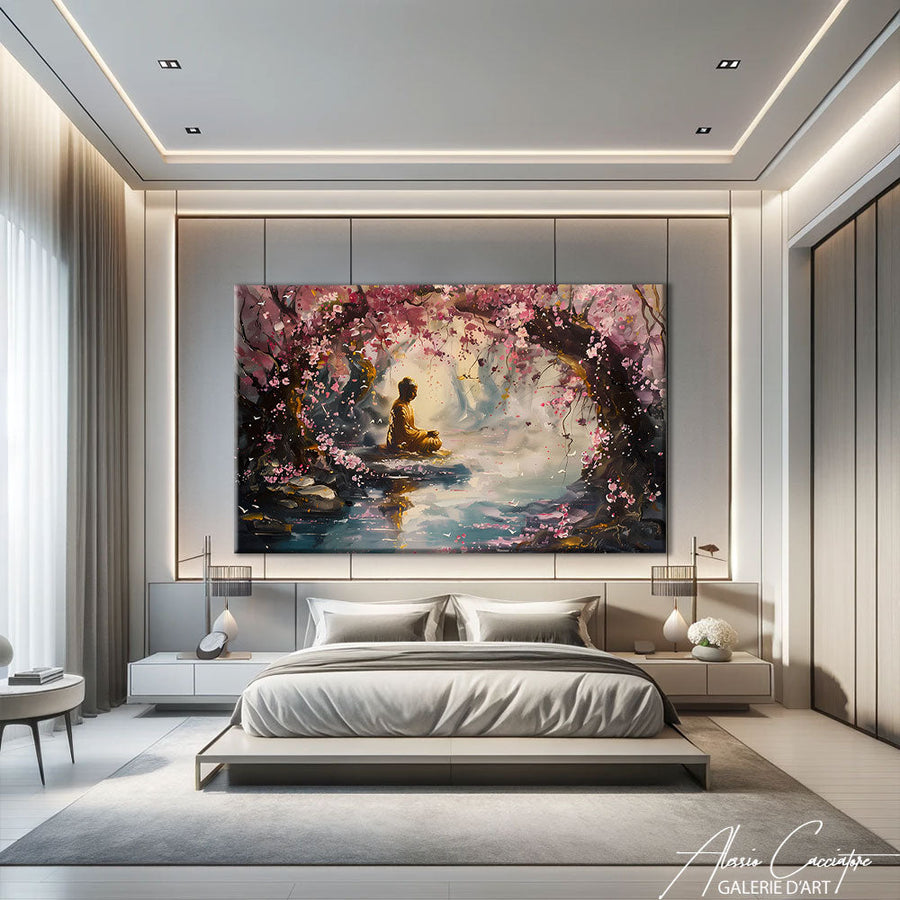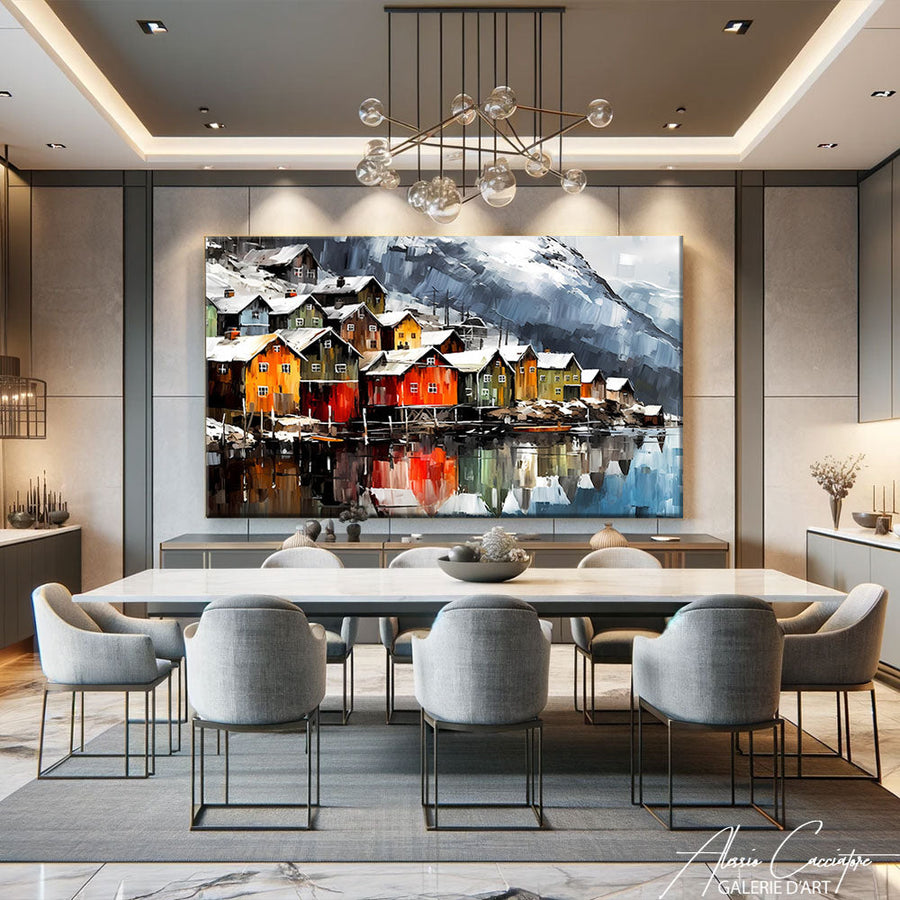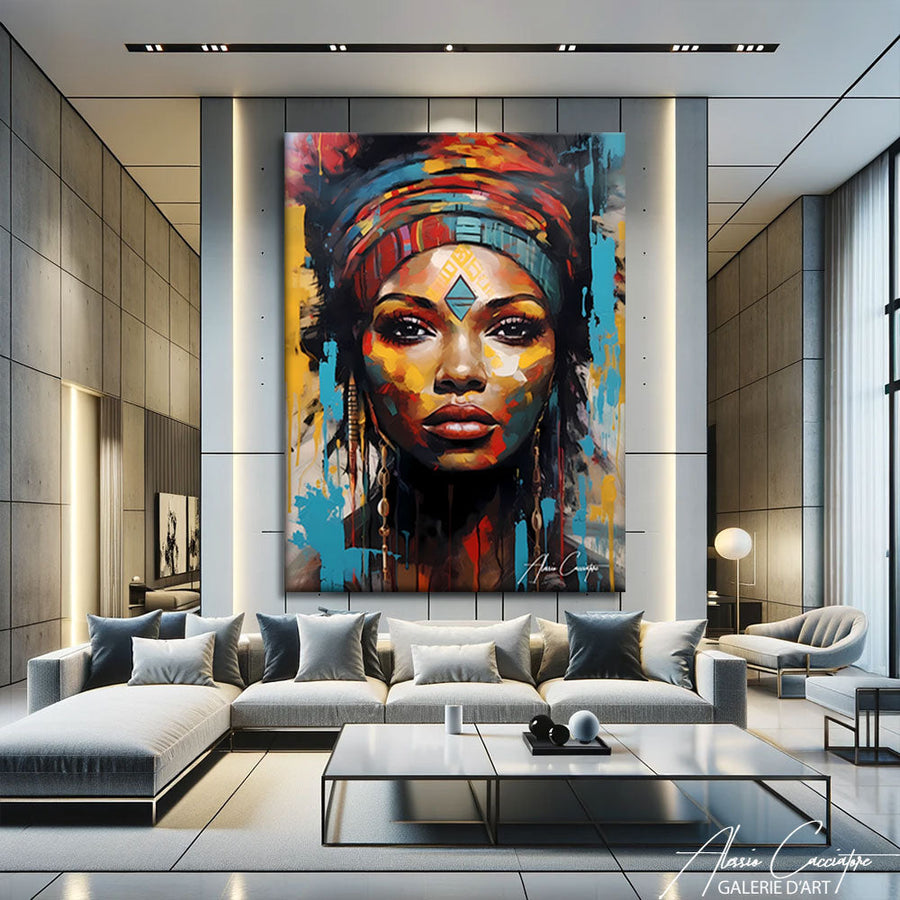

A few months ago, a client called me, saying they were looking for "something striking, Warhol-esque, but not Marilyn because everyone does that." That day, I realized how deeply pop art remains embedded in our collective imagination, sixty years after its debut. Warhol, Lichtenstein, Hockney: these names still resonate in every home that dares to embrace color and boldness. But why does a pop art painting continue to be so popular today, when so many other movements have faded into oblivion?
The 60s: When Warhol Blew Up Art Conventions
Pop art emerged in the 1950s-60s, between New York and London, in the context of a triumphant consumer society. Andy Warhol, Roy Lichtenstein, James Rosenquist: these artists decided to paint what no one considered worthy of being painted.
Campbell's soup cans. Comic strips. Advertisements.
Warhol, above all, understood something brilliant: by endlessly repeating an image (Marilyn, Mao, Elvis), he emptied it of its meaning to turn it into a pure visual object. A Andy Warhol pop art painting is first and foremost an explosion of saturated colors, unconventional silkscreens, and portraits multiplied to the absurd.
Lichtenstein, meanwhile, enlarged comic book panels until you could see the printing dots — that famous Ben-Day dot pattern that gives it such a recognizable graphic look.
What sometimes annoys me is that pop art is presented as an "easy" movement. Frankly, reducing popular culture to its pure visual form was an incredibly audacious conceptual gesture for the time. New York galleries initially hated it, then loved it, then sold millions.
Why a Pop Art Painting Still Works Today (Spoiler: Colors)
 If pop art has never really left our homes, it's primarily a matter of saturated colors.
In my Parisian studio, I see a lot of clients looking for "something strong" for their living room, office, or entryway. And when I show them my pop art-inspired series — portraits of cats, monkeys, female faces — the reaction is often immediate. People smile.
Why?
Because a good pop art painting is a shot of visual dopamine. Electric cyan. Striking magenta. Lemon yellow that wakes up a white wall. These colors are found nowhere else in contemporary art.
Assumed Irony
The other reason is irony. Pop art never takes itself completely seriously. A pop art monkey painting with sunglasses and a fluorescent background is kitsch, funny, quirky — and precisely because of that, it works everywhere. There's no denying it, it lightens the mood.
In a world where everything is Instagrammable, pop art is one step ahead: it was already designed to be reproduced, duplicated, viral.
Pop Art Animal Paintings: The Timeless Bestseller
Now, this is a topic I'm passionate about.
Pop art animal paintings have been hugely popular for years. Cat, lion, monkey, bulldog, even unicorn (yes, really). Why? Because they mix two things people love: animals and vibrant colors.
In my online gallery, pop art cat paintings are consistently in the top 3 bestsellers. A bright orange cat on a purple background, with electric blue eyes: it's cute, it's graphic, and it works just as well in a teenager's bedroom as in an industrial loft.
The lion, for its part, symbolizes power and majesty — but when you treat it in pop art, with flashy colors and brutal contrasts, it loses its "king of the savanna bourgeois decor" side to become a true statement.
The monkey, in my opinion, is the king of animal pop art. It has that mischievous look that lends itself perfectly to the movement's irony. A well-executed pop art monkey painting is funny without being childish, bold without being aggressive.
Where to Place Them?
- Living room: a large format (80×80 cm minimum) facing the sofa
- Office: a lion or a monkey to inject energy
- Children's room: a colorful cat, soft version
- Entryway: an animal that greets with humor
Pop Art Female Face Paintings: Between Glamour and Subversion

Pop art female face paintings hold a special status in the history of the movement.
Warhol obviously immortalized Marilyn Monroe, Elizabeth Taylor, Jackie Kennedy. But what's fascinating is that he treated them like consumer products — exactly like his soup cans. A portrait repeated ten times, in different colors, becomes a series. An icon becomes a motif.
Today, in contemporary interiors, a pop art female face painting still works. But beware: the silkscreened Marilyn poster from Ikea is over. What works now is reinterpretation.
In my own creations, I work a lot with anonymous female faces: no stars, just gazes, expressions, red mouths on a turquoise background. The idea is to maintain the pop aesthetic (saturated colors, strong contrasts, clean lines) while creating something personal.
A good pop art portrait should tell a story, even with an excess of color. Otherwise, it's just hollow decor.
How to Integrate a Pop Art Painting into a Modern Interior Without Being Kitsch
Because yes, there is a risk.
A poorly chosen or badly placed pop art painting can quickly turn into a vintage burger joint or a 2000s teenager's room. Here's what I've learned from seeing my works installed in dozens of clients' homes.
Rule #1: Only One Pop Art Painting Per Room
Unless you want to create a very well-curated gallery wall, one painting is enough. Pop art is powerful. Two works fighting for attention is visual chaos.
Rule #2: Coordinate with the Rest of the Decor
If your interior is minimalist (white walls, clean furniture), a pop art painting becomes the star. Perfect.
If you already have a lot of colors, patterns, and textures, opt for a more subtle pop art piece: black and white with a single touch of color, for example.
Rule #3: Size Appropriate for the Wall
A small pop art painting (30×40 cm) on a large white wall doesn't work. It needs presence. For a living room, aim for at least 60×80 cm, ideally 80×100 cm or more.
Rule #4: Embrace the Quirky
Pop art is meant to be a little disruptive. If you want something "tame," this isn't the right movement. Embrace the monkey in sunglasses, the fluorescent cat, the striking portrait.
Pop Art and Popular Culture: A Dialogue That Never Ends

What makes pop art eternally relevant is that it feeds on popular culture — and that culture is constantly changing.
Warhol painted Marilyn because she was everywhere in 1960s media. Today, a contemporary pop artist might paint Beyoncé, Elon Musk, or even a viral meme.
In my work, I prefer to avoid celebrities (too dated, too legally risky), but I keep the spirit: immediately recognizable visual references, reinterpreted, amplified.
Pop art is a mirror held up to our time. And frankly, in the age of Instagram and TikTok, we are more than ever in a culture of repeated, saturated, endlessly consumed images.
Warhol would be thrilled.
Choosing a Pop Art Painting: My Artist's (and Gallerist's) Criteria
When I advise a client or create a new piece for my gallery, here's what I look for.
Print or Painting Quality
A true pop art painting is either an original painted work or a limited edition print on art media (canvas, fine art paper), with resistant pigment inks. A poster is a low-end offset print, unsigned, unnumbered, often on standard paper. The difference is most noticeable in color depth and durability.
Color Balance
Too many colors = chaos. Not enough = boredom. A good pop art painting uses 3 to 5 colors maximum, with sharp contrasts.
Originality of the Subject
Marilyn's been done. The Campbell's can's been done. Find an artist who reinterprets, who offers a personal vision. A well-thought-out pop art animal painting is worth more than yet another copy of Warhol.
Format
For maximum impact, favor square formats (80×80, 100×100) or vertical formats (60×90, 80×120). Panoramic formats work less well with pop art, except for very specific compositions.
Price
Expect between €150 and €800 for a quality limited print, signed and numbered. For an original painting, prices quickly rise to €1500–€5000 depending on the artist and size.
Warhol's Legacy: More Than a Style, an Attitude
Ultimately, what fascinates about pop art — and Warhol in particular — is not just the aesthetic.
It's the attitude.
Warhol said: "In the future, everyone will be world-famous for 15 minutes." He was right. Today, with social media, we are all potential micro-celebrities, all image producers, all ravenous consumers of visual content.
A pop art painting is a bit like that: an object that unapologetically decorative, eye-catching, Instagrammable — but also offers an ironic look at this obsession.
In my studio, when I finish a new pop art piece, I always ask myself: does it make you smile? Is it visually striking? Is there a little bit of irony?
If so, it's good.
Otherwise, I start over.
Frequently Asked Questions
What's the difference between a true pop art painting and a poster?
A true pop art painting is either an original painted work or a limited edition print on art media (canvas, fine art paper), with resistant pigment inks. A poster is a low-quality offset print, unsigned, unnumbered, often on standard paper. The difference is primarily seen in the depth of colors and durability.
Can a pop art painting fit into a minimalist interior?
Absolutely, and it often works best there. In a minimalist interior with white walls and clean furniture, a pop art painting becomes the centerpiece, the element that brings life and personality. The key is to choose a single strong, well-sized painting.
Why are pop art animal paintings so popular?
Because they combine two universally appreciated things: animals (cute, majestic, funny) and the vibrant colors of pop art. A cat, monkey, or lion treated in pop art retains its character while becoming a graphic and playful decorative object. It works in all types of interiors.
What size pop art painting should I choose for a living room?
For a living room, favor a square format (80×80 cm minimum) or vertical (80×120 cm). The painting needs presence to balance the furniture. On a 3-meter wall, a 100×100 cm or even 120×120 cm format will not be too large — pop art needs space to breathe.
Can you mix pop art and classical decor?
Yes, and it's even a bold choice that works well. A colorful pop art painting in a Haussmannian interior with moldings and old parquet creates a striking, very contemporary contrast. The main thing is to play on this deliberate contrast, not to try to harmonize everything.
Do pop art paintings lose value over time?
For limited edition prints by contemporary artists, the value remains stable if the work is well-preserved (no direct sun exposure, framed under UV glass). For originals by emerging artists, the value can even increase if the artist gains notoriety. Obviously, a true Warhol or Lichtenstein is another story — and another budget.
All works mentioned in this article are available on the gallery. Worldwide shipping offered, 30-day money-back guarantee.