
An African woman painting is never just a decorative element: it is a gaze that inhabits the room. Whether it is a portrait with a colorful turban, an abstract silhouette, or a face in bluish hues, this type of artwork imposes a presence that few subjects can match. But precisely because the subject is powerful, the choice deserves reflection: which style to prefer, which colors, which format, and above all, in which room to hang it? After years of advising clients on their walls, one conviction has become clear: a poorly placed African female portrait loses half its power, while the same painting, well-chosen and well-positioned, becomes the beating heart of an interior. Here is how not to go wrong.
Why does an African woman painting bring so much presence?
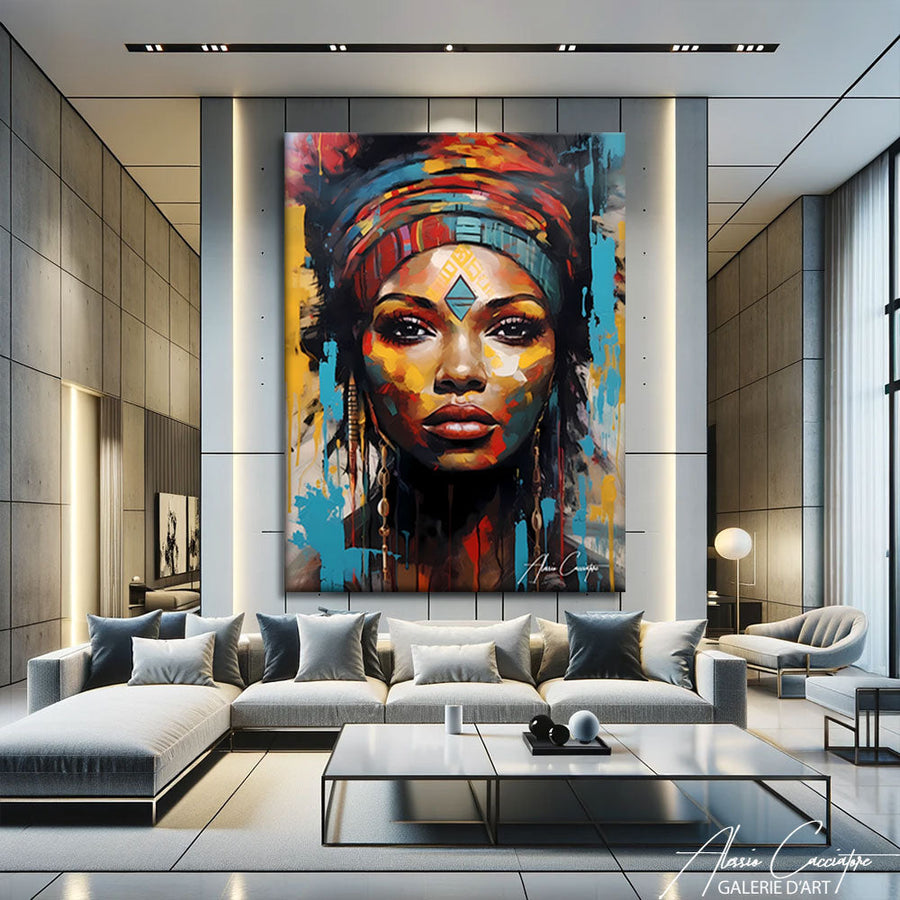
The answer lies in one word: the gaze. Unlike a landscape or an abstract composition, a portrait creates a relationship. You meet its eyes when crossing the living room, you find it again in the morning in the bedroom. Portraits of African women add a rich cultural dimension to this relationship: proud posture, finery, wax fabrics, sculptural turbans… all graphic elements that tell a story of dignity and beauty.
It is also a matter of composition. Artists who work on this subject often play on a powerful contrast between a sober background and a highly detailed face, which naturally structures a wall. Our opinion is clear: in a slightly cold or impersonal room, an African female portrait does more for the atmosphere than any decor accessory. You can explore the range of styles in our collection of African paintings.
Which style of portrait should you choose: realistic, abstract, or very colorful?
Three major families stand out, and the choice depends less on trends than on your interior.
- The realistic portrait: detailed face, striking expressions, often enhanced with touches of gold or jewelry. Ideal in a classic or chic interior, where it plays the role of a masterpiece.
- The abstract or stylized portrait: suggested features, flat colors, clean silhouettes. It is the safest choice for a contemporary or minimalist interior, as it brings the subject without overwhelming the space.
- The very colorful portrait: vibrant turbans, saturated backgrounds, almost pop. Perfect for waking up a neutral room — white walls, gray or linen furniture.
A little gallery anecdote: clients almost always hesitate between realistic and abstract… and walk away with the colorful one. The "love at first sight" factor wins, and that is a good thing: you buy a portrait with your gut, not with a color chart.

In which room should you hang an African woman's portrait?
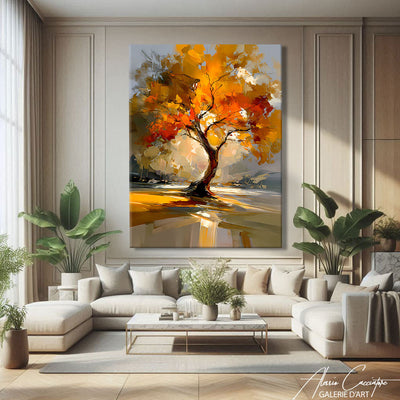
The living room remains the natural setting: above the sofa or facing the entrance to the room, the portrait welcomes and sets the tone. If you are composing an entire atmosphere around this theme, our article how to create an African-style decoration for a living room details the combinations of materials and colors that work.
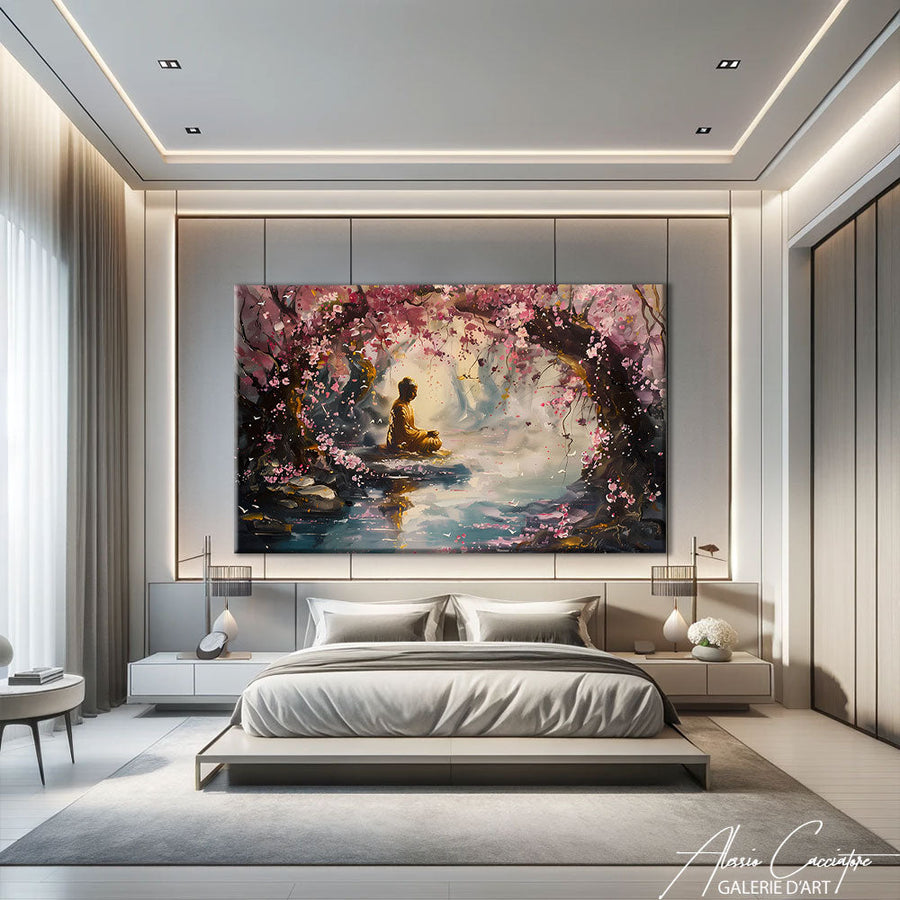
The bedroom is an underestimated option. A smiling or peaceful face, in warm tones, creates an enveloping atmosphere — far more personal than yet another graphic composition. It is best hung above the headboard or on the wall you see when you wake up.

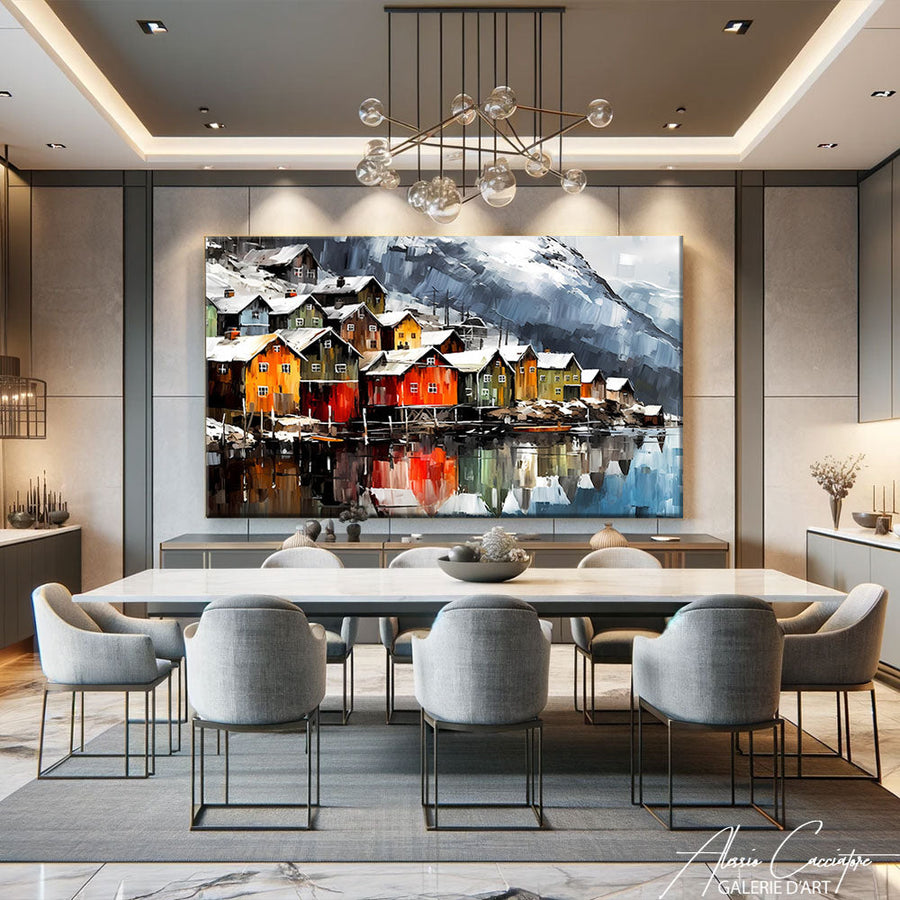
Finally, the dining room loves portraits with deep colors: a face in blue or ochre tones engages with the conviviality of meals, much like a permanent guest. In all cases, follow the gallery rule: the center of the artwork should be approximately 1.65 m from the floor, and never wedged between two tall pieces of furniture that would stifle it.

Which colors and format should you prioritize?
Regarding colors, there are two strategies. Either the portrait extends your palette: earthy tones, ochre, terracotta in an interior with warm shades. Or it challenges it: a face with a fuchsia turban or a turquoise background in a beige living room. The latter option requires some boldness, but it is what creates memorable interiors — provided you repeat the dominant color of the painting in one or two small items (cushion, vase) to tie it all together.
Regarding format, a portrait needs room to breathe. On a standard living room wall, aim for at least 60 x 90 cm; above a large sofa, a vertical format of 80 x 120 cm gives the face the monumentality it deserves. A canvas stretched on a frame, possibly protected by plexiglass, ensures deep colors and good durability over time. To refine these style questions, our guide on the modern African painting is a useful addition to this reading. And if the female figure moves you beyond the African theme, our collection of women's paintings explores the subject in all its facets.
FAQ: your questions about the African woman painting
Is an African woman portrait suitable for a Scandinavian interior?
Yes, and it is actually a very successful combination. The sobriety of light-colored furniture highlights the colors and the graphic nature of the portrait, which becomes the focal point of the room without visual competition.
Should I prefer a smiling face or a serious gaze?
It is a matter of the room's use: a smile warms up a bedroom or a kitchen, while an intense gaze structures a living room or an entryway. Trust the emotion felt at first glance — it doesn't lie.
Can I combine several portraits on the same wall?
Yes, provided you maintain consistency in palette or style, and space the artworks at least 8 to 10 cm apart. Two faces facing each other create a dialogue; three aligned portraits compose a true gallery.
Final word
Choosing an African woman painting means choosing a gaze you will live with. Take the time to define the style that speaks to your interior, offer it a generous format and an uncluttered space: the portrait will do the rest. To find the one that will stop you in your tracks, browse our collection of African paintings — beware, "love at first sight" happens often.