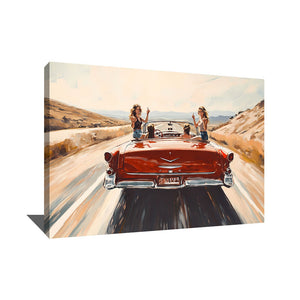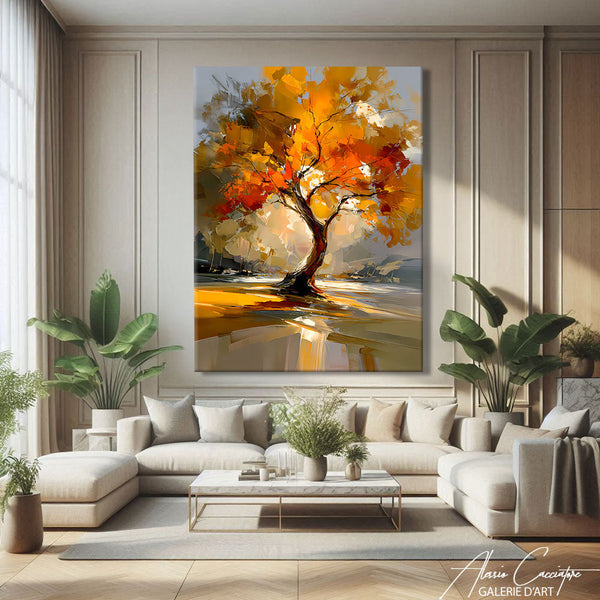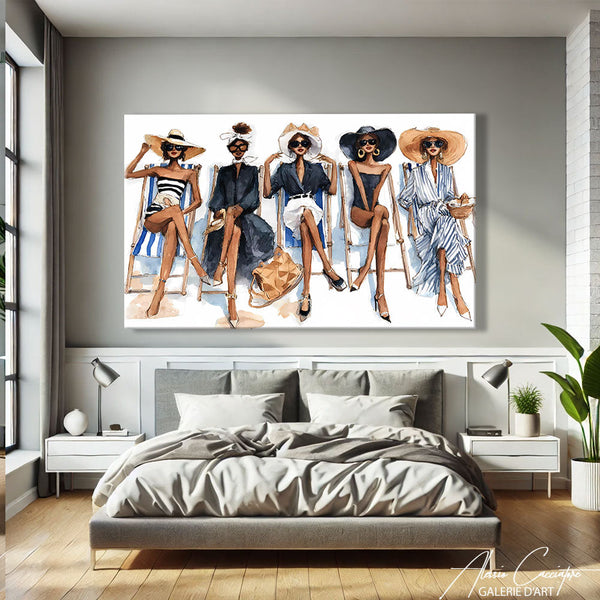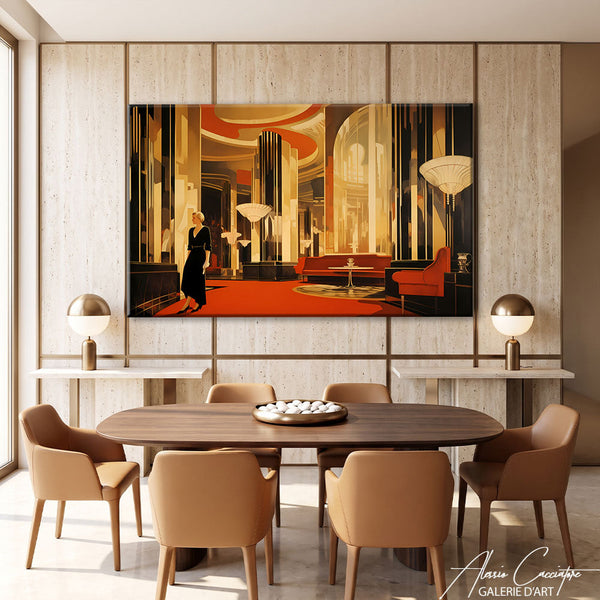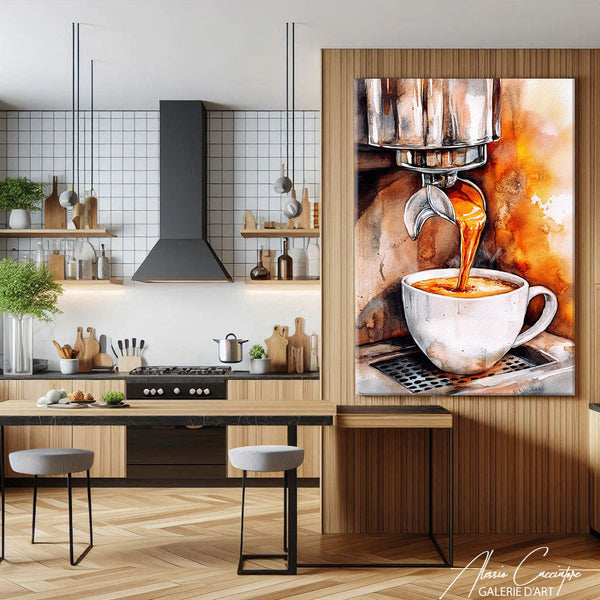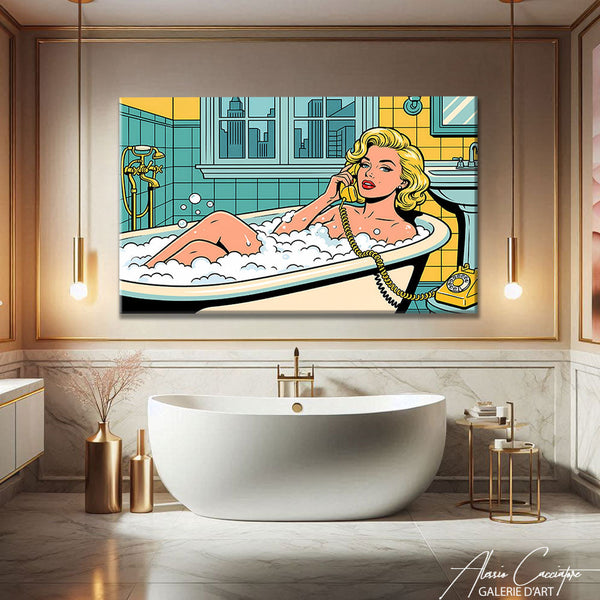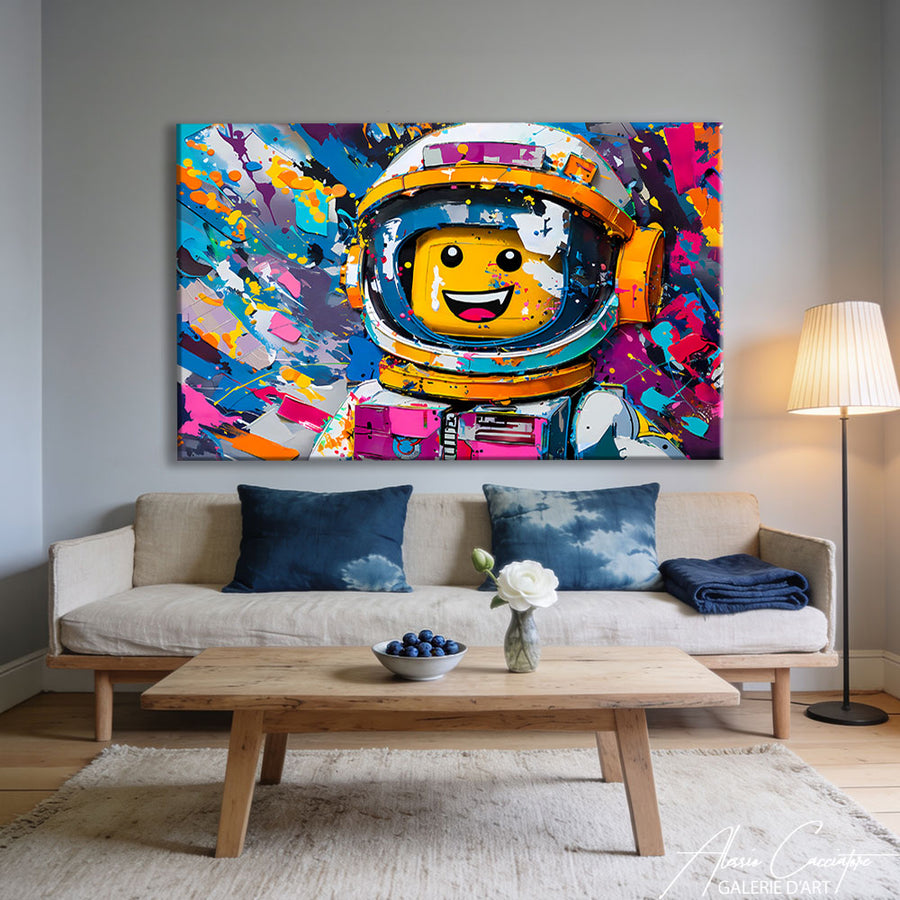

A large white wall is like an awkward silence in a conversation: the longer it lasts, the more oppressive it becomes. The modern XXL artwork is the most direct answer to this problem, but it is also the home décor purchase that forgives improvisation the least. Too small, it looks lost; too imposing, it overwhelms; hung poorly, it throws the entire room out of balance. So what size should you choose, for which wall, and in which room? Here are the practical answers to the most frequently asked questions about large-format pieces, such as those in our collection of landscape-format artwork.
At what dimensions do we start talking about modern XXL artwork?
There is no official standard, but in the trade, an artwork is considered to be in the XXL category from around 100 cm on its longest side. Below that, we talk about classic large format; above 150 cm, we enter the very large format, the kind that literally becomes the architecture of the wall.
What distinguishes a modern XXL artwork from a simply enlarged canvas is the way the piece occupies the space. A visual designed for large format has breathing room, bold areas of color, and a composition that is as easy to read from five meters as from fifty centimeters. This is precisely why the landscape (horizontal) format dominates this category: it naturally follows the line of a sofa, a console table, or a headboard.
What size XXL artwork for which wall?
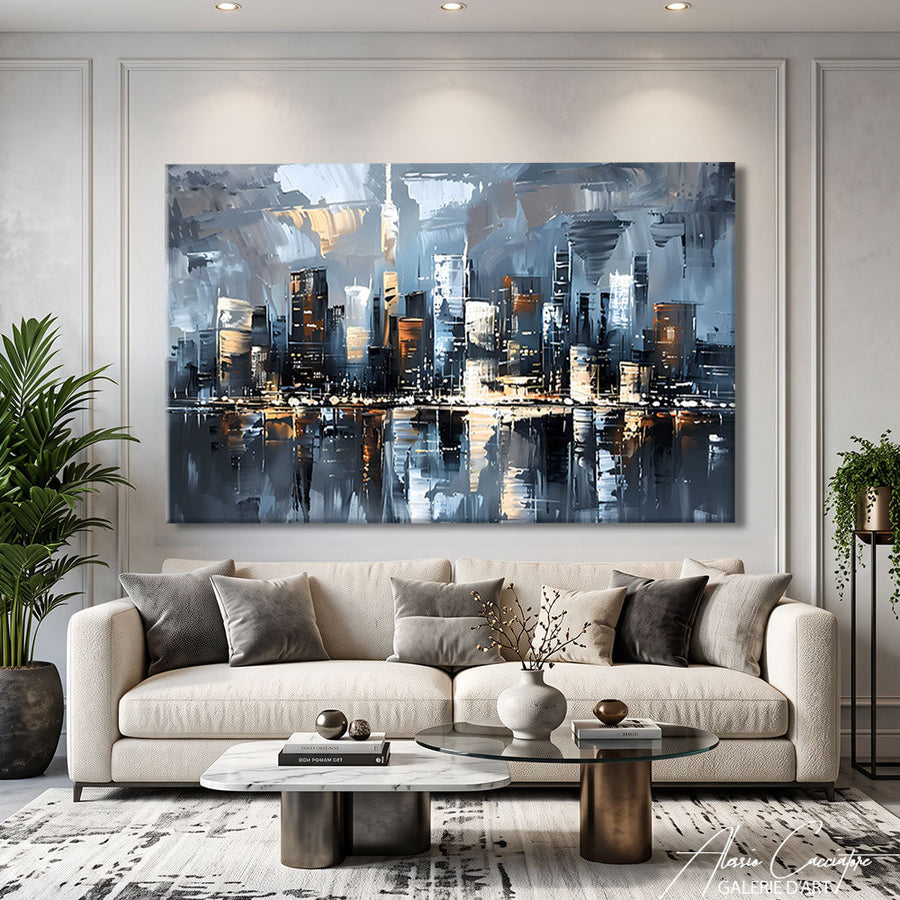
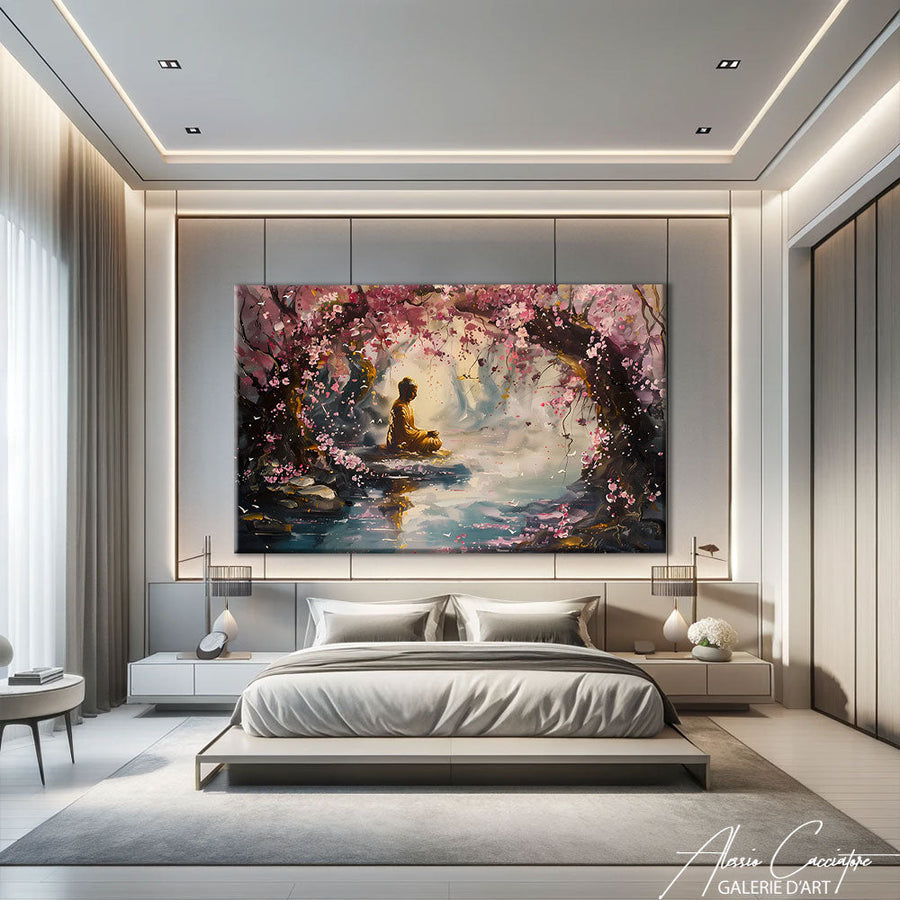
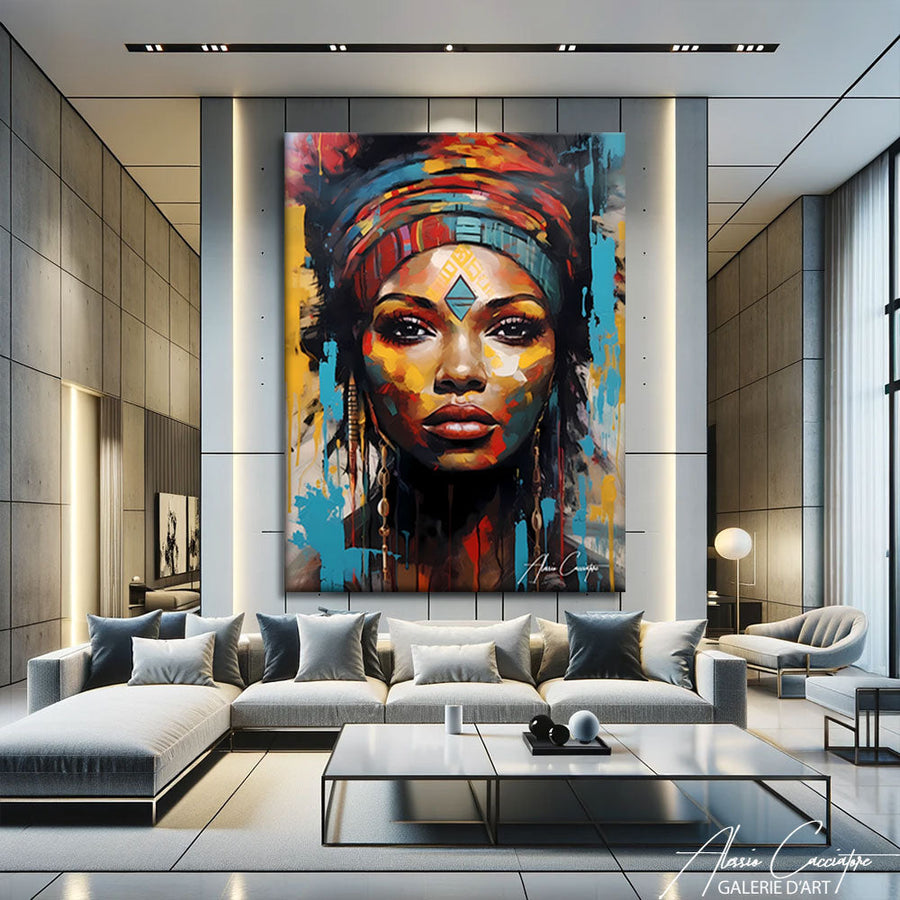
The rule we systematically apply: the artwork should occupy between two-thirds and three-quarters of the width of the piece of furniture it hangs above. Above a 220 cm sofa, therefore, aim for an artwork 150 to 165 cm wide. On a bare wall, without a reference piece of furniture, the artwork can be more generous: up to 80% of the width of the wall.
A little tip that avoids a lot of disappointment: cut out a kraft paper template to the intended dimensions and fix it to the wall with masking tape. Live with it for two days. If the template seems too large the first evening but just right the day after, that's the right size—the eye always adjusts to large format, never the other way around. An XXL artwork that feels "a little small" after a week will always feel that way.

In which room should you hang a large-format piece?
The living room remains the natural playground of the modern XXL artwork: it is the room where there is enough distance to appreciate the piece as a whole. The wall above the sofa is the absolute classic, but the wall facing the living room entrance is often even more rewarding—it is the first thing you see when you enter, and a large-format piece creates an immediate welcoming effect. We have detailed these locations in our living room artwork guide.
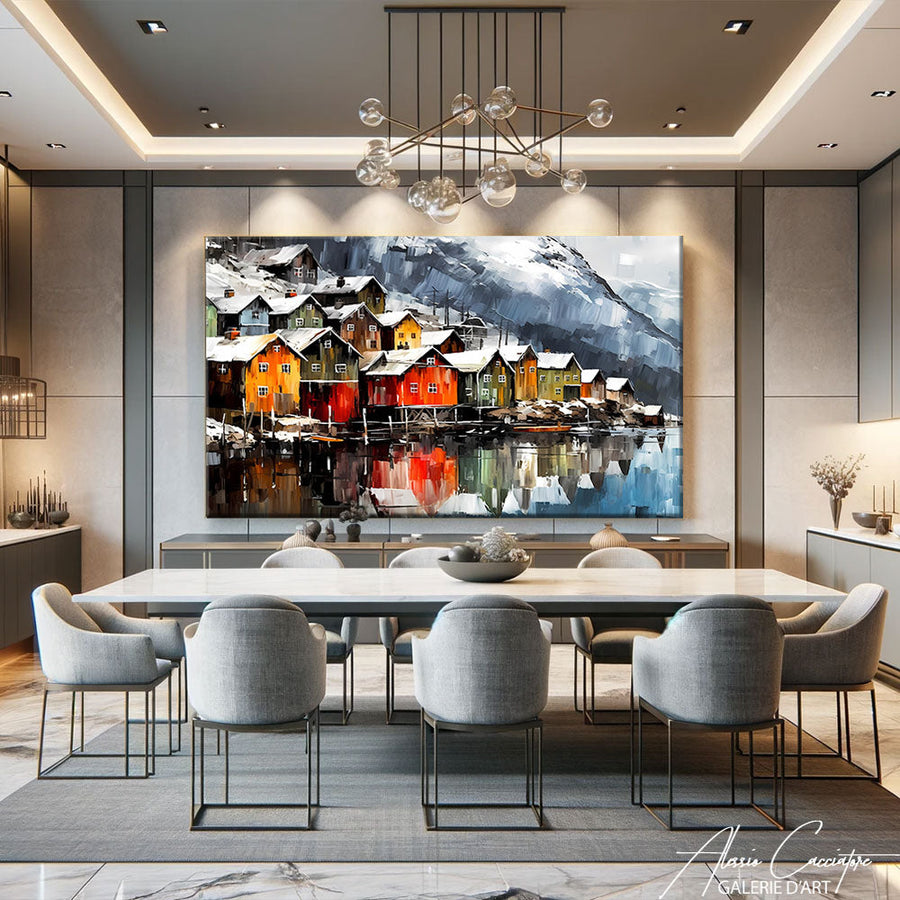
The dining room is the great forgotten room, wrongly so. A horizontal XXL above the table or a sideboard structures the room and gives meals a restaurant-like setting. It is also a room where you sit for a long time facing the same wall: it might as well tell a story.

Finally, the bedroom accepts large format very well on one condition: choose a visual whose energy does not compete with sleep. Above the headboard, you do not see the artwork from the bed—it is therefore a location that allows for more boldness than we think.
What style for an XXL artwork: pop art, abstract, or figurative?
Large format amplifies everything, including the character of the piece. A 150 cm pop art visual is not "a little more striking" than a 60 cm one: it changes status and becomes the conversation piece of the room. If that is the desired effect, go for it—our pop art collection is full of pieces that embrace this role. If your interior is already full of colors and patterns, a more graphic XXL, with controlled tones, will soothe the whole rather than saturate it.

And if a single panel intimidates you, know that very large format is also available in several panels that make up a single piece: we have dedicated a full article to the wall triptych artwork, an elegant alternative that visually lightens large surfaces.
Canvas or plexiglass: what finish for a very large format?
On an XXL, the question of the finish is not a detail. Canvas stretched over a wooden frame remains our default recommendation: it is lightweight (a decisive point when hanging something 150 cm wide), matte, without reflections, and its texture gives the large format that gallery finish that framed paper never achieves. The plexiglass option, on the other hand, brings depth and a spectacular contemporary shine—it is superb in very bright interiors and rooms with a bold style, provided you avoid placing it directly opposite a south-facing window, where reflections can interfere with the readability of the artwork.
Frequently asked questions about modern XXL artwork
At what height should you hang an XXL artwork?
The center of the artwork should be located around 160 cm from the floor, at eye level. Above a sofa or sideboard, leave 20 to 30 cm between the piece of furniture and the bottom of the artwork: less, and the artwork seems to be sitting on the furniture; more, and it appears to detach itself and float.
One XXL artwork or several medium formats?
On a large wall, a single XXL almost always produces more impact than an accumulation. A gallery wall is charming, but it requires a real composition job; a single large format, on the other hand, works the first time. Reserve accumulation for hallways and stairs.
Can you put an XXL artwork in a small room?
Yes, and it is even a decorator's secret: a large format in a small room creates a sense of depth that visually enlarges the space, where three small frames would break it up. The only limit is distance—keep at least two meters between the artwork and the main viewing point.
Final word
Choosing a modern XXL artwork means accepting that the piece will become the main character of the room—and that is exactly what makes it charming. Measure your wall, test with a template, aim for two-thirds of the furniture, and let the large format do the rest. To find the piece that will dress your wall, browse our collection of landscape-format XXL artwork: each piece is available on canvas stretched over a wooden frame, with a plexiglass option for lovers of spectacular finishes.