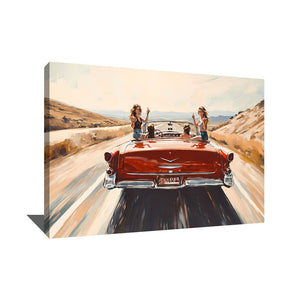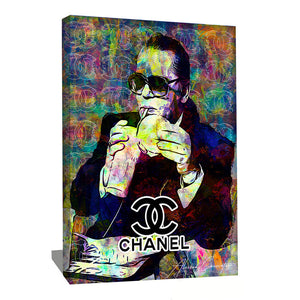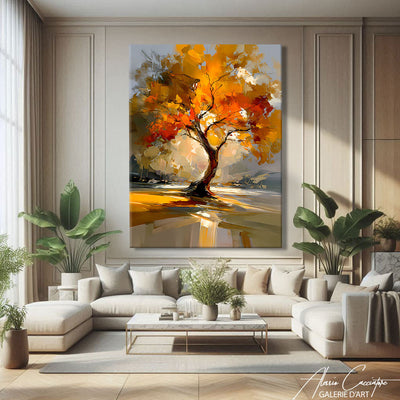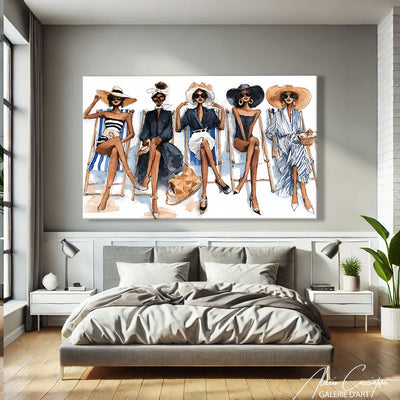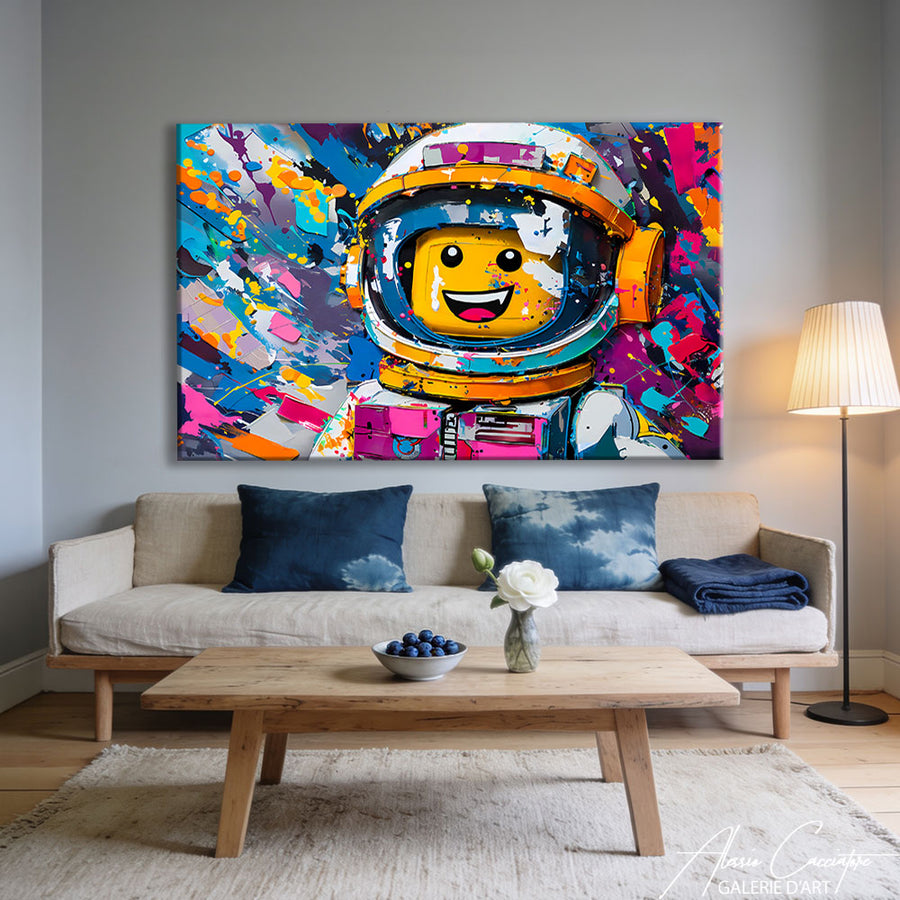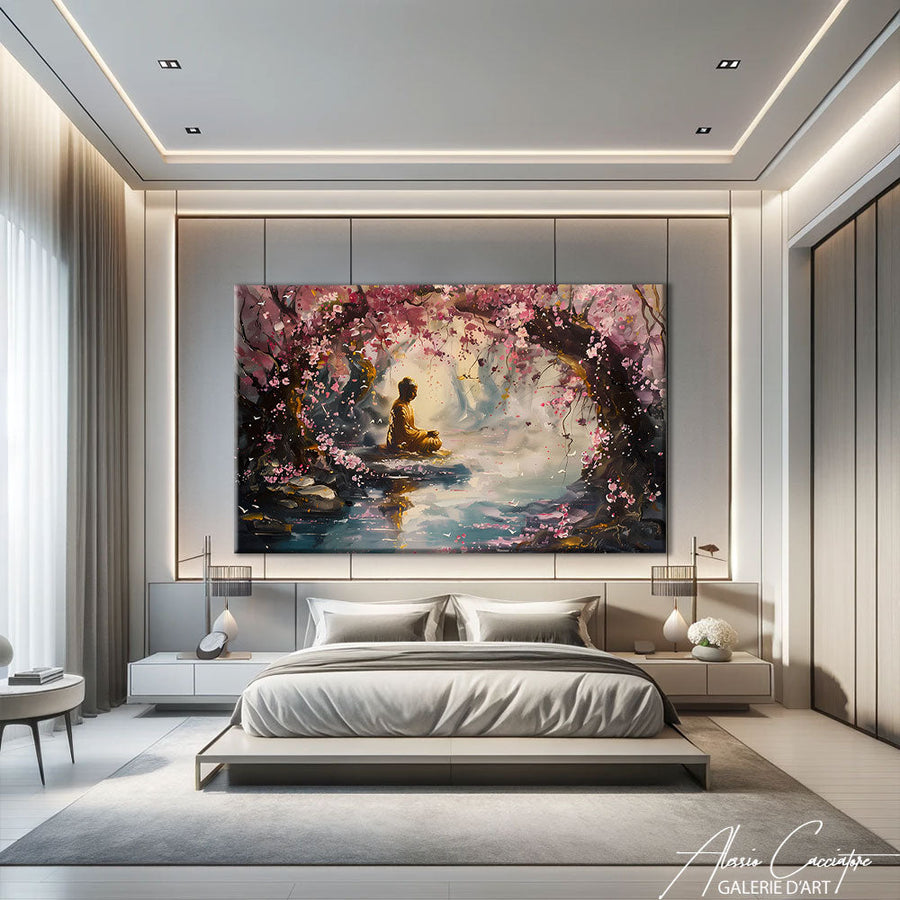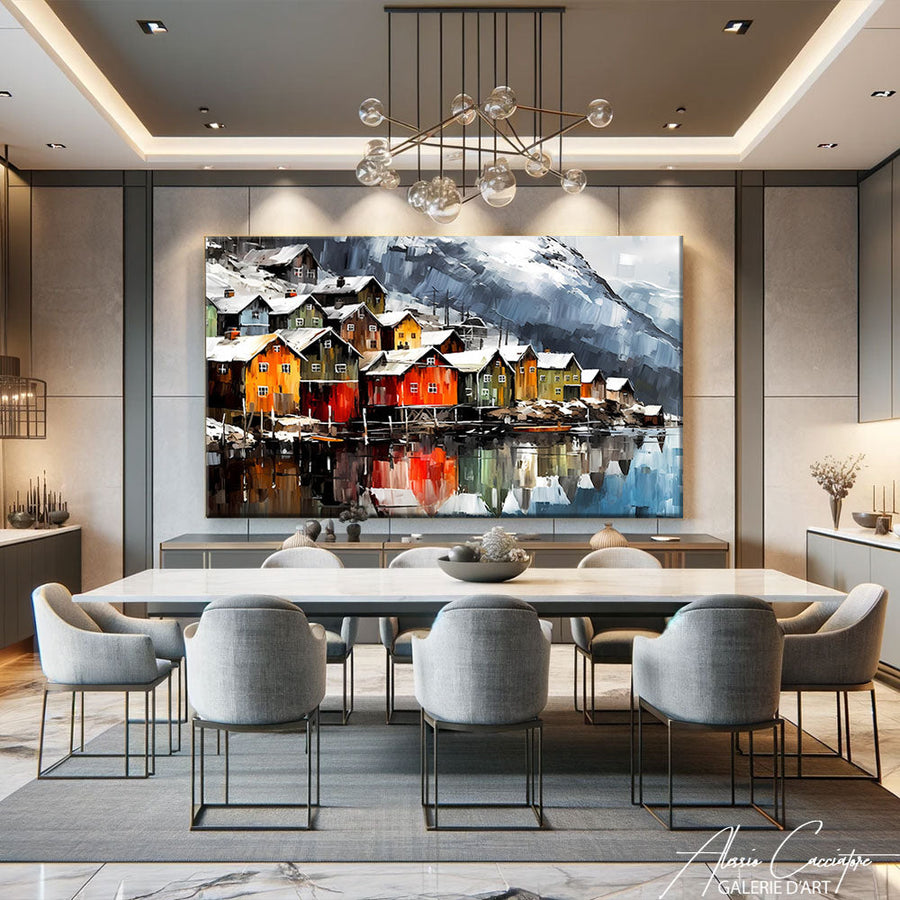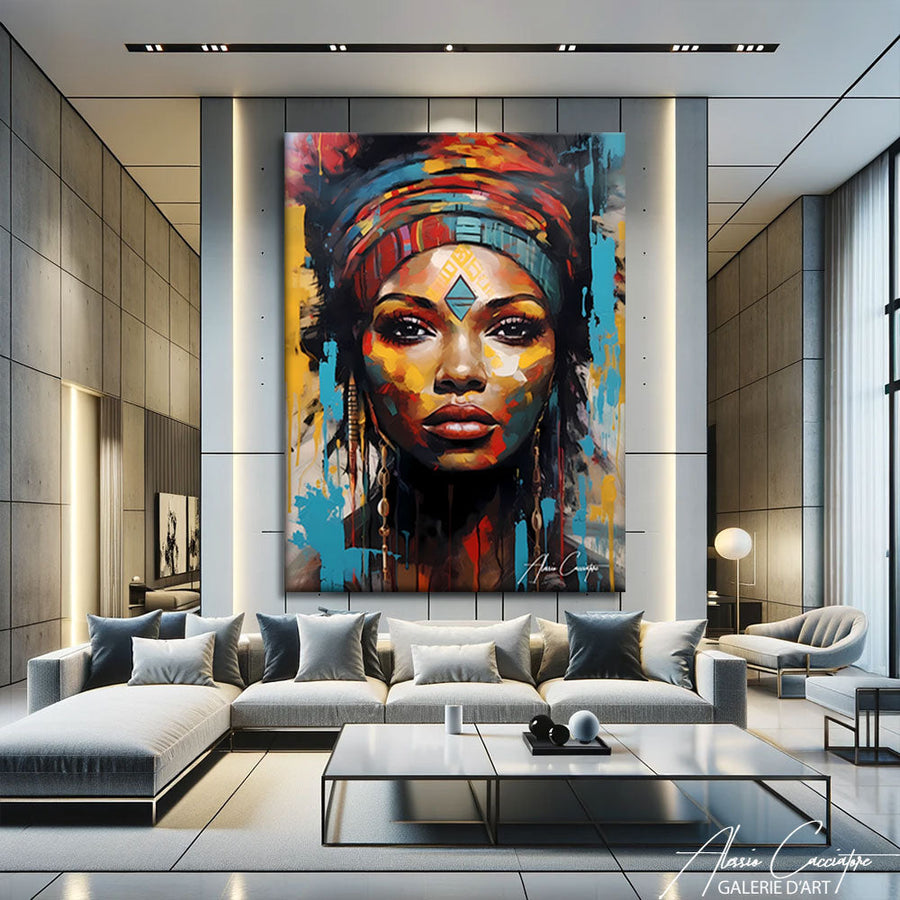

Last week, a client asked me for a "modern painting for their living room." When I showed them an abstract canvas from 2023, they looked at me, puzzled: "No, I want a Monet, something modern." This confusion is something I encounter every day. Modern does not mean contemporary. In art history, "modern" refers to a specific period: from around 1860 until 1945. Everything that comes after belongs to contemporary art. But in people's minds — and frankly, that's what matters when looking for a piece for your home — "modern" tends to evoke a sleek style, bold forms, and striking colors.
What we really mean by "modern painting"
Before diving into the movements, let's clarify the vocabulary. Technically, modern art begins with Édouard Manet and his scandals at the Paris Salon in the 1860s. It ends at the end of World War II, when American Abstract Expressionism took over.
But here's the thing.
When someone types "modern painting" into Google, they aren't necessarily looking for a Cézanne from 1890. They're looking for a piece that exudes modernity: clean lines, bold compositions, vibrant colors. Sometimes it's a geometric Mondrian. Sometimes it's a Pop Art Warhol. Sometimes it's even a minimalist abstraction from 2020.
In my studio, I use the term "modern" for anything that breaks with the rigid academism of the 19th century. Impressionism, Fauvism, Cubism, Abstraction, Pop Art — all these movements shook up the established norms. And today, when we talk about modern art painting, we are often referring to works that extend this spirit of rupture.
The real question to ask
Regardless of the creation date: does the artwork bring something fresh, unexpected, and vibrant to your wall? That's what a modern painting means to me.
Impressionism: the birth of the modern gaze

Monet, Renoir, Pissarro. Names that sound classic today, but back then? Pure provocation. They painted en plein air, captured the changing light, and rejected sharp outlines.
What makes Impressionism still relevant for a contemporary interior is its visual lightness. No heavy compositions, no hermetic symbolism. Just a scene from life, a garden, a bank of the Seine. These modern flower paintings — think Monet's water lilies — work wonderfully in a minimalist living room. They bring softness without being kitschy.
I recently sold a reproduction of an Impressionist bouquet to an interior designer. She placed it in an ultra-modern kitchen with brushed steel and polished concrete. The contrast was perfect: the soft, almost vibrating touch of the painting softened the coldness of the materials.
Why it still works
- Soft yet never bland palette
- Timeless subjects (gardens, landscapes, urban scenes)
- Integrates equally well into a Haussmannian interior or an industrial loft
Fauvism: the explosion of color that awakens a wall
Matisse, Derain, Vlaminck. The Fauves pushed color to incandescence. Pure red. Acid green. Cobalt blue. No halftones, no subtle nuances. Just color for color's sake.
This movement is underestimated in interior design, and that's a shame. A chic modern painting inspired by Fauvism can transform a neutral space into a characterful room. I saw a Fauvist portrait — a face in orange and green tones — energize a minimalist white and wood office. That single canvas was enough.
Fauvism is about punch. No intellectual sophistication, no convoluted concept. It's visceral. You either like it or it disturbs you, but it doesn't leave you indifferent.
"Color, above all, and perhaps even more than drawing, is a liberation."
— Henri Matisse
If your interior is too subdued, a Fauvist painting is the solution.
Cubism: geometry that defies the gaze

Picasso and Braque literally deconstructed reality. No more single perspective, no more illusionistic volumes. Just facets, angles, and overlapping planes.
Cubism is not easy. It demands visual effort. But that's also what makes it fascinating for a wall. A Cubist painting never gets old. Every time you walk past it, you see a different detail, a new angle.
In my experience, Cubist paintings work particularly well in workspaces. Libraries, offices, studios. They stimulate the mind. They remind you that there are many ways to see the same thing.
A collector told me he had hung a Cubist still life in his office for ten years. "It forces me to think differently," he told me. Not a bad effect for a canvas.
Abstraction: when form becomes pure emotion
Kandinsky, Mondrian, Rothko. Abstraction abandons all figurative representation. No recognizable subject. Just lines, shapes, fields of color.
This is the most versatile movement for decoration. An abstract canvas adapts to everything: contemporary living room, minimalist bedroom, clean entryway. It doesn't tell a precise story, so it imposes nothing. It allows for breathing room.
But be careful. Abstraction doesn't mean emptiness. The best abstract works carry a tension, a dynamic. A Mondrian, with its rectangles of primary colors, creates a rigorous balance. A Rothko, with its floating rectangles, generates a meditative depth.
I have a simple rule for choosing an abstract canvas: if you feel something when you look at it—calm, excitement, curiosity—it works. If you feel nothing, move on.
Three styles of abstraction to know
Geometric abstraction (Mondrian, Malevich): clean lines, primary colors, rigorous compositions. Perfect for minimalist interiors.
Lyrical abstraction (Kandinsky, Delaunay): organic shapes, expressive colors, movement. Ideal for softening an overly strict space.
Color field (Rothko, Newman): large flat areas of color, contemplative surfaces. Spectacular in large spaces.
Pop Art: modern art that embraces mass culture

Warhol, Lichtenstein, Hockney. Pop Art took what "serious" art despised—advertising, comics, consumer products—and turned it into art.
Pop Art is joyful irony. It's colorful, direct, often humorous. A Warhol Campbell's Soup in a kitchen? It works. A Lichtenstein in a modern living room? Perfect.
What I like about Pop Art is that it never takes itself too seriously. There's no obscure message to decipher. The image is what it is. And that's precisely what makes it accessible.
In my gallery, Pop Art-inspired works sell quickly. People love this positive energy. A screen-printed portrait with flashy colors. A still life that plays with advertising codes. It brings life and vibrancy.
Frankly, if you're looking for a modern painting for a living space—living room, dining room, even a teen's bedroom—Pop Art is a safe bet.
How to choose your modern painting according to your interior
Okay. We've covered the major movements. Now, practically, how do you choose?
First rule: forget strict rules. I've seen a dark Rothko enhance a white bedroom. I've seen a vibrant Fauvist portrait calm (yes, calm) a cluttered living room. Art isn't math.
But here are some approaches that often work:
For a minimalist interior: geometric abstraction, Cubist black and white, or conversely a Fauvist explosion to create a unique focal point.
For a classic interior (parquet, moldings): Impressionism, Post-Impressionist landscapes, or lyrical abstraction to modernize without clashing.
For an industrial loft: XXL Pop Art, gestural abstraction, metal and acrylic. No doubt, large formats work better in generous volumes.
For an office: Cubism (stimulates the mind), geometric abstraction (brings visual order), or a graphic black and white.
Size matters
A small modern painting on a large wall? It floats. It gets lost. Either you group several works, or you embrace the large format. A 120x100 cm is not "too big" for a 25 m² living room. It's just to scale.
Modern paintings and current decoration trends
Trends change, but some clear directions are emerging for 2025.
The return of graphic black and white. Clean, timeless, easy to integrate. Sharp lines, clear contrasts, it always works.
Modern metal wall art is gaining ground. Not necessarily painting, but brushed metal, laser-cut steel pieces. It dialogues well with classic modern paintings. A Mondrian next to a metal wall sculpture? Total coherence.
XXL formats continue to appeal. People are buying fewer small decorative objects and investing in one or two strong pieces. A large modern painting becomes THE centerpiece.
The return of modern flower paintings, but in a stylized version. No saccharine country bouquets. Rather graphic compositions, sleek botanical silhouettes, saturated colors.
In my studio, I see many requests for works that blend influences: an abstract background with a figurative element, an Impressionist palette with a Cubist composition. Hybridization is true modernity.
Where to find quality modern paintings (without breaking the bank)
Originals by Picasso or Rothko, let's be honest, are out of budget. But there are many ways to access modern art without selling a kidney.
Museum-quality reproductions: some institutions (MoMA, Centre Pompidou) offer high-fidelity reproductions on canvas. Not cheap, but they are serious.
Inspired contemporary artists: many living artists work in the lineage of modern movements. A young painter doing lyrical abstraction in the spirit of Kandinsky? Their works are accessible, and you support a creator.
Screen prints and limited editions: Warhol himself popularized this format. A numbered, signed screen print is a work of art in its own right. And it costs a fraction of the price of an original.
Online galleries (yes, like mine): lower overheads than a physical gallery, so often fairer prices. And you can visualize the artwork in your home before buying.
A piece of advice: always prioritize the quality of the medium and the printing. A poorly reproduced modern painting is low-end decoration. A carefully crafted reproduction is a lasting piece.
Frequently Asked Questions
What is the difference between a modern painting and a contemporary painting?
In art history, "modern" refers to the period 1860-1945 (Impressionism, Cubism, Abstraction), while "contemporary" covers art produced after 1945. In common parlance, "modern" tends to evoke a sleek, bold style that breaks with classical academism—regardless of its creation date.
What type of modern painting should I choose for a minimalist living room?
For a minimalist interior, opt for geometric abstraction (Mondrian, Malevich) or a large monochrome piece. If you want to create a strong focal point, choose a vibrant Fauvist or Pop Art work. The key is to have one strong piece rather than several small ones.
Are modern flower paintings outdated?
Not at all, as long as you choose stylized and graphic compositions. Impressionist bouquets (Monet, Renoir) remain timeless. Contemporary versions—clean shapes, saturated colors—work perfectly in a modern interior. Just avoid overly realistic country bouquets.
What size painting for a 3-meter wall?
For a 3-meter wall, aim for a painting at least 120 cm wide, or a set of 2-3 medium canvases (60-80 cm each). A small format (50x70 cm) would get completely lost. Don't be afraid of large formats: they structure the space and create a real visual impact.
Can different modern artistic movements be mixed in the same room?
Yes, provided you maintain chromatic or stylistic consistency. For example, a geometric Mondrian can coexist with lyrical abstraction if the colors complement each other. Just avoid mixing too many different figurative styles (Cubism + Pop Art + Impressionism): this risks creating visual clutter.
Do modern painting reproductions have value?
Not speculative value like an original, but true decorative and emotional value. A museum-quality reproduction, well-framed, brings as much visual pleasure as an inaccessible original. If you genuinely love the artwork and it transforms your interior, it has value—for you.
All works mentioned in this article are available on the gallery. Free worldwide shipping, 30-day money-back guarantee.