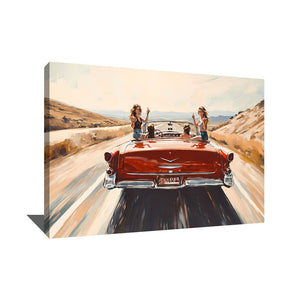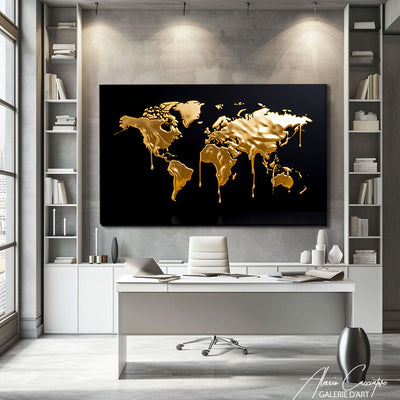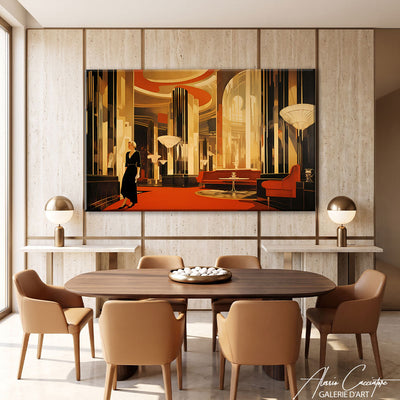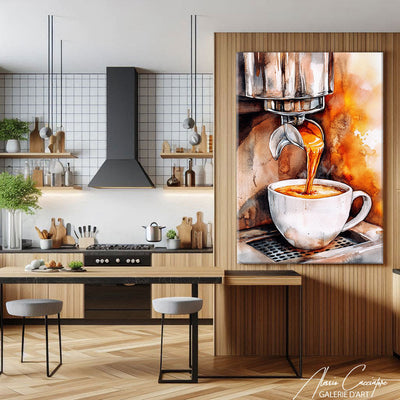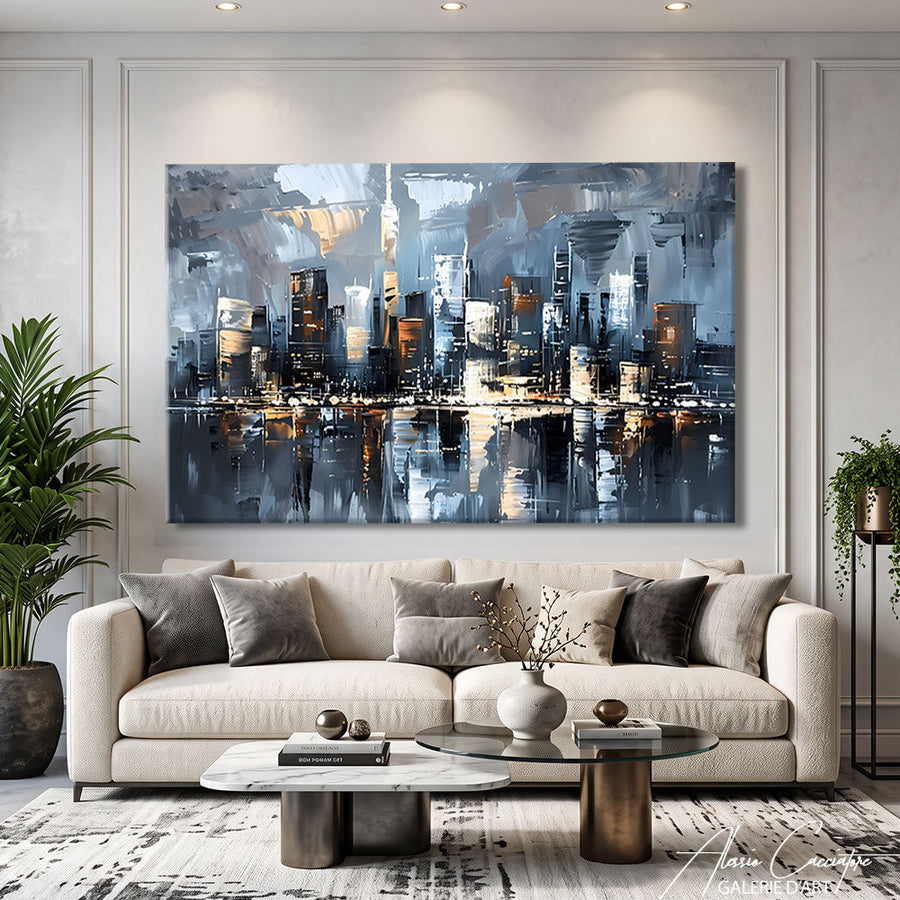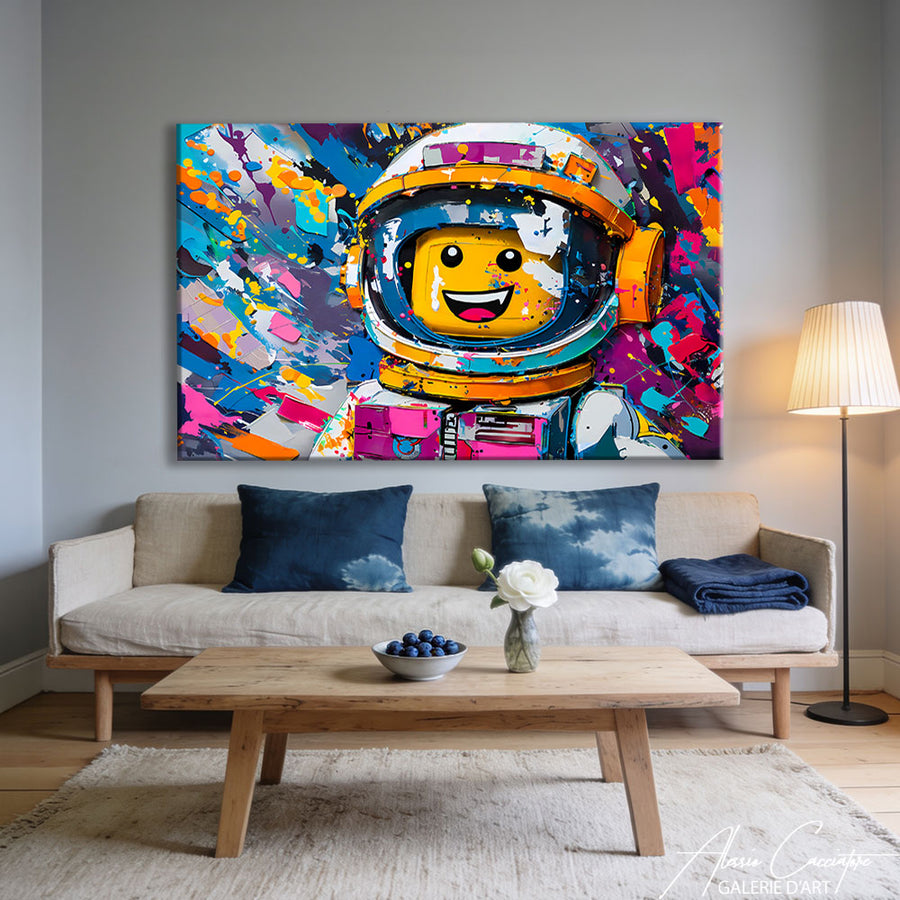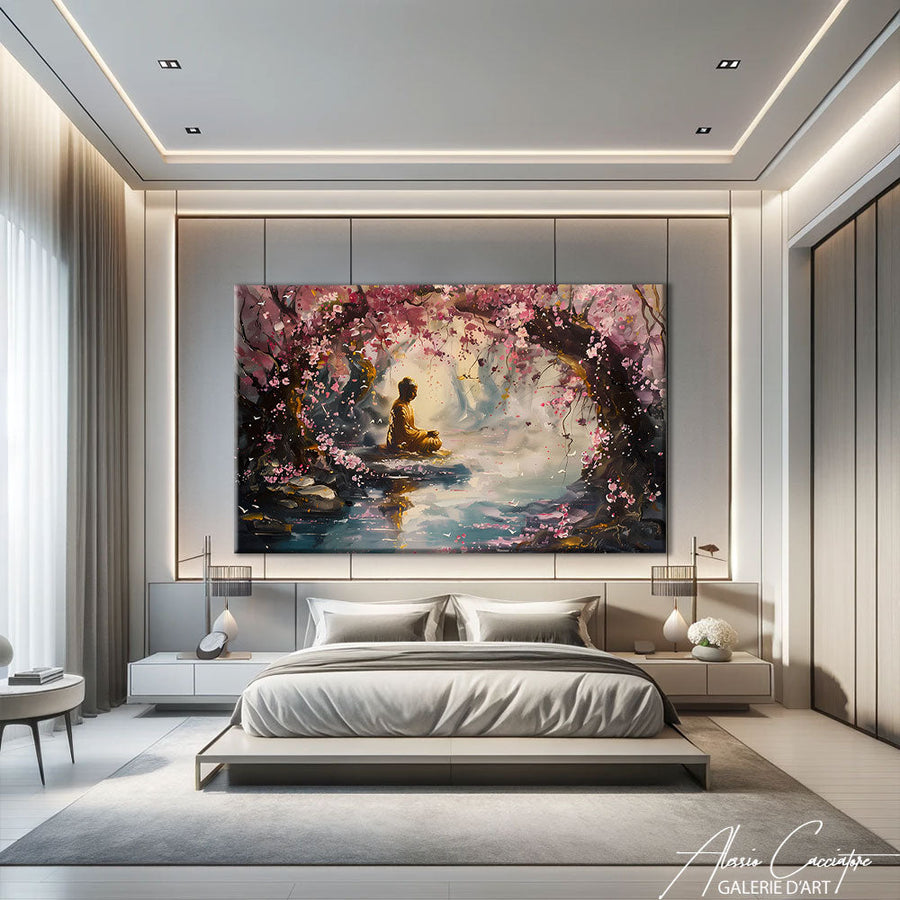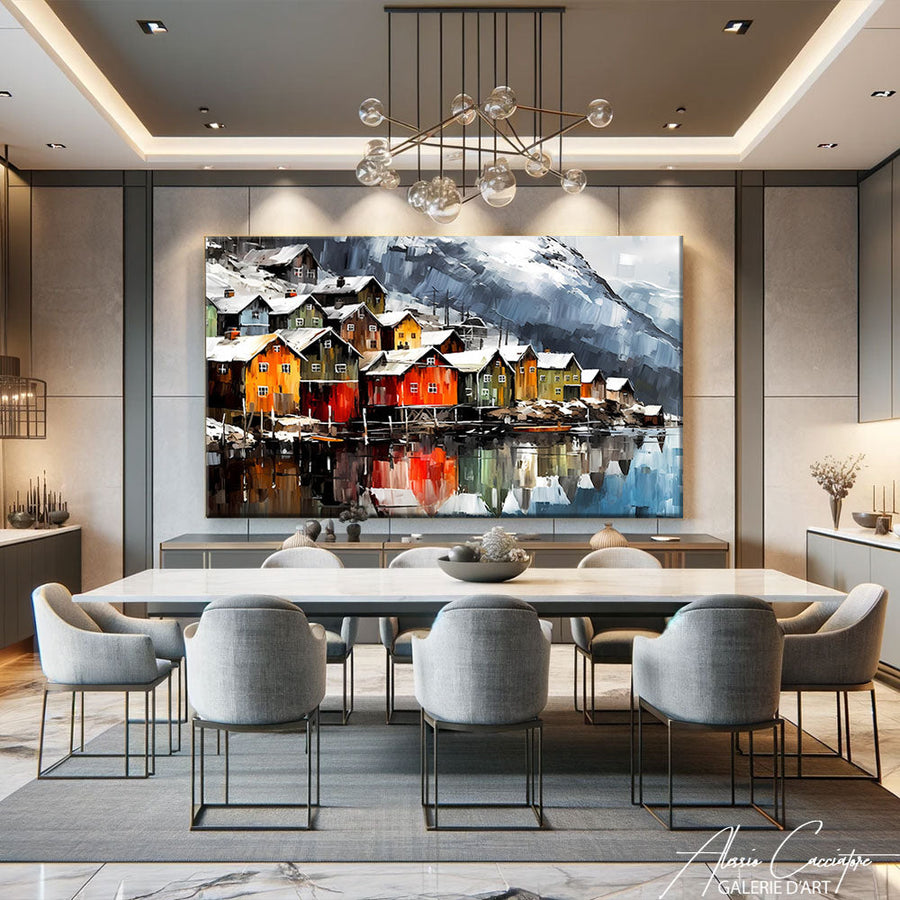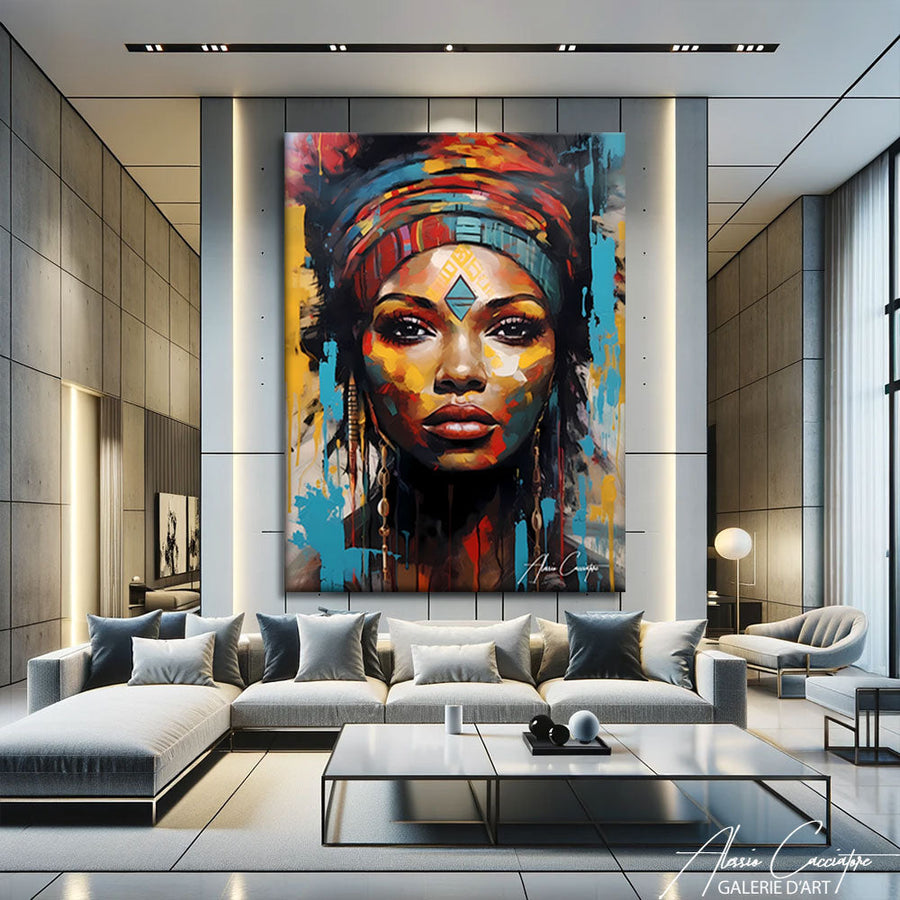

Last week, a client called me from their open-plan office. "Alessio, our walls are white, our team falls asleep by 3 PM, and our clients say we lack personality." Honestly, I hear that three times a month. A professional office without art is like a shirt without a collar: technically functional, but it sends no message. Several studies show that a work environment enriched with visual artworks increases creativity by 15% and reduces stress by 10%. But beware—putting just any canvas on the wall can also have the opposite effect.
Why office art is no longer a luxury but an investment
Companies that rank on Google for "best employer" almost all have one thing in common: they meticulously care for their work environment. And that starts with the walls.
A 2014 study by the University of Exeter compared two groups of employees: those working in offices decorated with plants and artworks, and those in "lean" (extremely minimalist) spaces. The result? +15% productivity in the first group, and a much higher satisfaction rate.
But beyond the numbers, there's the human element. When I visit offices to advise my clients, I always see the same thing: employees take their breaks in front of the artworks. They talk about them. It becomes a conversation starter, a marker of identity. A well-chosen professional office painting says something about your company culture—and your clients pick up on that in 30 seconds.
What annoys me is when a company spends €80,000 on designer furniture and sticks three €15 Ikea posters on the wall. The message sent there is clear: "we don't know who we are."
The golden rule: stimulating, but never distracting

Here's what you need to understand: an office painting doesn't have the same role as a piece of art in a living room. At home, you seek pure emotion, a crush. At the office, you seek a balance between stimulation and concentration.
I have a client—a law firm in Paris—who had hung a highly detailed, almost narrative canvas. Magnificent. But the partners called me back three months later: "We spend our time looking at it instead of working."
The solution? We opted for an abstract work, with strong contrast and two dominant colors (black and red). Strong enough to make a statement, yet clean enough not to monopolize attention. Since then, their clients invariably comment on the painting upon arrival. It sets a mood.
What works well in a professional office:
- Geometric abstraction: clean lines, clear shapes, restricted palette (2-3 colors max)
- Graphic black and white: timeless, elegant, never distracting
- Large-format urban photography: adds depth, tells a story of a city, an energy
- Minimalist pop art: a face, a symbol, no overload
What often causes problems:
- Bucolic landscapes (too soft, not impactful enough)
- Overly busy abstractions with 12 colors
- Realistic portraits that "stare" (disturbing in meetings)
- Overly neutral "decorative" works (= invisible, thus useless)
What size painting for what type of office?
This is the question everyone gets wrong. They buy a 60×80 cm for a 4-meter wall. The result: it floats, it doesn't fill the space, it looks cheap.
My advice after 15 years of placing artworks: dare to go big. Really big.
For an individual office (12-15 m²), go for a minimum of 100×100 cm. For a meeting room or open-plan office, rarely go below 120×150 cm. If you have an empty wall 3 linear meters long, an 80×120 cm diptych (×2) works perfectly.
I have a vivid memory: a startup CEO who wanted "something discreet." I showed him two formats—a 70×70 and a 140×100. He chose the small one. We hung it. Silence. Then he said: "Yeah, it doesn't really do anything." We replaced it with the large one. That made an impact.
The approximate rule: your artwork should cover 50 to 75% of the width of the wall it occupies. Below that, you lose impact. Above that, it can feel overwhelming (unless it's deliberate—and in that case, go all in).
Office wall decoration: beyond the classic painting

Everyone thinks "hung painting." But there are other formats that work very well in a professional environment.
The cork board remains a classic—useful, but frankly, from an aesthetic point of view, it's rarely amazing. If you absolutely must have one (for post-its, schedules, etc.), integrate it into a larger composition: a designer frame around it, or place it next to a strong artwork that rebalances it.
What also works well:
- Triptychs or diptychs: three canvases aligned, same format, telling a visual progression
- Aluminium Dibond print: modern look, very professional, no reflection (perfect in open-plan offices with overhead lighting)
- Framed works under anti-reflective glass: for offices with large bay windows
- 3D wall installations (e.g., relief, carved wood): beware, these require maintenance (dust) and only work in spaces with high ceilings
One thing to know: plexiglass (often seen on cheap prints) ages poorly. It yellows, it scratches. If you invest in a real professional office painting, go for museum glass or, better yet, a varnished stretched canvas (no reflection, matte finish, timeless).
Choosing the right color palette for your industry
It seems secondary, but it's fundamental. The colors of an artwork send a subliminal message about your business.
Are you a law firm, finance, consulting? Forget fluorescent pink and pistachio green. Favor sober palettes: black/white/gray, navy blue, burgundy red, gold. These inspire rigor and stability.
Are you a creative agency, tech startup, design studio? Then dare to be bold. Bright yellow, pink, electric blue, strong contrasts. You need to show that you're not afraid to think outside the box. A pop art painting or a colorful abstraction works perfectly.
Health, wellness sector? Soothing colors. Light blue, sea green, beige, off-white. Avoid aggressive red or overly violent contrasts. A minimalist landscape or a gentle abstraction works wonders.
"Color is a power which directly influences the soul." — Kandinsky
And frankly, he was right. I've seen dentists' waiting rooms go from entirely beige (depressing) to a deep blue with a white abstract artwork (soothing, classy). Patient feedback changed completely.
My advice: before buying, take a photo of your wall, print it in A4, and stick color swatches on it to visually test. Or use Photoshop if you're skilled. But never choose an artwork just because it's "pretty"—ask yourself what it says about YOU.
The fatal error: buying too quickly without thinking about hanging

You found the perfect painting. You hang it. And then… it's too high. Or too low. Or not centered with the window. Or it disappears because no one walks past it.
Hanging is 50% of the final result.
Standard height: the center of the artwork should be 1.60 m from the floor (= average eye level). Unless you have a cathedral ceiling, in which case you go up to 1.70-1.80 m.
Viewing distance: for a 120 cm wide artwork, allow a minimum viewing distance of 2.50 m. Otherwise, you can't take it all in. If your corridor is 1.20 m wide, avoid XXL formats—it will never work.
Lighting: an unlit painting is an invisible painting after 6 PM. Install an adjustable LED spot (3000K temperature, CRI>90) or a battery-powered picture light if you don't have an outlet nearby.
Last point: dangling cables, visible fixings, peeling corners… that kills everything. If you invest €800 in a professional office painting, spend an extra €50 for a clean hanging. Picture rails, tracks, or invisible "ghost mounting" type fixings—it changes everything.
Office painting: rent or buy?
A legitimate question, especially for companies that are testing things out or have tight budgets.
There are platforms for renting artworks for offices (Artsper Pro, Art&Office, etc.). Advantage: you change it every 6 months, you test, you don't commit. Disadvantage: over 3 years, you will have paid the price of the artwork… without owning it.
My point of view as an artist? Buy. For two reasons:
- An artwork takes time to settle into a place. People get attached to it. Changing every 6 months is frustrating—and it sends a message of instability.
- An original work is an investment. It (sometimes) appreciates in value. It becomes an asset.
If you're really hesitant: start with a limited edition digital art print (signed, numbered). It's 3 to 5 times cheaper than an original, and it's still high quality. Then, if it works, invest in an original for your executive office or main meeting room.
And if you rent, demand a certificate of authenticity and included insurance. I've seen too many galleries rent "artworks" that were just framed posters.
Concrete examples of artworks that work well in a professional environment
Finally, here are types of artworks I've successfully placed in professional offices over the past three years:
For an architectural firm: a series of three urban photographs in black and white, 80×120 cm each, representing New York, Tokyo, Berlin. Message: "we think global, we master international urban planning."
For a communication agency: a 150×100 cm pop art abstract canvas, red and black on a white background, with a word in capital letters ("CREATE"). Immediate impact, memorable, Instagrammable.
For a recruitment firm: a diptych with stylized portraits (Warhol style), vibrant colors, 100×100 cm each. It humanizes the space, speaks of diversity without being preachy.
For a fintech startup: a minimalist geometric artwork, navy blue and gold, 120×80 cm. It exudes tech, precision, modernity—without falling into the "Silicon Valley" cliché.
For a coworking space: a wall mural (yes, not a classic painting) 4 linear meters long, created live over 3 days. It becomes the identity of the place, a conversation topic, a marketing lever.
What always works: authenticity. If you are a family-owned SME that has been around for 40 years, don't try to look like Google. Embrace your history, and find an artwork that reflects it.
Frequently asked questions
What budget should I plan for a professional office painting?
Expect between €300 and €1500 for a quality original artwork (80×100 to 120×150 cm). For a limited edition art print, the budget starts around €150-400. If you are furnishing an entire open-plan office, plan €2000-€5000 for 4-5 coherent artworks. My advice: one beautiful piece is better than a dozen small, unimpactful works.
How do I know if a painting is too big for my office?
Measure the width of your wall and multiply by 0.6. This is the maximum recommended width for your artwork. Then, check the viewing distance: for a 120 cm wide painting, you need at least 2.50 m of distance to fully appreciate it. If your office is 3×3 m, avoid XXL formats—opt for an 80×100 cm instead.
Should the painting match the colors of the company's graphic charter?
Not necessarily. The artwork can (and sometimes should) create a controlled contrast. If your walls are white and your logo is navy blue, a painting with red or yellow will energize the space. However, avoid colors that clash: a bright orange on green walls is an eyesore. The ideal: 1-2 common colors between the artwork and your visual identity.
Can I hang a painting above a screen or a desk?
Above a desk, yes—provided you leave 20-30 cm between the furniture and the bottom of the frame. Above a screen, it depends: if it's a fixed meeting screen, no problem. If it's a workstation where someone spends 8 hours a day, avoid it—it can create visual discomfort (reflections, peripheral distraction). In this case, place the artwork on an adjacent wall.
What is the difference between an original painting and a reproduction for an office?
An original is unique, signed, often textured (paint, relief). A reproduction (even high-end) is a print, sometimes in a limited series. In terms of brand image, an original sends a stronger message: "we invest in culture, we support artists." A quality reproduction remains a valid option if the budget is tight, but check that it is signed, numbered, and printed on a durable medium (Dibond, fine art paper).
All artworks mentioned in this article are available on the gallery. Worldwide shipping offered, 30-day money-back guarantee.